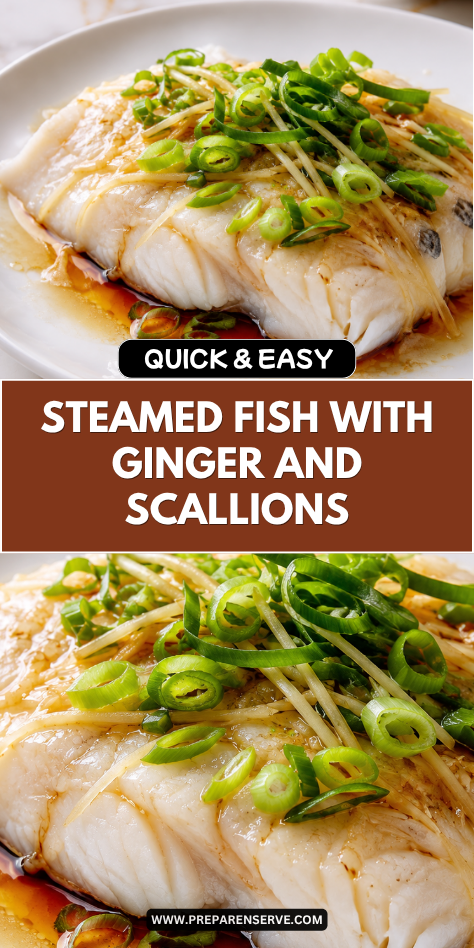
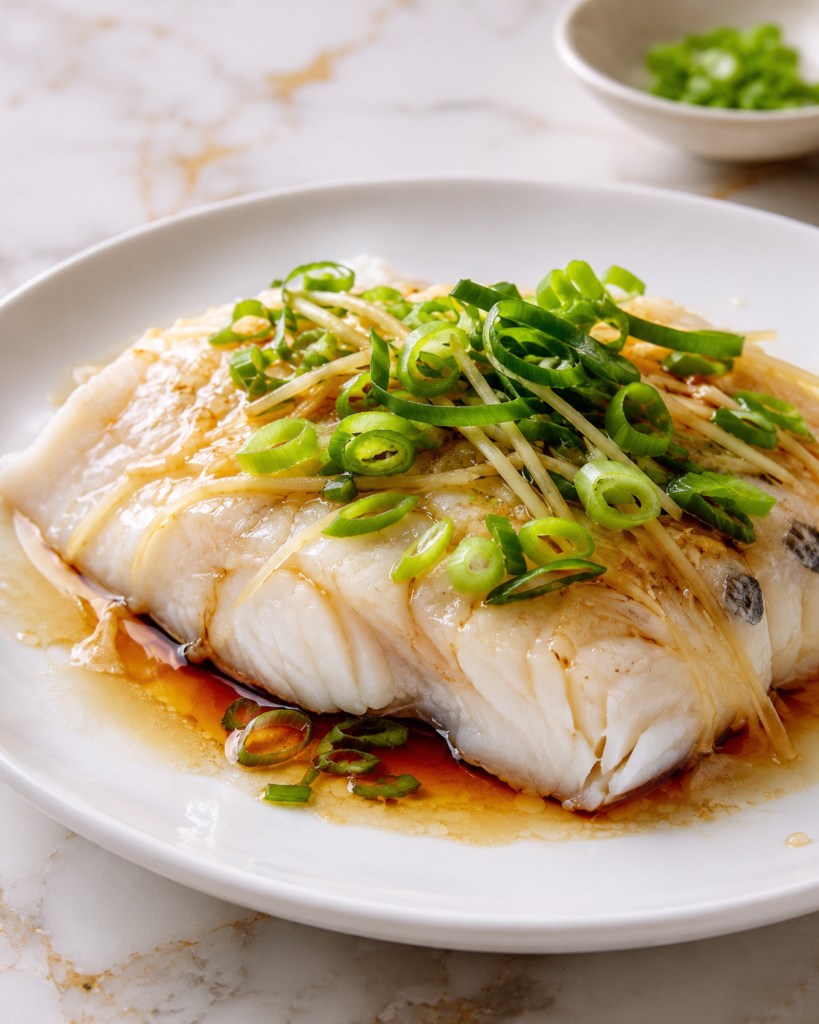
I make Steamed Fish with Ginger and Scallions when I want a meal that feels light, warm, and comforting without being heavy. The fish cooks gently until tender, then gets topped with fresh ginger, scallions, soy sauce, and hot oil for a simple finish that tastes clean and full of flavor.
I like this recipe because it feels special, but it is not hard to make at home. The steaming keeps the fish soft and moist, and the ginger and scallions add a fresh, cozy flavor that works well for both weeknight dinners and family meals.
Why You’ll Love This Recipe
Steamed Fish with Ginger and Scallions is simple, healthy, and full of gentle flavor. The fish stays tender because it cooks with steam instead of direct heat, which makes it a good recipe for anyone nervous about overcooking seafood.
The sauce is light but savory, with soy sauce, sesame oil, ginger, and scallions adding flavor without covering up the fish. A small drizzle of hot oil at the end brings out the aroma and makes the dish taste fresh from a restaurant kitchen.
This recipe is also great for families because it cooks quickly and pairs well with rice, vegetables, or noodles. You can keep the flavors mild for kids or add chili oil at the table for anyone who likes a little heat.
Serves: 4 people
This recipe serves 4 people with one medium fish fillet or portion per person. If you are serving larger appetites, add steamed rice, stir-fried vegetables, soup, or extra side dishes to make the meal feel more complete.
Ingredients You’ll Need
For the Fish
- 1 1/2 pounds mild white fish fillets, such as cod, halibut, sea bass, snapper, or tilapia
- 1/2 teaspoon kosher salt
- 1/4 teaspoon black pepper
- 1 tablespoon rice wine or dry sherry, optional
- 1 tablespoon fresh ginger, thinly sliced
- 2 scallions, cut into 2-inch pieces
- 1 lemon slice or 1 small piece of orange peel, optional
For the Ginger Scallion Topping
- 2 tablespoons fresh ginger, finely julienned
- 4 scallions, thinly sliced lengthwise or on a bias
- 2 tablespoons low-sodium soy sauce
- 1 tablespoon water
- 1 teaspoon toasted sesame oil
- 1 teaspoon rice vinegar
- 1/2 teaspoon sugar or honey
- 2 tablespoons neutral oil, such as avocado oil, canola oil, or vegetable oil
- 1 tablespoon chopped fresh cilantro, optional
- 1 small red chili, thinly sliced, optional
For Serving
- Steamed jasmine rice or brown rice
- Extra soy sauce, for serving
- Lime wedges or lemon wedges, optional
Pro Tips
Choose a mild, firm fish.
Cod, halibut, sea bass, snapper, and tilapia all work well because they steam gently and hold together nicely. Try to choose fillets that are close in thickness so they cook at the same pace.
Pat the fish dry first.
Drying the fish helps the seasoning stick and keeps extra water from pooling on the plate. This simple step helps the finished dish taste clean instead of watery.
Do not over-steam the fish.
Fish cooks quickly, especially thinner fillets. Start checking early, and remove it from the steamer when it flakes easily and looks opaque in the thickest part.
Use fresh ginger and scallions.
Fresh ginger gives the dish its warm, bright flavor, and scallions add a soft onion taste. Powdered ginger will not give the same fresh aroma or texture.
Heat the oil carefully.
The oil should be hot enough to sizzle when it hits the ginger and scallions, but it should not smoke heavily. This quick pour helps bloom the topping and makes the whole dish smell wonderful.
Serve right after steaming.
Steamed fish tastes best when it is hot and tender. Have the rice, sauce, and topping ready before the fish finishes so you can serve everything right away.
Tools You’ll Need
- Large steamer basket, bamboo steamer, or steaming rack
- Large pot, wok, or deep skillet with a lid
- Heat-safe plate that fits inside the steamer
- Cutting board
- Sharp knife
- Measuring spoons
- Measuring cups
- Small bowl for sauce
- Small saucepan or skillet for heating oil
- Tongs or oven mitts
- Fish spatula or serving spoon
- Paper towels
Substitutions and Variations
Use a Different Fish
Use cod, halibut, snapper, sea bass, tilapia, or flounder for this recipe. Choose a mild fish that is not too thin so it stays tender and does not fall apart too easily.
Make It Gluten-Free
Use gluten-free tamari instead of soy sauce. Check the rice wine or dry sherry if using, or simply leave it out for an easy gluten-free option.
Add a Little Heat
Top the fish with thinly sliced red chili, chili crisp, or a small drizzle of chili oil. Keep the spice on the side if you are serving children or mild eaters.
Make the Flavor Brighter
Add a little lime juice, lemon juice, or extra rice vinegar right before serving. The citrus gives the dish a fresh finish without changing the gentle ginger scallion flavor.
Make It Heartier
Serve the steamed fish over rice with bok choy, snow peas, mushrooms, or steamed broccoli. These sides make the meal more filling while keeping it light and balanced.
Make Ahead Tips
Steamed Fish with Ginger and Scallions is best cooked right before serving, but you can prep many parts ahead to make dinner easier. Slice the ginger, cut the scallions, mix the sauce, and wash the herbs up to 1 day ahead.
Store each item in a separate covered container in the refrigerator so the flavors stay fresh. You can also portion the fish and pat it dry a few hours ahead, then keep it covered and chilled until you are ready to steam.
I do not recommend steaming the fish ahead because it can become dry or firm after reheating. For the best texture, have the rice and vegetables ready first, then steam the fish last so it goes to the table hot, tender, and fresh.
Instructions
Step 1: Prepare the Steamer
Add 1 to 2 inches of water to a large pot, wok, or deep skillet. Place a steamer basket, bamboo steamer, or steaming rack inside, making sure the water does not touch the plate where the fish will sit.
Bring the water to a gentle simmer over medium-high heat. Keep the lid nearby so the steamer is ready once the fish is seasoned.
Step 2: Season the Fish
Pat 1 1/2 pounds mild white fish fillets dry with paper towels. Season both sides with 1/2 teaspoon kosher salt and 1/4 teaspoon black pepper.
Place the fish on a heat-safe plate that fits inside your steamer. Drizzle with 1 tablespoon rice wine or dry sherry if using, then add 1 tablespoon thinly sliced fresh ginger, 2 scallions cut into 2-inch pieces, and a lemon slice or small piece of orange peel if using.
Step 3: Steam the Fish
Carefully place the plate of fish inside the steamer. Cover with the lid and steam for 7 to 10 minutes, depending on the thickness of the fillets.
The fish is done when it looks opaque and flakes easily with a fork. If you have an instant-read thermometer, the thickest part should reach 145°F.
Step 4: Mix the Sauce
While the fish steams, stir together 2 tablespoons low-sodium soy sauce, 1 tablespoon water, 1 teaspoon toasted sesame oil, 1 teaspoon rice vinegar, and 1/2 teaspoon sugar or honey in a small bowl. Stir until the sugar or honey dissolves.
Taste the sauce and adjust gently if needed. Add a tiny splash more water if it tastes too salty, or a little more vinegar if you want it brighter.
Step 5: Prepare the Fresh Topping
Place 2 tablespoons finely julienned fresh ginger and 4 thinly sliced scallions in a small pile on a cutting board or plate. Add 1 tablespoon chopped fresh cilantro and thinly sliced red chili if using.
Keeping the topping ready is important because the fish should be served soon after steaming. The hot oil will be poured over these fresh ingredients at the end.
Step 6: Remove the Fish from the Steamer
Turn off the heat and carefully remove the plate from the steamer using oven mitts or tongs. Be careful because the plate and steam will be very hot.
Pour off any watery liquid that collected on the plate, if desired. Leave the fish on the warm plate or transfer it gently to a serving platter.
Step 7: Add the Sauce and Fresh Topping
Spoon the soy sauce mixture over and around the steamed fish. Scatter the fresh ginger, scallions, cilantro, and chili over the top.
Try to place most of the ginger and scallions directly on the fish. This helps the hot oil bloom their flavor and aroma.
Step 8: Heat the Oil
Heat 2 tablespoons neutral oil in a small saucepan or skillet over medium-high heat. The oil is ready when it shimmers and looks thin, usually after 1 to 2 minutes.
You can test it by dropping in one small piece of scallion. It should sizzle right away without turning dark.
Step 9: Pour the Hot Oil Over the Topping
Carefully pour the hot oil over the ginger and scallions on top of the fish. You should hear a gentle sizzle as the oil hits the fresh topping.
This step brings out the fragrance of the ginger and scallions and gives the dish its classic finish. Pour slowly and keep your hands back from the steam.
Step 10: Serve Right Away
Serve the fish warm with steamed jasmine rice or brown rice. Add extra soy sauce, lime wedges, or lemon wedges on the side if your family likes a brighter flavor.
Use a fish spatula or serving spoon to lift portions carefully from the plate. The fish will be very tender, so gentle serving helps keep the pieces neat.
Serving Suggestions
Steamed Fish with Ginger and Scallions is wonderful with steamed jasmine rice because the rice soaks up the light soy sauce and fragrant oil. Brown rice also works well if you want a heartier base.
For vegetables, serve it with steamed bok choy, broccoli, snow peas, or green beans. These sides keep the meal light and fresh while adding color to the plate.
A simple cucumber salad is a nice cool side next to the warm fish. Thin cucumber slices with rice vinegar and a pinch of salt make the meal feel balanced without much extra work.
You can also serve this fish with noodles if your family wants something different from rice. Plain rice noodles or thin egg noodles taste good with the ginger scallion sauce spooned over the top.
For a fuller dinner, add miso soup, egg drop soup, or a simple vegetable broth on the side. The gentle flavors fit well with the clean taste of the steamed fish.
If you are serving children, flake the fish into small pieces over rice and spoon a little sauce on top. Keep chili oil or sliced chili on the side so the main dish stays mild.
Leftovers and Storage
Store leftover Steamed Fish with Ginger and Scallions in an airtight container in the refrigerator for up to 2 days. Fish is delicate, so it is best to cool it and refrigerate it soon after the meal.
To reheat, place the fish in a covered skillet with a small splash of water over low heat. Warm it gently just until heated through, because high heat can make the fish dry or tough.
You can also microwave leftovers at lower power in short bursts. Cover the fish loosely and stop heating as soon as it is warm.
Freezing is not ideal for this recipe because steamed fish can become watery and soft after thawing. If you do freeze it, wrap it well and use it within 1 month. Leftover fish can also be flaked into rice bowls, soup, fried rice, or lettuce cups for an easy next-day meal.
Nutrition and Benefits
- Light protein: White fish is a lean source of protein that feels satisfying without being heavy. It works well for a balanced lunch or dinner.
- Gentle cooking method: Steaming helps keep the fish moist without needing much oil. It is a simple way to cook seafood with a soft, tender texture.
- Fresh aromatics: Ginger and scallions add bold flavor without a heavy sauce. They make the dish taste bright, warm, and clean.
- Easy to pair with vegetables: This recipe goes well with many simple sides, like bok choy, broccoli, peas, or green beans. That makes it easy to build a complete family meal.
- Naturally flexible: You can keep the dish mild, add chili for heat, or use different white fish based on what is available. The core recipe stays simple and dependable.
Recipe FAQ
What kind of fish works best for this recipe?
Mild white fish works best because it steams quickly and takes on the ginger scallion flavor well. Cod, halibut, sea bass, snapper, tilapia, and flounder are all good choices. Try to use fillets that are similar in thickness so they cook evenly.
How do I know when steamed fish is done?
The fish is done when it turns opaque and flakes easily with a fork. The thickest part should reach 145°F if you are using an instant-read thermometer. Start checking early so the fish stays tender and does not overcook.
Can I make this without a steamer?
Yes, you can make a simple steamer with a large pot, a heat-safe rack, and a plate that fits inside. Add water below the rack, place the fish on the plate, and cover the pot with a lid. Make sure the water does not touch the fish plate.
Can I use frozen fish?
Yes, frozen fish can work if it is fully thawed first. Thaw it overnight in the refrigerator, then pat it very dry before seasoning. Removing extra moisture helps the finished dish taste cleaner and less watery.
Is this recipe spicy?
No, the base recipe is mild and family-friendly. The ginger adds warmth, but it is not spicy in the same way chili is. Add sliced red chili, chili crisp, or chili oil only if you want heat.
Why pour hot oil over the ginger and scallions?
Hot oil wakes up the flavor of the fresh ginger and scallions. It creates a gentle sizzle and gives the dish a fragrant finish. This small step makes the simple ingredients taste more complete.
Can I make the sauce less salty?
Yes, use low-sodium soy sauce and add the tablespoon of water as written. You can add a little more water or a squeeze of lemon or lime if it still tastes too salty. Serving the fish with plain rice also helps balance the sauce.
A Gentle Fish Dinner with Fresh Flavor
Steamed Fish with Ginger and Scallions is light, tender, and comforting in a quiet, dependable way. The fish cooks gently, the sauce stays simple, and the warm ginger scallion topping brings just enough flavor to make the meal feel special. It is easy enough for a weeknight but still feels thoughtful.
This recipe is worth making again because it gives reliable results without much fuss. It pairs well with rice, vegetables, or noodles, and the flavors can stay mild or be brightened with chili and citrus. It is a fresh family dinner that feels calm, nourishing, and homemade.