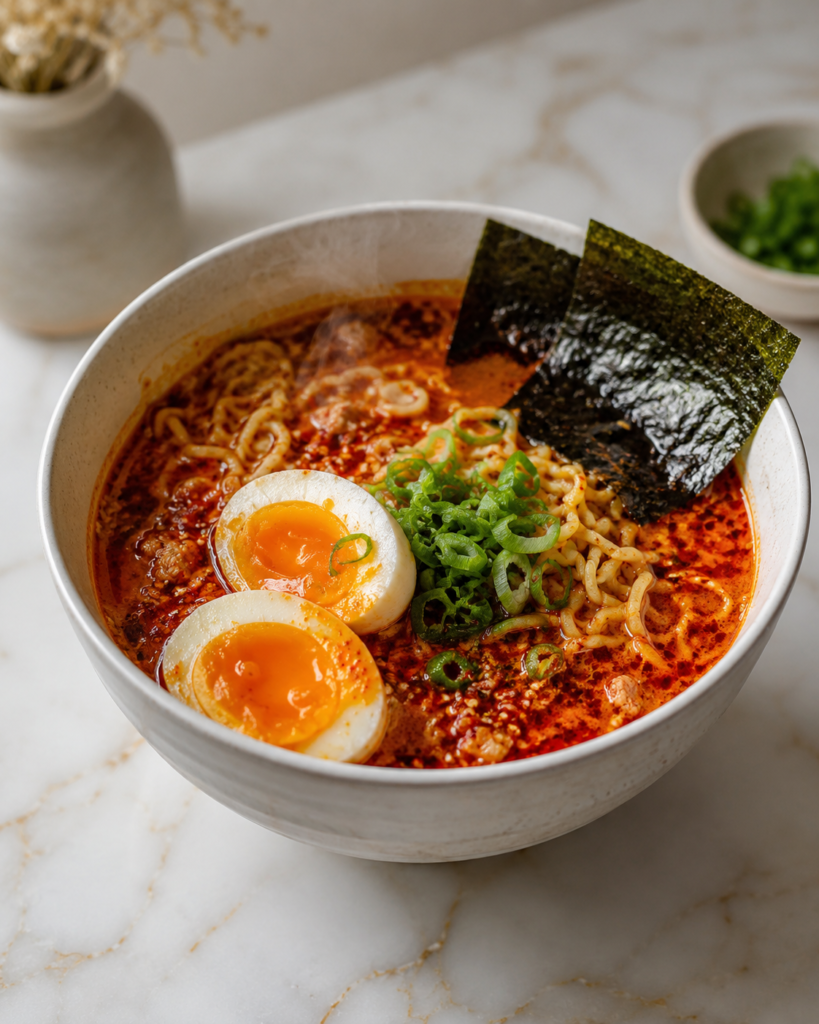
I make Spicy Ramen with Soft Boiled Egg when I want a warm bowl that feels cozy, filling, and full of flavor. It is the kind of meal that helps everyone slow down for a few minutes, especially on a chilly day or after a long afternoon.
I like this recipe because it uses simple ingredients but still tastes rich and comforting. The noodles are tender, the broth has a gentle kick, and the soft boiled egg makes the bowl feel extra satisfying without a lot of extra work.

Why You’ll Love This Recipe
Spicy Ramen with Soft Boiled Egg is warm, savory, and easy to make at home. The broth has a nice balance of garlic, ginger, soy sauce, chili paste, and sesame oil, so it tastes bold without needing hours on the stove.
This recipe is also flexible for families because the spice level can be adjusted. You can keep the broth mild for kids, then add chili oil, sriracha, or extra chili paste to the adult bowls.
It is a helpful meal for busy nights because most of the ingredients cook quickly. The noodles, eggs, and toppings come together in one cozy bowl that feels homemade, comforting, and easy to repeat.
Serves: 4 people
This recipe serves 4 people with one ramen bowl per person. Each bowl includes noodles, broth, toppings, and one soft boiled egg half or whole egg, depending on how filling you want the meal to be.
Ingredients You’ll Need
For the Soft Boiled Eggs
- 4 large eggs
- 6 cups water, for boiling
- 2 cups ice
- 2 cups cold water, for the ice bath
For the Spicy Ramen Broth
- 1 tablespoon vegetable oil or avocado oil
- 3 garlic cloves, minced
- 1 tablespoon fresh ginger, grated
- 2 tablespoons chili garlic paste or sambal oelek
- 1 tablespoon tomato paste
- 6 cups low-sodium chicken broth or vegetable broth
- 2 tablespoons low-sodium soy sauce
- 1 tablespoon rice vinegar
- 1 tablespoon toasted sesame oil
- 1 teaspoon honey or brown sugar
- 1/2 teaspoon kosher salt, plus more to taste
- 1/4 teaspoon black pepper
- 1/2 cup canned coconut milk or heavy cream, optional for a creamier broth
For the Noodles and Toppings
- 12 ounces ramen noodles, fresh or dried
- 2 cups baby spinach
- 1 cup sliced mushrooms
- 1 cup shredded cooked chicken, tofu cubes, or edamame, optional
- 1/2 cup shredded carrots
- 2 green onions, thinly sliced
- 1 tablespoon sesame seeds
- 1 sheet nori, cut into thin strips, optional
- Chili oil or sriracha, optional for serving
- Lime wedges, for serving
Pro Tips
Start with the eggs.
Soft boiled eggs are easiest to peel when they have time to chill in an ice bath. Making them first also means they are ready when the ramen bowls are hot.
Control the spice level.
Chili garlic paste can vary in heat, so start with less if your family prefers mild food. You can always add chili oil or sriracha to individual bowls at the end.
Use low-sodium broth.
Soy sauce, chili paste, and toppings can add salt quickly. Low-sodium broth gives you more control over the final flavor.
Do not overcook the noodles.
Ramen noodles soften fast and continue to absorb broth after serving. Cook them just until tender so they stay springy in the bowl.
Add greens at the end.
Baby spinach only needs a minute or two to wilt. Adding it near the end keeps it bright and fresh instead of dull and overcooked.
Set toppings out family-style.
Place carrots, green onions, sesame seeds, nori, lime, and chili oil in small bowls. This lets everyone build a ramen bowl that fits their own taste.
Tools You’ll Need
- Medium saucepan for boiling eggs
- Large pot or Dutch oven for broth
- Slotted spoon
- Mixing bowl for ice bath
- Cutting board
- Sharp knife
- Measuring cups
- Measuring spoons
- Microplane or grater
- Wooden spoon or silicone spatula
- Tongs or chopsticks
- Ladle
- Serving bowls
Substitutions and Variations
Make It Less Spicy
Use 1 tablespoon chili garlic paste instead of 2 tablespoons, or choose a mild chili sauce. Add extra heat only to the bowls that need it so the whole family can enjoy the same meal.
Change the Protein
Use shredded chicken, seared tofu, edamame, shrimp, or thinly sliced cooked pork. Keep the protein simple so the broth, noodles, and soft boiled egg stay the main focus.
Make It Vegetarian
Use vegetable broth and add tofu, edamame, mushrooms, or extra spinach. This keeps the ramen hearty while still giving the bowl plenty of flavor and texture.
Add More Vegetables
Stir in bok choy, snap peas, corn, cabbage, or zucchini. Add tender vegetables near the end so they stay colorful and do not get too soft.
Make It Creamier
Stir in coconut milk, heavy cream, or a spoonful of peanut butter. This softens the heat and gives the broth a richer, smoother texture.
Make Ahead Tips
Spicy Ramen with Soft Boiled Egg is best served fresh, but you can prep several parts ahead to make the final cooking easy. The soft boiled eggs can be cooked, peeled, and stored in the refrigerator for up to 2 days in a covered container.
You can also chop the vegetables, slice the green onions, grate the ginger, and mince the garlic ahead of time. Keep each item in separate containers so the broth comes together quickly when you are ready to cook.
The broth can be made up to 3 days ahead and stored in the refrigerator without the noodles or spinach. Reheat it gently on the stove, then add fresh noodles and quick-cooking toppings right before serving so the ramen does not become soggy.
Instructions
Step 1: Boil the Eggs
Bring 6 cups water to a gentle boil in a medium saucepan. Carefully lower 4 large eggs into the water with a slotted spoon.
Boil the eggs for 6 to 7 minutes for soft, jammy yolks. Keep the water at a steady boil, but not so hard that the eggs bounce and crack.
Step 2: Chill and Peel the Eggs
Fill a bowl with 2 cups ice and 2 cups cold water. Transfer the cooked eggs straight into the ice bath and let them sit for at least 5 minutes.
Gently tap each egg on the counter and peel under cool running water if needed. Set the peeled eggs aside until the ramen bowls are ready.
Step 3: Start the Broth Base
Heat 1 tablespoon vegetable oil or avocado oil in a large pot or Dutch oven over medium heat. Add 3 minced garlic cloves and 1 tablespoon grated fresh ginger.
Cook for 30 to 60 seconds, stirring often, until fragrant. Keep the heat steady so the garlic softens without turning dark or bitter.
Step 4: Add Chili Paste and Tomato Paste
Stir in 2 tablespoons chili garlic paste or sambal oelek and 1 tablespoon tomato paste. Cook for 1 minute, stirring constantly, so the pastes blend with the garlic and ginger.
This step gives the broth a deeper flavor and helps the chili paste taste rounded instead of sharp. If you are making a milder ramen, start with 1 tablespoon chili paste and add more later.
Step 5: Simmer the Broth
Pour in 6 cups low-sodium chicken broth or vegetable broth. Stir in 2 tablespoons low-sodium soy sauce, 1 tablespoon rice vinegar, 1 tablespoon toasted sesame oil, 1 teaspoon honey or brown sugar, 1/2 teaspoon kosher salt, and 1/4 teaspoon black pepper.
Bring the broth to a gentle simmer and let it cook for 8 to 10 minutes. Taste and adjust with a little more soy sauce, vinegar, honey, or chili paste if needed.
Step 6: Add Mushrooms and Protein
Add 1 cup sliced mushrooms to the simmering broth. Stir in 1 cup shredded cooked chicken, tofu cubes, or edamame if using.
Let everything simmer for 3 to 5 minutes, until the mushrooms soften and the protein is heated through. Keep the broth at a gentle simmer so the flavors stay smooth.
Step 7: Cook the Noodles
Add 12 ounces ramen noodles to the pot and cook according to the package directions. Most fresh or dried ramen noodles take about 2 to 4 minutes.
Stir gently with tongs or chopsticks to loosen the noodles as they cook. Stop cooking when the noodles are tender but still springy.
Step 8: Add Spinach and Creamy Option
Stir in 2 cups baby spinach and let it wilt for 1 to 2 minutes. If you want a creamier broth, stir in 1/2 cup canned coconut milk or heavy cream.
Taste the broth one more time before serving. Add a pinch more salt, a splash of rice vinegar, or a little chili oil if the flavor needs a final lift.
Step 9: Build the Bowls
Use tongs to divide the noodles among 4 serving bowls. Ladle the hot broth, mushrooms, spinach, and protein over the noodles.
Slice the soft boiled eggs in half and place one egg or two halves on each bowl. Arrange the egg gently so the yolk stays soft and pretty.
Step 10: Add Toppings and Serve
Top each bowl with shredded carrots, sliced green onions, sesame seeds, and nori strips if using. Add chili oil or sriracha for anyone who wants more heat.
Serve with lime wedges on the side for squeezing over the broth. The lime adds a fresh finish that balances the spice and richness.
Serving Suggestions
Serve Spicy Ramen with Soft Boiled Egg right away while the noodles are tender and the broth is hot. Ramen tastes best when the noodles have not had time to soak up too much liquid.
For a family-style dinner, place the toppings in small bowls on the table. Shredded carrots, green onions, sesame seeds, nori, lime wedges, chili oil, and sriracha let everyone build their bowl the way they like.
A simple cucumber salad is a nice side with spicy ramen. The cool crunch balances the warm broth and helps soften the heat.
Steamed edamame also works well beside ramen, especially if you want a little extra protein. A sprinkle of salt or sesame seeds is enough to keep the side simple.
For a heartier meal, serve the ramen with dumplings, spring rolls, or a small plate of roasted vegetables. These sides make the meal feel more filling without making the ramen bowl too heavy.
If you are serving children, build mild bowls first and keep extra chili oil on the side. This helps everyone enjoy the same meal with the spice level that feels right for them.
Leftovers and Storage
Store leftover broth, noodles, eggs, and toppings separately when possible. This keeps the noodles from soaking up too much broth and becoming too soft.
The broth can be stored in an airtight container in the refrigerator for up to 3 days. Cooked noodles can be stored separately for 1 to 2 days, though they are best fresh.
Soft boiled eggs can be kept peeled or unpeeled in the refrigerator for up to 2 days. Store them in a covered container and slice them right before serving.
To reheat, warm the broth gently on the stove until it simmers. Add noodles just long enough to heat through, then build the bowls with fresh toppings. Freezing is not ideal for assembled ramen, but you can freeze the broth alone for up to 2 months. Thaw it overnight in the refrigerator, then add fresh noodles, eggs, and vegetables.
Nutrition and Benefits
- Protein from eggs and add-ins: Soft boiled eggs add protein and make each bowl feel satisfying. Chicken, tofu, edamame, or shrimp can add even more staying power.
- Warm, hydrating broth: The broth makes the meal comforting and soothing, especially on cold days. Using low-sodium broth helps keep the salt level easier to manage.
- Vegetable-friendly bowl: Spinach, mushrooms, carrots, green onions, and nori add color, texture, and nutrients. You can add more vegetables based on what your family likes.
- Flexible spice level: The heat can be adjusted in the pot or at the table. This makes the recipe easier for families with both mild and spicy eaters.
- Quick homemade comfort: This ramen comes together faster than many soups but still feels cozy and complete. It is a helpful recipe for busy nights when you want something warm and homemade.
Recipe FAQ
How do I get a soft boiled egg with a jammy yolk?
Boil the eggs for 6 to 7 minutes, then move them straight into an ice bath. The ice bath stops the cooking and helps keep the yolk soft. Peel gently once the eggs are cool enough to handle.
Can I make this ramen less spicy?
Yes, use 1 tablespoon chili garlic paste instead of 2 tablespoons. You can also skip chili oil and sriracha at serving. For families, it is often easiest to keep the broth mild and let adults add extra heat to their bowls.
What noodles should I use?
Fresh ramen noodles are great if you can find them, but dried ramen noodles also work well. You can discard the seasoning packet if using instant ramen noodles. Cook the noodles just until tender so they do not become mushy.
Can I make this vegetarian?
Yes, use vegetable broth and add tofu, edamame, mushrooms, or extra vegetables. The soft boiled egg can stay if you eat eggs. For a vegan version, skip the egg and use tofu or edamame for protein.
Can I make the broth ahead?
Yes, the broth can be made up to 3 days ahead. Store it without the noodles, spinach, eggs, or toppings so everything stays fresh. Reheat the broth, then add fresh noodles and toppings right before serving.
Why are my noodles too soft?
Ramen noodles soften when they sit in hot broth too long. Cook them just until tender and serve right away. If making leftovers, store noodles and broth separately.
What can I add to make it more filling?
Add shredded chicken, tofu, shrimp, edamame, or extra mushrooms. You can also add corn, bok choy, cabbage, or a second egg for a heartier bowl. Keep the toppings balanced so the broth and noodles still shine.
A Cozy Bowl with Just the Right Kick
Spicy Ramen with Soft Boiled Egg is warm, simple, and full of comforting flavor. The broth has a gentle heat, the noodles stay tender, and the soft boiled egg makes each bowl feel rich and satisfying. It is an easy meal to adjust for different spice levels at the family table.
This recipe is worth making again because it feels homemade without being hard. The broth can be prepped ahead, the toppings are flexible, and the final bowl is dependable every time. It is a cozy lunch or dinner that brings comfort, warmth, and a little brightness to busy days.