I make Spanish Paella Recipe when I want a meal that feels warm, colorful, and worth gathering around. It has tender rice, savory broth, gentle spices, vegetables, and a mix of protein that makes the whole pan feel generous and comforting.
I like this dish because it looks special, but the steps are calm and easy to follow when everything is prepped first. The rice cooks right in the pan with the broth and seasonings, so every bite has flavor without needing a long list of complicated steps.
Why You’ll Love This Recipe
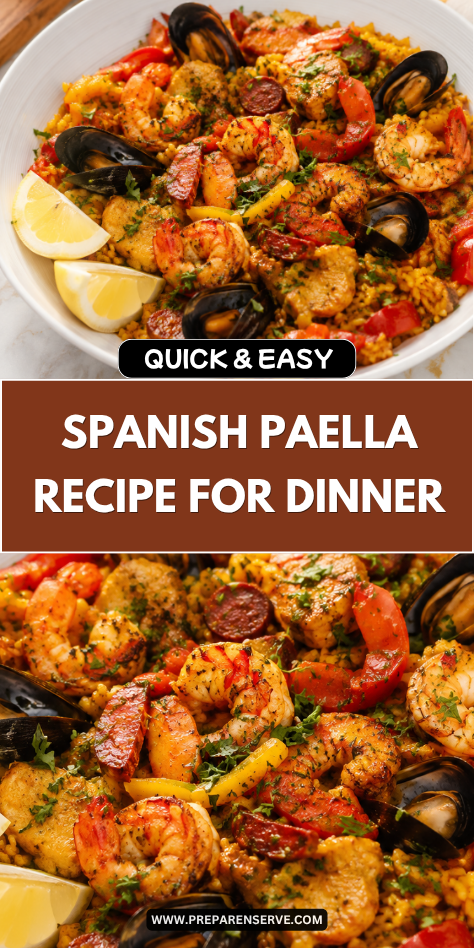
Spanish Paella Recipe is full of cozy flavor, bright color, and family-style charm. The rice soaks up saffron, paprika, broth, vegetables, and juices from the chicken, sausage, and shrimp, which makes each spoonful taste rich and balanced.
It is also a great meal for sharing because the whole dish cooks in one wide pan and goes straight to the table. You can serve it for Sunday dinner, a family gathering, or any night when you want something a little different but still comforting.
This recipe is flexible enough for home cooks, even if it is your first time making paella. The key is to prep your ingredients, use the right amount of liquid, and let the rice cook without too much stirring.
Serves: 6 people
This recipe serves 6 people as a hearty main dish. If you are serving it with salad, bread, roasted vegetables, or a few small appetizers, it can stretch a little further for a family meal or casual gathering.
Ingredients You’ll Need
For the Paella Base
- 3 tablespoons olive oil
- 1 pound boneless, skinless chicken thighs, cut into 1-inch pieces
- 1/2 teaspoon kosher salt, for seasoning the chicken
- 1/4 teaspoon black pepper, for seasoning the chicken
- 8 ounces Spanish chorizo or smoked sausage, sliced into thin rounds
- 1 small yellow onion, finely chopped
- 1 red bell pepper, diced
- 3 garlic cloves, minced
- 1 1/2 cups short-grain rice, such as Bomba or Arborio
- 1 teaspoon smoked paprika
- 1/4 teaspoon saffron threads
- 1/2 teaspoon kosher salt, plus more to taste
- 1/4 teaspoon black pepper
- 1 can diced tomatoes, 14.5 ounces, drained
- 3 1/2 cups low-sodium chicken broth, warmed
- 1/2 cup frozen peas
- 1/2 pound large shrimp, peeled and deveined
- 1/4 cup chopped fresh parsley
- 1 lemon, cut into wedges, for serving
Optional Add-Ins
- 1/2 pound mussels, scrubbed and debearded
- 1/2 cup roasted red peppers, sliced
- 1/4 teaspoon red pepper flakes, for mild heat
Pro Tips
Prep everything before you start.
Paella moves smoothly when the chicken is cut, vegetables are chopped, broth is warm, and spices are measured. This keeps you from rushing once the pan is hot.
Use a wide pan if you can.
A wide, shallow pan helps the rice cook evenly and gives more surface area for the flavorful bottom layer. A large skillet can work well if you do not have a paella pan.
Warm the broth first.
Warm broth helps the rice cook more evenly once it hits the pan. It also helps the saffron release its color and flavor into the dish.
Do not stir too much after adding broth.
Once the broth goes in, paella should simmer gently without constant stirring. This helps the rice keep its texture and allows the bottom to develop a lightly crisp layer.
Check the heat as it cooks.
The rice should simmer, not boil hard. If the edges dry out too fast or the bottom smells like it is burning, lower the heat and rotate the pan if needed.
Let the paella rest before serving.
A short rest helps the rice finish absorbing liquid and makes the texture more even. Cover the pan loosely with foil or a clean towel for 5 to 10 minutes before serving.
Tools You’ll Need
- Large paella pan or wide 12-inch skillet
- Cutting board
- Sharp knife
- Measuring cups
- Measuring spoons
- Small saucepan for warming broth
- Wooden spoon or silicone spatula
- Tongs
- Ladle or heat-safe measuring cup
- Aluminum foil or clean kitchen towel
- Serving spoon
- Citrus juicer or fork, optional
Substitutions and Variations
Use a Different Protein
Use chicken drumettes, boneless chicken breast, firm white fish, or extra shrimp instead of chicken thighs. Keep the pieces similar in size so they cook evenly with the rice.
Make It Seafood-Forward
Skip the chicken and sausage and use shrimp, mussels, clams, or calamari instead. Add delicate seafood near the end so it stays tender and does not overcook.
Make It Vegetarian
Leave out the meat and seafood, then add artichoke hearts, green beans, chickpeas, mushrooms, or extra bell peppers. Use vegetable broth instead of chicken broth to keep the flavor balanced.
Use a Different Rice
Use Arborio rice if you cannot find Bomba rice. Avoid long-grain rice because it will not absorb the broth in the same way and can change the texture of the dish.
Adjust the Flavor
Add roasted red peppers, red pepper flakes, or a little extra smoked paprika for a deeper flavor. Keep the saffron and broth as the base so the paella still tastes classic and recognizable.
Make Ahead Tips
Spanish Paella Recipe is best served fresh from the pan, but you can prep several parts ahead to make cooking feel easier. Chop the onion, bell pepper, garlic, parsley, and lemon wedges up to 1 day in advance, then store them in separate covered containers in the refrigerator.
You can also cut the chicken, slice the chorizo or smoked sausage, and peel and devein the shrimp ahead of time. Keep the chicken and shrimp chilled in separate containers until you are ready to cook.
For the best rice texture, do not cook the full paella ahead if you can avoid it. Paella rice is meant to be tender but not mushy, and it tastes best after it rests briefly in the pan. If you need to save time, have the broth warmed, saffron measured, vegetables chopped, and proteins ready before you start cooking.
Instructions
Step 1: Warm the Broth
Pour 3 1/2 cups low-sodium chicken broth into a small saucepan and warm it over low heat. Add 1/4 teaspoon saffron threads to the broth and let them steep while you prepare the pan.
The broth does not need to boil. It should be warm enough to help the rice cook evenly and bring out the color and flavor of the saffron.
Step 2: Season and Brown the Chicken
Pat 1 pound boneless, skinless chicken thighs dry, then season them with 1/2 teaspoon kosher salt and 1/4 teaspoon black pepper. Heat 3 tablespoons olive oil in a large paella pan or wide skillet over medium-high heat.
Add the chicken pieces in an even layer and cook for 4 to 5 minutes, turning as needed. The chicken should be lightly browned on the outside, but it does not need to be fully cooked yet.
Step 3: Brown the Chorizo
Add 8 ounces sliced Spanish chorizo or smoked sausage to the pan with the chicken. Cook for 2 to 3 minutes, stirring often, until the sausage releases some flavor into the oil.
The chorizo should look lightly browned around the edges. This step gives the rice a deeper, savory taste.
Step 4: Cook the Vegetables
Add 1 finely chopped small yellow onion and 1 diced red bell pepper to the pan. Cook for 4 to 5 minutes, stirring often, until the onion softens and the bell pepper starts to become tender.
Stir in 3 minced garlic cloves and cook for about 30 seconds. The garlic should smell fragrant, but it should not brown too much.
Step 5: Toast the Rice and Spices
Add 1 1/2 cups short-grain rice, 1 teaspoon smoked paprika, 1/2 teaspoon kosher salt, 1/4 teaspoon black pepper, and red pepper flakes if using. Stir for 1 to 2 minutes so the rice gets coated in the oil, spices, and pan juices.
This short toasting step helps the rice absorb flavor. Try not to rush it, because it builds the base of the paella.
Step 6: Add Tomatoes and Broth
Stir in 1 can drained diced tomatoes until they are evenly mixed through the rice. Pour the warm saffron broth into the pan and gently spread the rice into an even layer.
Once the broth is added, avoid stirring too much. Bring the pan to a gentle simmer, then lower the heat to medium or medium-low.
Step 7: Simmer the Rice
Let the rice simmer uncovered for 15 to 18 minutes. Rotate the pan once or twice if your burner heats unevenly, but do not stir the rice.
The liquid should slowly reduce as the rice becomes tender. If the pan looks dry before the rice is cooked, add a small splash of warm broth or water around the edges.
Step 8: Add the Peas and Shrimp
Sprinkle 1/2 cup frozen peas over the rice. Nestle 1/2 pound peeled and deveined shrimp into the top of the paella, pressing them lightly into the rice.
If using mussels, add them now with the hinge side down. Cover the pan loosely with foil and cook for 5 to 7 minutes, until the shrimp turn pink and the mussels open.
Step 9: Rest the Paella
Remove the pan from the heat and keep it loosely covered for 5 to 10 minutes. This rest helps the rice finish absorbing the last bit of steam and liquid.
Discard any mussels that do not open. Sprinkle the paella with 1/4 cup chopped fresh parsley before serving.
Step 10: Serve with Lemon
Serve the paella warm straight from the pan. Add lemon wedges on the side so everyone can squeeze a little juice over their serving.
The lemon brightens the rice, seafood, chicken, and sausage. It also makes the whole dish taste fresh after the rich, savory cooking time.
Serving Suggestions
Serve Spanish Paella Recipe straight from the pan for a family-style meal that feels warm and inviting. A large serving spoon and a few lemon wedges are all you need to make the table feel special.
A crisp green salad pairs nicely with the rich rice and savory proteins. Use a simple dressing with lemon juice or vinegar so the side stays fresh and light.
Crusty bread is a helpful side if your family likes something extra with dinner. It can scoop up any flavorful bits of rice, tomato, and broth left on the plate.
Roasted vegetables, such as asparagus, zucchini, or green beans, work well beside paella. Keep them simply seasoned so they do not compete with the saffron and smoked paprika.
For a casual gathering, serve paella with olives, sliced cucumbers, marinated peppers, or a small plate of cheese. These easy sides make the meal feel relaxed without adding much cooking.
A simple fruit salad is a nice finish after a warm rice dish. Oranges, grapes, berries, or melon bring a fresh ending that works well for both kids and adults.
Leftovers and Storage
Store leftover Spanish Paella Recipe in an airtight container in the refrigerator for up to 3 days. Let the paella cool before storing, but do not leave seafood or chicken sitting out for too long.
To reheat, place leftovers in a skillet with a small splash of broth or water. Cover and warm over low heat until the rice is hot and the shrimp and chicken are heated through. Stir gently only as needed so the rice does not break down too much.
You can also microwave individual portions in short bursts. Add a spoonful of water first, cover loosely, and stir gently between each burst.
Freezing paella is possible, but the rice and seafood may soften after thawing. If you freeze it, use a freezer-safe container and store it for up to 2 months. Thaw overnight in the refrigerator and reheat gently with a splash of broth.
Nutrition and Benefits
- Balanced main dish: Paella brings rice, protein, vegetables, and broth together in one pan. This makes it a filling meal that does not need many extra sides.
- Protein from chicken and seafood: Chicken, shrimp, and optional mussels add satisfying protein. The mix makes the dish hearty while still feeling lighter than many heavy casseroles.
- Vegetables for color and flavor: Onion, bell pepper, tomatoes, peas, parsley, and lemon add brightness and freshness. They help balance the savory rice and sausage.
- Big flavor from spices: Saffron and smoked paprika add depth without needing a heavy sauce. A small amount of each gives the rice its warm color and cozy taste.
- Great for family-style meals: Paella is easy to bring to the table in one pan. Everyone can scoop the amount they want, which makes it helpful for family dinners and gatherings.
Recipe FAQ
Can I make paella without a paella pan?
Yes, you can use a wide skillet if you do not have a paella pan. Choose the widest pan you have so the rice cooks in a shallow layer. A crowded deep pan can make the rice steam too much and turn softer.
What rice is best for paella?
Bomba rice is a traditional choice because it absorbs liquid well while keeping a good texture. Arborio rice can work if Bomba is not available. Avoid long-grain rice because it cooks differently and will not give the same paella texture.
Do I have to use saffron?
Saffron gives paella its classic color and gentle floral flavor, but you can still make a tasty rice dish without it. If you skip saffron, lean on smoked paprika, broth, garlic, and tomatoes for flavor. The dish will not taste quite the same, but it will still be comforting.
Why should I avoid stirring the rice?
After the broth is added, too much stirring can make the rice creamy instead of giving it a classic paella texture. Letting the rice sit helps it absorb liquid evenly and may create a lightly crisp bottom. You can rotate the pan instead of stirring if your burner heats unevenly.
Can I use only seafood?
Yes, you can make a seafood version with shrimp, mussels, clams, calamari, or firm white fish. Add seafood near the end so it stays tender. Use seafood stock or a mix of seafood stock and chicken broth for more flavor.
How do I know when the paella is done?
The rice should be tender, most of the liquid should be absorbed, and the shrimp should be pink and opaque. If using mussels, they should open during cooking. Let the pan rest for 5 to 10 minutes before serving so the texture settles.
Can I make this recipe less salty?
Yes, use low-sodium broth and choose a mild smoked sausage instead of a very salty chorizo. Taste before adding extra salt near the end. Lemon juice can also brighten the dish without needing more salt.
A Colorful Pan Made for Sharing
Spanish Paella Recipe brings comfort, color, and generous flavor to the family table. The rice turns tender, the broth adds warmth, and the mix of chicken, sausage, shrimp, and vegetables makes every serving feel special.
It is a one-pan meal that feels inviting without being too complicated. This recipe is worth making again because it turns simple ingredients into something memorable.
With a little prep and patient simmering, the results are dependable and satisfying. It is a cozy dish for weekends, gatherings, or any meal that deserves a warm shared pan.