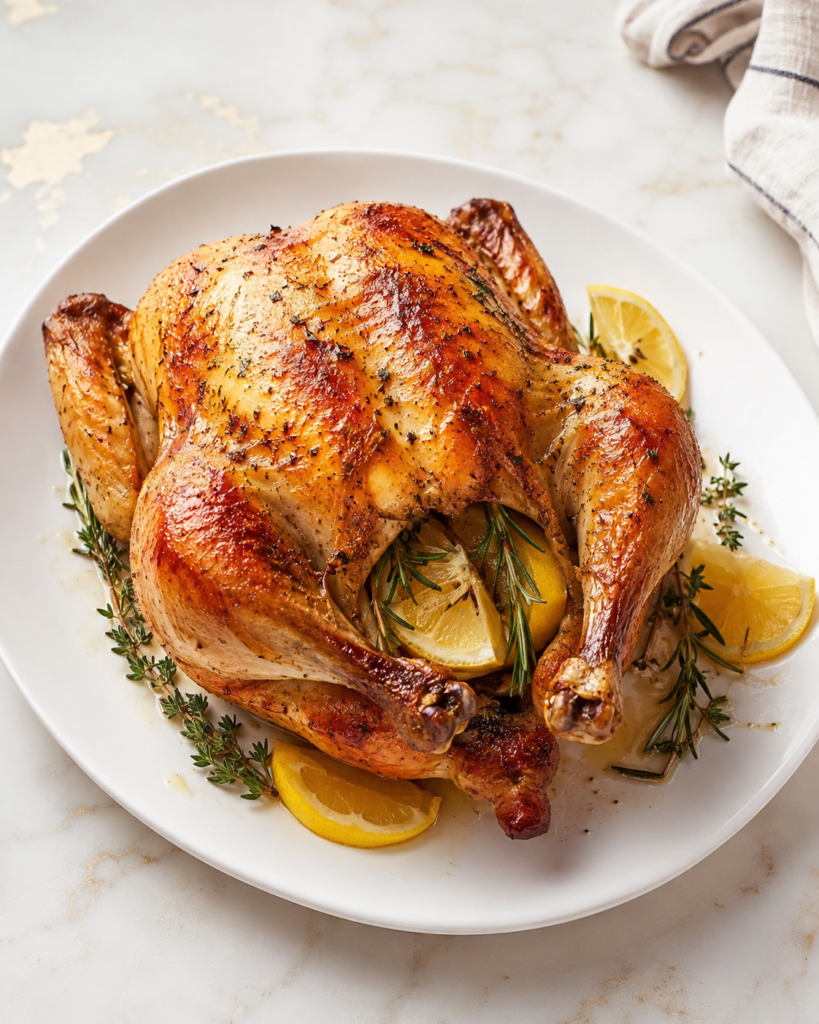
I make Whole Roasted Chicken with Lemon and Herbs when I want a dinner that feels classic, comforting, and steady. There is something simple and homey about pulling a golden chicken from the oven and serving it with pan juices, vegetables, or warm bread on the side.
I like this recipe because it does not need fancy ingredients to taste good. The lemon, garlic, butter, and fresh herbs season the chicken from the inside out, while the oven does the work of turning the skin crisp and the meat tender.

Why You’ll Love This Recipe
Whole Roasted Chicken with Lemon and Herbs is a dependable family dinner that feels special without being hard. The outside gets golden and crisp, while the inside stays juicy with the help of butter, lemon, garlic, and herbs.
This recipe is also useful because it can stretch into more than one meal. You can serve the roast chicken for dinner, then use the leftovers in soup, sandwiches, salads, tacos, or rice bowls later in the week.
It is a great recipe for beginners because the steps are simple and the ingredients are easy to find. Once you learn the basic method, you can change the herbs, add vegetables, or adjust the seasonings to fit what your family likes.
Serves: 4 people
This recipe serves 4 people with a whole 4 to 5 pound chicken. If you are feeding bigger appetites or want leftovers, choose a slightly larger chicken or serve it with potatoes, carrots, salad, rice, or bread.
Ingredients You’ll Need
For the Chicken
- 1 whole chicken, 4 to 5 pounds
- 2 tablespoons olive oil
- 3 tablespoons unsalted butter, softened
- 1 1/2 teaspoons kosher salt
- 1/2 teaspoon black pepper
- 1 teaspoon garlic powder
- 1 teaspoon onion powder
- 1 teaspoon paprika
- 1 lemon, zested and halved
- 5 garlic cloves, smashed
- 3 sprigs fresh rosemary
- 5 sprigs fresh thyme
- 2 sprigs fresh parsley, optional
For the Roasting Pan
- 1 large yellow onion, cut into wedges
- 3 carrots, cut into large pieces
- 2 celery stalks, cut into large pieces
- 1 cup low-sodium chicken broth
- 1 tablespoon fresh lemon juice
- Extra fresh herbs, for serving, optional
Pro Tips
Pat the chicken very dry.
Dry skin roasts better and gets much crispier in the oven. Use paper towels to dry the outside and inside of the chicken before adding the butter and seasonings.
Use softened butter.
Soft butter spreads more easily over the chicken and can be tucked under the skin. This helps flavor the meat and gives the skin a golden, rich finish.
Season inside the cavity too.
Do not only season the outside of the chicken. Adding lemon, garlic, and herbs inside the cavity helps the chicken smell wonderful and gives the meat a gentle flavor as it roasts.
Let the chicken rest before carving.
Resting gives the juices time to settle back into the meat. If you carve too soon, the juices can run out onto the cutting board instead of staying in the chicken.
Use a meat thermometer.
A thermometer is the easiest way to know when the chicken is done. The thickest part of the thigh should reach 165°F without touching the bone.
Save the pan juices.
The broth, lemon, herbs, and roasted vegetables create flavorful juices in the bottom of the pan. Spoon them over the carved chicken or use them as a simple base for gravy.
Tools You’ll Need
- Roasting pan or large oven-safe skillet
- Cutting board
- Sharp knife
- Kitchen twine, optional
- Measuring spoons
- Measuring cup
- Small bowl
- Paper towels
- Microplane or zester
- Citrus juicer or fork
- Meat thermometer
- Tongs
- Basting spoon
- Aluminum foil
- Carving knife
- Serving platter
Substitutions and Variations
Use Different Herbs
Use sage, oregano, marjoram, or dill instead of rosemary and thyme. Fresh herbs give the best flavor, but dried herbs can work in smaller amounts if that is what you have.
Make It Dairy-Free
Use olive oil instead of softened butter. The skin will still turn golden, and the lemon, garlic, and herbs will keep the chicken flavorful.
Add More Vegetables
Place potatoes, parsnips, sweet potatoes, or fennel around the chicken before roasting. Cut them into larger pieces so they cook evenly and do not burn before the chicken is done.
Change the Citrus
Use orange instead of lemon for a softer, sweeter flavor. You can also use a mix of lemon and orange if you want the chicken to taste bright but not too sharp.
Make It Heartier
Serve the roasted chicken with mashed potatoes, rice pilaf, roasted vegetables, or warm dinner rolls. These sides help turn the chicken into a full, comforting family meal.
Make Ahead Tips
Whole Roasted Chicken with Lemon and Herbs is best roasted the day you plan to serve it, but you can do a lot of the prep ahead. The chicken can be seasoned up to 24 hours in advance, then stored uncovered or loosely covered in the refrigerator.
This resting time helps the salt flavor the meat and also dries the skin, which can make it roast up crispier. You can also chop the onion, carrots, celery, garlic, and herbs a day ahead and store them in covered containers.
If you want to save time before dinner, mix the softened butter, lemon zest, garlic powder, onion powder, paprika, salt, and pepper ahead of time. Keep it covered in the refrigerator, then let it soften before rubbing it over the chicken. For the best results, bring the chicken out of the refrigerator for about 30 minutes before roasting so it cooks more evenly.
Instructions
Step 1: Prepare the Chicken
Remove the whole chicken from its packaging and take out any giblets from the cavity. Pat the chicken very dry inside and outside with paper towels.
Set the chicken on a cutting board or in the roasting pan while you prepare the seasoning. Dry skin helps the chicken roast instead of steam.
Step 2: Preheat the Oven
Preheat the oven to 425°F. Position a rack in the lower third of the oven so the chicken has enough space to roast evenly.
A hot start helps the skin begin browning right away. You can lower the temperature later if the skin gets dark too quickly.
Step 3: Make the Herb Butter
In a small bowl, mix 3 tablespoons softened unsalted butter, 2 tablespoons olive oil, 1 1/2 teaspoons kosher salt, 1/2 teaspoon black pepper, 1 teaspoon garlic powder, 1 teaspoon onion powder, 1 teaspoon paprika, and the zest from 1 lemon.
Stir until the mixture looks smooth and spreadable. The butter should be soft enough to rub over the chicken without tearing the skin.
Step 4: Season the Chicken
Rub the herb butter mixture all over the outside of the chicken. If you can, gently loosen the skin over the breast and rub a little butter underneath.
Seasoning under the skin helps flavor the meat, not just the outside. Be gentle so the skin stays mostly intact.
Step 5: Stuff the Cavity
Place the halved lemon, 5 smashed garlic cloves, 3 sprigs fresh rosemary, 5 sprigs fresh thyme, and 2 sprigs fresh parsley if using inside the chicken cavity. Do not pack the cavity too tightly.
The lemon, garlic, and herbs add gentle flavor as the chicken roasts. They also make the kitchen smell warm and inviting.
Step 6: Prepare the Roasting Pan
Place 1 large yellow onion cut into wedges, 3 carrots cut into large pieces, and 2 celery stalks cut into large pieces in the bottom of a roasting pan or large oven-safe skillet. Pour in 1 cup low-sodium chicken broth and 1 tablespoon fresh lemon juice.
Set the seasoned chicken on top of the vegetables, breast side up. The vegetables lift the chicken slightly and flavor the pan juices.
Step 7: Tie the Legs
Tie the chicken legs together with kitchen twine if you have it. Tuck the wing tips under the chicken to keep them from browning too fast.
This helps the chicken cook more evenly and keeps the shape neat. If you do not have twine, the chicken will still roast well.
Step 8: Roast the Chicken
Roast the chicken at 425°F for 20 minutes. Then reduce the oven temperature to 375°F and continue roasting for 50 to 70 minutes, depending on the size of the chicken.
Baste once or twice with the pan juices if desired. If the skin browns too quickly, loosely tent the chicken with foil.
Step 9: Check for Doneness
Check the chicken with a meat thermometer inserted into the thickest part of the thigh, without touching the bone. The chicken is done when it reaches 165°F.
The juices should run clear when the thigh is pierced. If the chicken needs more time, return it to the oven and check again in 10 minutes.
Step 10: Rest Before Carving
Transfer the roasted chicken to a cutting board and loosely cover it with foil. Let it rest for 15 to 20 minutes before carving.
Resting keeps the meat juicy and easier to slice. Use this time to spoon the pan juices into a small bowl or prepare your side dishes.
Step 11: Carve and Serve
Carve the chicken into breasts, thighs, drumsticks, and wings. Arrange the pieces on a serving platter with the roasted vegetables.
Spoon warm pan juices over the top and sprinkle with extra fresh herbs if desired. Serve while the chicken is warm and the skin is still crisp.
Serving Suggestions
Whole Roasted Chicken with Lemon and Herbs is wonderful with mashed potatoes because the pan juices taste so good spooned over the top. The creamy potatoes make the meal feel classic and comforting.
Roasted vegetables are also a natural match. Carrots, potatoes, parsnips, Brussels sprouts, or green beans all work well with the lemon and herb flavor.
For a lighter meal, serve the chicken with a crisp green salad and warm bread. The salad adds freshness, while the bread helps scoop up the juices.
Rice pilaf, buttered noodles, or simple couscous can make the meal more filling without much extra work. These sides are especially helpful if you want to stretch the chicken for a family dinner.
You can also serve the chicken with steamed broccoli, peas, or sautéed spinach. These simple green sides keep the plate balanced and easy.
For a cozy Sunday-style meal, add gravy, dinner rolls, and a fruit salad. It feels special but still uses simple ingredients everyone knows.
Leftovers and Storage
Store leftover Whole Roasted Chicken with Lemon and Herbs in an airtight container in the refrigerator for up to 4 days. Remove the meat from the bones before storing if you want easier lunches and quick dinners.
Keep the pan juices in a separate small container if you have extra. They can be spooned over reheated chicken to keep it moist and flavorful.
To reheat, place chicken in a covered baking dish with a spoonful of broth or pan juices. Warm it in a 325°F oven until heated through. You can also microwave smaller portions in short bursts, but cover them so the meat does not dry out.
Leftover chicken can be frozen for up to 3 months. Freeze the meat in meal-size portions, with a little broth or pan juice if possible. Thaw overnight in the refrigerator before reheating. Use leftovers in soup, sandwiches, casseroles, salads, quesadillas, or rice bowls.
Nutrition and Benefits
- Good source of protein: Roasted chicken provides filling protein for a balanced family meal. Both white and dark meat can be used depending on what your family enjoys.
- Simple whole-food ingredients: Lemon, garlic, herbs, vegetables, and broth add flavor without needing a heavy sauce. The recipe feels classic and homemade with familiar ingredients.
- Flexible for leftovers: One whole chicken can turn into several easy meals. Leftover meat works well in soups, wraps, salads, pasta, and grain bowls.
- Balanced with easy sides: This chicken pairs well with vegetables, potatoes, rice, or salad. That makes it simple to build a complete dinner around it.
- Comforting and dependable: Roasting a whole chicken is a useful kitchen skill. Once you learn the method, it becomes an easy meal to repeat with different herbs and sides.
Recipe FAQ
How long does it take to roast a whole chicken?
A 4 to 5 pound chicken usually takes about 70 to 90 minutes total. Starting at 425°F helps brown the skin, then lowering to 375°F helps the meat cook through evenly. Always check with a meat thermometer to be sure.
What temperature should roasted chicken reach?
The thickest part of the thigh should reach 165°F without the thermometer touching bone. The breast should also be cooked through and juicy. Letting the chicken rest after roasting helps the temperature settle and the juices redistribute.
Do I have to use butter?
No, you can use olive oil instead of butter. Butter gives the skin a rich flavor and golden color, but olive oil still works well. This is a good option if you need the recipe to be dairy-free.
Why is my chicken skin not crispy?
The chicken may not have been dry enough before roasting, or the pan may have had too much steam. Pat the chicken very dry and avoid covering it while it roasts. Starting at a higher oven temperature also helps the skin crisp.
Can I roast vegetables with the chicken?
Yes, vegetables like carrots, onions, celery, potatoes, and parsnips roast well with the chicken. Cut them into larger pieces so they do not burn before the chicken is done. They also add flavor to the pan juices.
Should I cover the chicken while roasting?
You do not need to cover the chicken for most of the roasting time. Leaving it uncovered helps the skin brown and crisp. If the skin starts getting too dark, loosely tent it with foil.
Can I use dried herbs instead of fresh?
Yes, dried herbs can work if fresh herbs are not available. Use about 1 teaspoon dried rosemary or thyme in the butter mixture instead of whole fresh sprigs. Fresh herbs give a brighter flavor, but dried herbs are still useful and convenient.
A Golden Roast Chicken for the Family Table
Whole Roasted Chicken with Lemon and Herbs is a warm, classic dinner that always feels welcome. The skin turns golden, the meat stays tender, and the lemon, garlic, and herbs bring simple flavor to every bite. It is dependable enough for Sunday dinner and easy enough for any calm night at home.
This recipe is worth making again because it gives you a full meal with helpful leftovers. The pan juices, roasted vegetables, and tender chicken all work together in a comforting way. It is the kind of homemade dinner that feels steady, useful, and satisfying.