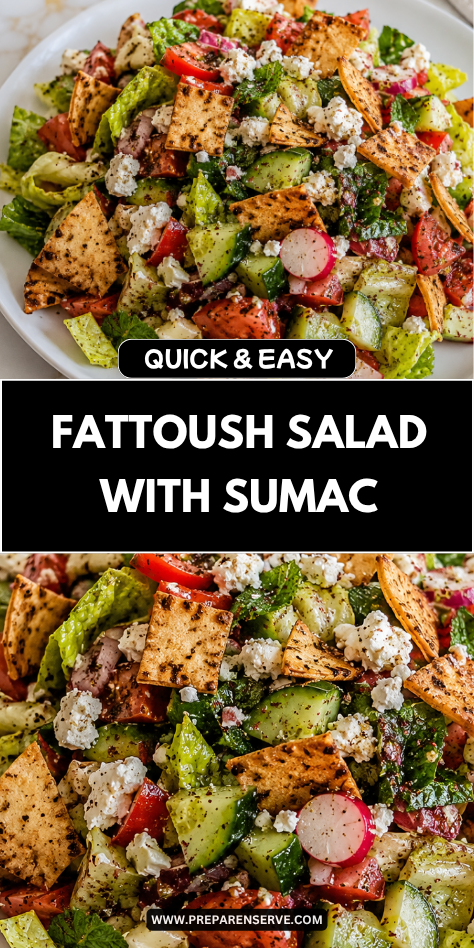
I make Fattoush with Sumac when I want a salad that feels fresh, crisp, and full of bright flavor. It is the kind of dish that makes simple vegetables taste lively with toasted pita, herbs, lemon, olive oil, and that tangy sprinkle of sumac.
I love this salad because it works with everyday ingredients but still feels special on the table. The cucumbers and tomatoes are juicy, the lettuce is crunchy, the herbs make everything taste fresh, and the pita pieces give each bite a little golden crunch.
Why You’ll Love This Recipe
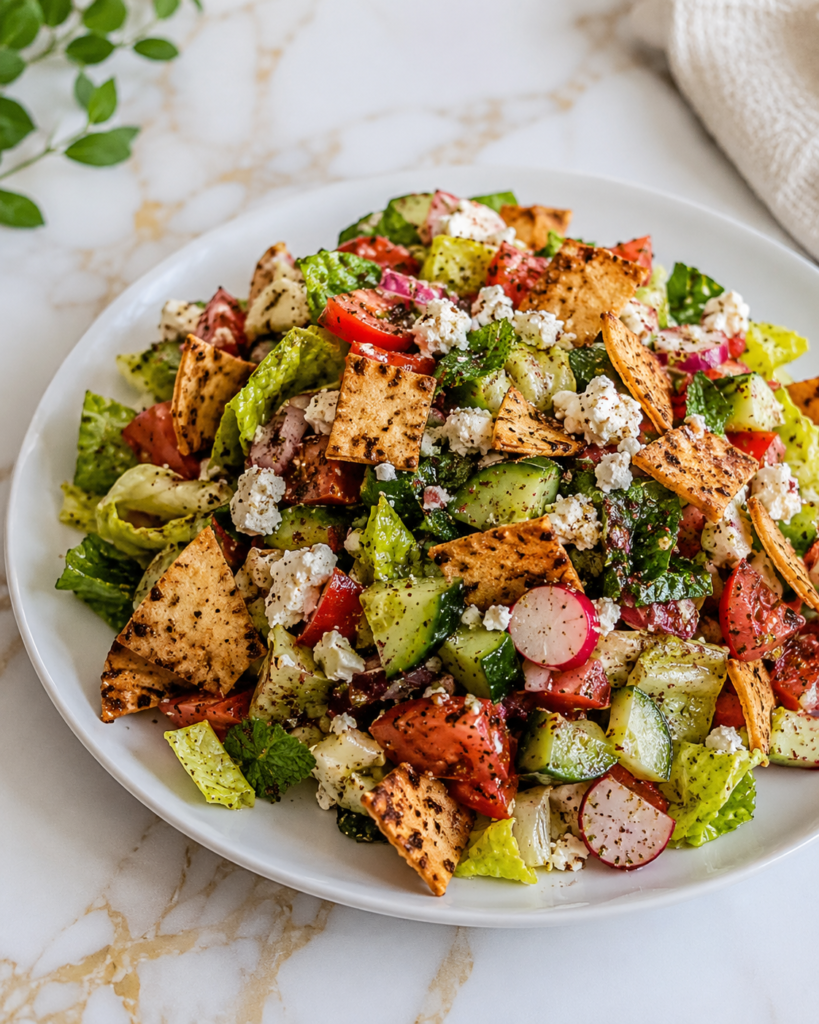
Fattoush with Sumac is fresh, colorful, and easy to make for a family meal. It has crisp vegetables, toasted pita, and a lemony dressing that brings everything together without feeling heavy.
The sumac gives this salad its classic tangy flavor. It tastes a little lemony and earthy, which makes the tomatoes, cucumbers, radishes, and herbs feel extra bright.
This recipe is also very flexible. You can serve it with grilled chicken, rice, hummus, kebabs, fish, or lentils, or enjoy it as a light lunch with extra pita and chickpeas.
Serves: 4 people
This recipe serves 4 people as a generous side salad. It is enough to pair with a main dish like grilled chicken, roasted vegetables, rice, or warm flatbread.
If you are serving it as a main meal, you may want to add chickpeas, grilled chicken, feta, or extra pita to make it more filling. For a larger family dinner, the recipe can be doubled easily, but it is best to add the pita right before serving so it stays crisp.
Ingredients You’ll Need
For the Salad
- 2 large pita breads, cut or torn into bite-size pieces
- 1 tablespoon olive oil, for toasting pita
- 1/4 teaspoon kosher salt, for pita
- 1 large head romaine lettuce, chopped
- 2 cups cherry tomatoes, halved
- 1 large English cucumber, diced
- 1 cup radishes, thinly sliced
- 1/2 red bell pepper, diced
- 1/2 green bell pepper, diced
- 3 green onions, thinly sliced
- 1/2 cup fresh parsley, chopped
- 1/4 cup fresh mint leaves, chopped
- 1/4 cup fresh cilantro, chopped, optional
For the Sumac Dressing
- 1/4 cup extra virgin olive oil
- 3 tablespoons fresh lemon juice
- 1 tablespoon red wine vinegar
- 1 teaspoon ground sumac, plus more for serving
- 1 small garlic clove, finely grated or minced
- 1 teaspoon honey or maple syrup, optional
- 1/2 teaspoon kosher salt
- 1/4 teaspoon black pepper
Optional Add-Ins for Serving
- 1 cup canned chickpeas, drained and rinsed
- 1/2 cup crumbled feta cheese
- 1 avocado, diced
- 1/4 cup pomegranate seeds
- Extra lemon wedges
Pro Tips
Toast the pita until it is deeply golden and crisp. Soft pita will become soggy quickly, but well-toasted pita holds its crunch better after being tossed with the vegetables and dressing.
Dry the lettuce well after washing it. Extra water on the leaves can thin the dressing and make the salad taste flat.
Use fresh lemon juice for the dressing. Bottled lemon juice can taste dull, while fresh lemon makes the sumac and herbs taste brighter.
Add the toasted pita right before serving. This keeps the pieces crunchy and gives the salad that classic fattoush texture.
Taste the dressing before tossing the salad. Sumac brands can vary in tanginess, so you may want a little more lemon juice, salt, or honey to balance it.
Chop the vegetables into bite-size pieces. This makes the salad easier for kids to eat and helps every forkful get a little lettuce, tomato, cucumber, herb, and pita.
Tools You’ll Need
- Cutting board
- Sharp knife
- Large salad bowl
- Small mixing bowl or jar with lid
- Measuring cups
- Measuring spoons
- Whisk or fork
- Baking sheet
- Parchment paper, optional
- Tongs or salad servers
- Citrus juicer, optional
- Salad spinner, optional
- Can opener, if using chickpeas
Substitutions and Variations
Use Different Greens
Romaine gives fattoush a crisp, sturdy base, but you can also use little gem lettuce, butter lettuce, green leaf lettuce, or chopped kale. If using kale, massage it lightly with a little dressing first so it becomes more tender.
Make It Gluten-Free
Use gluten-free pita, gluten-free flatbread, or toasted gluten-free crackers in place of regular pita. Add them right before serving so they stay crisp and still give the salad its crunchy bite.
Add More Protein
Add chickpeas, grilled chicken, shrimp, salmon, lentils, or hard-boiled eggs to make the salad more filling. These additions keep the fresh flavor of the salad while turning it into a simple lunch or dinner.
Change the Vegetables
Use diced carrots, celery, cabbage, sweet peppers, avocado, or pomegranate seeds based on what you have. Keep the tomatoes, cucumber, herbs, pita, and sumac dressing if you want the salad to stay close to classic fattoush.
Make It Brighter or Milder
Add extra lemon juice and sumac for a sharper, tangier salad. For a milder family-friendly version, use a little less sumac and add 1 teaspoon honey or maple syrup to soften the dressing.
Make Ahead Tips
Fattoush with Sumac is best tossed right before serving, but you can prepare most of the pieces ahead of time. Wash and dry the lettuce, chop the vegetables, and store them in separate airtight containers in the refrigerator for up to 1 day.
The sumac dressing can be made up to 3 days ahead and kept in a jar in the refrigerator. Shake it well before using because the olive oil, lemon juice, vinegar, and seasonings may separate as they sit.
You can also toast the pita ahead and store it at room temperature in an airtight container. Make sure the pita is completely cool before storing so it stays crisp instead of steaming and softening.
For the freshest salad, keep the dressing and pita separate until the last minute. This helps the vegetables stay crunchy and keeps the toasted pita from getting soggy too soon.
Instructions
Step 1: Toast the Pita
Preheat the oven to 375°F. Place 2 large pita breads, cut or torn into bite-size pieces, on a baking sheet.
Drizzle the pita with 1 tablespoon olive oil and sprinkle with 1/4 teaspoon kosher salt. Toss well, then bake for 8 to 10 minutes, turning once, until the pieces are golden and crisp.
Step 2: Prepare the Lettuce
Wash 1 large head of romaine lettuce and dry it very well. Chop it into bite-size pieces and place it in a large salad bowl.
Dry lettuce helps the dressing cling better. If the leaves are wet, the salad can taste watery and the pita can soften too quickly.
Step 3: Chop the Vegetables
Add 2 cups halved cherry tomatoes, 1 diced large English cucumber, 1 cup thinly sliced radishes, 1/2 diced red bell pepper, and 1/2 diced green bell pepper to the bowl with the lettuce.
Slice 3 green onions and add them to the salad. Keep the vegetables in small, even pieces so every bite has a good mix of flavor and crunch.
Step 4: Add the Fresh Herbs
Add 1/2 cup chopped fresh parsley, 1/4 cup chopped fresh mint leaves, and 1/4 cup chopped fresh cilantro if using. Toss the salad gently to spread the herbs through the vegetables.
The herbs are a big part of what makes fattoush taste fresh. Use tender leaves and avoid large tough stems for the best texture.
Step 5: Make the Sumac Dressing
In a small bowl or jar, combine 1/4 cup extra virgin olive oil, 3 tablespoons fresh lemon juice, 1 tablespoon red wine vinegar, 1 teaspoon ground sumac, 1 finely grated or minced small garlic clove, 1 teaspoon honey or maple syrup if using, 1/2 teaspoon kosher salt, and 1/4 teaspoon black pepper.
Whisk or shake until the dressing looks smooth and well mixed. Taste and add a little more lemon juice or salt if needed.
Step 6: Dress the Salad
Pour about two-thirds of the dressing over the chopped vegetables and herbs. Toss gently with tongs or salad servers until everything is lightly coated.
Add more dressing only if needed. Fattoush should taste bright and flavorful, but it should not feel heavy or soaked.
Step 7: Add Optional Ingredients
If using add-ins, gently fold in 1 cup drained and rinsed chickpeas, 1/2 cup crumbled feta cheese, 1 diced avocado, or 1/4 cup pomegranate seeds. Choose one or two add-ins so the salad still feels fresh and balanced.
These extras can make the salad more filling or colorful. Add avocado last so it does not get mashed while tossing.
Step 8: Add the Crispy Pita
Add the toasted pita pieces right before serving. Toss lightly so some pieces get coated in dressing while others stay crisp.
Do not add the pita too early. The contrast between juicy vegetables and crunchy pita is one of the best parts of this salad.
Step 9: Finish with Sumac
Sprinkle a little extra ground sumac over the top of the salad. Add extra lemon wedges on the side if you want a brighter finish.
The final sprinkle of sumac gives the salad its classic tangy flavor. It also makes the bowl look colorful and fresh.
Step 10: Serve Right Away
Serve the fattoush soon after tossing. It should be crisp, juicy, tangy, and full of fresh herbs.
If serving for a family meal, you can keep extra pita on the side. This lets everyone add more crunch to their own plate.
Serving Suggestions
Fattoush with Sumac is wonderful with grilled chicken because the bright salad balances smoky, savory meat. The lemony dressing and crunchy pita make the whole plate feel fresh and satisfying.
It also pairs nicely with rice dishes, kebabs, roasted vegetables, or fish. The vegetables keep the meal light, while the pita adds enough crunch to make the salad feel complete.
Serve it with hummus, baba ganoush, warm pita, and olives for a simple mezze-style meal. This is a nice way to make lunch or dinner feel relaxed and shareable.
For a vegetarian meal, add chickpeas or lentils to the salad. They make it more filling while still keeping the fresh vegetables and sumac dressing as the main flavors.
Fattoush is also a good side for soups and stews. The crisp salad gives a fresh contrast to warm, cozy dishes.
For family meals, serve the salad with the pita on the side for kids who prefer things separate. They can add a few crunchy pieces to their own bowl when they are ready.
Leftovers and Storage
Fattoush is best eaten soon after it is dressed because the pita and lettuce soften as they sit. If you expect leftovers, store the vegetables, dressing, and pita separately.
Undressed chopped vegetables can be stored in an airtight container in the refrigerator for up to 2 days. Keep paper towels in the container if needed to absorb extra moisture.
The dressing will keep in the refrigerator for up to 3 days. Shake or whisk it well before using again because the oil and lemon juice naturally separate.
Toasted pita can be stored at room temperature in an airtight container for 2 to 3 days. If it softens, warm it briefly in the oven to crisp it back up.
Once the salad is fully tossed, leftovers can be refrigerated for 1 day, but the texture will be softer. It still tastes good, but it will not have the same fresh crunch.
Nutrition and Benefits
- Romaine lettuce, cucumber, tomatoes, radishes, and peppers bring freshness, color, and crunch. They make this salad feel light while still giving each bowl plenty of texture.
- Fresh herbs like parsley and mint add bright flavor without needing a heavy dressing. They help the salad taste clean, fresh, and homemade.
- Sumac gives the dressing a tangy flavor that pairs well with lemon juice and olive oil. It adds a special taste while keeping the ingredient list simple.
- Toasted pita makes the salad more satisfying and gives it a crunchy bite. Adding it at the end keeps the texture balanced.
- Optional chickpeas, feta, avocado, or grilled protein can make the salad more filling. This makes it easy to serve as a side dish or a light meal.
Recipe FAQ
What does sumac taste like?
Sumac has a tangy, lemony flavor with a mild earthy note. It is not spicy, which makes it easy to use in family-friendly recipes. In fattoush, it gives the dressing its bright, classic taste.
Can I make fattoush without sumac?
Yes, you can make a fresh salad without sumac, but it will not have the same classic fattoush flavor. Add a little extra lemon juice for brightness. If you can find sumac, it is worth using because it makes the salad taste more authentic and lively.
How do I keep the pita from getting soggy?
Toast the pita until it is very crisp and add it right before serving. You can also serve the pita on the side so each person adds it to their own bowl. This is helpful for leftovers or family meals.
Can I use store-bought pita chips?
Yes, store-bought pita chips can be used as a shortcut. Choose plain or lightly salted pita chips so they do not overpower the salad. Break larger chips into bite-size pieces before tossing.
Can I make this salad ahead for a party?
Yes, but keep the parts separate until serving. Chop the vegetables, make the dressing, and toast the pita ahead of time. Toss everything together right before guests eat so the salad stays crisp.
Is fattoush gluten-free?
Traditional fattoush is not gluten-free because it uses pita bread. You can make it gluten-free by using gluten-free pita, gluten-free flatbread, or gluten-free crackers. Add them right before serving for the best crunch.
What protein goes well with fattoush?
Grilled chicken, shrimp, salmon, chickpeas, lentils, or hard-boiled eggs all work well. These options make the salad more filling without hiding the fresh vegetables and tangy dressing. Choose what fits your meal and family preferences.
A Bright Salad Bowl for Fresh Family Meals
Fattoush with Sumac is a crisp, colorful salad that brings fresh flavor to the table with very simple ingredients. The juicy vegetables, toasted pita, bright herbs, lemony dressing, and tangy sumac make every bite feel light, crunchy, and satisfying.
I love serving this salad with grilled meats, rice dishes, hummus, or warm bread for an easy family meal. It is fresh, flexible, and dependable, making it a recipe worth returning to whenever you want something bright and homemade.