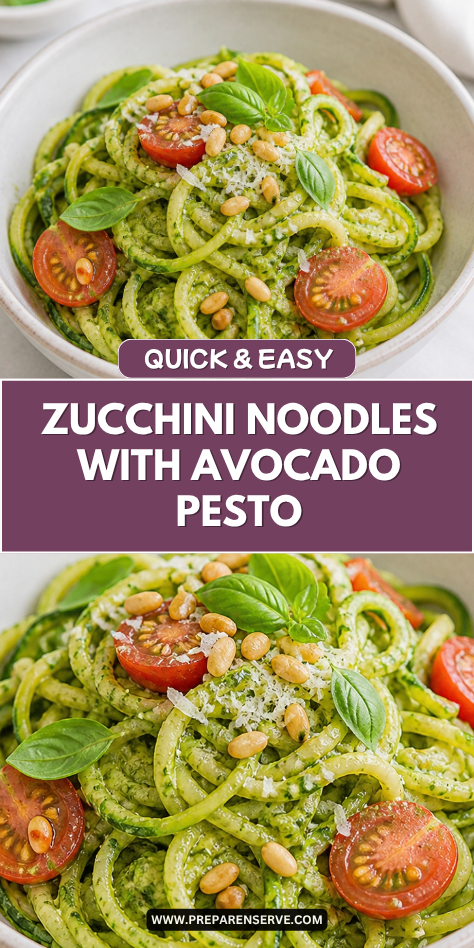
I make Zucchini Noodles with Avocado Pesto when I want something fresh, creamy, and simple that still feels like a real meal. The zucchini noodles are light and tender, and the avocado pesto makes them taste smooth, rich, and comforting without needing heavy cream.
Why You’ll Love This Recipe
Zucchini Noodles with Avocado Pesto are fresh, creamy, and full of gentle flavor. The avocado blends with basil, lemon, garlic, olive oil, and Parmesan to make a smooth pesto that coats the zucchini noodles beautifully.
This recipe is also quick, which makes it helpful on busy days. You do not need to boil pasta water, and the zucchini noodles only need a short cook so they stay tender without turning watery.
It is a family-friendly meal because it can be served as a light main dish or paired with chicken, shrimp, eggs, or bread for something heartier. The flavor is mild enough for kids, but still fresh and satisfying for adults.
Serves: 4 people
This recipe serves about 4 people as a light meal or side dish. Each serving has a generous bowl of zucchini noodles coated in creamy avocado pesto, with enough flavor to feel filling without being heavy.
If you are serving it as a main dish for hungry appetites, add grilled chicken, shrimp, chickpeas, or a soft piece of bread on the side. For smaller appetites, this recipe can stretch a little further when served with soup, salad, or roasted vegetables.
Ingredients You’ll Need
For the Zucchini Noodles
- 4 medium zucchini, spiralized into noodles
- 1 tablespoon olive oil
- 1/4 teaspoon fine salt
- 1/4 teaspoon black pepper
For the Avocado Pesto
- 1 large ripe avocado, peeled and pitted
- 1 cup fresh basil leaves, packed
- 1/3 cup grated Parmesan cheese
- 1/4 cup olive oil
- 2 tablespoons fresh lemon juice
- 1 teaspoon lemon zest
- 1 small garlic clove
- 1/2 teaspoon fine salt
- 1/4 teaspoon black pepper
- 2 tablespoons cold water, plus more if needed to thin
For Serving
- 2 tablespoons grated Parmesan cheese, optional
- 1 tablespoon chopped fresh basil, optional
- 1/4 teaspoon red pepper flakes, optional
- Lemon wedges, optional
Pro Tips
Do not overcook the zucchini noodles. Zucchini releases water quickly when heated, so it only needs 2 to 3 minutes in the pan. The noodles should be just tender, not soft or soggy.
Pat the zucchini noodles dry before cooking. After spiralizing, place them on a clean towel or paper towels and gently blot away extra moisture. This helps the pesto cling better and keeps the final dish from becoming watery.
Use a ripe avocado for the smoothest pesto. A ripe avocado should feel slightly soft when gently pressed. If it is too firm, the pesto may taste flat and will not blend as creamy.
Add the pesto off the heat. Avocado pesto tastes best when it is warmed gently by the zucchini noodles, not cooked hard in the pan. Too much heat can dull the fresh flavor and make the sauce look less bright.
Thin the sauce slowly. Start with the measured cold water, then add more only if needed. The pesto should be creamy and spoonable, not watery.
Serve soon after mixing. Avocado can darken as it sits, even with lemon juice added. The flavor and color are best when the noodles are tossed and served right away.
Tools You’ll Need
- Spiralizer, julienne peeler, or vegetable peeler
- Large skillet
- Food processor or blender
- Cutting board
- Sharp knife
- Measuring cups
- Measuring spoons
- Citrus zester
- Citrus juicer or fork
- Tongs
- Rubber spatula
- Clean kitchen towel or paper towels
- Serving bowls
Substitutions and Variations
Use a Different Noodle Base
Swap the zucchini noodles for yellow squash noodles, cucumber noodles, spaghetti squash, or cooked pasta. The avocado pesto still gives the dish a creamy, fresh flavor while letting you use what you have.
Make It Dairy-Free
Leave out the Parmesan cheese and add 2 tablespoons nutritional yeast instead. This keeps the pesto savory and creamy while making it easier for anyone avoiding dairy.
Add More Protein
Top the noodles with grilled chicken, shrimp, salmon, chickpeas, or a soft-boiled egg. These additions make the meal heartier while keeping the fresh avocado pesto flavor at the center.
Boost the Texture
Add toasted pine nuts, sunflower seeds, chopped walnuts, or roasted chickpeas on top. A little crunch makes the soft zucchini noodles and creamy pesto more satisfying.
Make It Lighter or Brighter
Add extra lemon juice, more basil, or a handful of baby spinach to the pesto. This gives the sauce a fresher taste and keeps the whole bowl feeling light and clean.
Make Ahead Tips
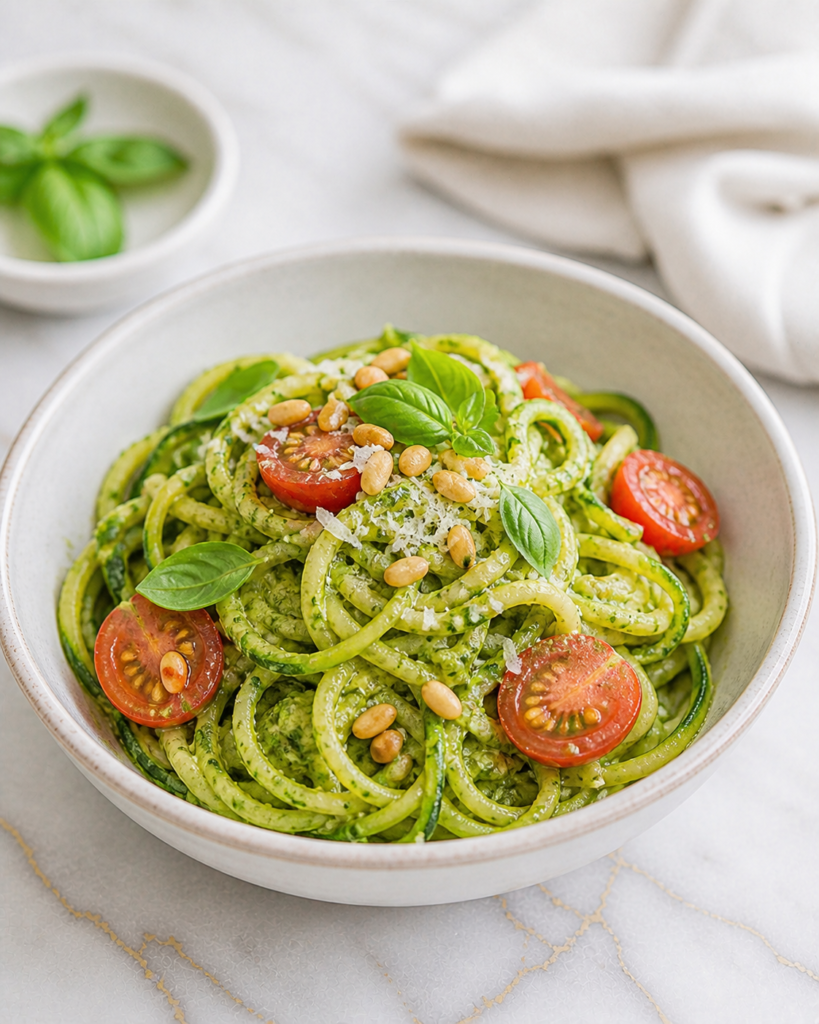
Zucchini Noodles with Avocado Pesto are best served soon after tossing, but you can still prep several parts ahead to make the meal easier. Spiralize the zucchini up to 1 day ahead, then pat the noodles dry and store them in an airtight container lined with paper towels. Keep them chilled until you are ready to cook.
The avocado pesto is freshest when made close to serving time because avocado can darken as it sits. If you need to make it a few hours ahead, press plastic wrap directly against the surface of the pesto before covering the container. The lemon juice helps slow browning, but the color will always look best when the sauce is fresh.
You can also measure the Parmesan, wash the basil, zest the lemon, and peel the garlic ahead of time. This makes the blender step quick when dinner starts. For meal prep, keep the zucchini noodles, pesto, and toppings separate, then combine them right before eating for the best texture.
Instructions
Step 1: Prepare the Zucchini Noodles
Spiralize 4 medium zucchini into noodles using a spiralizer, julienne peeler, or vegetable peeler. If the noodles are very long, cut them into shorter pieces so they are easier to toss and eat.
Spread the zucchini noodles on a clean kitchen towel or paper towels. Pat them gently to remove extra moisture before cooking.
Step 2: Make the Avocado Pesto
In a food processor or blender, add 1 large ripe avocado, 1 cup packed fresh basil leaves, 1/3 cup grated Parmesan cheese, 1/4 cup olive oil, 2 tablespoons fresh lemon juice, 1 teaspoon lemon zest, 1 small garlic clove, 1/2 teaspoon fine salt, 1/4 teaspoon black pepper, and 2 tablespoons cold water. Blend until smooth and creamy.
Stop and scrape down the sides as needed so everything blends evenly. If the pesto is too thick, add another tablespoon of cold water until it is spoonable but not thin.
Step 3: Taste and Adjust the Pesto
Taste the avocado pesto before adding it to the noodles. Add a little more lemon juice for brightness, a pinch more salt for flavor, or extra basil if you want it to taste greener and fresher.
The pesto should be creamy, smooth, and balanced. It should taste rich from the avocado but still fresh from the lemon and basil.
Step 4: Warm the Skillet
Place a large skillet over medium heat and add 1 tablespoon olive oil. Let the oil warm for a minute, but do not let it smoke.
Zucchini noodles cook quickly, so have the pesto and toppings ready before adding them to the pan. This helps prevent overcooking and keeps the noodles from turning watery.
Step 5: Cook the Zucchini Noodles
Add the zucchini noodles to the skillet with 1/4 teaspoon fine salt and 1/4 teaspoon black pepper. Toss with tongs and cook for 2 to 3 minutes, just until the noodles begin to soften.
The noodles should still have a little bite and should not look limp. If liquid collects in the pan, carefully drain off a little before adding the pesto.
Step 6: Add the Avocado Pesto
Remove the skillet from the heat before adding the avocado pesto. Spoon the pesto over the warm zucchini noodles and toss gently until the noodles are coated.
The heat from the noodles will warm the sauce without cooking it too much. This keeps the avocado pesto bright, creamy, and fresh tasting.
Step 7: Finish the Dish
Add 2 tablespoons grated Parmesan cheese, 1 tablespoon chopped fresh basil, and 1/4 teaspoon red pepper flakes if using. Toss lightly so the toppings are spread through the noodles.
If the noodles look too thick or clumpy, add a small splash of cold water or olive oil. The sauce should coat the zucchini noodles smoothly without pooling at the bottom.
Step 8: Serve Right Away
Divide the zucchini noodles into serving bowls while they are still fresh and lightly warm. Add lemon wedges on the side if you want an extra bright finish.
Serve right away for the best color and texture. The noodles will continue to soften as they sit, so they taste best soon after mixing.
Serving Suggestions
Zucchini Noodles with Avocado Pesto make a light, fresh meal on their own. The creamy avocado sauce gives the bowl enough richness to feel satisfying without making it heavy.
For a more filling dinner, serve the noodles with grilled chicken, shrimp, salmon, or sliced turkey. These proteins work well with the lemon, basil, and garlic in the pesto.
A side of crusty bread or garlic toast is helpful if your family wants something heartier. The bread can scoop up any extra avocado pesto left in the bowl.
You can also serve this recipe beside soup for a simple lunch. Tomato soup, vegetable soup, or chicken soup all pair well with the fresh flavor of the noodles.
For a vegetarian meal, add roasted chickpeas, white beans, or a soft-boiled egg on top. These options add protein and texture without taking away from the fresh pesto flavor.
If you are serving kids, try adding a little cooked pasta with the zucchini noodles. This keeps the dish familiar while still adding the freshness of the zucchini and avocado pesto.
Leftovers and Storage
Zucchini Noodles with Avocado Pesto are best eaten right after they are made, but leftovers can be stored for a short time. Place leftovers in an airtight container and refrigerate for up to 1 day. The avocado pesto may darken a little, but it should still taste good if stored properly.
For the best texture, store extra zucchini noodles and avocado pesto separately if you know you will have leftovers. Keep the pesto covered with plastic wrap pressed directly against the surface, then seal the container. This helps reduce air exposure and slows browning.
Reheat leftovers gently, or enjoy them cold like a pasta salad. If warming, use low heat and stir only until slightly warm, because too much heat can make the zucchini watery and the pesto dull. Freezing is not recommended because zucchini noodles and avocado pesto both lose their smooth texture after thawing.
Nutrition and Benefits
- Fresh vegetable base: Zucchini noodles add volume, color, and a light texture to the meal. They are a simple way to serve more vegetables in a form that feels fun and easy to eat.
- Creamy avocado sauce: Avocado gives the pesto a smooth texture and satisfying richness. It also helps the dish feel comforting without needing heavy cream.
- Bright herbs and lemon: Basil and lemon juice add fresh flavor that keeps the noodles from tasting flat. They also help balance the richness of the avocado and olive oil.
- Easy to customize: This recipe can be served light or made heartier with protein, beans, pasta, or bread. That makes it useful for different appetites at the same table.
- Quick family meal: The whole dish comes together fast once the zucchini is spiralized. It is a helpful option for lunches, warm-weather dinners, or simple meal prep.
Recipe FAQ
Can I eat zucchini noodles raw?
Yes, zucchini noodles can be eaten raw if you prefer a crisp texture. Toss them directly with the avocado pesto and serve right away. Raw zucchini noodles work especially well on warm days when you want a cool, fresh meal.
How do I keep zucchini noodles from getting watery?
Pat the noodles dry before cooking and cook them only for 2 to 3 minutes. Overcooking makes zucchini release more liquid. If extra water collects in the skillet, drain it before adding the pesto.
Can I make avocado pesto ahead of time?
You can make it a few hours ahead, but it is best fresh. Press plastic wrap directly onto the surface of the pesto and refrigerate it in an airtight container. The lemon juice helps slow browning, but the color may still darken slightly.
Can I use regular pasta instead of zucchini noodles?
Yes, regular pasta works very well with avocado pesto. Cook the pasta, drain it, and toss it with the pesto while it is warm but not boiling hot. Add a splash of pasta water if you need to loosen the sauce.
What can I use instead of basil?
You can use baby spinach, parsley, cilantro, or a mix of herbs and greens. Basil gives the most classic pesto flavor, but other greens still make a fresh, creamy sauce. Add lemon juice to keep the flavor bright.
Is this recipe dairy-free?
It is not dairy-free as written because it includes Parmesan cheese. To make it dairy-free, leave out the Parmesan and use nutritional yeast instead. This keeps the pesto savory while avoiding dairy.
Can I add protein to this dish?
Yes, grilled chicken, shrimp, salmon, chickpeas, white beans, or eggs are all good choices. Add the protein on top after tossing the noodles with pesto. This makes the meal more filling without changing the fresh flavor.
A Fresh Bowl for Simple, Comforting Meals
Zucchini Noodles with Avocado Pesto are fresh, creamy, and easy to make when you want something light that still feels satisfying. The tender zucchini noodles and smooth avocado pesto come together quickly, with bright lemon and basil giving each bite a clean, comforting flavor.
I like this recipe for lunches, warm evenings, and simple family meals because it feels flexible and dependable. It can stay light, become heartier with protein, or pair with bread or soup, making it a recipe worth keeping close for easy meals.