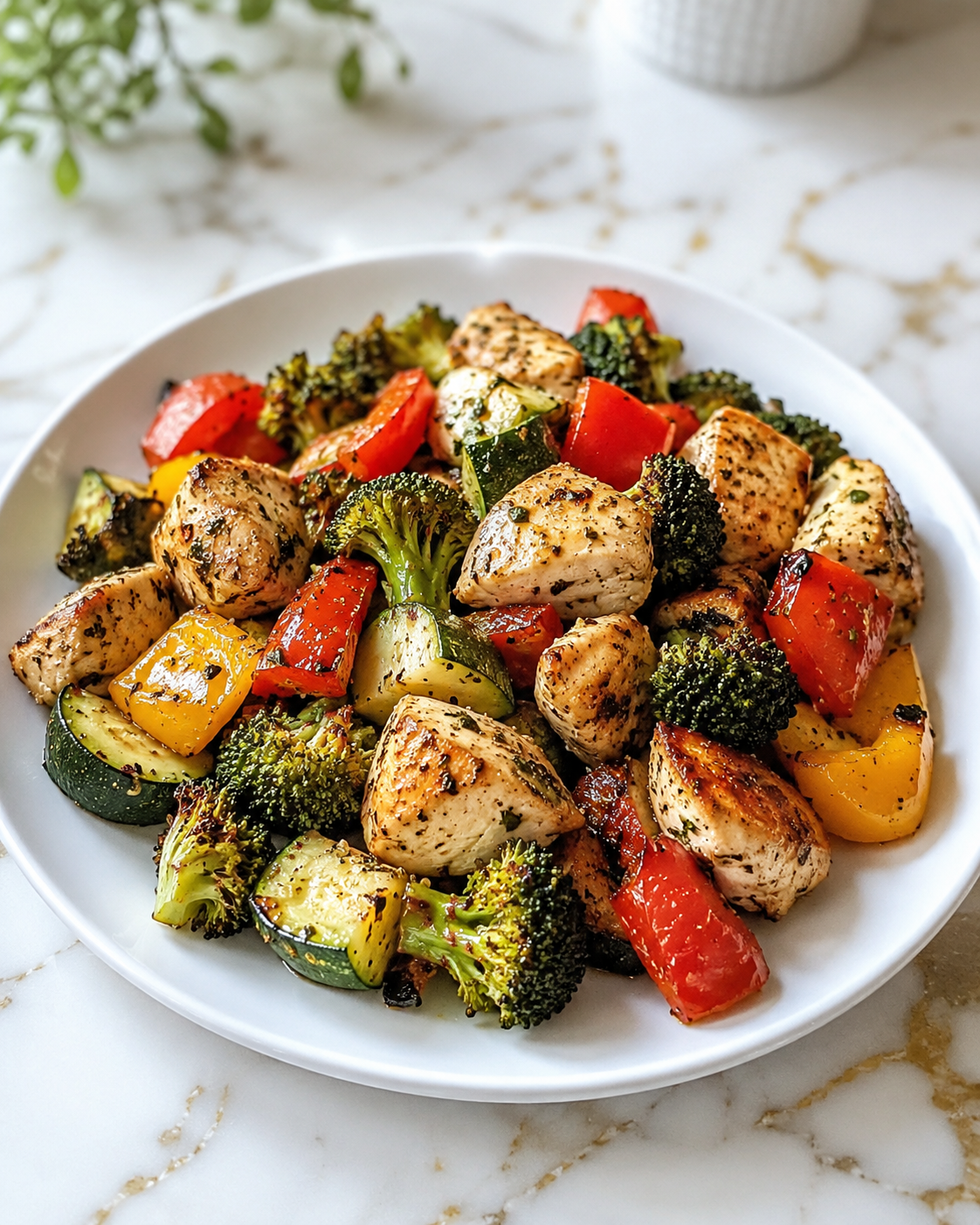
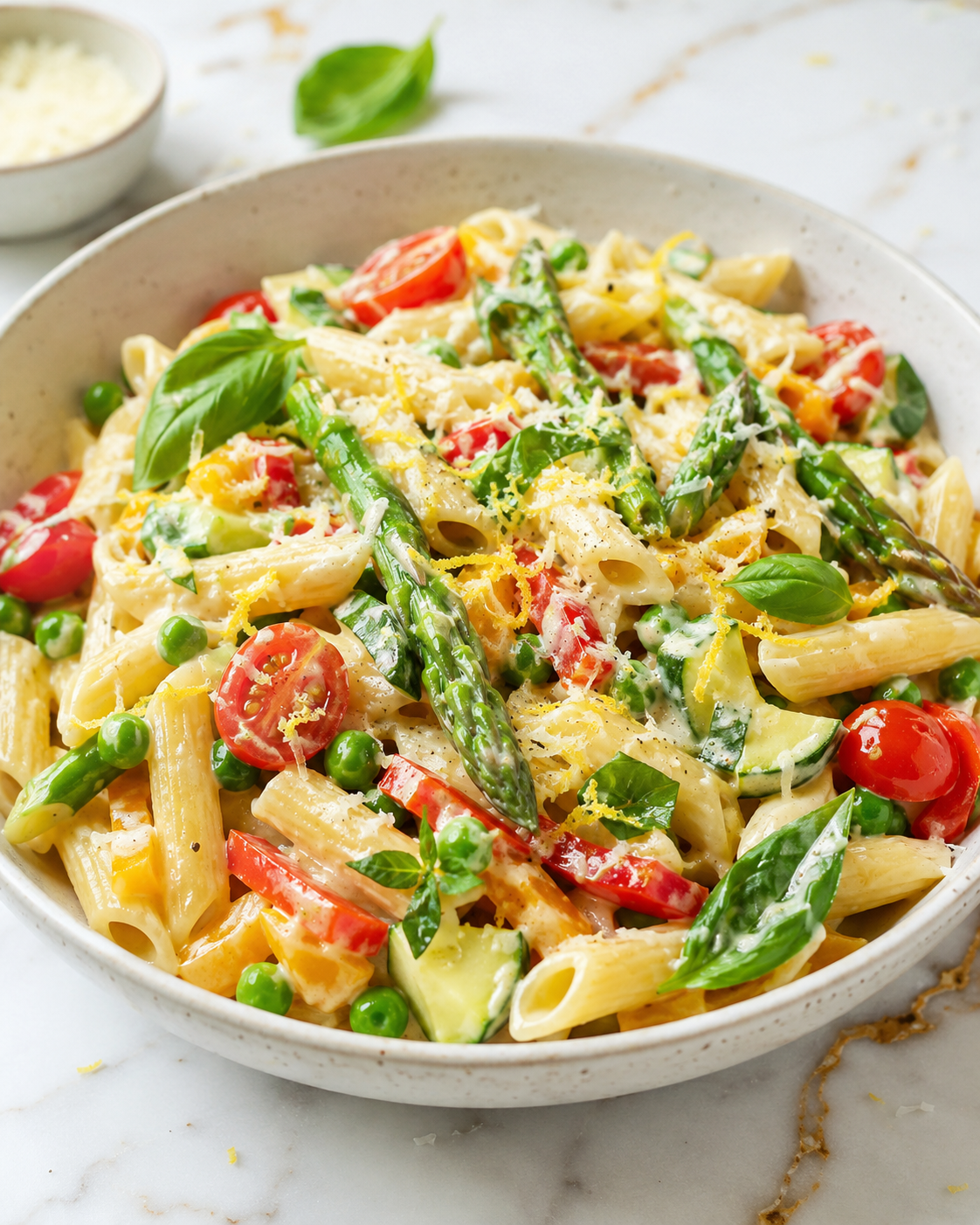
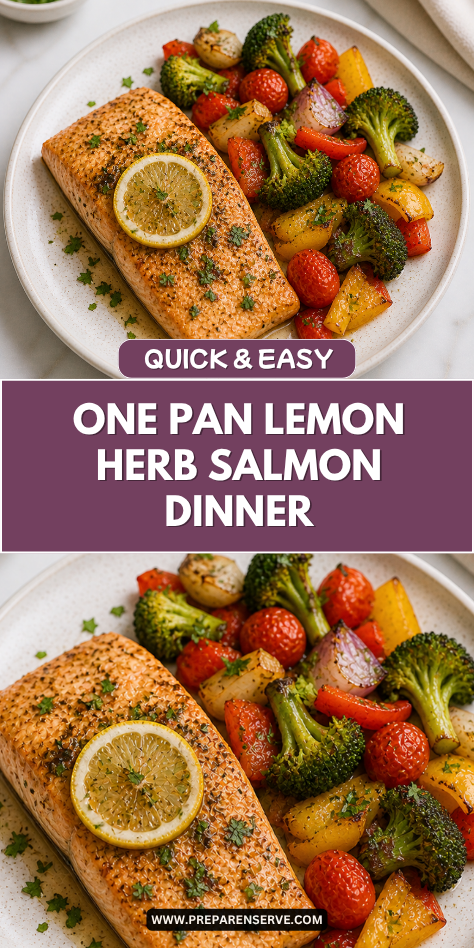
I make One-Pan Lemon Herb Salmon and Vegetables when I want a dinner that feels fresh, simple, and easy to clean up. The salmon bakes until tender and flaky, while the vegetables roast around it with lemon, garlic, and herbs.
I like this recipe because it feels light but still filling enough for a family meal. Everything cooks on one sheet pan, so it is helpful on busy nights when I want something homemade without juggling several pots and pans.
Why You’ll Love This Recipe
One-Pan Lemon Herb Salmon and Vegetables is bright, colorful, and easy to prepare. The lemon keeps the salmon fresh-tasting, the herbs add gentle flavor, and the roasted vegetables make the meal feel complete without much extra work.
This recipe is also a good choice for families because the flavors are mild and familiar. The salmon is not covered in a heavy sauce, and the vegetables can be swapped based on what your family enjoys.
It is perfect for weeknights, but it also looks pretty enough for a relaxed weekend dinner. With tender fish, golden vegetables, and fresh lemon on top, it feels special while staying very simple.
Serves: 4 people
This recipe serves 4 people with one salmon fillet per person and a generous amount of vegetables. It works well as a full meal on its own, especially if you choose hearty vegetables like potatoes, carrots, or broccoli.
If you are feeding younger kids, you may be able to stretch it into smaller portions. For hungrier eaters, serve it with rice, quinoa, couscous, or warm bread on the side.
Ingredients You’ll Need
For the Salmon
- 4 salmon fillets, about 6 ounces each
- 2 tablespoons olive oil
- 2 tablespoons fresh lemon juice
- 1 teaspoon lemon zest
- 2 cloves garlic, minced
- 1 teaspoon Dijon mustard
- 1 teaspoon honey, optional
- 1 teaspoon dried parsley
- 1/2 teaspoon dried dill
- 1/2 teaspoon dried oregano
- 3/4 teaspoon fine sea salt
- 1/4 teaspoon black pepper
- 1 lemon, thinly sliced
For the Vegetables
- 2 cups baby potatoes, halved or quartered if large
- 2 cups broccoli florets
- 1 cup baby carrots, halved lengthwise
- 1 red bell pepper, sliced
- 1 small zucchini, sliced into half-moons
- 2 tablespoons olive oil
- 1 teaspoon garlic powder
- 1/2 teaspoon dried oregano
- 1/2 teaspoon fine sea salt
- 1/4 teaspoon black pepper
For Serving
- 2 tablespoons chopped fresh parsley, optional
- Extra lemon wedges, optional
- Cooked rice, quinoa, or couscous, optional
- Plain Greek yogurt or tzatziki, optional
Pro Tips
Cut the vegetables into similar sizes so they cook evenly. Potatoes and carrots take longer than zucchini and bell pepper, so keeping them smaller helps everything finish at the same time.
Start the firmer vegetables first if needed. Potatoes and carrots can roast for a few minutes before the salmon is added, which keeps the salmon from overcooking while the vegetables soften.
Pat the salmon dry before adding the lemon herb mixture. This helps the seasoning cling better and keeps the fish from becoming watery on the pan.
Use parchment paper for easier cleanup. It keeps the salmon from sticking and makes the sheet pan much easier to wash after dinner.
Do not overbake the salmon. It is done when it flakes easily with a fork and reaches 145°F in the thickest part, though many home cooks pull it slightly earlier and let it rest.
Add delicate vegetables later if they are sliced thin. Zucchini and bell pepper cook quickly, so they can become too soft if roasted for the full time with potatoes.
Use fresh lemon if possible. Bottled lemon juice can taste dull, while fresh lemon juice and zest make the dish taste brighter and cleaner.
Let the salmon rest for a few minutes before serving. This helps the juices settle and keeps each fillet tender when it reaches the plate.
Tools You’ll Need
- Large rimmed sheet pan
- Parchment paper or aluminum foil
- Cutting board
- Sharp knife
- Small mixing bowl
- Large mixing bowl
- Measuring spoons
- Measuring cups
- Microplane or zester
- Citrus juicer or reamer
- Garlic press, optional
- Tongs
- Pastry brush or spoon
- Meat thermometer
- Spatula for serving
Substitutions and Variations
Use a Different Fish
Swap salmon for cod, halibut, trout, or tilapia. Thinner fish fillets may cook faster, so check them early to keep them tender.
Change the Vegetables
Use green beans, asparagus, cherry tomatoes, cauliflower, sweet potatoes, or Brussels sprouts. Choose vegetables your family likes and cut firmer ones smaller so they roast evenly.
Make It Dairy-Free
This recipe is naturally dairy-free as written if you skip the yogurt or tzatziki for serving. For a creamy side, use a dairy-free cucumber sauce or avocado dressing.
Add More Flavor
Sprinkle the salmon with smoked paprika, red pepper flakes, or a little lemon pepper seasoning. Keep the amount light so the fresh lemon and herbs still stay at the center.
Make It Lighter or Heartier
For a lighter meal, serve the salmon and vegetables with extra greens or cucumber salad. For a heartier dinner, add rice, quinoa, couscous, roasted potatoes, or warm pita on the side.
Make Ahead Tips
One-Pan Lemon Herb Salmon and Vegetables is best baked fresh, but you can prep many parts ahead to make dinner easier. I like to wash and cut the vegetables earlier in the day, then store them in airtight containers in the refrigerator.
You can also mix the lemon herb marinade a day ahead and keep it covered in the fridge. Wait to add it to the salmon until shortly before baking so the lemon juice does not start to change the texture of the fish.
If using potatoes and carrots, you can cut them ahead and store them in cold water in the refrigerator for a few hours. Drain and dry them well before roasting so they brown instead of steaming.
For the best results, do not fully assemble the sheet pan too far ahead. Salmon cooks quickly and tastes freshest when seasoned and baked right before serving.
Instructions
Step 1: Preheat the Oven
Preheat the oven to 425°F. Line a large rimmed sheet pan with parchment paper or aluminum foil for easier cleanup.
A hot oven helps the vegetables roast and gives the salmon a tender, flaky texture. Make sure the oven is fully heated before the pan goes in.
Step 2: Prepare the Vegetables
Add the baby potatoes, broccoli florets, baby carrots, red bell pepper, and zucchini to a large mixing bowl. Drizzle with olive oil, then sprinkle with garlic powder, dried oregano, fine sea salt, and black pepper.
Toss everything until the vegetables are evenly coated. Try to keep the potato and carrot pieces smaller so they cook at the same pace as the other vegetables.
Step 3: Start Roasting the Firm Vegetables
Spread the potatoes and carrots on the prepared sheet pan first. Roast them for 12 to 15 minutes before adding the salmon and softer vegetables.
This gives the firmer vegetables a head start. It helps prevent the salmon from overcooking while waiting for the potatoes to become tender.
Step 4: Make the Lemon Herb Mixture
In a small bowl, stir together the olive oil, fresh lemon juice, lemon zest, minced garlic, Dijon mustard, honey if using, dried parsley, dried dill, dried oregano, fine sea salt, and black pepper.
The mixture should look smooth and lightly golden. Taste a tiny bit and add a little more lemon or honey if you want it brighter or softer.
Step 5: Prepare the Salmon
Pat the salmon fillets dry with paper towels. Place them on a plate and brush or spoon the lemon herb mixture over the top of each fillet.
Make sure each piece gets some garlic, herbs, and lemon zest. This helps the salmon bake with flavor in every bite.
Step 6: Add Salmon and Remaining Vegetables
Remove the sheet pan from the oven carefully. Add the broccoli, red bell pepper, and zucchini around the partially roasted potatoes and carrots.
Nestle the salmon fillets onto the pan, leaving a little space between each piece. Add thin lemon slices over the salmon and vegetables for extra flavor.
Step 7: Bake Until Tender
Return the sheet pan to the oven and bake for 12 to 15 minutes. The salmon should flake easily with a fork, and the vegetables should be tender with lightly browned edges.
Use a meat thermometer if you want to be exact. Salmon is fully cooked at 145°F in the thickest part.
Step 8: Check the Vegetables
If the salmon is done but the vegetables need more time, transfer the salmon to a plate and cover it loosely. Return the vegetables to the oven for another 5 minutes.
This keeps the fish tender instead of overbaked. It also gives the potatoes and carrots a chance to finish roasting.
Step 9: Rest and Finish
Let the salmon rest for 3 to 5 minutes before serving. Sprinkle chopped fresh parsley over the pan if using.
Add extra lemon wedges on the side. A fresh squeeze of lemon right before eating makes the herbs and vegetables taste brighter.
Step 10: Serve Warm
Serve each salmon fillet with a generous scoop of roasted vegetables. Add rice, quinoa, couscous, Greek yogurt, or tzatziki on the side if you want a more filling meal.
Keep the salmon pieces whole when serving so they stay moist. A wide spatula makes it easier to lift each fillet from the sheet pan.
Serving Suggestions
One-Pan Lemon Herb Salmon and Vegetables is lovely served with fluffy rice because the grains soak up the lemony pan juices. White rice, brown rice, or wild rice all work well with the mild herb flavor.
Quinoa is another good option if you want something hearty but still light. It adds a little nutty flavor and pairs nicely with the salmon and roasted vegetables.
Couscous is a quick side that keeps the meal easy. It cooks fast and tastes especially good with extra lemon juice and a little fresh parsley stirred in.
A spoonful of plain Greek yogurt or tzatziki adds a cool, creamy finish. This is especially nice for kids or anyone who enjoys a softer flavor with salmon.
For a lighter plate, serve the salmon and vegetables over mixed greens. The warm vegetables and flaky fish make the salad feel filling without needing a heavy dressing.
Warm pita or crusty bread also works well on the side. It is perfect for scooping up any lemon herb juices left on the plate.
Leftovers and Storage
Store leftover One-Pan Lemon Herb Salmon and Vegetables in an airtight container in the refrigerator for up to 3 days. Let everything cool before covering, but do not leave the salmon at room temperature for more than 2 hours.
For the best texture, reheat the salmon gently. Warm it in a 300°F oven for 8 to 10 minutes, or until just heated through.
You can also reheat leftovers in the microwave, but use short bursts and lower power if possible. Salmon can dry out quickly when overheated, so stop as soon as it is warm.
The vegetables can be reheated in the oven, air fryer, skillet, or microwave. If they seem dry, add a small drizzle of olive oil or a squeeze of lemon before serving.
I do not usually freeze cooked salmon with roasted vegetables because the texture can become soft after thawing. For best results, enjoy leftovers from the refrigerator within a few days.
Nutrition and Benefits
- Salmon provides protein and healthy fats, making this meal satisfying without feeling too heavy.
- Lemon juice and zest add bright flavor without needing a heavy sauce.
- Broccoli, carrots, bell pepper, zucchini, and potatoes add color, fiber, and a mix of textures.
- Cooking everything on one pan helps keep the meal simple and makes cleanup easier.
- Serving the dish with rice, quinoa, or greens makes it easy to adjust for lighter or heartier appetites.
Recipe FAQ
Can I use frozen salmon?
Yes, frozen salmon works well if it is fully thawed before baking. Pat it dry very well so the lemon herb mixture sticks to the fish. Extra moisture can make the salmon steam instead of bake nicely.
How do I know when salmon is done?
Salmon is done when it flakes easily with a fork and looks opaque through the center. For a precise check, use a thermometer and cook it to 145°F in the thickest part. Try not to overbake it, because salmon can dry out quickly.
Can I use different vegetables?
Yes, this recipe is very flexible. Asparagus, green beans, cauliflower, cherry tomatoes, Brussels sprouts, and sweet potatoes can all work. Cut harder vegetables smaller and give them a head start if needed.
Why are my potatoes not cooked through?
Potatoes may need more time if they are cut too large. Halve small baby potatoes or quarter larger ones so they roast faster. Starting the potatoes before adding the salmon also helps them become tender.
Can I make this recipe without mustard?
Yes, you can leave out the Dijon mustard. The lemon, garlic, olive oil, and herbs will still give the salmon plenty of flavor. If you want a little extra balance, add a tiny bit more honey or lemon zest.
Is this recipe good for meal prep?
Yes, it works well for meal prep if you do not mind reheated salmon. Store portions in airtight containers with rice, quinoa, or extra vegetables. Reheat gently so the salmon stays moist.
Can I use fresh herbs instead of dried?
Yes, fresh herbs taste wonderful here. Use about 1 tablespoon fresh parsley, 1 teaspoon fresh dill, and 1 teaspoon fresh oregano if you have them. Add a little extra fresh parsley after baking for the best flavor.
A Bright One-Pan Dinner for Easy Evenings
One-Pan Lemon Herb Salmon and Vegetables is a fresh, dependable dinner that keeps things simple without feeling plain. The salmon turns tender and flaky, the vegetables roast with savory edges, and the lemon herb flavor makes the whole pan feel bright and comforting.
I love this recipe for busy nights because it gives you a full meal with very little cleanup. It is easy to adjust, simple to serve, and worth making again whenever your family wants something wholesome, warm, and homemade.