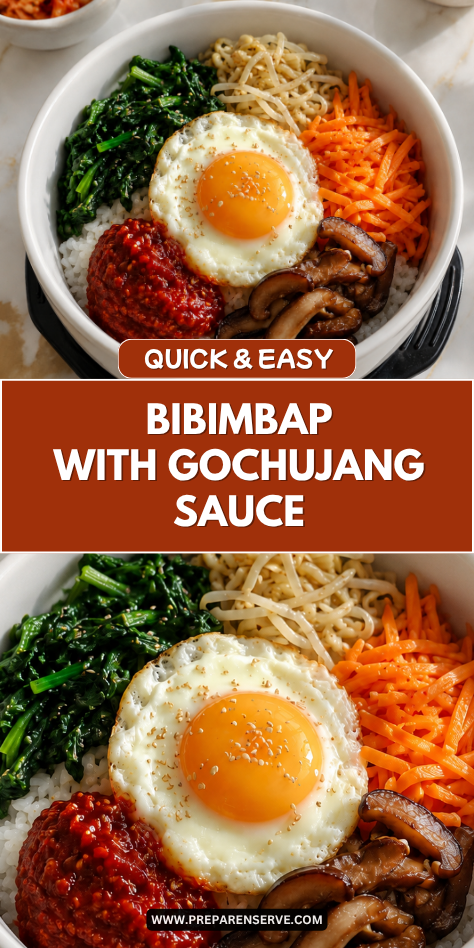
I make Bibimbap with Gochujang when I want a meal that feels colorful, nourishing, and comforting all at once. It is built with warm rice, seasoned vegetables, tender protein, a fried egg, and a bold gochujang sauce that ties everything together.
This is one of those meals that looks special but is very practical for a family kitchen. I love that everyone can mix their own bowl, add the vegetables they like, and choose how much sauce feels right for them.
Why You’ll Love This Recipe
Bibimbap with Gochujang is full of texture, color, and flavor. The rice is warm and soft, the vegetables are fresh and lightly seasoned, the protein makes it filling, and the gochujang sauce adds a savory, slightly sweet heat.
This recipe is also flexible, which makes it helpful for families. You can use beef, chicken, tofu, or leftover vegetables, and the bowls still feel complete and satisfying.
It is a great meal when you want something wholesome without feeling plain. Each topping is simple on its own, but once everything is mixed together with the sauce and egg yolk, the bowl becomes rich, balanced, and comforting.
Serves: 4 people
This recipe serves 4 people with generous rice bowls and a variety of toppings. Each bowl includes rice, protein, vegetables, an egg, and gochujang sauce, so it works well as a full meal.
For younger kids, you can make smaller bowls and serve the sauce on the side. For bigger appetites, add extra rice, more protein, or a side of soup or dumplings.
Ingredients You’ll Need
For the Bowls
- 4 cups cooked short-grain white rice or medium-grain rice
- 1 tablespoon sesame oil, for drizzling over rice
- 4 large eggs
- 1 tablespoon neutral oil, for frying eggs
- 1 tablespoon toasted sesame seeds, for serving
- 2 green onions, thinly sliced, for serving
For the Beef
- 1 pound ground beef or thinly sliced beef
- 2 tablespoons low-sodium soy sauce
- 1 tablespoon brown sugar
- 1 tablespoon sesame oil
- 2 garlic cloves, minced
- 1 teaspoon fresh ginger, grated
- ½ teaspoon black pepper
- 1 teaspoon rice vinegar
For the Vegetables
- 2 cups fresh spinach
- 1 medium carrot, julienned or thinly sliced
- 1 medium zucchini, julienned or thinly sliced
- 1 cup bean sprouts
- 1 cup shiitake mushrooms or button mushrooms, sliced
- 1 tablespoon neutral oil, divided
- 2 teaspoons sesame oil, divided
- 2 garlic cloves, minced, divided
- ½ teaspoon kosher salt, divided
- ¼ teaspoon black pepper, divided
For the Gochujang Sauce
- 3 tablespoons gochujang
- 1 tablespoon sesame oil
- 1 tablespoon rice vinegar
- 1 tablespoon honey or brown sugar
- 1 tablespoon warm water, plus more as needed
- 1 teaspoon low-sodium soy sauce
- 1 teaspoon toasted sesame seeds
- 1 small garlic clove, minced
Short-grain or medium-grain rice works best because it is soft, slightly sticky, and easy to mix with the toppings. Long-grain rice can be used, but the bowl will have a looser texture.
The beef adds savory flavor and makes the meal hearty. Ground beef is quick and easy, while thinly sliced beef gives the bowl a more traditional feel.
The vegetables bring color, freshness, and balance. Spinach, carrots, zucchini, bean sprouts, and mushrooms each add a different texture, which is part of what makes bibimbap so satisfying.
The gochujang sauce is the heart of the bowl. Gochujang is a Korean red chili paste with heat, sweetness, and deep savory flavor, and mixing it with sesame oil, vinegar, honey, and water makes it easier to drizzle.
The fried egg adds richness and helps bring everything together. When the yolk mixes into the warm rice and sauce, the whole bowl becomes creamy and comforting.
Pro Tips
Prep all the vegetables before you start cooking. Bibimbap comes together more smoothly when the carrots, zucchini, mushrooms, spinach, bean sprouts, and green onions are ready to go.
Cook each vegetable separately if you can. This keeps the colors bright and lets each topping have its own texture and flavor.
Keep the vegetables lightly seasoned. The beef and gochujang sauce bring plenty of flavor, so the vegetables only need a little garlic, sesame oil, salt, and pepper.
Serve the gochujang sauce on the side for kids or anyone who prefers mild food. A small spoonful adds flavor, while a larger amount brings more heat.
Use warm rice for the best bowl. The heat from the rice helps soften the toppings and makes everything easier to mix together.
Do not overcook the fried eggs. A runny or soft yolk makes the bowl rich and creamy, but you can cook the eggs fully for younger kids or anyone who prefers firm eggs.
Add sesame oil at the end. A small drizzle over the rice or finished bowl gives a nutty aroma without making the dish feel greasy.
Tools You’ll Need
- Rice cooker or medium saucepan
- Large skillet or wok
- Small skillet for eggs
- Cutting board
- Sharp knife
- Measuring cups
- Measuring spoons
- Small mixing bowl
- Medium mixing bowl
- Whisk or spoon
- Spatula
- Tongs
- Box grater or julienne peeler, optional
- Microplane or small grater for ginger
- Garlic press or small knife for mincing garlic
- Serving bowls
- Small sauce bowl
A rice cooker makes this recipe easier because the rice can cook while you prepare the toppings. A saucepan also works well if that is what you have.
A large skillet helps cook the beef and vegetables quickly. Since the vegetables are best cooked in small batches, a wide pan gives them room to soften without becoming soggy.
A small bowl is useful for mixing the gochujang sauce before serving. This lets you taste and adjust the thickness so it drizzles easily over the bowls.
A julienne peeler or box grater can save time with the carrots and zucchini. Thin pieces cook quickly and make the finished bowl easier to mix.
Substitutions and Variations
Change the Protein
Use chicken, pork, shrimp, tofu, or tempeh instead of beef. Keep the seasoning similar so the bowl still has that savory, sesame-garlic flavor.
Make It Vegetarian
Skip the beef and add extra mushrooms, tofu, edamame, or a second egg. These options keep the bowl filling while letting the vegetables and gochujang sauce shine.
Use Different Vegetables
Try cucumber, cabbage, kale, bell peppers, snap peas, or leftover roasted vegetables. Keep the pieces thin or bite-size so they mix easily with the rice.
Make It Milder
Use less gochujang and add more honey, sesame oil, or warm water to soften the heat. You can also serve the sauce on the side so each person controls the spice.
Make It Heartier
Add kimchi, extra beef, avocado, or a larger scoop of rice. These additions make the bowl more filling while keeping the classic rice, vegetable, egg, and sauce base recognizable.
Make Ahead Tips
Bibimbap with Gochujang is a helpful make-ahead meal because most of the toppings can be prepared in advance. You can cook the rice, season the beef, wash and cut the vegetables, and mix the gochujang sauce earlier in the day.
The vegetables can be cooked up to 2 days ahead and stored in separate containers in the refrigerator. Keeping them separate helps each topping keep its own flavor, color, and texture.
The beef can also be cooked ahead and reheated gently before serving. Add a small splash of water or broth when reheating so it stays moist and easy to spoon over the rice.
The gochujang sauce keeps well in the refrigerator for up to 1 week. Store it in a small jar or covered bowl, then stir in a little warm water if it thickens too much.
For the best bowl, fry the eggs right before serving. Warm rice, hot beef, and a freshly cooked egg make the finished bibimbap taste cozy and fresh.
Instructions
Step 1: Make the Gochujang Sauce
In a small bowl, stir together the gochujang, sesame oil, rice vinegar, honey or brown sugar, warm water, low-sodium soy sauce, toasted sesame seeds, and minced garlic. Mix until the sauce looks smooth and easy to drizzle.
Taste the sauce and adjust it for your family. Add a little more warm water for a thinner sauce, or a bit more honey if you want to soften the heat.
Step 2: Season the Beef
In a medium bowl, combine the ground beef or thinly sliced beef with low-sodium soy sauce, brown sugar, sesame oil, minced garlic, grated ginger, black pepper, and rice vinegar. Stir until the beef is evenly coated.
Let the beef sit for 10 to 15 minutes while you prepare the vegetables. This short rest gives the meat a deeper sesame-garlic flavor without making the recipe take too long.
Step 3: Cook the Beef
Heat a large skillet over medium-high heat. Add the seasoned beef and cook for 5 to 7 minutes, breaking it up if using ground beef, until browned and cooked through.
If using thinly sliced beef, stir often so it cooks quickly and evenly. Transfer the cooked beef to a bowl and cover loosely to keep warm.
Step 4: Cook the Spinach
Add the spinach to the same skillet with a small drizzle of sesame oil and a pinch of salt. Cook for 1 to 2 minutes, just until wilted.
Remove the spinach from the pan and gently squeeze out any extra liquid if needed. This keeps the rice bowl from becoming watery.
Step 5: Cook the Carrots
Add a small amount of neutral oil to the skillet. Cook the julienned carrots with a pinch of salt and pepper for 2 to 3 minutes, until they soften slightly but still have a little bite.
Transfer the carrots to a plate or bowl. Keeping them separate helps the finished bowls look colorful and fresh.
Step 6: Cook the Zucchini
Add another small drizzle of oil to the skillet if needed. Cook the zucchini with a little garlic, salt, and pepper for 2 to 3 minutes.
The zucchini should be tender but not mushy. Remove it from the pan before it releases too much water.
Step 7: Cook the Mushrooms and Bean Sprouts
Add the sliced mushrooms to the skillet with a small drizzle of sesame oil. Cook for 4 to 5 minutes, until they soften and turn lightly golden.
Quickly cook the bean sprouts for 1 to 2 minutes with a pinch of salt, or leave them fresh if your family likes more crunch. Set both toppings aside.
Step 8: Fry the Eggs
Heat neutral oil in a small skillet over medium heat. Crack in the eggs and cook until the whites are set and the yolks are still soft, or cook longer if you prefer firm yolks.
Season each egg with a tiny pinch of salt and pepper. A soft yolk adds creaminess when mixed into the rice, but fully cooked eggs work well too.
Step 9: Build the Bowls
Divide the warm cooked rice among 4 serving bowls. Drizzle each bowl with a little sesame oil for extra nutty flavor.
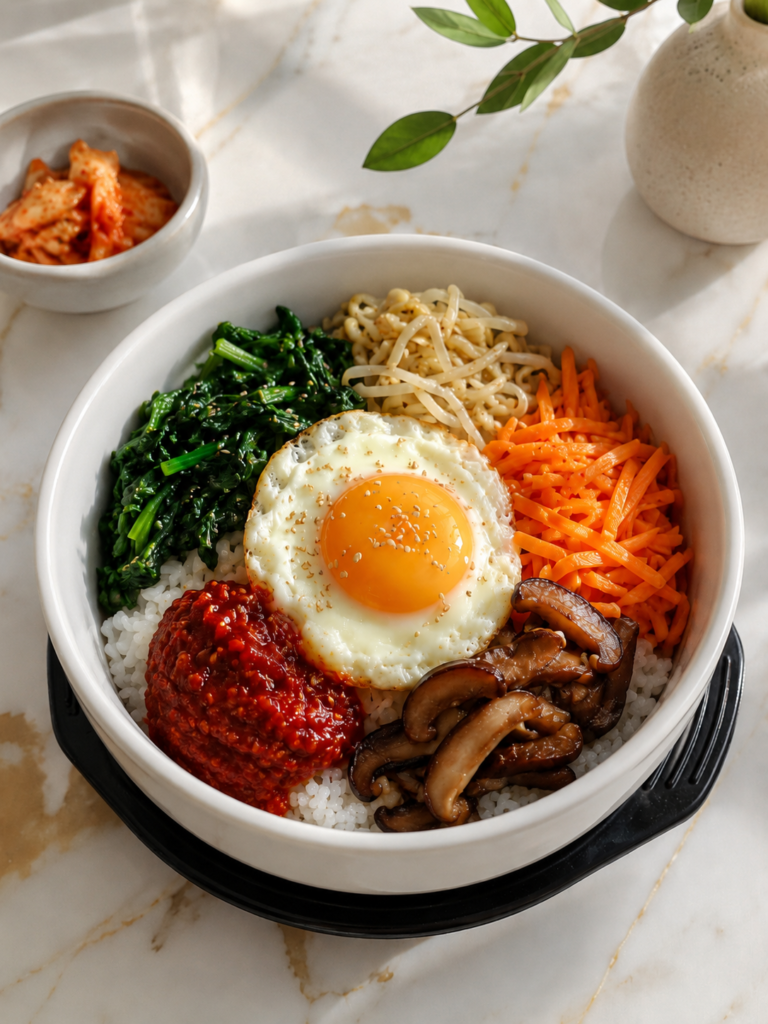
Arrange the beef, spinach, carrots, zucchini, mushrooms, and bean sprouts in small sections over the rice. Place one fried egg on top of each bowl.
Step 10: Add Sauce and Serve
Spoon the gochujang sauce over the bowls, or serve it on the side so everyone can add their own amount. Sprinkle with toasted sesame seeds and sliced green onions.
Mix everything together before eating so the rice, vegetables, beef, egg, and sauce blend into one flavorful bowl. Serve while the rice and beef are warm.
Serving Suggestions
Bibimbap with Gochujang is filling on its own, but it also pairs nicely with a simple bowl of miso soup or clear broth. The warm soup makes the meal feel extra cozy without adding much work.
Kimchi is a classic side if your family enjoys tangy, spicy flavor. Serve it in a small bowl so everyone can add as much or as little as they like.
Steamed dumplings are a fun side for a bigger dinner. They make the meal feel special and are easy to share at the table.
A cucumber salad brings cool crunch beside the warm rice bowl. Thin cucumbers with rice vinegar, sesame oil, and a pinch of salt work especially well.
For kids, serve the gochujang sauce separately and offer a mild drizzle of soy sauce and sesame oil instead. This keeps the bowl approachable while still letting them enjoy the rice, egg, beef, and vegetables.
For meal prep, pack the rice, beef, and vegetables together, then keep the sauce in a small separate container. Add the egg fresh if possible, or use a hard-boiled egg for an easier packed lunch.
Leftovers and Storage
Store leftover Bibimbap with Gochujang toppings in airtight containers in the refrigerator for up to 4 days. If possible, keep the rice, beef, vegetables, sauce, and eggs separate for the best texture.
Reheat the rice and beef gently in the microwave or in a skillet with a splash of water. The vegetables can be warmed briefly or served cold, depending on what you like.
The gochujang sauce should be stored separately in a covered jar or small container. Stir it before serving because the sesame oil and thicker chili paste may separate as it sits.
Fried eggs are best made fresh, but leftovers can still be stored for 1 day in the refrigerator. For easy meal prep, a hard-boiled egg is often a better option.
I do not usually freeze assembled bibimbap because the vegetables can become soft after thawing. The cooked beef can be frozen for up to 2 months and reheated for quick bowls later.
Nutrition and Benefits
- Balanced meal in one bowl: Bibimbap includes rice, protein, vegetables, egg, and sauce. This makes it filling and satisfying without needing many side dishes.
- Colorful vegetables: Spinach, carrots, zucchini, mushrooms, and bean sprouts add color, texture, and fresh flavor. They also make the bowl feel wholesome and varied.
- Good source of protein: Beef and eggs help make this meal hearty and satisfying. You can also use tofu, chicken, or shrimp if you want a different protein.
- Flexible spice level: Gochujang adds bold flavor, but the amount can be adjusted easily. Serving the sauce on the side makes the recipe more family-friendly.
- Great for meal prep: The toppings can be cooked ahead and stored separately. This makes it easy to build quick rice bowls during the week.
Recipe FAQ
Can I make bibimbap without gochujang?
Yes, you can make a milder sauce with soy sauce, sesame oil, honey, rice vinegar, and a little garlic. It will not have the same deep chili flavor, but it will still taste savory and balanced. This is a good option for kids or anyone who avoids spice.
Is gochujang very spicy?
Gochujang has heat, but it is also sweet, savory, and rich. The spice level can vary by brand, so start with a small amount if you are unsure. Mixing it with sesame oil, honey, vinegar, and water makes it milder and easier to drizzle.
Can I use leftover rice?
Yes, leftover rice works well for bibimbap. Warm it with a splash of water so it becomes soft again before building the bowls. Warm rice helps the toppings and sauce mix together better.
What protein can I use besides beef?
Chicken, pork, shrimp, tofu, or tempeh all work well. Keep the seasoning similar with soy sauce, garlic, ginger, and sesame oil. This keeps the bowl flavorful while letting you use what your family likes.
Do I have to cook each vegetable separately?
Cooking each vegetable separately gives the best color and texture. It also keeps watery vegetables from affecting the whole dish. If you are short on time, you can cook them together, but the toppings may blend more.
Can I make this vegetarian?
Yes, skip the beef and use tofu, mushrooms, edamame, or an extra egg. You can also add more vegetables to make the bowl heartier. Use the same gochujang sauce unless you need it to be vegan, then choose maple syrup instead of honey.
How do I eat bibimbap?
Bibimbap is meant to be mixed before eating. Add the sauce, break the egg yolk, and stir the rice, vegetables, beef, and toppings together. This blends all the flavors and textures into one cozy bowl.
A Colorful Rice Bowl Made for Mixing
Bibimbap with Gochujang is a warm, colorful meal that brings rice, vegetables, beef, egg, and sauce together in a simple but satisfying way. Each topping adds something special, and the gochujang sauce gives the bowl a bold flavor that can be adjusted for the whole family.
It is dependable for dinner, useful for meal prep, and easy to change with whatever vegetables or protein you have. This is the kind of bowl that feels comforting, fresh, and worth making again.