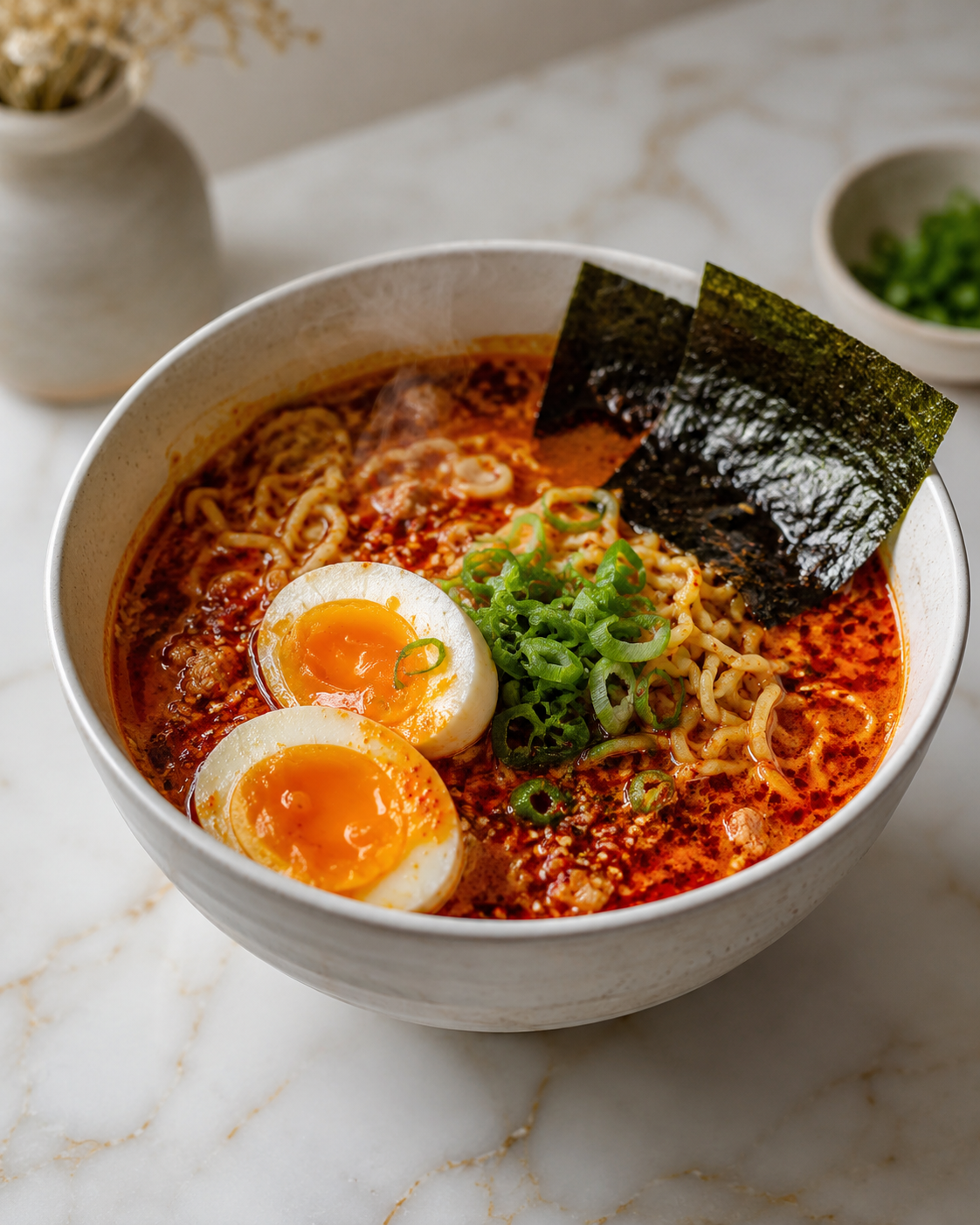
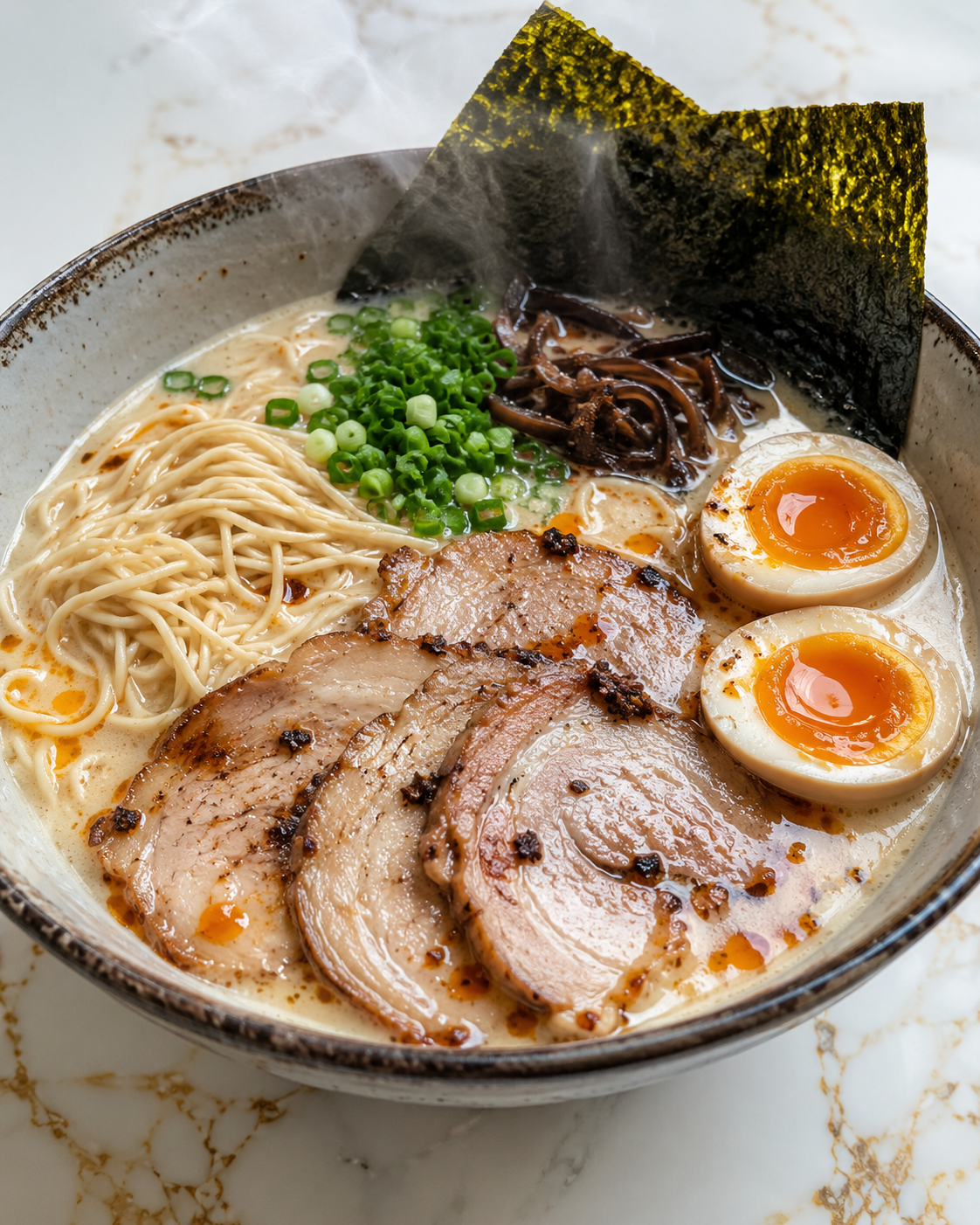
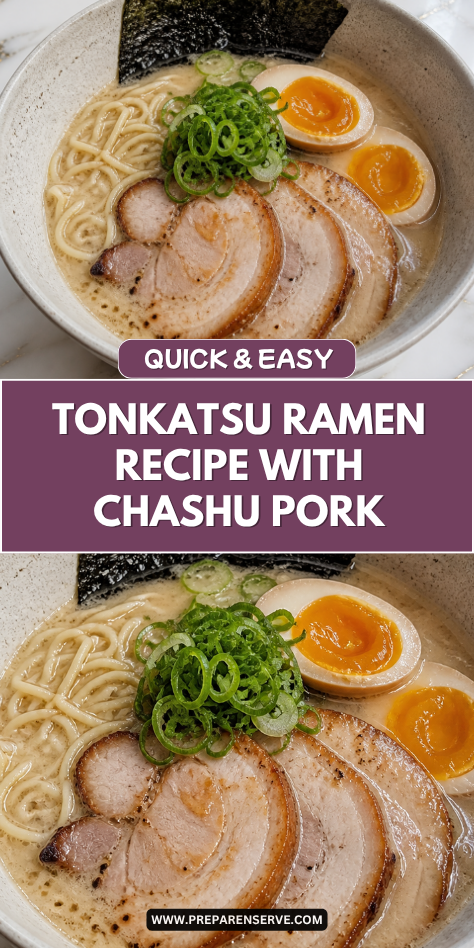
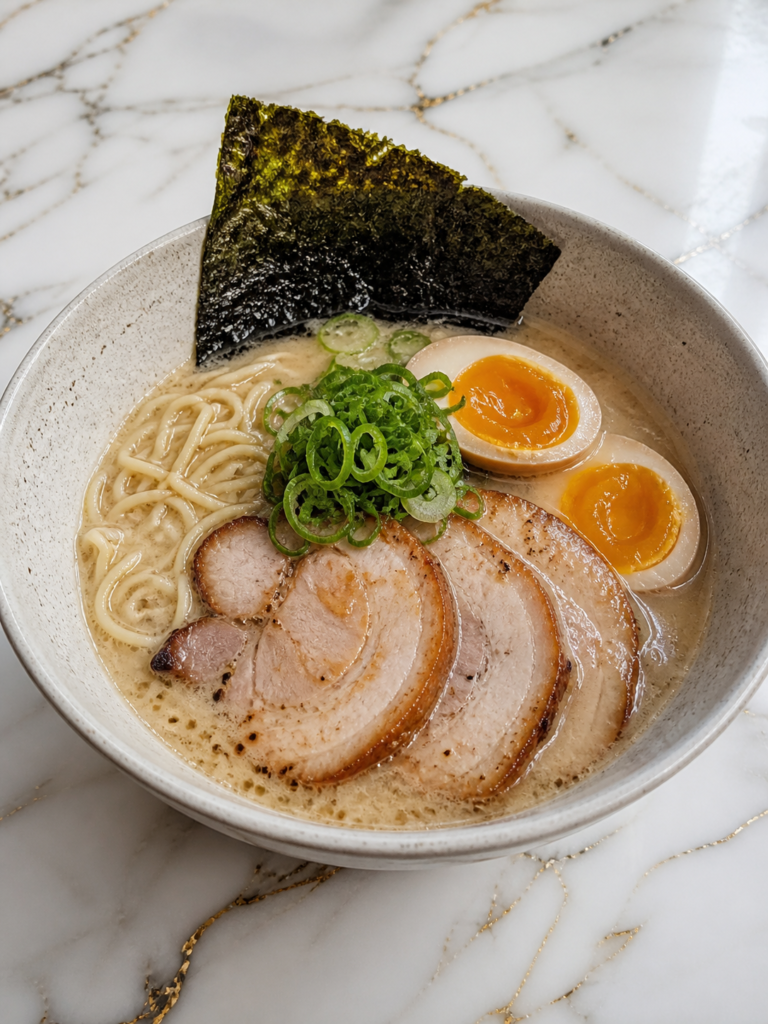
I make Tonkatsu Ramen with Chashu Pork when I want a bowl of soup that feels rich, cozy, and deeply satisfying. The broth is creamy and savory, the noodles are springy, and the tender slices of pork make the whole bowl feel special.
This is the kind of meal I like to save for a slow weekend or a day when I want something warm and comforting. It takes a little planning, but each part is simple when you break it down, and the final bowl feels like a homemade treat worth the effort.
Why You’ll Love This Recipe
Tonkatsu Ramen with Chashu Pork is warm, hearty, and full of layered flavor. The broth is rich and silky, the pork is tender, and the toppings add texture, color, and freshness to every bite.
This recipe is great for anyone who loves a cozy noodle bowl at home. You can prepare several parts ahead, which makes it much easier to serve when your family is ready to eat.
It is also flexible enough for different tastes. Kids can enjoy a simple bowl with noodles, broth, pork, and corn, while adults can add chili oil, green onions, mushrooms, or a soft-boiled egg.
Serves: 4 people
This recipe serves 4 people with generous bowls of ramen, each with noodles, broth, chashu pork, and toppings. The portions are filling, especially with eggs, mushrooms, corn, and other add-ins.
If you are serving younger kids, you can make smaller bowls with less broth and fewer toppings. For bigger appetites, add extra noodles or serve with dumplings, edamame, or a simple cucumber salad on the side.
Ingredients You’ll Need
For the Chashu Pork
- 2 pounds pork belly or pork shoulder, rolled and tied if using pork belly
- 1 tablespoon neutral oil
- ¾ cup low-sodium soy sauce
- ¾ cup water
- ½ cup mirin
- ¼ cup sake or chicken broth
- 3 tablespoons brown sugar
- 4 garlic cloves, smashed
- 1 2-inch piece fresh ginger, sliced
- 3 green onions, cut into large pieces
For the Broth
- 6 cups pork broth or chicken broth
- 1 cup unsweetened plain soy milk or whole milk, optional for creaminess
- 2 tablespoons white miso paste
- 1 tablespoon low-sodium soy sauce
- 1 tablespoon sesame oil
- 2 teaspoons rice vinegar
- 1 teaspoon grated fresh ginger
- 2 garlic cloves, minced
- ½ teaspoon kosher salt, plus more to taste
- ¼ teaspoon white pepper or black pepper
For the Ramen Bowls
- 12 ounces fresh ramen noodles or dried ramen noodles
- 4 soft-boiled eggs, halved
- 1 cup corn kernels, warmed
- 1 cup sliced mushrooms, cooked
- 2 cups baby spinach or bok choy
- 4 green onions, thinly sliced
- ½ cup bamboo shoots, optional
- 1 sheet nori, cut into strips
- 1 tablespoon toasted sesame seeds
- Chili oil, optional for serving
Pork belly is the classic choice for chashu because it becomes tender, rich, and easy to slice after slow cooking. Pork shoulder is a good option if you want something a little meatier and less fatty.
The chashu braising liquid gives the pork its deep flavor. Soy sauce, mirin, sake or broth, brown sugar, garlic, ginger, and green onions create a sweet-savory balance that works beautifully with the creamy ramen broth.
The broth is the base of the bowl, so it should taste rich and well-seasoned. Pork broth gives the deepest flavor, but chicken broth works well for a simpler family version.
Miso paste, soy sauce, sesame oil, garlic, and ginger help build a ramen-style flavor without making the recipe too hard at home. Soy milk or whole milk can add creaminess if you are not using a long-simmered pork bone broth.
Fresh ramen noodles give the best springy texture, but dried ramen noodles are easier to find and still work well. Just skip the seasoning packets and cook the noodles according to the package directions.
The toppings make each bowl feel complete. Soft-boiled eggs, corn, mushrooms, greens, green onions, bamboo shoots, nori, sesame seeds, and chili oil all bring something different to the bowl.
Pro Tips
Make the chashu pork ahead if possible. It slices much more neatly after chilling, and the flavor gets better as it rests in the braising liquid.
Do not boil the broth hard once the miso is added. A gentle simmer keeps the flavor smooth and helps the broth stay balanced.
Cook the noodles right before serving. Ramen noodles can soften quickly if they sit in hot broth too long.
Warm the toppings before adding them to the bowls. Cold toppings can cool down the broth too fast, especially when serving ramen to a family.
Slice the chashu thinly with a sharp knife. Thin slices feel tender in the bowl and are easier for kids to eat.
Taste the broth before serving. Depending on your broth and miso, you may need a little more salt, soy sauce, or rice vinegar to make it taste complete.
Serve chili oil on the side. This keeps the main broth family-friendly while still letting adults add heat to their own bowls.
Tools You’ll Need
- Dutch oven or heavy-bottomed pot
- Large saucepan for broth
- Medium saucepan for noodles
- Cutting board
- Sharp knife
- Kitchen twine, if rolling pork belly
- Tongs
- Measuring cups
- Measuring spoons
- Wooden spoon or silicone spatula
- Fine mesh strainer, optional
- Small bowl for mixing miso
- Ladle
- Slotted spoon
- Ramen bowls or deep soup bowls
- Small saucepan for eggs
- Ice bath bowl for eggs
A Dutch oven is helpful for cooking the chashu pork because it holds heat evenly and gives the pork room to braise. A heavy pot also helps keep the liquid at a gentle simmer.
A separate saucepan for the broth makes the final assembly much easier. You can keep the broth hot while the noodles cook fresh in another pot.
Deep bowls are best for ramen because they hold the broth, noodles, pork, and toppings without crowding. Warm bowls also help keep the ramen hot longer at the table.
A sharp knife is important for slicing the pork. Chilled chashu is much easier to slice cleanly, especially if you use pork belly.
Substitutions and Variations
Use Pork Shoulder Instead of Pork Belly
Pork shoulder is a little leaner and meatier than pork belly. It still becomes tender when braised and works well for families who prefer less fat.
Make the Broth Easier
Use good-quality chicken broth or pork broth instead of making broth from scratch. Miso, garlic, ginger, sesame oil, and soy sauce help build rich flavor quickly.
Change the Noodles
Fresh ramen noodles are best, but dried ramen noodles, udon noodles, or even thin spaghetti can work in a pinch. Cook them separately so they do not make the broth cloudy or overly starchy.
Add More Vegetables
Try bok choy, spinach, mushrooms, bean sprouts, carrots, or cabbage. Keep the vegetables simple and lightly cooked so the ramen still feels balanced.
Make It Spicier
Add chili oil, chili crisp, sriracha, or red pepper flakes to individual bowls. This keeps the base recipe mild enough for kids while giving adults more heat.
Make Ahead Tips
Tonkatsu Ramen with Chashu Pork is a great recipe to make in stages because the pork, eggs, broth, and toppings can all be prepared ahead. The chashu pork is especially good when made a day early because it firms up in the refrigerator and becomes easier to slice.
You can cook the chashu pork up to 3 days ahead and store it in its braising liquid in an airtight container. When ready to serve, slice it thinly and warm the slices gently in a skillet, in the broth, or under the broiler for a lightly caramelized edge.
The soft-boiled eggs can also be made ahead and kept peeled in the refrigerator for up to 2 days. For extra flavor, you can place them in some cooled chashu braising liquid for a few hours.
The broth can be made up to 3 days ahead and reheated gently on the stove. Wait to cook the noodles until right before serving, because ramen noodles soften quickly and taste best fresh.
Instructions
Step 1: Sear the Pork
Pat the pork belly or pork shoulder dry with paper towels. Heat the neutral oil in a Dutch oven or heavy-bottomed pot over medium-high heat.
Add the pork and sear it on all sides until browned, about 2 to 3 minutes per side. Browning adds flavor to the pork and gives the braising liquid a richer taste.
Step 2: Make the Chashu Braising Liquid
Add the low-sodium soy sauce, water, mirin, sake or chicken broth, brown sugar, smashed garlic, sliced ginger, and green onions to the pot with the pork. Stir gently so the sugar begins to dissolve.
Bring the liquid to a simmer, then reduce the heat to low. The liquid should bubble gently, not boil hard.
Step 3: Braise the Chashu Pork
Cover the pot and cook the pork for 2 to 2 ½ hours, turning it every 30 minutes if possible. The pork should become tender enough to slice easily but not fall apart completely.
If the liquid reduces too much, add a small splash of water. When the pork is done, remove it from the heat and let it cool slightly in the braising liquid.
Step 4: Chill and Slice the Pork
Transfer the pork and some braising liquid to an airtight container. Refrigerate for at least 2 hours, or overnight for the cleanest slices.
Once chilled, slice the chashu into thin pieces with a sharp knife. Warm the slices before serving, or quickly broil them for 1 to 2 minutes if you want caramelized edges.
Step 5: Make the Soft-Boiled Eggs
Bring a small saucepan of water to a gentle boil. Carefully lower in the eggs and cook for 6 ½ to 7 minutes for soft yolks.
Transfer the eggs to an ice bath and let them cool for 5 minutes. Peel carefully, then slice in half right before serving.
Step 6: Prepare the Broth
In a large saucepan, warm the pork broth or chicken broth over medium heat. Add the grated ginger, minced garlic, sesame oil, rice vinegar, soy sauce, salt, and white pepper or black pepper.
Simmer gently for 5 to 8 minutes so the flavors can blend. Keep the heat moderate so the broth stays smooth and does not reduce too much.
Step 7: Add the Miso and Creaminess
Scoop a little warm broth into a small bowl and whisk it with the white miso paste until smooth. Pour the miso mixture back into the pot and stir well.
Add the soy milk or whole milk if using, then warm gently without boiling. Taste the broth and adjust with more salt, soy sauce, or rice vinegar if needed.
Step 8: Prepare the Toppings
Warm the corn, cook the mushrooms, and lightly wilt the spinach or bok choy. Slice the green onions, cut the nori into strips, and set out the bamboo shoots if using.
Keep the toppings close to the stove so the bowls can be assembled quickly. Warm toppings help keep the ramen hot when served.
Step 9: Cook the Ramen Noodles
Bring a separate pot of water to a boil. Cook the fresh or dried ramen noodles according to the package directions until just tender.
Drain the noodles well and divide them right away among 4 deep ramen bowls. Do not rinse unless the package specifically says to, because warm noodles hold the broth better.
Step 10: Build the Ramen Bowls
Ladle the hot broth over the noodles in each bowl. Arrange slices of chashu pork, soft-boiled egg halves, corn, mushrooms, spinach or bok choy, bamboo shoots, green onions, and nori on top.
Sprinkle with toasted sesame seeds and add chili oil if desired. Serve immediately while the broth is hot and the noodles are springy.
Serving Suggestions
Tonkatsu Ramen with Chashu Pork is hearty enough to serve as a full meal on its own. The broth, noodles, pork, eggs, and vegetables make each bowl filling and satisfying.
Steamed edamame is a simple side that works well with ramen. It adds a little extra protein and gives everyone something easy to snack on while the bowls are served.
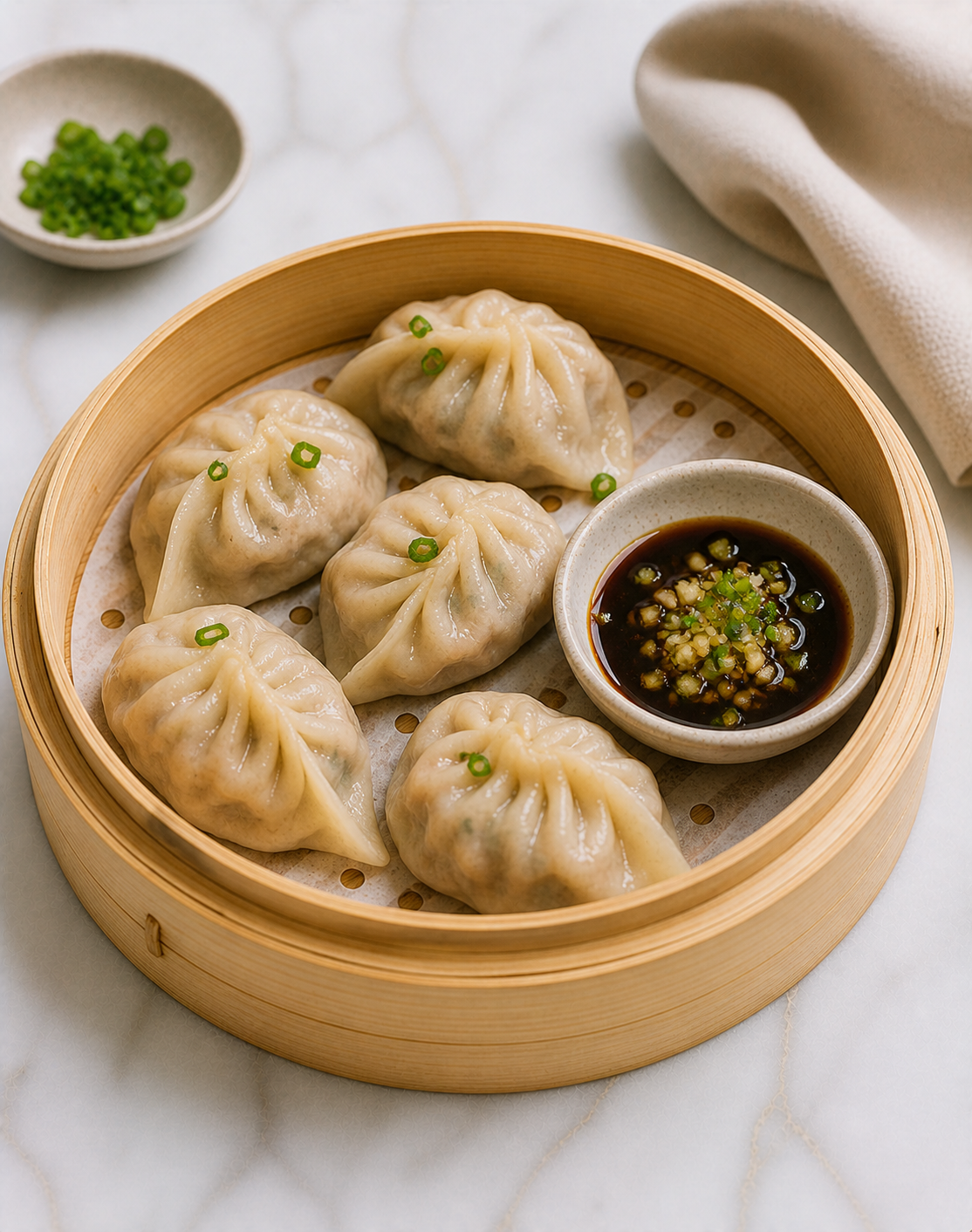
Dumplings also pair nicely with ramen, especially if you want a bigger family dinner. Steamed or pan-fried dumplings add texture without taking attention away from the soup.
A cucumber salad brings a cool, crisp contrast to the rich broth. Thin cucumbers with rice vinegar, sesame oil, and a pinch of salt keep the meal fresh.
For kids, serve the ramen with mild toppings like corn, egg, noodles, and pork. Keep chili oil, extra green onions, mushrooms, and bamboo shoots on the side so each person can build their bowl.
Leftovers and Storage
Store leftover chashu pork, broth, noodles, and toppings separately whenever possible. This keeps the noodles from soaking up too much broth and becoming soft.
The chashu pork can be refrigerated in an airtight container with some braising liquid for up to 3 days. Reheat slices gently in a skillet, microwave, or warm broth until heated through.
The broth can be stored in the refrigerator for up to 3 days. Reheat it slowly on the stove and avoid boiling hard after the miso and milk have been added.
Cooked ramen noodles are best fresh, but leftovers can be stored for 1 day if needed. Warm them briefly in hot water before adding them to reheated broth.
You can freeze the chashu pork and broth separately for up to 2 months. I do not recommend freezing cooked noodles or soft-boiled eggs because their texture changes after thawing.
Nutrition and Benefits
- Filling protein: Chashu pork and soft-boiled eggs add protein and make each bowl satisfying. This helps the ramen feel like a complete meal instead of just soup.
- Comforting broth: The broth is warm, savory, and rich with garlic, ginger, miso, sesame oil, and soy sauce. It brings cozy flavor without needing complicated steps.
- Customizable toppings: Corn, mushrooms, greens, bamboo shoots, green onions, and nori make the bowl colorful and flexible. Everyone can choose the toppings they enjoy most.
- Make-ahead friendly parts: The pork, broth, eggs, and toppings can be prepared ahead of time. This makes homemade ramen more manageable for family meals.
- Balanced texture: Springy noodles, tender pork, creamy eggs, crisp green onions, and warm broth make each bite interesting. The mix of textures is part of what makes ramen so comforting.
Recipe FAQ
Can I make chashu pork ahead of time?
Yes, chashu pork is actually better when made ahead. Chilling it helps the pork firm up so it slices more neatly. Store it in some of the braising liquid to keep it moist and flavorful.
Can I use pork shoulder instead of pork belly?
Yes, pork shoulder works well and is a little meatier than pork belly. It may not slice quite as neatly, but it becomes tender and flavorful after braising. It is a good option for families who prefer less fat.
What noodles should I use?
Fresh ramen noodles give the best chewy texture. Dried ramen noodles also work well if they are easier to find. Skip the seasoning packet and cook the noodles separately from the broth.
Can I make the broth without soy milk?
Yes, you can leave out the soy milk or whole milk. The broth will be less creamy but still flavorful from the miso, soy sauce, garlic, ginger, and sesame oil. Use a rich pork or chicken broth for the best taste.
How do I keep ramen noodles from getting mushy?
Cook the noodles right before serving and add them directly to the bowls. Do not let them sit in hot broth for too long before eating. Store leftover noodles separately from the broth.
Is this ramen spicy?
The base recipe is mild and family-friendly. Chili oil is optional and can be added to individual bowls. This makes it easy for kids and adults to enjoy the same pot of broth.
Can I use store-bought broth?
Yes, store-bought pork or chicken broth works well for a simpler version. Choose a good-quality broth and season it with miso, garlic, ginger, soy sauce, sesame oil, and rice vinegar. These additions help make it taste richer and more homemade.
A Cozy Ramen Bowl Worth the Extra Care
Tonkatsu Ramen with Chashu Pork is a warm, rich bowl that feels comforting from the first spoonful. The tender pork, savory broth, springy noodles, and simple toppings come together in a way that feels special without being out of reach.
It is a recipe best made in small steps, which makes it easier for a home kitchen. With make-ahead pork, prepared toppings, and fresh noodles cooked at the end, this ramen is a satisfying meal worth making again.