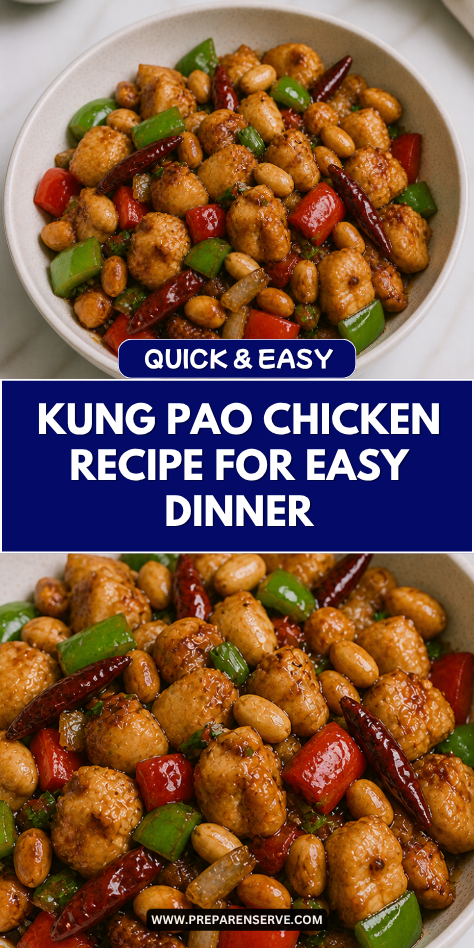
I make Kung Pao Chicken when I want a dinner that feels bold, warm, and satisfying without being hard to cook at home. The chicken is tender, the sauce is savory and slightly sweet, and the peanuts add a crunchy bite that makes the whole dish feel complete.
This is one of those meals my family enjoys because it has a little bit of everything. It has juicy chicken, colorful vegetables, a glossy sauce, and just enough heat to make it interesting while still being easy to adjust for kids or anyone who prefers milder food.
Why You’ll Love This Recipe
Kung Pao Chicken is full of flavor, but it comes together with simple steps and everyday ingredients. The sauce has a nice balance of salty, tangy, sweet, and savory flavors, while the chicken stays tender because it cooks quickly in small pieces.
This recipe is great for busy family dinners because it cooks fast once everything is chopped and ready. Stir-fries move quickly, so a little prep before turning on the stove makes the whole meal feel calm and easy.
It is also flexible for different tastes. You can keep the spice mild, add more chili for heat, or stir in extra vegetables to make the meal heartier and more colorful.
Serves: 4 people
This recipe serves 4 people as a main dish, especially when served over rice or noodles. Each portion has a good mix of chicken, vegetables, peanuts, and sauce, so it feels filling without being too heavy.
If you are serving younger kids, you can reduce the dried chilies or leave them out completely. For bigger appetites, add extra rice, steamed vegetables, or a simple cucumber salad on the side.
Ingredients You’ll Need
For the Chicken Marinade
- 1 ½ pounds boneless, skinless chicken thighs or chicken breasts, cut into ¾-inch pieces
- 1 tablespoon low-sodium soy sauce
- 1 tablespoon cornstarch
- 1 tablespoon Shaoxing wine or dry sherry
- 1 teaspoon sesame oil
- ¼ teaspoon black pepper
For the Kung Pao Sauce
- 3 tablespoons low-sodium soy sauce
- 1 tablespoon dark soy sauce, optional for color
- 1 tablespoon hoisin sauce
- 1 tablespoon rice vinegar
- 1 tablespoon brown sugar
- 1 tablespoon cornstarch
- ½ cup low-sodium chicken broth
- 1 teaspoon sesame oil
For the Stir-Fry
- 2 tablespoons neutral oil, such as canola, vegetable, or avocado oil
- 3 garlic cloves, minced
- 1 tablespoon fresh ginger, grated or finely minced
- 6 to 8 dried red chilies, cut in half, optional for heat
- 1 red bell pepper, diced
- 1 green bell pepper, diced
- ½ cup diced zucchini or celery
- ½ cup roasted unsalted peanuts
- 3 green onions, sliced, white and green parts separated
For Serving
- Cooked jasmine rice or white rice
- Extra sliced green onions, optional
- Toasted sesame seeds, optional
Chicken thighs are a great choice for Kung Pao Chicken because they stay juicy and tender during high-heat cooking. Chicken breasts also work well, but they need a little extra care so they do not overcook.
The marinade helps the chicken stay soft and flavorful. Cornstarch gives the chicken a light coating, which helps it brown nicely and hold onto the sauce.
The sauce is what brings everything together. Soy sauce, hoisin sauce, rice vinegar, brown sugar, chicken broth, and sesame oil create a glossy sauce that tastes savory, tangy, and lightly sweet.
Bell peppers, zucchini or celery, green onions, garlic, and ginger add color and fresh flavor. The peanuts give the dish its classic crunch and make each bite more satisfying.
Dried red chilies add traditional warmth, but they can be adjusted. If your family likes mild food, use fewer chilies or leave them out and serve chili oil on the side for adults.
Pro Tips
Cut the chicken into even pieces so it cooks at the same speed. Smaller pieces also help the chicken brown quickly and soak up the sauce better.
Have everything ready before turning on the stove. Kung Pao Chicken cooks fast, and there is not much time to chop or measure once the stir-fry begins.
Use a large skillet or wok so the chicken has room to sear. If the pan is too crowded, the chicken may steam instead of browning.
Do not overcook the vegetables. Bell peppers and zucchini should stay a little crisp so the dish has color, freshness, and texture.
Stir the sauce again right before adding it to the pan. Cornstarch settles quickly, and stirring helps the sauce thicken evenly.
Add the peanuts near the end. This keeps them crunchy and gives the finished dish that classic Kung Pao texture.
Keep the spice flexible for family meals. You can cook the dish mild, then add chili crisp, chili oil, or extra red pepper flakes to adult portions at the table.
Tools You’ll Need
- Large wok or large skillet
- Large mixing bowl
- Small mixing bowl
- Measuring cups
- Measuring spoons
- Cutting board
- Sharp knife
- Wooden spoon or silicone spatula
- Tongs
- Microplane or small grater for ginger
- Garlic press or small knife for mincing garlic
- Whisk
- Serving spoon
- Rice cooker or medium pot for rice
A wok is helpful because it gives the ingredients plenty of room to move and cook quickly. A large skillet also works well, especially if it has a wide bottom that lets the chicken brown.
A sharp knife makes the prep much easier. Since the chicken, peppers, zucchini or celery, and green onions all need to be cut before cooking, clean and even pieces help the recipe come together smoothly.
A small bowl for the sauce is important because the sauce needs to be mixed before it goes into the pan. This helps prevent clumps and makes the final stir-fry glossy and smooth.
Substitutions and Variations
Use Chicken Breast or Thighs
Chicken thighs give the juiciest texture, but chicken breast works well for a leaner version. Cut the pieces evenly and avoid cooking them too long so they stay tender.
Make It Mild for Kids
Leave out the dried red chilies or use only one or two for gentle flavor. You can serve chili oil or red pepper flakes on the side for adults who want more heat.
Swap the Peanuts
Cashews can be used instead of peanuts for a slightly sweeter crunch. For a nut-free version, use roasted sunflower seeds or leave the nuts out completely.
Add More Vegetables
Broccoli florets, snap peas, carrots, mushrooms, or water chestnuts can be added to the stir-fry. Keep the pieces small so they cook quickly and do not overpower the chicken.
Make It Lighter
Use chicken breast, reduce the oil slightly, and add extra vegetables like zucchini, bell peppers, or broccoli. Serve it over cauliflower rice or a smaller portion of steamed rice for a lighter plate.
Make Ahead Tips
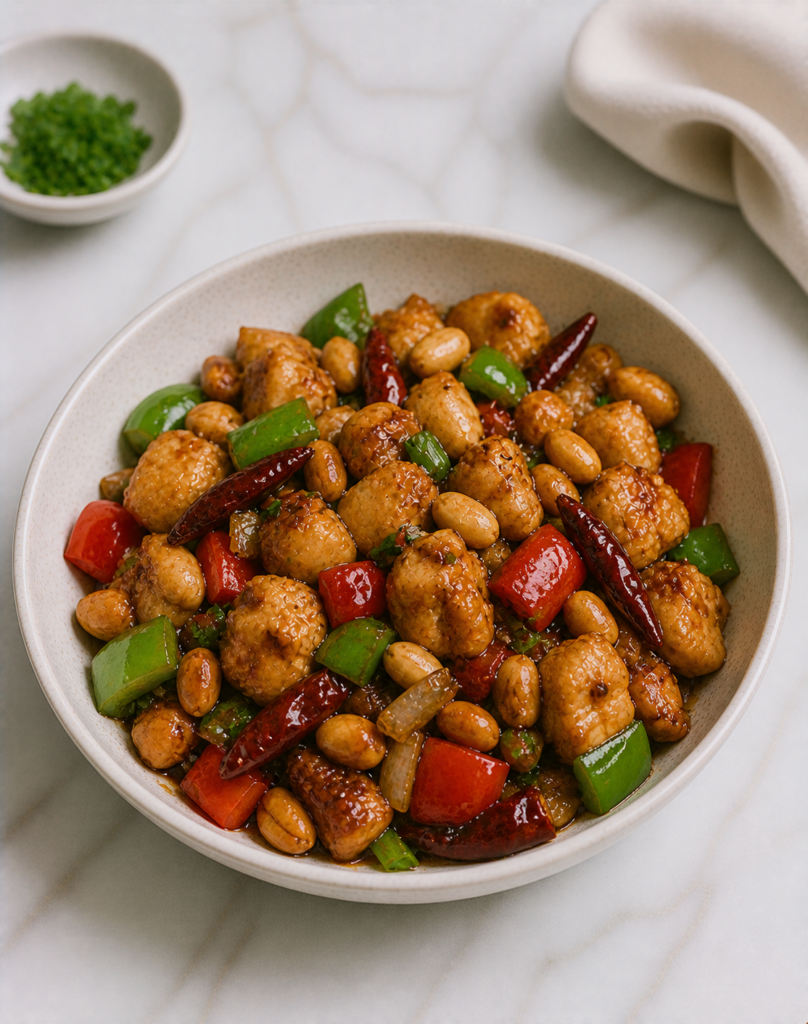
Kung Pao Chicken is a great recipe to prep ahead because most of the work is in the chopping and mixing. You can cut the chicken, dice the vegetables, slice the green onions, and measure the peanuts earlier in the day.
The chicken can be mixed with the low-sodium soy sauce, cornstarch, Shaoxing wine or dry sherry, sesame oil, and black pepper up to 24 hours ahead. Keep it covered in the refrigerator until you are ready to cook.
The sauce can also be made ahead and stored in a covered jar or bowl in the refrigerator. Stir or shake it well before using because the cornstarch will settle at the bottom.
For the best texture, wait to stir-fry the dish until right before serving. Kung Pao Chicken cooks quickly, and the vegetables taste best when they still have a little crispness.
If you are making rice, that can be cooked ahead and reheated while the chicken cooks. This makes the final meal feel much easier on a busy night.
Instructions
Step 1: Marinate the Chicken
Add the chicken pieces to a large mixing bowl. Stir in the low-sodium soy sauce, cornstarch, Shaoxing wine or dry sherry, sesame oil, and black pepper until the chicken is evenly coated.
Let the chicken sit for 15 to 20 minutes while you prepare the vegetables and sauce. This short rest helps the chicken stay tender and gives it a light coating that grabs the sauce later.
Step 2: Mix the Kung Pao Sauce
In a small bowl, whisk together the low-sodium soy sauce, dark soy sauce if using, hoisin sauce, rice vinegar, brown sugar, cornstarch, chicken broth, and sesame oil. Make sure the cornstarch is fully mixed in and there are no dry clumps.
Set the sauce near the stove so it is ready when you need it. Stir it again right before pouring it into the pan because the cornstarch settles quickly.
Step 3: Prepare the Stir-Fry Ingredients
Dice the red bell pepper, green bell pepper, and zucchini or celery into small, even pieces. Slice the green onions, keeping the white parts and green parts separate.
Mince the garlic and grate or finely mince the fresh ginger. If using dried red chilies, cut them in half and shake out some seeds for a milder heat.
Step 4: Heat the Pan
Place a large wok or skillet over medium-high heat. Add 1 tablespoon of neutral oil and let it heat until it looks shiny.
The pan should be hot enough for the chicken to sizzle when it touches the surface. A hot pan helps the chicken brown instead of release too much liquid.
Step 5: Cook the Chicken
Add the chicken in a single layer, working in batches if needed. Cook for 3 to 5 minutes, stirring occasionally, until the pieces are browned and mostly cooked through.
Transfer the chicken to a clean plate. It will finish cooking when it goes back into the pan with the sauce, so try not to overcook it here.
Step 6: Cook the Aromatics
Add the remaining 1 tablespoon of neutral oil to the pan. Stir in the dried red chilies, white parts of the green onions, minced garlic, and fresh ginger.
Cook for 30 to 60 seconds, stirring constantly, until fragrant. Be careful not to let the garlic burn because it can turn bitter quickly.
Step 7: Add the Vegetables
Add the diced red bell pepper, green bell pepper, and zucchini or celery to the pan. Stir-fry for 2 to 3 minutes, just until the vegetables brighten in color and begin to soften.
The vegetables should still have a little bite. This keeps the dish fresh and gives a nice contrast to the tender chicken and glossy sauce.
Step 8: Return the Chicken to the Pan
Add the cooked chicken back to the wok or skillet. Stir everything together so the chicken mixes evenly with the vegetables, garlic, ginger, chilies, and green onions.
Let it cook for about 1 minute to bring the chicken back up to heat. This also helps the flavors start to blend before the sauce goes in.
Step 9: Add the Sauce
Stir the sauce once more, then pour it into the pan. Toss everything well so the chicken and vegetables are coated.
Cook for 1 to 2 minutes, stirring often, until the sauce thickens and turns glossy. If the sauce gets too thick, add a splash of chicken broth or water to loosen it.
Step 10: Finish with Peanuts and Green Onions
Stir in the roasted unsalted peanuts and the green parts of the sliced green onions. Cook for about 30 seconds, just long enough to warm them through.
Remove the pan from the heat. Serve the Kung Pao Chicken right away over warm rice, with extra green onions or toasted sesame seeds if desired.
Serving Suggestions
Kung Pao Chicken is wonderful served over hot jasmine rice or plain white rice. The rice soaks up the glossy sauce and makes the meal feel complete.
Brown rice is a good option if you want something a little heartier. It adds a nutty flavor and gives the dish a more filling base.
For a noodle-style dinner, serve the chicken over lo mein noodles, rice noodles, or simple buttered spaghetti. The sauce coats noodles well and makes the meal feel fun for kids.
Steamed vegetables are a simple side that works nicely with this dish. Broccoli, snap peas, carrots, or green beans add color and help balance the sweet and savory sauce.
A cool cucumber salad is also a refreshing pairing. The crisp cucumbers and light vinegar dressing help calm the heat if you use dried chilies.
For a family-style meal, place the Kung Pao Chicken in a large serving bowl with rice and toppings on the side. This makes it easy for everyone to build a plate with the amount of sauce, peanuts, and spice they like.
Leftovers and Storage
Store leftover Kung Pao Chicken in an airtight container in the refrigerator for up to 4 days. Let it cool before storing, but do not leave it at room temperature for more than 2 hours.
For best results, store the rice separately from the chicken. This keeps the rice from soaking up too much sauce and becoming soft.
Reheat leftovers in a skillet over medium-low heat with a splash of chicken broth or water. Stir gently until the chicken is warmed through and the sauce becomes glossy again.
You can also reheat individual portions in the microwave. Cover loosely and heat in short intervals, stirring between each one so the chicken warms evenly.
Kung Pao Chicken can be frozen, but the vegetables may soften after thawing. Freeze it in a freezer-safe container for up to 2 months, then thaw overnight in the refrigerator before reheating.
If you know you will freeze some, slightly undercook the vegetables. This helps them keep a better texture when reheated later.
Nutrition and Benefits
- Good source of protein: The chicken gives this meal filling protein that helps make it satisfying. It works well as a main dish with rice, noodles, or vegetables.
- Colorful vegetables: Bell peppers, zucchini or celery, green onions, garlic, and ginger add flavor, color, and texture. They also help make the dish feel fresh and balanced.
- Flexible spice level: The dried red chilies can be reduced, skipped, or served on the side. This makes the recipe easier to adjust for kids and adults.
- Homemade sauce: Making the sauce at home lets you control the sweetness, saltiness, and heat. It also gives the stir-fry a fresher taste than many takeout versions.
- Crunchy texture: Roasted peanuts add a classic crunch and make every bite more interesting. They also help the dish feel hearty without adding extra steps.
Recipe FAQ
Can I make Kung Pao Chicken without dried red chilies?
Yes, you can leave out the dried red chilies for a mild version. The dish will still have plenty of flavor from the garlic, ginger, soy sauce, hoisin, vinegar, and sesame oil. You can serve chili crisp or red pepper flakes on the side for anyone who wants heat.
Can I use chicken breast instead of chicken thighs?
Yes, chicken breast works well in this recipe. Cut it into even pieces and avoid overcooking it so it stays tender. Chicken thighs are a little juicier, but both options taste good.
What can I use instead of Shaoxing wine?
Dry sherry is a good substitute for Shaoxing wine. You can also use chicken broth if you prefer not to cook with wine. The flavor will be a little different, but the chicken will still be tasty.
How do I keep the chicken tender?
Cut the chicken into small, even pieces and marinate it with soy sauce, cornstarch, sesame oil, and wine or broth. Cook it quickly over medium-high heat and remove it from the pan before it overcooks. It will finish gently in the sauce.
Can I make this nut-free?
Yes, you can leave out the peanuts or replace them with roasted sunflower seeds. You can also add water chestnuts for crunch. The dish will still keep its sweet, savory, and tangy flavor.
Why did my sauce get too thick?
The cornstarch may have thickened quickly from the heat. Add a splash of chicken broth or water and stir until the sauce loosens. Next time, cook the sauce just until glossy and remove the pan from the heat.
Can I add more vegetables?
Yes, this recipe works well with extra vegetables. Broccoli, snap peas, carrots, mushrooms, and water chestnuts are all good choices. Keep the pieces small so they cook quickly and blend well with the chicken.
A Saucy Stir-Fry That Brings Everyone to the Table
Kung Pao Chicken is a warm, flavorful dinner that feels bold but still simple enough for a family night. The tender chicken, crisp vegetables, glossy sauce, and crunchy peanuts come together in a way that feels comforting and dependable.
It is easy to adjust the spice, quick to cook, and helpful for busy evenings when you want something homemade. Served over rice or noodles, this is a meal worth making again whenever your family wants a cozy takeout-style dinner at home.