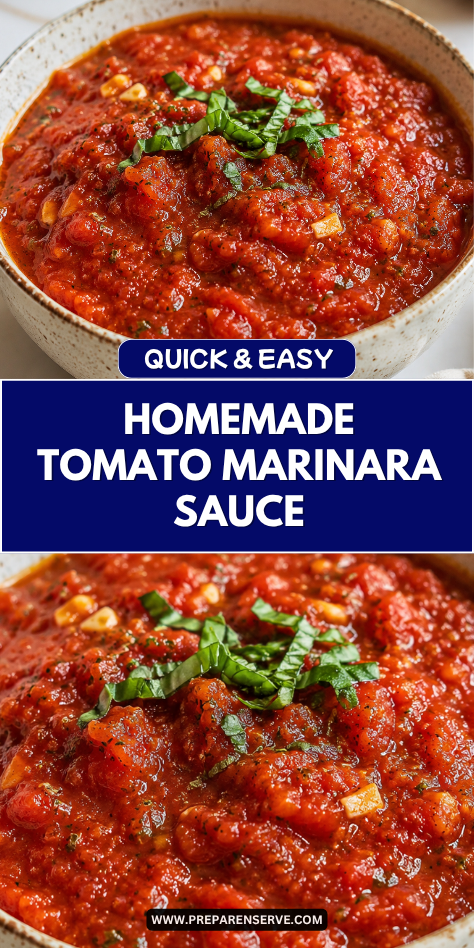
I make Homemade Tomato Marinara when I want a simple sauce that tastes warm, fresh, and reliable. It is one of those recipes that makes dinner feel more homemade, even when the rest of the meal is very easy.
This sauce is something I like to keep in the kitchen because it works with so many meals. Pasta is the first thing most people think of, but marinara is also wonderful with meatballs, chicken, vegetables, pizza, sandwiches, or baked casseroles.
I also love that this recipe uses basic ingredients and does not need anything fancy. Tomatoes, garlic, onion, olive oil, herbs, and a little simmering time come together into a sauce that feels comforting, family-friendly, and easy to trust.
Why You’ll Love This Recipe
Homemade Tomato Marinara has a bright tomato flavor with a cozy garlic and herb base. It tastes fresh and simple, but the slow simmer helps the sauce become smooth, rich, and full of comfort.
This recipe is easy enough for beginner cooks and useful enough to make again and again. Once you learn the basic method, you can adjust the texture, sweetness, herbs, and seasoning to fit your family’s taste.
It is also a great make-ahead sauce because it stores and freezes well. A batch in the fridge or freezer can help you pull together pasta, pizza, baked chicken, or quick lunches with very little extra work.
Serves: 6 people
This recipe serves about 6 people when used as a pasta sauce. It makes enough marinara for about 1 pound of pasta, with a little extra depending on how saucy your family likes each bowl.
If you are using it for dipping, pizza, or smaller servings, it may stretch even further. You can also double the recipe and freeze half for another dinner.
Ingredients You’ll Need
For the Marinara Sauce
- 2 tablespoons olive oil
- 1 small yellow onion, finely diced
- 4 cloves garlic, minced
- 2 tablespoons tomato paste
- 2 cans whole peeled tomatoes, 28 ounces each
- 1 teaspoon kosher salt, plus more to taste
- 1/2 teaspoon black pepper
- 1 teaspoon dried oregano
- 1/2 teaspoon dried basil
- 1/4 teaspoon crushed red pepper flakes, optional
- 1 teaspoon sugar or honey, optional
- 1 bay leaf
- 2 tablespoons chopped fresh basil
- 1 tablespoon chopped fresh parsley
- 1 tablespoon fresh lemon juice or balsamic vinegar, optional
For Serving
- 1 pound cooked pasta, optional
- Grated Parmesan cheese, optional
- Extra chopped fresh basil
- Extra olive oil, for drizzling
- Crusty bread or garlic bread, optional
Pro Tips
Use whole peeled tomatoes for the best texture and flavor. They usually have a softer, sweeter taste than some canned diced tomatoes, and they break down nicely as the sauce simmers.
Cook the onion until it is soft before adding the tomatoes. This helps the sauce taste smooth and gently sweet instead of sharp.
Let the tomato paste cook for a minute before adding the canned tomatoes. This deepens the flavor and gives the marinara a richer color.
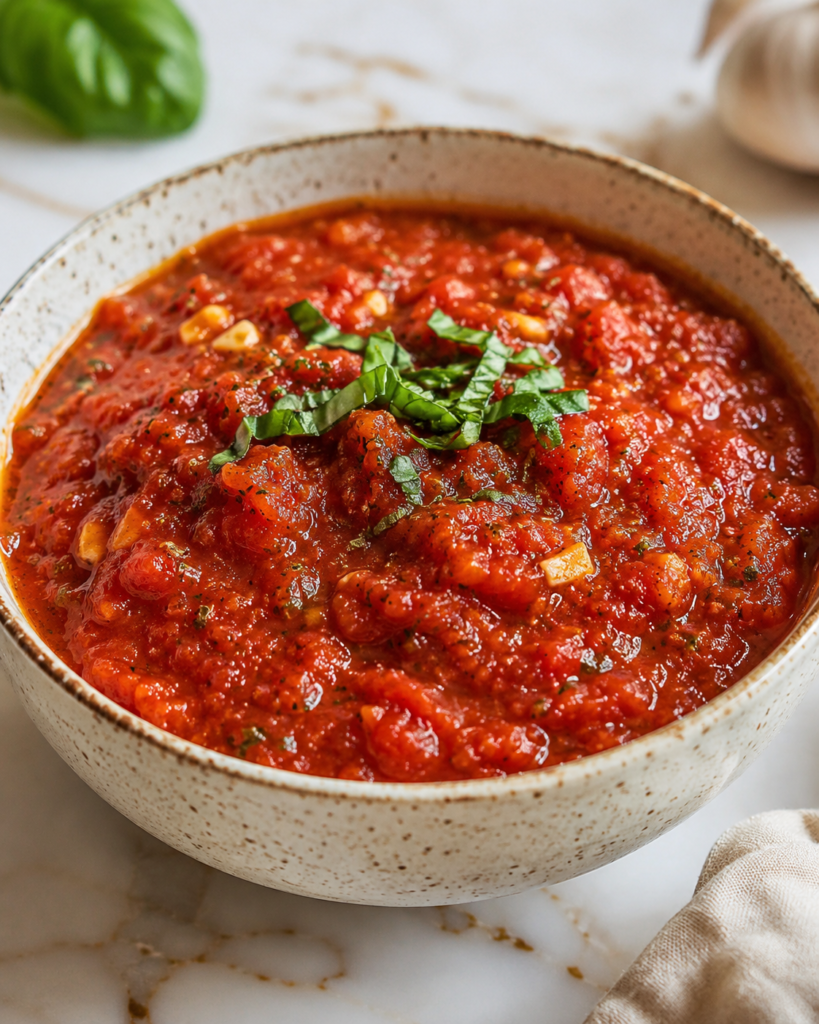
Crush the tomatoes by hand for a rustic texture or blend the sauce for a smoother finish. Both ways work well, so choose the texture your family enjoys most.
Simmer the sauce uncovered so it can thicken. Stir now and then to keep it from sticking and to help the flavors come together.
Taste at the end before adding extra salt or sugar. Tomatoes can vary a lot, so the final seasoning should be based on how your sauce tastes after simmering.
Tools You’ll Need
- Large saucepan or Dutch oven
- Cutting board
- Sharp knife
- Can opener
- Measuring spoons
- Measuring cups
- Wooden spoon or spatula
- Potato masher, optional
- Immersion blender or regular blender, optional
- Ladle
- Fine mesh splatter screen, optional
- Airtight containers for storage
Substitutions and Variations
Use Crushed Tomatoes
Crushed tomatoes can be used instead of whole peeled tomatoes if you want a smoother sauce with less work. Choose a good-quality canned tomato because the flavor of the sauce depends heavily on the tomatoes.
Make It Spicy
Add extra crushed red pepper flakes or a pinch of cayenne while the sauce simmers. Keep the base mild for kids, then let adults add more heat at the table if needed.
Add More Vegetables
Stir in finely grated carrot, diced bell pepper, mushrooms, or zucchini with the onion. These add flavor and texture while keeping the sauce familiar and easy to use.
Make It Richer
Add a small pat of butter or an extra drizzle of olive oil at the end. This gives the sauce a softer, rounder flavor without turning it into a heavy sauce.
Turn It Into Meat Sauce
Brown ground beef, turkey, pork, or Italian sausage before adding the onion and garlic. The marinara base stays the same, but the sauce becomes heartier and more filling for pasta night.
Make Ahead Tips
Homemade Tomato Marinara is one of the easiest sauces to make ahead because the flavor gets better after it rests. You can cook the full sauce up to 4 days in advance and store it in an airtight container in the refrigerator.
The sauce also freezes very well, which makes it helpful for busy weeks. Let it cool completely, then portion it into freezer-safe containers or bags so you can thaw only what you need.
You can also prep the onion, garlic, basil, and parsley ahead of time. Keep the fresh herbs separate and add them near the end so they keep their bright flavor.
If you are planning pasta night, make the sauce first and let it sit while you cook the pasta. A warm pot of marinara ready on the stove makes dinner feel much calmer.
Instructions
Step 1: Cook the Onion
Heat 2 tablespoons olive oil in a large saucepan or Dutch oven over medium heat. Add 1 finely diced small yellow onion and cook for 5 to 7 minutes, stirring often, until it softens and looks translucent.
Do not rush this step, because soft onion gives the sauce a sweeter and smoother flavor. If the onion starts to brown too quickly, lower the heat slightly.
Step 2: Add the Garlic
Add 4 minced garlic cloves to the pot and stir for about 30 seconds. The garlic should smell fragrant but should not turn dark brown.
Garlic can burn quickly, so keep it moving in the oil. This short cooking time gives the sauce warm garlic flavor without bitterness.
Step 3: Stir in the Tomato Paste
Add 2 tablespoons tomato paste to the onion and garlic. Stir it into the oil and cook for 1 minute.
The tomato paste will darken slightly and smell richer. This helps build a deeper tomato flavor before the canned tomatoes are added.
Step 4: Add the Tomatoes
Pour in 2 cans whole peeled tomatoes with their juices. Use a wooden spoon or potato masher to gently crush the tomatoes in the pot.
If you like a rustic sauce, leave some small tomato pieces. If your family prefers a smoother sauce, you can blend it later.
Step 5: Season the Sauce
Add 1 teaspoon kosher salt, 1/2 teaspoon black pepper, 1 teaspoon dried oregano, 1/2 teaspoon dried basil, 1/4 teaspoon crushed red pepper flakes if using, 1 teaspoon sugar or honey if using, and 1 bay leaf. Stir well so the seasonings are mixed through the tomatoes.
The sugar or honey is optional and depends on your tomatoes. If they taste sweet and balanced already, you can leave it out.
Step 6: Simmer the Marinara
Bring the sauce to a gentle simmer, then lower the heat to medium-low. Let it simmer uncovered for 30 to 40 minutes, stirring now and then.
The sauce should thicken slightly and smell rich, garlicky, and warm. If it splatters, lower the heat a little or use a splatter screen.
Step 7: Adjust the Texture
Remove the bay leaf from the sauce. For a chunky sauce, use the marinara as it is or mash it a little more with a spoon.
For a smooth sauce, blend it with an immersion blender until it reaches the texture your family likes. You can also transfer it carefully to a regular blender in batches.
Step 8: Add Fresh Herbs
Stir in 2 tablespoons chopped fresh basil and 1 tablespoon chopped fresh parsley. Let the sauce simmer for 2 more minutes so the herbs soften into the marinara.
Fresh herbs added at the end make the sauce taste brighter. They also help balance the deeper cooked tomato flavor.
Step 9: Finish and Serve
Taste the sauce and add more salt, pepper, or a small splash of lemon juice or balsamic vinegar if needed. The sauce should taste bright, savory, and gently sweet.
Serve warm over cooked pasta, with grated Parmesan cheese, extra basil, and a drizzle of olive oil if desired. It is also ready to use for pizza, meatballs, baked dishes, or dipping bread.
Serving Suggestions
Homemade Tomato Marinara is classic over spaghetti, penne, rigatoni, or any pasta your family enjoys. Toss the hot pasta with the sauce so every piece is coated before serving.
It also makes a wonderful sauce for meatballs. Spoon it over beef, turkey, chicken, or vegetarian meatballs for a comforting dinner with pasta or bread.
Use this marinara as a pizza sauce for homemade pizza night. Spread a thin layer over dough, then add cheese, vegetables, pepperoni, or your favorite toppings.
It is also great with baked chicken or eggplant. Spoon the sauce over the top, add cheese if you like, and bake until warm and bubbly.
For a simple snack or side, serve it warm as a dip with garlic bread, mozzarella sticks, breadsticks, or roasted vegetables. The sauce is smooth, bright, and easy to pair with family favorites.
You can also use it in lasagna, baked ziti, stuffed shells, or casseroles. Having homemade marinara ready makes these meals taste more comforting and fresh.
Leftovers and Storage
Store leftover Homemade Tomato Marinara in an airtight container in the refrigerator for up to 4 days. Let the sauce cool before sealing the container, but do not leave it at room temperature for more than 2 hours.
To reheat, warm the sauce in a saucepan over medium-low heat, stirring often. If it has thickened in the refrigerator, add a splash of water, broth, or tomato juice to loosen it.
You can also reheat small portions in the microwave. Use short bursts and stir between each one so the sauce warms evenly.
For freezing, let the marinara cool completely, then place it in freezer-safe containers or bags. Freeze for up to 3 months.
Thaw frozen sauce overnight in the refrigerator, then warm it gently on the stove. Taste after reheating and add fresh basil, parsley, or a small drizzle of olive oil to brighten it again.
Nutrition and Benefits
- Made with simple ingredients: Tomatoes, onion, garlic, olive oil, and herbs create a sauce that feels fresh and homemade. It is a helpful base for many family meals.
- Rich in tomato flavor: Canned whole tomatoes give the sauce a bright, comforting taste. Simmering helps deepen the flavor and soften the acidity.
- Naturally versatile: Marinara works with pasta, pizza, meatballs, vegetables, sandwiches, and baked dishes. One batch can help with several meals during the week.
- Easy to make lighter or heartier: Keep it simple for a light sauce, or add meat, vegetables, cheese, or beans for a more filling meal. The base recipe stays easy and familiar.
- Great for meal prep: This sauce stores and freezes well. Keeping it ready can make busy dinners faster and more homemade.
Recipe FAQ
Can I use crushed tomatoes instead of whole peeled tomatoes?
Yes, crushed tomatoes work well and make the sauce smoother from the start. Use the same amount as the whole peeled tomatoes. Choose a good-quality brand because the tomato flavor is the heart of the sauce.
How long should marinara sauce simmer?
A good homemade marinara can simmer for 30 to 40 minutes. This gives the tomatoes time to thicken and blend with the garlic, onion, and herbs. You can simmer it longer on low heat if you want a deeper flavor.
Do I need to add sugar?
Sugar is optional and depends on the tomatoes. Some canned tomatoes taste sweet and balanced, while others are more acidic. Start without sugar, then add a small amount only if the sauce tastes sharp.
Can I make this sauce without onion?
Yes, you can leave out the onion and use extra garlic if you prefer. The sauce will taste a little sharper and less sweet. A small grated carrot can add gentle sweetness if needed.
Can I freeze Homemade Tomato Marinara?
Yes, marinara freezes very well. Let it cool fully, then freeze it in containers or bags for up to 3 months. Thaw it overnight in the refrigerator before reheating.
How do I make marinara sauce thicker?
Simmer it uncovered for a little longer so extra liquid can cook off. Stir now and then to keep it from sticking. Tomato paste also helps give the sauce a thicker texture.
What can I do if my sauce tastes too acidic?
Add a small pinch of sugar, a drizzle of honey, or a little extra olive oil. Simmer for a few more minutes and taste again. Fresh basil and a small pat of butter can also soften the flavor.
A Simple Tomato Sauce to Keep Close
Homemade Tomato Marinara is one of those kitchen basics that makes everyday meals feel warmer and more dependable. The tomatoes, garlic, onion, herbs, and olive oil come together into a sauce that is simple, comforting, and easy to use.
I love keeping a batch ready for pasta, pizza, meatballs, and quick family dinners. It is worth making again because it stores well, freezes beautifully, and brings homemade flavor to the table with very little fuss.