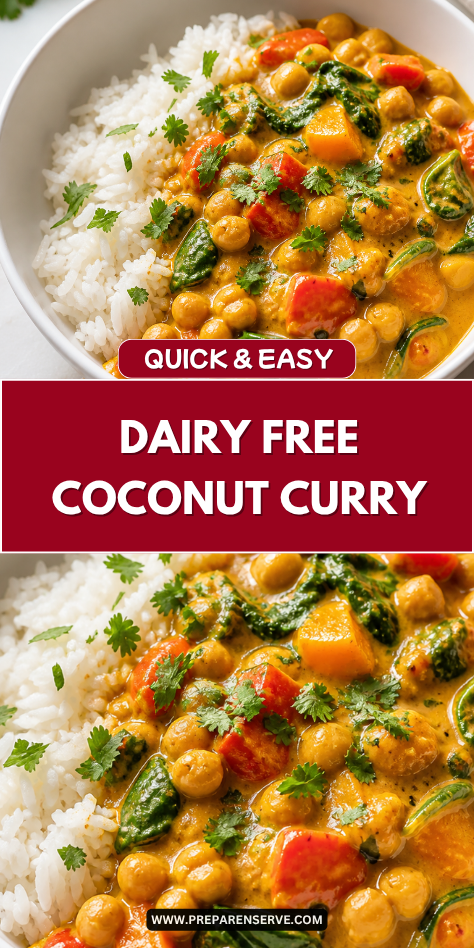
I make Dairy-Free Coconut Curry when I want a dinner that feels warm, creamy, and comforting without using any milk, cream, or butter. The coconut milk gives the sauce a smooth texture, the curry spices bring gentle warmth, and the vegetables make the whole dish colorful and filling.
Why You’ll Love This Recipe
Dairy-Free Coconut Curry is creamy, flavorful, and easy to make with everyday ingredients. The coconut milk creates a rich sauce, while garlic, ginger, curry powder, and tomato paste give the dish depth without needing dairy.
This recipe is also very flexible for families. You can use chicken, chickpeas, tofu, shrimp, or extra vegetables, and the curry still feels satisfying and complete.
It is mild enough for kids if you choose a gentle curry powder and skip extra chili. Adults can add chili flakes, lime juice, fresh herbs, or hot sauce at the table for more flavor and heat.
Serves: 4 people
This recipe serves 4 people as a main dish, especially when served over rice, quinoa, or noodles. Each bowl has a creamy coconut sauce, tender vegetables, and a filling protein option.
If you are serving younger kids, you can keep the vegetables soft and cut them into smaller pieces. For bigger appetites, add extra chickpeas, chicken, tofu, or serve the curry with naan or flatbread on the side.
Ingredients You’ll Need
For the Curry
- 1 tablespoon coconut oil or olive oil
- 1 small yellow onion, finely diced
- 3 garlic cloves, minced
- 1 tablespoon fresh ginger, grated
- 2 tablespoons tomato paste
- 2 tablespoons mild curry powder
- 1 teaspoon ground cumin
- ½ teaspoon ground turmeric
- ½ teaspoon paprika
- ½ teaspoon kosher salt, plus more to taste
- ¼ teaspoon black pepper
- ¼ teaspoon red pepper flakes, optional
- 1 can full-fat coconut milk, 13.5 ounces
- 1 cup vegetable broth or chicken broth
- 1 tablespoon low-sodium soy sauce or tamari
- 1 teaspoon maple syrup or honey
- 1 tablespoon fresh lime juice
For the Vegetables and Protein
- 1 medium sweet potato, peeled and diced into ½-inch cubes
- 1 red bell pepper, sliced
- 1 cup broccoli florets
- 1 cup sliced carrots
- 1 cup canned chickpeas, drained and rinsed
- 2 cups baby spinach
- ½ cup frozen peas
For Serving
- Cooked jasmine rice, basmati rice, brown rice, or quinoa
- 2 tablespoons chopped fresh cilantro, optional
- 2 green onions, thinly sliced, optional
- Lime wedges, optional
- Toasted cashews or peanuts, optional
Full-fat coconut milk is the key to the creamy texture in this curry. It gives the sauce body and richness without needing dairy, and it balances the spices with a gentle sweetness.
Onion, garlic, and ginger make the flavor base. Cooking them in oil before adding the spices helps the curry taste warm, savory, and homemade.
Tomato paste adds depth and a little tang. It helps the coconut milk taste more balanced and keeps the sauce from feeling too sweet.
Mild curry powder makes this recipe family-friendly. If your curry powder is spicy, start with less and add more after tasting.
Sweet potato, bell pepper, broccoli, carrots, chickpeas, spinach, and peas make the curry colorful and filling. The mix gives each bite a little sweetness, softness, crunch, and freshness.
Chickpeas are an easy plant-based protein and make the curry hearty. You can keep them as the main protein or add chicken, tofu, or shrimp if your family prefers.
Pro Tips
Use full-fat coconut milk for the creamiest sauce. Light coconut milk works, but the curry will be thinner and less rich.
Cut the sweet potato into small, even pieces. This helps it cook quickly and become tender at the same time as the other vegetables.
Cook the curry powder in the oil for about 30 seconds before adding liquid. This wakes up the spices and gives the sauce a deeper flavor.
Do not boil the coconut milk too hard. A gentle simmer keeps the sauce smooth and helps the vegetables cook without the curry separating.
Add spinach and peas near the end. They cook quickly and stay brighter when they are not simmered for too long.
Taste before serving and adjust slowly. A little more salt, lime juice, maple syrup, or soy sauce can make the curry taste balanced.
Keep the heat mild for kids. Serve chili flakes, chili oil, or hot sauce on the side so adults can add spice to their own bowls.
Tools You’ll Need
- Large skillet, sauté pan, or Dutch oven
- Cutting board
- Sharp knife
- Vegetable peeler
- Measuring cups
- Measuring spoons
- Wooden spoon or silicone spatula
- Can opener
- Microplane or small grater for ginger
- Garlic press or small knife for mincing garlic
- Colander for rinsing chickpeas
- Rice cooker or medium pot for rice
- Ladle or large serving spoon
- Serving bowls
A large skillet or Dutch oven works best because the vegetables need room to simmer in the coconut sauce. A deeper pan also helps prevent splashing as the curry bubbles gently.
A sharp knife makes the prep much easier, especially for the sweet potato, carrots, and bell pepper. Even pieces cook more evenly and make the finished curry easier to eat.
A microplane is helpful for fresh ginger because it makes the pieces fine enough to melt into the sauce. This gives the curry warm ginger flavor without sharp chunks.
A rice cooker is optional, but it makes serving this meal simpler. The rice can cook while the curry simmers, so everything is ready around the same time.
Substitutions and Variations
Change the Protein
Use diced chicken, shrimp, tofu, or lentils instead of chickpeas. Keep the pieces bite-size so they cook evenly and blend well with the creamy coconut sauce.
Make It Gluten-Free
Use tamari instead of soy sauce and check that your curry powder and broth are gluten-free. Serve the curry with rice, quinoa, or gluten-free noodles.
Use Different Vegetables
Try cauliflower, zucchini, green beans, mushrooms, kale, or butternut squash. Choose vegetables that cook well in sauce and cut them into even pieces.
Make It Spicier
Add red pepper flakes, chili paste, fresh jalapeño, or a spoonful of chili crisp. For family meals, keep the pot mild and add heat to individual bowls.
Make It Lighter
Use light coconut milk and add extra broth for a thinner sauce. Serve the curry over cauliflower rice, extra greens, or a smaller portion of regular rice for a lighter bowl.
Make Ahead Tips
Dairy-Free Coconut Curry is a helpful make-ahead dinner because the sauce becomes even more flavorful after it rests. The garlic, ginger, curry powder, coconut milk, tomato paste, and vegetables have time to blend into a warm, creamy sauce.
You can cook the full curry up to 3 days ahead and store it in an airtight container in the refrigerator. Reheat it gently on the stove over medium-low heat, stirring often so the coconut milk stays smooth.
If you want the vegetables to keep more texture, prep them ahead but cook the curry fresh. Dice the sweet potato, slice the carrots and bell pepper, and cut the broccoli into florets, then store them in separate containers.
Rice, quinoa, or noodles can also be made ahead for easy serving. Add a splash of water when reheating grains so they become soft and fluffy again.
For freezing, the curry can be stored for up to 2 months, though the vegetables may soften after thawing. Let it thaw overnight in the refrigerator, then reheat gently and finish with fresh lime juice.
Instructions
Step 1: Prep the Vegetables
Peel and dice the sweet potato into ½-inch cubes. Slice the carrots, slice the red bell pepper, cut the broccoli into small florets, drain and rinse the chickpeas, and measure the spinach and peas.
Keeping the pieces similar in size helps everything cook evenly. Smaller vegetables are also easier for kids to scoop with rice or noodles.
Step 2: Start the Flavor Base
Heat the coconut oil or olive oil in a large skillet, sauté pan, or Dutch oven over medium heat. Add the finely diced onion and cook for 4 to 5 minutes, stirring often, until it softens.
Stir in the minced garlic and grated ginger. Cook for about 30 seconds, just until fragrant, being careful not to let the garlic brown too much.
Step 3: Add Tomato Paste and Spices
Add the tomato paste, mild curry powder, ground cumin, turmeric, paprika, kosher salt, black pepper, and red pepper flakes if using. Stir everything into the onion mixture until it forms a thick, fragrant paste.
Cook for about 1 minute, stirring constantly. This helps deepen the flavor of the tomato paste and warms the spices before the liquid is added.
Step 4: Add Coconut Milk and Broth
Pour in the full-fat coconut milk and vegetable broth or chicken broth. Stir well, scraping the bottom of the pan so the spice mixture blends smoothly into the liquid.
Add the low-sodium soy sauce or tamari and the maple syrup or honey. The sauce should look creamy, golden, and lightly thickened.
Step 5: Simmer the Sweet Potato and Carrots
Add the diced sweet potato and sliced carrots to the pan. Bring the curry to a gentle simmer, then cover and cook for 10 to 12 minutes.
Stir once or twice so the vegetables cook evenly. The sweet potato should begin to soften but should not fall apart.
Step 6: Add Bell Pepper, Broccoli, and Chickpeas
Stir in the sliced red bell pepper, broccoli florets, and drained chickpeas. Cover again and simmer for 6 to 8 minutes, until the broccoli is bright green and the vegetables are tender.
Keep the heat at a gentle simmer rather than a hard boil. This helps the coconut sauce stay creamy and keeps the vegetables from becoming mushy.
Step 7: Add Spinach and Peas
Stir in the baby spinach and frozen peas. Cook for 2 to 3 minutes, just until the spinach wilts and the peas are warmed through.
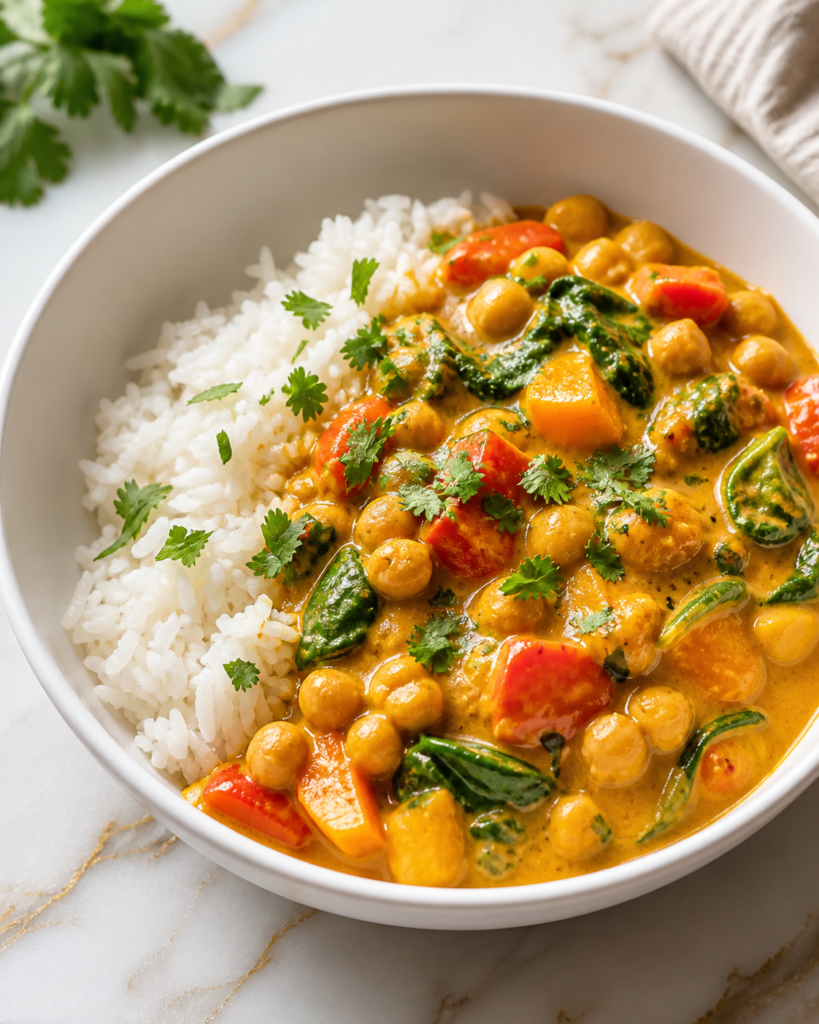
These ingredients cook quickly, so adding them at the end keeps their color fresh. The curry should look creamy, colorful, and full of tender vegetables.
Step 8: Finish the Sauce
Stir in the fresh lime juice and taste the curry. Add more salt, soy sauce or tamari, lime juice, or maple syrup if needed.
If the sauce is too thick, add a splash of broth or water. If it is too thin, simmer uncovered for a few minutes until it reaches the texture you like.
Step 9: Serve Warm
Spoon the curry over cooked jasmine rice, basmati rice, brown rice, or quinoa. Add chopped cilantro, sliced green onions, lime wedges, and toasted cashews or peanuts if desired.
Serve while the curry is warm and the sauce is creamy. Keep extra lime wedges on the side for anyone who likes a brighter finish.
Serving Suggestions
Dairy-Free Coconut Curry is delicious over jasmine rice because the soft grains soak up the creamy sauce. Basmati rice, brown rice, or quinoa also work well if that is what you have on hand.
Warm naan or flatbread makes a cozy side for scooping up the sauce. Choose a dairy-free bread if you need the whole meal to stay dairy-free.
A cucumber salad adds a cool, crisp contrast to the warm curry. Thin cucumbers with lime juice, salt, and fresh herbs keep the meal feeling fresh.
For a heartier dinner, serve the curry with extra chickpeas, tofu, chicken, or shrimp. This is helpful when you are feeding bigger appetites or want more protein in each bowl.
Roasted cashews or peanuts add crunch on top. They also bring a nutty flavor that pairs nicely with the coconut milk and curry spices.
For kids, serve the curry with rice and keep the toppings simple. A little extra coconut milk stirred into their portion can make the flavor softer and milder.
Leftovers and Storage
Store leftover Dairy-Free Coconut Curry in an airtight container in the refrigerator for up to 4 days. Let the curry cool before covering, but do not leave it at room temperature for more than 2 hours.
Reheat it gently in a saucepan over medium-low heat, stirring often. Coconut milk can separate if boiled too hard, so slow reheating helps the sauce stay creamy.
You can also reheat individual portions in the microwave. Use short intervals and stir between each one so the vegetables and sauce warm evenly.
If the curry thickens in the refrigerator, add a splash of broth, water, or coconut milk while reheating. This brings the sauce back to a smooth, spoonable texture.
The curry can be frozen for up to 2 months, but the vegetables may become softer after thawing. For the best texture, freeze the sauce with chickpeas and add fresh quick-cooking vegetables when reheating.
Store rice or quinoa separately if possible. This keeps the grains from soaking up too much sauce and becoming overly soft.
Nutrition and Benefits
- Dairy-free creaminess: Full-fat coconut milk gives the curry a rich, smooth texture without milk, cream, or butter. It makes the dish feel comforting while keeping it dairy-free.
- Loaded with vegetables: Sweet potato, carrots, bell pepper, broccoli, spinach, and peas add color, texture, and natural sweetness. This makes each bowl feel wholesome and satisfying.
- Plant-based protein option: Chickpeas help make the curry filling and add a soft, hearty texture. You can also use tofu, lentils, or another protein your family enjoys.
- Warm, gentle spices: Curry powder, cumin, turmeric, paprika, garlic, and ginger add cozy flavor without needing the dish to be very spicy. The heat is easy to adjust for kids and adults.
- Meal prep friendly: The curry stores and reheats well, which makes it useful for lunches and busy weeknights. The sauce often tastes even better the next day after the flavors settle.
Recipe FAQ
Can I use light coconut milk?
Yes, light coconut milk can be used, but the sauce will be thinner and less creamy. If you use it, simmer the curry uncovered for a few extra minutes to help it thicken. Full-fat coconut milk gives the best texture.
Is this curry spicy?
This version is mild if you use a gentle curry powder and skip the red pepper flakes. Curry powder blends vary, so taste yours before adding extra heat. You can always serve chili flakes or hot sauce on the side.
Can I add chicken to this curry?
Yes, diced chicken works well in this recipe. Cook the chicken after the onion, garlic, and ginger, then add the spices and liquids. Simmer until the chicken is cooked through and reaches 165°F.
Can I make this curry vegan?
Yes, use vegetable broth and maple syrup instead of honey. The rest of the recipe is already dairy-free and can be fully plant-based with chickpeas, tofu, or lentils as the protein.
Why did my coconut curry separate?
Coconut milk can separate if it is boiled too hard or reheated too quickly. Keep the curry at a gentle simmer and stir often. If it separates slightly, whisk in a small splash of warm broth or coconut milk.
What vegetables work best?
Sweet potatoes, carrots, bell peppers, broccoli, spinach, peas, cauliflower, zucchini, and green beans all work well. Add firmer vegetables earlier and quick-cooking vegetables near the end. This keeps everything tender without turning mushy.
Can I freeze Dairy-Free Coconut Curry?
Yes, you can freeze it for up to 2 months. The sauce freezes well, but some vegetables may soften after thawing. Thaw overnight in the refrigerator and reheat gently with a splash of broth or coconut milk.
A Creamy Curry Bowl for Cozy Family Nights
Dairy-Free Coconut Curry is warm, colorful, and comforting without needing any dairy. The coconut milk makes the sauce smooth, the vegetables add texture, and the gentle spices bring cozy flavor that works well for family dinners.
It is easy to adjust, simple to reheat, and helpful for meal prep during busy weeks. Served over rice, quinoa, or noodles, this creamy curry is a dependable recipe worth making again.