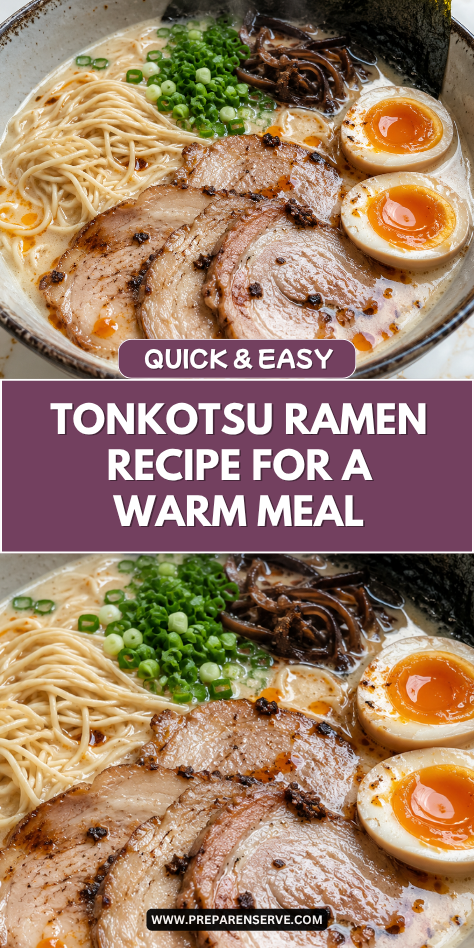
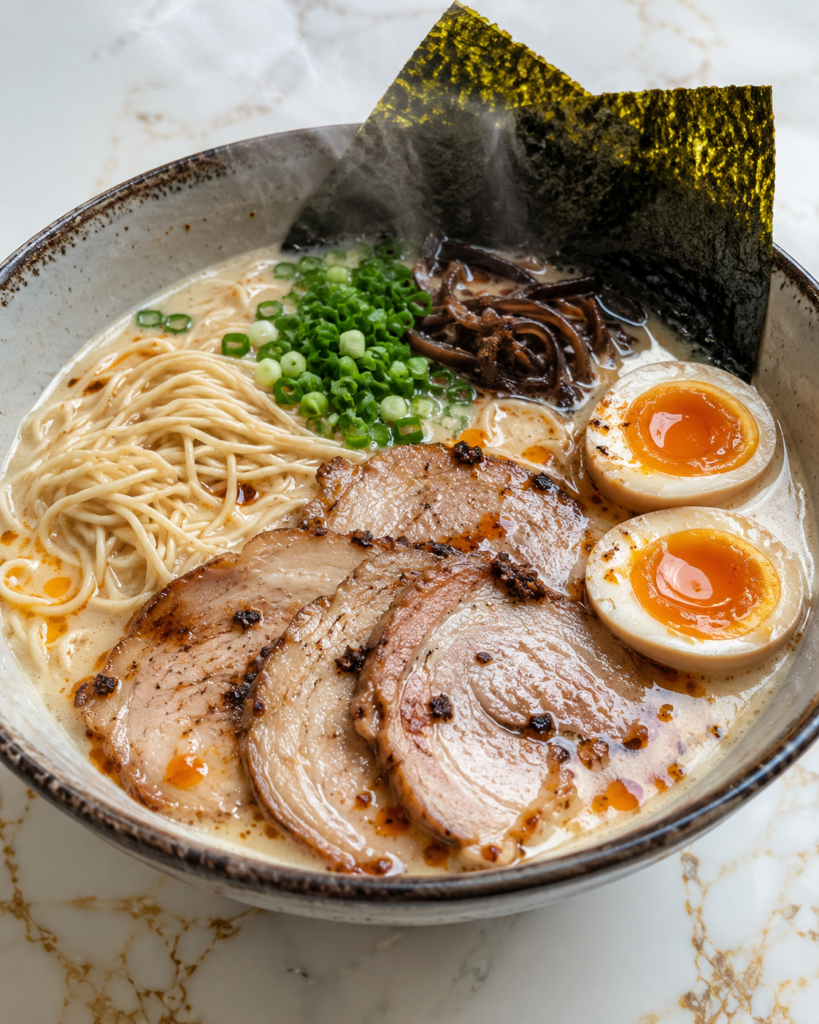
I make Tonkotsu Ramen when I want a bowl of soup that feels rich, warm, and deeply comforting. The creamy pork broth, springy noodles, tender chashu, soft-boiled eggs, and simple toppings come together in a way that makes the whole meal feel special.
This is not the fastest ramen recipe, but it is one of the most rewarding. The broth needs time to simmer, and that slow cooking is what gives it its silky texture and full flavor.
I like making Tonkotsu Ramen for a weekend cooking project or a cozy family meal when we have time to enjoy the process. It is the kind of recipe that fills the kitchen with warmth and gives everyone a bowl they can finish with their favorite toppings.
Why You’ll Love This Recipe
Tonkotsu Ramen is rich, creamy, savory, and full of comforting flavor. The broth is made by simmering pork bones for hours until it becomes cloudy, silky, and full-bodied.
This recipe is also very satisfying because each part adds something special. The noodles bring chew, the chashu adds tender richness, the eggs add creaminess, and the toppings bring freshness and texture.
It is a great recipe for families who enjoy building their own bowls. You can keep the broth simple, set out toppings separately, and let everyone choose how much egg, pork, green onion, or chili oil they want.
Serves: 6 people
This recipe serves 6 people with generous bowls of ramen. Each serving includes broth, noodles, chashu pork, ramen eggs, and toppings, so it works well as a full meal.
If you are serving smaller appetites, you may have extra broth or toppings for another day. The broth can also be frozen, which makes a future ramen night much easier.
Ingredients You’ll Need
For the Tonkotsu Broth
- 4 pounds pork neck bones, pork femur bones, or pork trotters
- 1 pound chicken backs or chicken wings, optional for extra body
- 1 large yellow onion, halved
- 1 head garlic, halved crosswise
- 2-inch piece fresh ginger, sliced
- 1 leek or 4 green onions, roughly chopped
- 12 cups water, plus more as needed for boiling and simmering
For the Chashu Pork
- 2 pounds pork belly, skin removed
- 1/2 cup low-sodium soy sauce
- 1/2 cup mirin
- 1/2 cup sake or water
- 1/4 cup brown sugar
- 1 cup water
- 4 cloves garlic, smashed
- 2-inch piece fresh ginger, sliced
- 2 green onions, cut into large pieces
For the Ramen Eggs
- 6 large eggs
- 1/2 cup low-sodium soy sauce
- 1/2 cup water
- 1/4 cup mirin
- 1 tablespoon sugar
For the Tare and Bowl Seasoning
- 1/2 cup low-sodium soy sauce
- 2 tablespoons mirin
- 1 tablespoon sake or water
- 1 teaspoon sesame oil
- 1 teaspoon rice vinegar
- 1/2 teaspoon sugar
For Serving
- 18 ounces fresh ramen noodles or 12 ounces dried ramen noodles
- 1 cup sliced green onions
- 1 cup canned bamboo shoots, drained
- 1/2 cup sweet corn, optional
- 6 sheets nori, cut in half
- 2 tablespoons toasted sesame seeds
- Chili oil, optional
- Extra sesame oil, optional
Pro Tips
Start the broth early and give it time. Tonkotsu broth gets its creamy texture from long, steady simmering, so this is not a recipe to rush.
Blanch and rinse the bones before making the broth. This helps remove impurities and gives the final broth a cleaner flavor and better color.
Keep the broth at a strong simmer once the bones are cleaned. The movement helps break down the collagen and fat, which creates that cloudy, rich broth.
Add water as needed during cooking. The bones should stay mostly covered so they can keep releasing flavor into the broth.
Make the chashu and eggs while the broth simmers. This keeps the process moving and helps the toppings have time to cool, slice, and soak.
Cook the noodles right before serving. Ramen noodles soften quickly, so they taste best when cooked fresh and added straight to the hot broth.
Tools You’ll Need
- Large stockpot
- Medium saucepan
- Large Dutch oven or deep skillet with lid
- Fine mesh strainer
- Large mixing bowl
- Cutting board
- Sharp knife
- Tongs
- Ladle
- Measuring cups
- Measuring spoons
- Kitchen twine, optional for chashu
- Slotted spoon
- Ice bath bowl
- Airtight containers
- Ramen bowls or deep soup bowls
Substitutions and Variations
Use Different Bones
Pork neck bones, femur bones, trotters, or a mix of these can all work for tonkotsu broth. Trotters add extra body and collagen, while neck bones add meaty flavor.
Make It Easier with Store-Bought Broth
For a quicker version, use rich pork broth or chicken broth and blend in a little unsweetened soy milk for a creamy look. It will not taste exactly like long-simmered tonkotsu, but it can make a comforting shortcut bowl.
Change the Protein
Use shredded chicken, sliced pork shoulder, tofu, or ground pork instead of chashu pork belly. Keep the broth, noodles, and toppings the same so the ramen still feels cozy and familiar.
Make It Spicier
Add chili oil, chili crisp, spicy miso paste, or a spoonful of garlic chili sauce to each bowl. This lets adults add heat while keeping the main broth gentle for kids.
Add More Toppings
Try mushrooms, spinach, bean sprouts, bok choy, roasted corn, or extra nori. These toppings add color, texture, and freshness while keeping the core ramen bowl the same.
Make Ahead Tips
Tonkotsu Ramen is a perfect make-ahead recipe because several parts need time to develop flavor. The broth can be made 1 to 2 days ahead, cooled, and stored in the refrigerator until you are ready to build the bowls.
The chashu pork is also easier to slice after it has chilled. Cook it ahead, let it cool in the braising liquid, then refrigerate it until firm enough to cut into neat slices.
Ramen eggs need time to soak, so making them the day before is helpful. A few hours will work, but overnight gives the eggs a deeper savory flavor.
Keep the broth, noodles, chashu, eggs, and toppings stored separately. This makes it easy to reheat each part the right way and keeps the noodles from getting soft before serving.
Instructions
Step 1: Blanch the Bones
Place 4 pounds pork neck bones, pork femur bones, or pork trotters in a large stockpot. Add enough water to cover the bones, then bring the pot to a boil over high heat.
Boil for 10 minutes, then drain the bones carefully. Rinse the bones under cool water and scrub away any dark bits so the broth has a cleaner taste.
Step 2: Start the Tonkotsu Broth
Return the cleaned bones to the stockpot. Add 1 pound chicken backs or chicken wings if using, 1 halved yellow onion, 1 halved head garlic, sliced fresh ginger, chopped leek or green onions, and 12 cups water.
Bring the pot to a boil, then reduce slightly to a strong simmer. The broth should bubble steadily because this movement helps create the cloudy, creamy texture.
Step 3: Simmer the Broth
Simmer the broth for 8 to 12 hours, adding more water as needed to keep the bones mostly covered. Stir now and then, and scrape the bottom of the pot so nothing sticks.
The broth should become cloudy, rich, and slightly thick. When it tastes full and savory, strain it through a fine mesh strainer into a clean pot or large bowl.
Step 4: Make the Chashu Pork
Place 2 pounds pork belly in a Dutch oven or deep skillet. Add 1/2 cup low-sodium soy sauce, 1/2 cup mirin, 1/2 cup sake or water, 1/4 cup brown sugar, 1 cup water, 4 smashed garlic cloves, sliced ginger, and 2 green onions.
Bring to a gentle simmer, then cover and cook over low heat for 1 1/2 to 2 hours. Turn the pork every 30 minutes so it cooks evenly and soaks up the sauce.
Step 5: Chill and Slice the Chashu
Remove the pork belly from the braising liquid and let it cool. For cleaner slices, chill it in the refrigerator for at least 1 hour.
Slice the chashu into thin pieces before serving. Warm the slices gently in a skillet, under a broiler, or in a little of the hot broth.
Step 6: Cook the Ramen Eggs
Bring a medium saucepan of water to a gentle boil. Lower in 6 large eggs and cook for 6 1/2 to 7 minutes for soft centers.
Move the eggs right away into an ice bath and let them cool for 5 minutes. Peel them carefully once they are cool enough to handle.
Step 7: Marinate the Eggs
In a bowl or container, stir together 1/2 cup low-sodium soy sauce, 1/2 cup water, 1/4 cup mirin, and 1 tablespoon sugar. Add the peeled eggs and turn them gently to coat.
Cover and refrigerate for at least 4 hours or overnight. Slice the eggs in half right before serving so the yolks stay creamy.
Step 8: Make the Tare
In a small bowl, stir together 1/2 cup low-sodium soy sauce, 2 tablespoons mirin, 1 tablespoon sake or water, 1 teaspoon sesame oil, 1 teaspoon rice vinegar, and 1/2 teaspoon sugar. This mixture seasons each bowl and gives the broth its salty, savory base.
Start with 1 to 2 tablespoons tare per bowl. You can always add more after tasting, but it is harder to fix a bowl that becomes too salty.
Step 9: Cook the Noodles
Bring a large pot of water to a boil. Cook 18 ounces fresh ramen noodles or 12 ounces dried ramen noodles according to the package directions.
Drain the noodles well and divide them right away among serving bowls. Ramen noodles are best when they go straight from the pot into hot broth.
Step 10: Build the Bowls
Add 1 to 2 tablespoons tare to each bowl, then ladle hot tonkotsu broth over the noodles. Stir gently so the tare blends into the broth.
Top each bowl with sliced chashu, halved ramen egg, green onions, bamboo shoots, corn if using, nori, toasted sesame seeds, chili oil, or extra sesame oil. Serve right away while the broth is hot and the noodles are springy.
Serving Suggestions
Tonkotsu Ramen is filling enough to serve as a full meal in one bowl. The broth, noodles, pork, egg, and toppings make it rich, warm, and satisfying.
For a lighter side, serve it with cucumber salad or quick pickled vegetables. The cool crunch helps balance the rich pork broth.
Steamed edamame is another simple side that works well. It adds color and freshness without taking much attention away from the ramen.
You can also serve ramen with pan-fried dumplings for a heartier meal. This is a nice option for a weekend dinner or a casual family ramen night.
For kids, serve toppings in small bowls and let them choose what to add. Some may like corn and noodles best, while adults may want extra chili oil, bamboo shoots, and nori.
A little extra tare, sesame oil, or chili oil on the table lets everyone adjust their bowl. This keeps the main broth family-friendly while still giving stronger flavor to those who want it.
Leftovers and Storage
Store leftover tonkotsu broth in an airtight container in the refrigerator for up to 4 days. Once chilled, the broth may turn thick or gel-like, which is a good sign of body and richness.
The broth can also be frozen for up to 3 months. Freeze it in meal-size portions so you can thaw only what you need for a future ramen night.
Keep cooked noodles separate from the broth whenever possible. Noodles continue to soften as they sit, so fresh noodles are best for leftovers.
Store chashu pork in its braising liquid for up to 4 days in the refrigerator. Ramen eggs can be stored in their marinade for up to 3 days, though the flavor gets stronger over time.
To reheat, warm the broth in a pot until steaming, heat the chashu gently, and cook fresh noodles. Build the bowls right before eating for the best texture.
Nutrition and Benefits
- Rich and satisfying: Tonkotsu broth is hearty and full-bodied from long-simmered pork bones. It makes the ramen feel comforting and filling.
- Good source of protein: Chashu pork, ramen eggs, and broth all add protein to the bowl. This helps make the meal more complete and satisfying.
- Customizable toppings: Green onions, bamboo shoots, corn, nori, sesame seeds, and chili oil let each person build a bowl they enjoy. This is helpful for families with different tastes.
- Great weekend cooking project: The recipe takes time, but many steps can be made ahead. The finished broth and toppings can also be used for more than one meal.
- Comforting homemade flavor: Making ramen at home lets you control the salt, spice, toppings, and serving size. It also turns a simple bowl of noodles into a warm family meal.
Recipe FAQ
Why is tonkotsu broth cloudy?
Tonkotsu broth becomes cloudy from boiling and simmering pork bones for a long time. The movement helps fat, collagen, and minerals blend into the liquid. This gives the broth its creamy look and rich texture.
Do I have to simmer the broth for 12 hours?
You do not have to simmer it for the full 12 hours, but longer cooking gives a richer broth. An 8-hour simmer can still make a good homemade version. The broth should look cloudy and taste full before you strain it.
Can I make Tonkotsu Ramen without pork belly?
Yes, you can use shredded chicken, pork shoulder, tofu, or even ground pork instead of chashu. Pork belly is classic because it is tender and rich. Other proteins can still make a comforting bowl.
Can I use dried ramen noodles?
Yes, dried ramen noodles work well if fresh noodles are not available. Cook them according to the package directions and do not overcook them. Add them to the broth right away for the best texture.
How do I keep ramen noodles from getting soggy?
Cook the noodles right before serving and keep them separate from leftover broth. Noodles absorb liquid quickly as they sit. For leftovers, reheat the broth and cook a fresh batch of noodles.
Can I make the broth less salty?
Yes, keep the broth unsalted and add tare to each bowl little by little. This gives you more control over the final flavor. If a bowl tastes too salty, add more hot broth to soften it.
Can I freeze tonkotsu broth?
Yes, tonkotsu broth freezes very well. Let it cool completely, then freeze it in airtight containers or freezer bags. Thaw it overnight in the refrigerator and reheat it gently on the stove.
A Cozy Ramen Bowl Worth the Time
Tonkotsu Ramen is a slow, comforting recipe that rewards you with a rich broth, tender pork, soft eggs, and warm noodles. Each part takes a little care, but the finished bowl feels deeply satisfying and homemade.
I love making this recipe when there is time to enjoy the process and gather around something special. It is hearty, flexible, and worth making again for cozy weekends, family meals, or a ramen night that feels truly comforting.