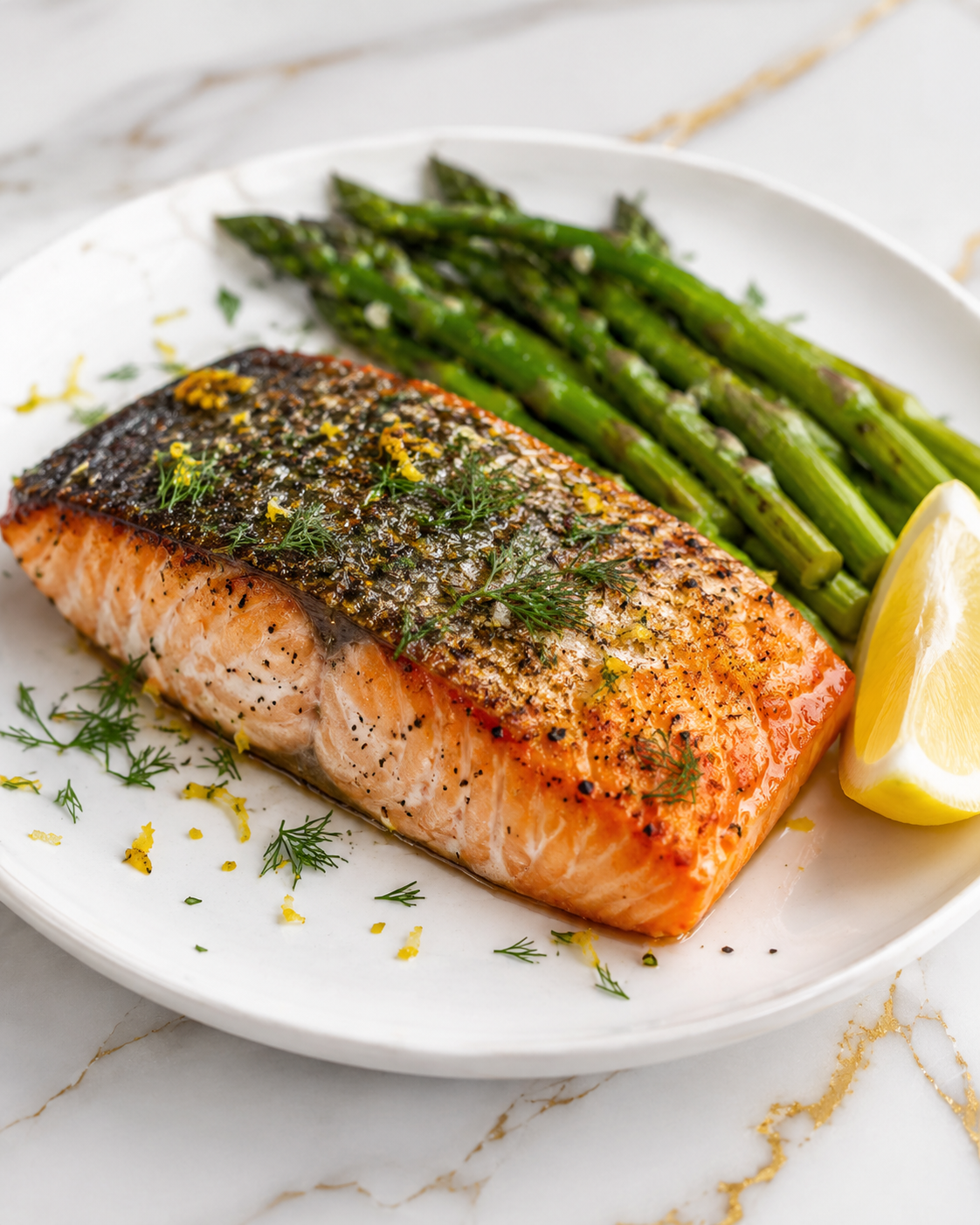
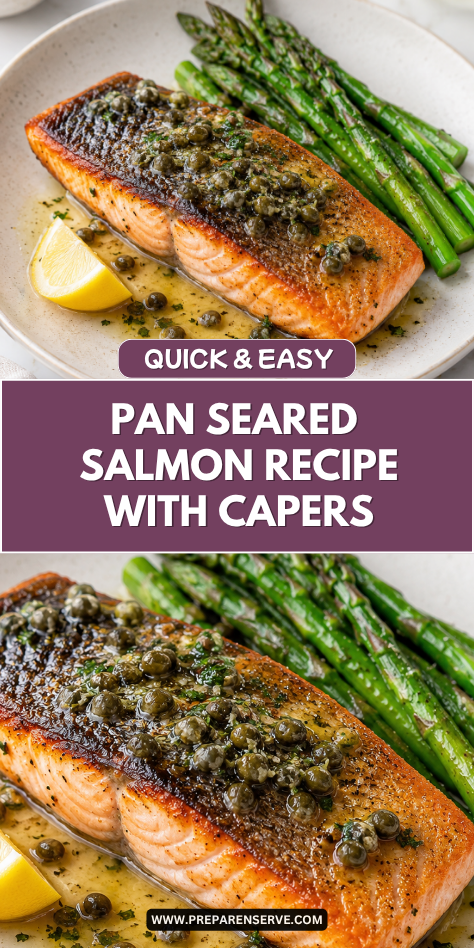
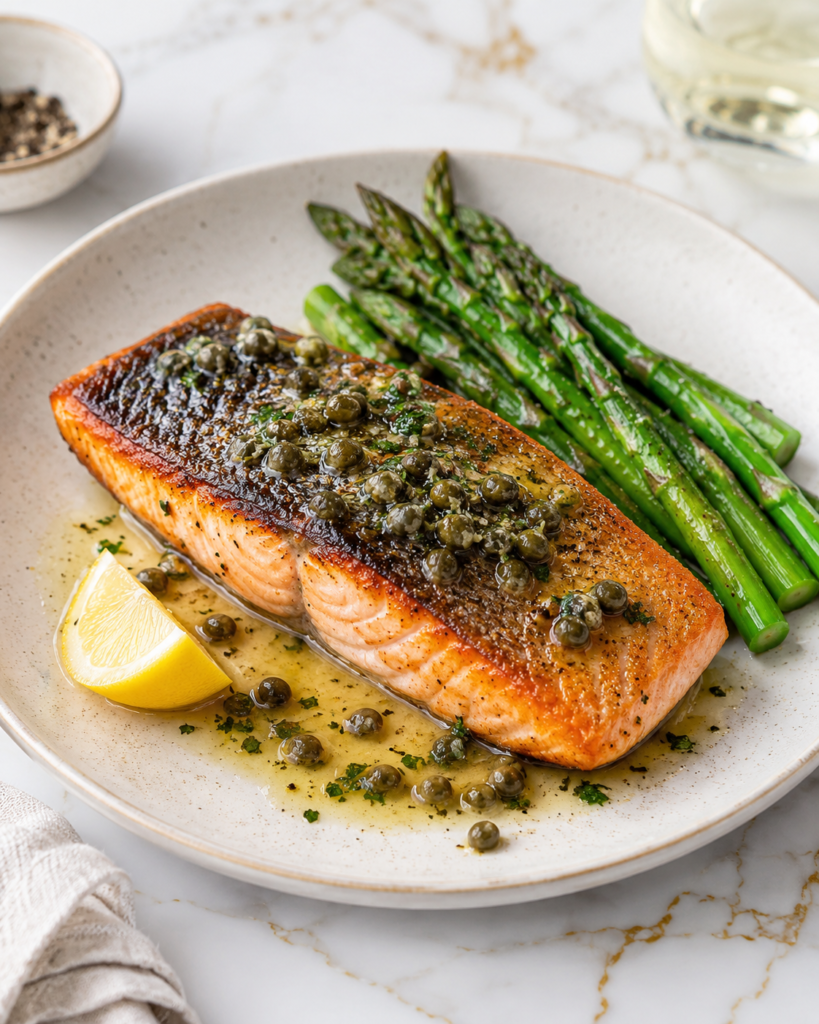
I make Pan-Seared Salmon with Capers when I want a dinner that feels fresh, simple, and a little special without taking much time. The salmon gets golden on the outside, tender in the middle, and finished with a bright, salty caper sauce that makes the whole plate taste balanced.
This is one of those meals that feels fancy enough for guests but easy enough for a weeknight. I like that it cooks quickly in one skillet, and the ingredients are simple enough to keep on hand.
I also love how well this recipe fits into family dinners. The flavor is mild and buttery, with just enough lemon and capers to keep it bright, and it pairs easily with rice, potatoes, pasta, salad, or roasted vegetables.
Why You’ll Love This Recipe
Pan-Seared Salmon with Capers is flavorful, fast, and dependable. The salmon cooks with a crisp golden crust, while the lemon caper sauce adds a fresh, tangy finish that keeps the dish from feeling heavy.
This recipe is also simple enough for beginner cooks. Once the salmon is patted dry and the skillet is hot, the cooking process moves quickly and does not need complicated steps.
It is a great family meal because it works with many easy sides. You can keep the caper sauce light for kids, add extra lemon for adults, or serve the sauce on the side so everyone can choose how much they want.
Serves: 4 people
This recipe serves 4 people with one salmon fillet per person. Each serving is satisfying on its own, especially when paired with a vegetable and a simple starch like rice, potatoes, or crusty bread.
If you are serving smaller children, you can divide the salmon into smaller portions after cooking. For bigger appetites, serve each fillet with a hearty side or add an extra fillet to the skillet in a second batch.
Ingredients You’ll Need
For the Salmon
- 4 salmon fillets, about 6 ounces each
- 1 tablespoon olive oil
- 1 tablespoon unsalted butter
- 1 teaspoon kosher salt
- 1/2 teaspoon black pepper
- 1/2 teaspoon garlic powder
- 1/2 teaspoon paprika
- 1 tablespoon fresh lemon juice
For the Lemon Caper Sauce
- 2 tablespoons unsalted butter
- 2 cloves garlic, minced
- 1/3 cup low-sodium chicken broth or vegetable broth
- 2 tablespoons fresh lemon juice
- 1 tablespoon caper brine from the jar
- 2 tablespoons capers, drained
- 1 teaspoon Dijon mustard
- 1/4 teaspoon black pepper
- 1 tablespoon chopped fresh parsley
For Serving
- Lemon wedges
- Extra chopped fresh parsley
- Cooked rice, roasted potatoes, pasta, or steamed vegetables, optional
Pro Tips
Pat the salmon very dry before seasoning it. This helps the surface sear instead of steam, giving you a better golden crust.
Let the skillet get hot before adding the salmon. A properly heated pan helps the fish release more easily and gives the outside that crisp, restaurant-style texture.
Do not move the salmon too soon. Let it cook undisturbed for several minutes so the crust can form and the fillet can lift cleanly from the pan.
Use medium to medium-high heat, depending on your stove. If the pan is too hot, the outside can brown before the center is cooked.
Keep the sauce quick and light. Capers are naturally salty, so taste before adding any extra salt to the sauce.
Serve the salmon right after cooking. Salmon has the best texture when it is warm, tender, and freshly sauced.
Tools You’ll Need
- Large skillet, preferably stainless steel, cast iron, or nonstick
- Fish spatula or thin spatula
- Cutting board
- Sharp knife
- Measuring spoons
- Measuring cups
- Paper towels
- Small bowl
- Tongs, optional
- Spoon for sauce
- Meat thermometer, optional
- Serving platter or plates
Substitutions and Variations
Use a Different Fish
Trout, cod, halibut, or mahi mahi can work in place of salmon. Choose fillets that are similar in thickness and adjust the cooking time so the fish stays tender.
Make It Dairy-Free
Use olive oil or a plant-based butter instead of regular butter. The sauce will still taste bright and savory from the lemon, garlic, capers, and Dijon mustard.
Change the Sauce
Add a splash of white wine in place of part of the broth for a more classic flavor. Let it simmer briefly so the sauce tastes smooth and not sharp.
Add More Fresh Herbs
Parsley is simple and fresh, but dill, basil, or chives also pair nicely with salmon. Use tender herbs at the end so they stay bright and flavorful.
Make It Heartier
Serve the salmon over mashed potatoes, creamy polenta, rice pilaf, or pasta. The lemon caper sauce soaks into these sides and makes the meal feel more filling.
Make Ahead Tips
Pan-Seared Salmon with Capers is best cooked fresh, but you can still prep a few things ahead to make dinner move quickly. The lemon caper sauce ingredients can be measured and ready before you start cooking, which helps because salmon cooks fast.
You can mince the garlic, chop the parsley, drain the capers, and juice the lemon earlier in the day. Store each item covered in the refrigerator until you are ready to cook.
If your salmon is frozen, thaw it overnight in the refrigerator for the best texture. Pat it very dry before seasoning, because extra moisture can keep the fish from getting a good sear.
I do not recommend searing the salmon too far ahead if you want the best texture. It is most tender when served right after cooking, but leftovers can still be used for salads, rice bowls, or quick lunches.
Instructions
Step 1: Dry and Season the Salmon
Pat 4 salmon fillets dry on all sides with paper towels. This helps remove extra moisture so the salmon can sear instead of steam in the skillet.
Season the fillets with 1 teaspoon kosher salt, 1/2 teaspoon black pepper, 1/2 teaspoon garlic powder, and 1/2 teaspoon paprika. Rub the seasoning gently over the top and sides so each fillet is evenly coated.
Step 2: Heat the Skillet
Place a large skillet over medium to medium-high heat. Add 1 tablespoon olive oil and let it heat until it looks shiny and moves easily across the pan.
Add 1 tablespoon unsalted butter and let it melt into the oil. The oil helps raise the cooking temperature, while the butter adds flavor and helps the salmon brown.
Step 3: Sear the First Side
Place the salmon fillets in the skillet, skin-side down if they have skin. Press each fillet gently with a spatula for a few seconds so the skin makes good contact with the pan.
Cook the salmon for 4 to 5 minutes without moving it. The edges should begin to turn opaque, and the bottom should look golden and crisp.
Step 4: Flip and Finish the Salmon
Carefully slide a thin spatula under each fillet and flip it over. Cook for another 2 to 4 minutes, depending on the thickness of the salmon.
The salmon is done when it flakes easily with a fork and reaches about 125°F to 130°F for medium or 145°F for fully cooked. Transfer the salmon to a plate and squeeze 1 tablespoon fresh lemon juice over the fillets.
Step 5: Start the Lemon Caper Sauce
Reduce the heat to medium-low and add 2 tablespoons unsalted butter to the same skillet. Let it melt, scraping up any browned bits left from the salmon.
Add 2 minced garlic cloves and cook for about 30 seconds, stirring often. The garlic should smell fragrant but should not brown too much.
Step 6: Build the Sauce
Pour in 1/3 cup low-sodium chicken broth or vegetable broth, 2 tablespoons fresh lemon juice, and 1 tablespoon caper brine. Stir well to loosen the flavorful bits from the bottom of the skillet.
Add 2 tablespoons drained capers, 1 teaspoon Dijon mustard, and 1/4 teaspoon black pepper. Let the sauce simmer for 2 to 3 minutes, until it reduces slightly and tastes bright and savory.
Step 7: Return the Salmon to the Pan
Place the salmon fillets back into the skillet with the sauce. Spoon the lemon caper sauce over the top of each fillet so the flavor coats the fish.
Let the salmon warm in the sauce for 1 minute. Avoid cooking it too long at this stage, because the salmon can dry out if it stays in the hot pan.
Step 8: Finish and Serve
Sprinkle 1 tablespoon chopped fresh parsley over the salmon. Add extra lemon wedges and more parsley if you like a fresh finish.
Serve the salmon right away with spoonfuls of the warm caper sauce over the top. The sauce should taste buttery, tangy, lightly salty, and fresh.
Serving Suggestions
Pan-Seared Salmon with Capers is lovely with simple rice or rice pilaf. The lemon caper sauce soaks into the rice and makes the whole plate taste bright and comforting.
Roasted potatoes are another good side because they feel hearty and family-friendly. Their crisp edges pair well with the tender salmon and buttery sauce.
For a lighter meal, serve the salmon with steamed green beans, asparagus, broccoli, or zucchini. These vegetables keep the plate fresh and let the caper sauce stand out.
Pasta also works well with this recipe, especially angel hair, linguine, or orzo. Toss the pasta with a little olive oil, parsley, and lemon juice before adding the salmon on top.
A simple salad with cucumbers, tomatoes, greens, and a mild vinaigrette makes the meal feel fresh. It is a nice choice when you want dinner to feel balanced without adding much more cooking.
For kids, serve the sauce on the side if capers are a new flavor. The salmon is still mild and tender, and everyone can add as much sauce as they like.
Leftovers and Storage
Store leftover salmon in an airtight container in the refrigerator for up to 3 days. Keep any extra lemon caper sauce in the same container or in a small separate container so it can be spooned over the fish when reheating.
To reheat, warm the salmon gently in a skillet over low heat with a splash of broth or water. Cover the pan for a few minutes so the fish warms through without drying out.
You can also reheat salmon in the microwave, but use short bursts at lower power if possible. Salmon can become firm quickly, so heat only until it is warm.
Leftover salmon is also delicious cold or room temperature in salads, grain bowls, wraps, or over toast. Flake it gently and add a little extra lemon juice to freshen the flavor.
Freezing cooked salmon is possible, but the texture may become drier after thawing. For best results, enjoy leftovers from the refrigerator within a few days.
Nutrition and Benefits
- Rich in protein: Salmon provides a good amount of protein, which helps make the meal satisfying. It is a strong choice for a filling dinner that still feels light.
- Source of omega-3 fats: Salmon is known for its healthy fats, which are one reason many families like adding it to their meal rotation. These fats also help the fish taste rich and tender.
- Bright, simple ingredients: Lemon, garlic, parsley, and capers add big flavor without needing a heavy sauce. This keeps the dish fresh while still making it feel special.
- Pairs with many sides: This salmon can be served with rice, potatoes, pasta, salad, or vegetables. That makes it easy to fit into different family meals.
- Quick cooking: Salmon cooks fast, which makes this recipe helpful for busy nights. With a little prep, the whole meal can come together without much stress.
Recipe FAQ
Can I use frozen salmon?
Yes, frozen salmon works well if it is fully thawed before cooking. Thaw it overnight in the refrigerator for the best texture. Pat it very dry before seasoning so it can sear properly.
Should I cook salmon with the skin on?
Skin-on salmon works very well for pan-searing because the skin helps protect the fish and can get crisp. Start skin-side down and let it cook without moving. You can eat the skin or remove it after cooking.
How do I know when salmon is done?
Salmon is done when it flakes easily with a fork and looks opaque on the outside. For a more exact check, use a thermometer. It is fully cooked at 145°F, though some people prefer it closer to 125°F to 130°F for a softer center.
Are capers very salty?
Yes, capers are salty and tangy because they are usually packed in brine. Drain them before adding them to the sauce, and taste the sauce before adding extra salt. A little caper brine adds flavor, but too much can make the sauce too salty.
Can I make this without capers?
Yes, you can leave out the capers if your family does not enjoy them. Add a few chopped green olives or extra lemon juice for a similar bright flavor. The sauce will still taste good with garlic, butter, broth, and Dijon mustard.
What pan is best for searing salmon?
A stainless steel, cast iron, or nonstick skillet can all work. Stainless steel and cast iron give a strong golden sear, while nonstick is easier for beginners. Make sure the pan is hot before adding the salmon.
Why did my salmon stick to the pan?
Salmon may stick if the pan was not hot enough or if the fish was moved too soon. Let it cook undisturbed until a crust forms. When it is ready, it should release more easily with a thin spatula.
A Bright Skillet Dinner Worth Keeping
Pan-Seared Salmon with Capers is a simple meal that feels fresh, comforting, and dependable. The salmon turns golden and tender, while the lemon caper sauce adds just the right mix of buttery, tangy, and savory flavor.
I love this recipe for busy nights when I still want dinner to feel thoughtful and homemade. It is quick to cook, easy to pair with family-friendly sides, and worth making again whenever you want a bright seafood meal with very little fuss.