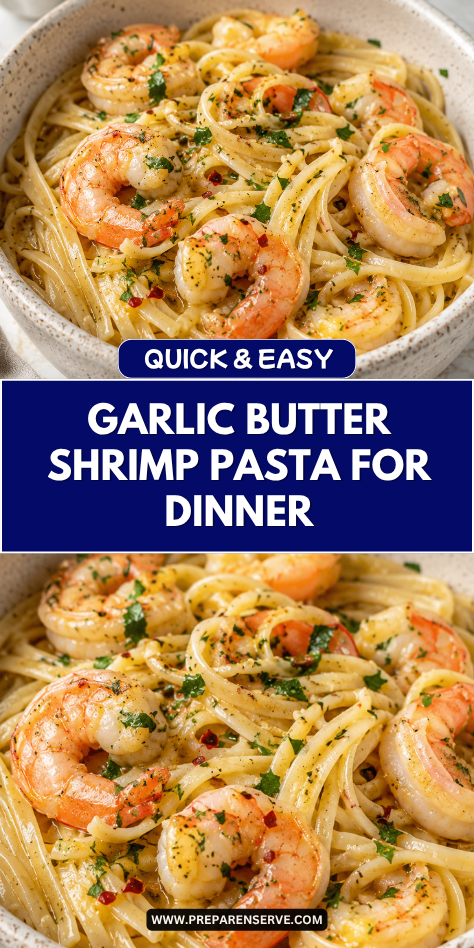
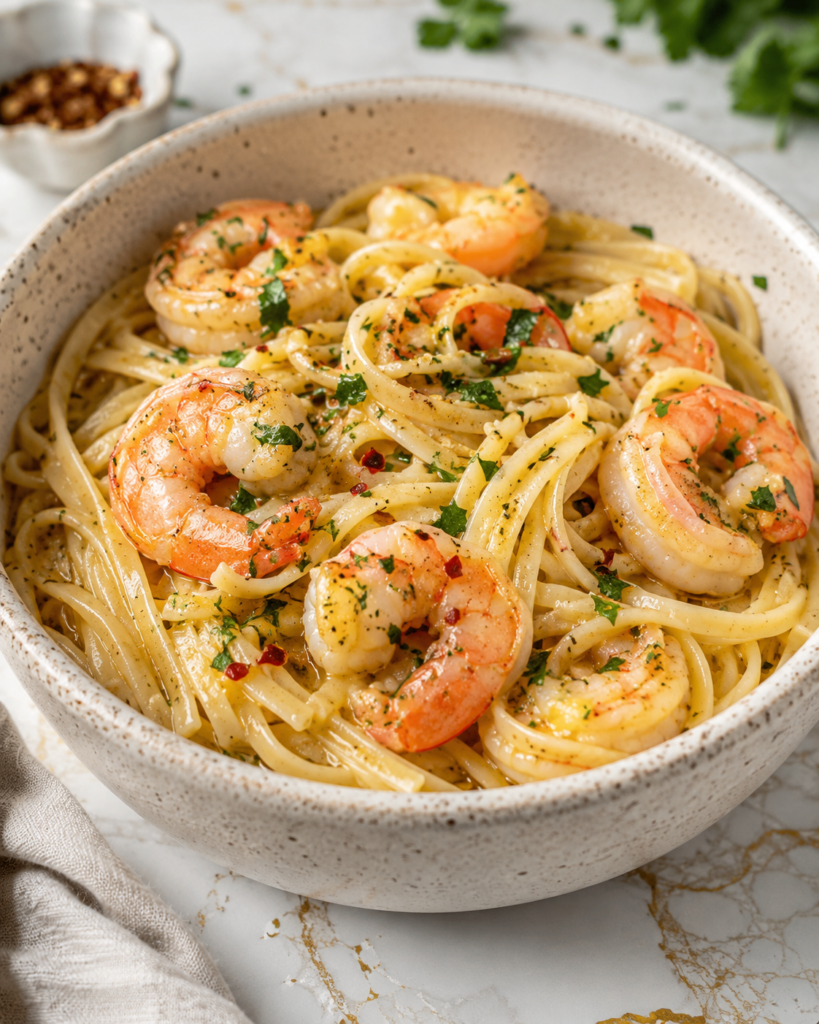
I make Garlic Butter Shrimp Pasta when I want a dinner that feels cozy, simple, and a little special without spending a long time in the kitchen. It has tender shrimp, warm pasta, and a buttery garlic sauce that coats everything in a way that feels comforting and familiar.
This is the kind of meal I like to make on busy nights when everyone is hungry and I need something dependable. The shrimp cook quickly, the pasta is easy, and the sauce comes together with simple ingredients I usually already have.
I also love that this recipe feels nice enough for a weekend dinner but easy enough for a regular weeknight. It is rich without being too heavy, and it pairs well with vegetables, salad, bread, or whatever simple sides your family enjoys.
Why You’ll Love This Recipe
Garlic Butter Shrimp Pasta is full of flavor but does not take much effort. The garlic butter sauce is brightened with lemon juice and a little pasta water, so it tastes rich, fresh, and silky without needing cream.
This recipe is also very family-friendly because the flavors are gentle and easy to adjust. You can keep it mild for kids, add red pepper flakes for adults, or serve extra lemon and Parmesan on the side.
It is a helpful recipe for nights when you want something homemade but quick. The shrimp cook in just a few minutes, and the whole dish comes together while the pasta is still warm.
Serves: 4 people
This recipe serves 4 people as a main dish. Each serving has a generous amount of pasta with plenty of shrimp and garlic butter sauce, making it filling but not too heavy.
If you are feeding bigger appetites, you can add a side salad, roasted vegetables, or warm bread. For smaller portions or younger kids, this recipe may stretch to 5 servings with a simple side.
Ingredients You’ll Need
For the Pasta
- 12 ounces linguine, spaghetti, or fettuccine
- 1 tablespoon kosher salt, for the pasta water
- 1/2 cup reserved pasta water
For the Shrimp
- 1 pound large shrimp, peeled and deveined
- 1 tablespoon olive oil
- 1/2 teaspoon kosher salt
- 1/4 teaspoon black pepper
- 1/2 teaspoon paprika
- 1/4 teaspoon garlic powder
For the Garlic Butter Sauce
- 4 tablespoons unsalted butter
- 4 cloves garlic, minced
- 1/4 teaspoon crushed red pepper flakes, optional
- 1/3 cup low-sodium chicken broth or vegetable broth
- 2 tablespoons fresh lemon juice
- 1 teaspoon lemon zest
- 1/4 cup grated Parmesan cheese, optional
- 2 tablespoons chopped fresh parsley
For Serving
- Extra grated Parmesan cheese, optional
- Lemon wedges
- Extra chopped fresh parsley
- Extra black pepper, to taste
Pro Tips
Use large shrimp if you can because they stay juicy and are less likely to overcook quickly. Smaller shrimp can work too, but they will need less time in the skillet.
Pat the shrimp dry before seasoning them. This helps them sear lightly instead of steaming, which gives the pasta better flavor.
Cook the pasta just until al dente. It will finish in the skillet with the garlic butter sauce, so you do not want it too soft before mixing.
Save pasta water before draining the noodles. The starchy water helps the butter, broth, lemon juice, and Parmesan come together into a smooth sauce.
Do not let the garlic burn. Garlic only needs a short time in the butter, and it should smell fragrant without turning dark brown.
Add the shrimp back at the end so they stay tender. If they cook too long in the hot sauce, they can become rubbery.
Tools You’ll Need
- Large pot
- Large skillet
- Colander
- Cutting board
- Sharp knife
- Measuring cups
- Measuring spoons
- Tongs
- Wooden spoon or spatula
- Microplane or zester
- Citrus juicer, optional
- Small bowl
- Serving bowls or platter
Substitutions and Variations
Use a Different Pasta
Linguine, spaghetti, fettuccine, angel hair, penne, or rotini can all work well in this recipe. Choose a shape your family enjoys, but keep an eye on the cooking time so the pasta stays tender and not mushy.
Make It Dairy-Free
Use olive oil or a dairy-free butter in place of the unsalted butter, and skip the Parmesan cheese. The garlic, lemon, broth, and parsley still give the dish plenty of fresh flavor.
Add More Vegetables
Stir in spinach, cherry tomatoes, zucchini, asparagus, or broccoli for extra color and texture. Cook firmer vegetables before adding the pasta, and stir in tender greens at the end so they just wilt.
Make It Spicier
Add extra crushed red pepper flakes or a small pinch of cayenne to the garlic butter sauce. Keep the base mild if cooking for kids, then let adults add more heat at the table.
Make It Heartier
Serve the shrimp pasta with garlic bread, a green salad, or roasted vegetables. You can also add extra shrimp or a little more pasta if you are feeding bigger appetites.
Make Ahead Tips
Garlic Butter Shrimp Pasta is best served fresh, but you can still prep a few parts ahead to make dinner easier. The shrimp can be peeled, deveined, patted dry, and stored covered in the refrigerator until you are ready to cook.
You can also mince the garlic, chop the parsley, zest the lemon, and juice the lemon earlier in the day. Keep everything in small covered containers so the sauce comes together quickly when the pasta is ready.
If you want to cook ahead, I recommend making the shrimp and sauce fresh, then tossing everything together right before serving. Pasta can soften as it sits, and shrimp can become firm if reheated too many times.
For meal prep, store the pasta and shrimp in portions with a small splash of broth or reserved pasta water. This helps bring the sauce back together when you reheat it later.
Instructions
Step 1: Boil the Pasta Water
Bring a large pot of water to a boil over high heat. Add 1 tablespoon kosher salt once the water is boiling.
The salted water helps season the pasta from the inside as it cooks. This simple step gives the whole dish better flavor without needing to add too much salt later.
Step 2: Cook the Pasta
Add 12 ounces linguine, spaghetti, or fettuccine to the boiling water. Cook according to the package directions until the pasta is al dente.
Before draining, carefully scoop out 1/2 cup of pasta water and set it aside. Drain the pasta, but do not rinse it because the starch on the noodles helps the sauce cling.
Step 3: Season the Shrimp
Pat 1 pound peeled and deveined large shrimp dry with paper towels. Place the shrimp in a small bowl and season with 1/2 teaspoon kosher salt, 1/4 teaspoon black pepper, 1/2 teaspoon paprika, and 1/4 teaspoon garlic powder.
Toss gently until the shrimp are evenly coated. Dry, well-seasoned shrimp cook better and bring more flavor to the pasta.
Step 4: Cook the Shrimp
Heat 1 tablespoon olive oil in a large skillet over medium-high heat. Add the shrimp in a single layer and cook for 1 to 2 minutes per side.
The shrimp are done when they turn pink and curl into a loose C shape. Transfer them to a plate right away so they do not overcook while you make the sauce.
Step 5: Start the Garlic Butter Sauce
Reduce the heat to medium and add 4 tablespoons unsalted butter to the same skillet. Let the butter melt, then add 4 minced garlic cloves and 1/4 teaspoon crushed red pepper flakes if using.
Cook for about 30 seconds, stirring often, until the garlic smells fragrant. Do not let it turn dark brown because burned garlic can taste bitter.
Step 6: Add the Broth and Lemon
Pour in 1/3 cup low-sodium chicken broth or vegetable broth, 2 tablespoons fresh lemon juice, and 1 teaspoon lemon zest. Stir well, scraping up any flavorful bits from the bottom of the skillet.
Let the sauce simmer for 1 to 2 minutes so the flavors blend. It should smell buttery, garlicky, and bright from the lemon.
Step 7: Toss the Pasta in the Sauce
Add the drained pasta to the skillet with the garlic butter sauce. Use tongs to toss the pasta until it is coated.
Add a splash of the reserved pasta water as needed to loosen the sauce. The pasta should look glossy and lightly coated, not dry or watery.
Step 8: Add the Shrimp Back In
Return the cooked shrimp to the skillet and gently toss everything together. Add 1/4 cup grated Parmesan cheese if using and 2 tablespoons chopped fresh parsley.
Cook for 1 minute over low heat, just until the shrimp are warm again and the cheese melts into the sauce. Taste and adjust with extra black pepper, lemon juice, or parsley if needed.
Step 9: Serve Warm
Transfer the pasta to serving bowls or a large platter. Top with extra grated Parmesan cheese, chopped parsley, lemon wedges, and extra black pepper if desired.
Serve right away while the shrimp are tender and the sauce is warm. Garlic Butter Shrimp Pasta tastes best when the noodles are silky and freshly tossed.
Serving Suggestions
Garlic Butter Shrimp Pasta is lovely with a simple green salad. Crisp lettuce, cucumbers, tomatoes, and a light vinaigrette help balance the rich butter sauce.
Warm garlic bread or crusty bread is a comforting side for this meal. It is perfect for soaking up any extra sauce left in the bowl.
Roasted vegetables also pair well with the lemony garlic flavor. Broccoli, asparagus, zucchini, or green beans are all simple choices that keep the plate colorful.
For a lighter meal, serve smaller portions of pasta with extra vegetables on the side. This keeps the dinner fresh while still giving everyone the comfort of pasta.
You can also serve this dish with a fruit salad for a family-friendly dinner. The sweet fruit is a nice contrast to the savory shrimp and garlic butter sauce.
For a special touch, add a little extra lemon zest and parsley right before serving. It makes the pasta taste brighter and look fresh without adding extra work.
Leftovers and Storage
Store leftover Garlic Butter Shrimp Pasta in an airtight container in the refrigerator for up to 3 days. Let it cool before sealing the container, but do not leave it at room temperature for more than 2 hours.
To reheat, place the pasta in a skillet over low heat with a splash of broth, water, or milk. Toss gently until warm so the sauce loosens and coats the noodles again.
You can also reheat it in the microwave in short bursts. Stir between each burst and add a small splash of liquid if the pasta seems dry.
Shrimp can become rubbery if overheated, so warm leftovers gently. Heat only until the shrimp and pasta are warmed through.
Freezing is not the best choice for this recipe because cooked shrimp and pasta can change texture after thawing. For the best taste, enjoy leftovers from the refrigerator within a few days.
Nutrition and Benefits
- Good source of protein: Shrimp adds lean protein to the pasta, which helps make the meal more filling. It is a helpful ingredient when you want dinner to feel satisfying without being too heavy.
- Bright, simple flavor: Lemon juice, lemon zest, garlic, and parsley bring freshness to the butter sauce. These ingredients keep the dish flavorful without needing a heavy cream sauce.
- Family-friendly meal: The flavors are mild, familiar, and easy to adjust. Kids can enjoy it without spice, while adults can add red pepper flakes or extra black pepper.
- Quick cooking: Shrimp cooks in just a few minutes, making this recipe useful for busy nights. The sauce comes together while the pasta is still hot.
- Easy to customize: You can add vegetables, change the pasta shape, or serve it with different sides. This makes it a flexible recipe for many family meals.
Recipe FAQ
Can I use frozen shrimp?
Yes, frozen shrimp work well in this recipe. Thaw them overnight in the refrigerator or under cool running water if you need them sooner. Pat them very dry before seasoning so they cook properly.
What pasta works best for garlic butter shrimp pasta?
Linguine, spaghetti, and fettuccine all work well because they hold the buttery sauce nicely. Short pasta like penne or rotini can also be used. Choose a pasta shape your family likes and cook it until al dente.
How do I know when shrimp are cooked?
Shrimp are cooked when they turn pink and curl into a loose C shape. They should look opaque and feel firm but not tough. If they curl tightly into an O shape, they may be overcooked.
Can I make this recipe without Parmesan?
Yes, you can skip the Parmesan and still have a flavorful pasta. The garlic, butter, lemon, broth, and parsley create a simple sauce on their own. Add a little extra pasta water if you want the sauce smoother.
Can I add vegetables to this pasta?
Yes, vegetables are a great addition. Spinach, cherry tomatoes, broccoli, asparagus, and zucchini all work well. Cook firmer vegetables before adding the pasta, and stir in spinach at the end so it just wilts.
How do I keep the sauce from drying out?
Save pasta water before draining the noodles and add it a little at a time while tossing. The starch helps the sauce cling to the pasta. A small splash of broth can also help when reheating leftovers.
Can I make this spicy?
Yes, add crushed red pepper flakes, cayenne pepper, or a little hot sauce to the garlic butter sauce. Start with a small amount if serving kids. You can always add more spice at the table.
A Cozy Pasta Dinner with Bright Garlic Flavor
Garlic Butter Shrimp Pasta is a simple dinner that feels warm, fresh, and dependable. The tender shrimp, silky noodles, buttery garlic sauce, and bright lemon come together in a way that feels comforting without being too heavy.
I love making this recipe when I need something quick but still homemade and satisfying. It is easy enough for weeknights, special enough for a relaxed weekend meal, and worth making again whenever your family wants a cozy pasta dinner.