I make classic hummus when I want something creamy, simple, and useful for snacks, lunches, and easy meals. It is one of those recipes that feels calm and dependable because it uses just a few basic ingredients and turns them into something fresh and satisfying.
This hummus is smooth, lemony, and lightly garlicky, with a rich flavor from tahini and chickpeas. I like keeping a bowl in the fridge because it makes it easier to serve vegetables, crackers, pita, sandwiches, and lunch boxes without much extra work.
Homemade hummus can taste much fresher than store-bought, and it is easy to adjust once you know the basic method. You can make it extra smooth, add more lemon, keep the garlic gentle, or drizzle olive oil on top for a simple finish.
It is also a great recipe for families because everyone can use it in their own way. Kids can dip pita strips or cucumber slices, while adults can add it to bowls, wraps, toast, or salads for quick flavor and creaminess.
Why You’ll Love This Recipe
Classic hummus is creamy, bright, and full of simple pantry flavor. The chickpeas make it hearty, the tahini adds richness, and the lemon juice keeps the dip fresh instead of heavy.
This recipe is easy to make in a food processor or blender, and it comes together in just a few minutes. It is a helpful snack to keep ready for busy afternoons, school lunches, or quick meals when you want something nourishing without cooking.
Families love hummus because it is flexible and easy to serve. You can keep it plain and mild, add toppings for more flavor, or use it as a dip, spread, or base for a simple meal bowl.
Serves: 6 people
This recipe makes about 2 cups of hummus, which serves around 6 people as a dip or spread. If you are serving it as part of a snack board, it may stretch further, and if your family loves hummus with pita, you may want to double the batch.
Ingredients You’ll Need
- 1 can chickpeas, 15 ounces, drained and rinsed
- 1/4 cup tahini
- 3 tablespoons fresh lemon juice
- 2 tablespoons extra virgin olive oil, plus more for serving
- 1 small garlic clove, minced
- 1/2 teaspoon fine sea salt, plus more to taste
- 1/2 teaspoon ground cumin
- 2 to 4 tablespoons cold water, as needed
- 1/4 teaspoon paprika, optional for serving
- 1 tablespoon chopped fresh parsley, optional for serving
- Warm pita bread, pita chips, crackers, or fresh vegetables, for serving
Pro Tips
Use fresh lemon juice instead of bottled lemon juice for the best flavor. Fresh lemon makes the hummus taste brighter and helps balance the richness of the tahini.
Blend the tahini and lemon juice first if you want a smoother texture. This quick step whips the tahini a little and helps the hummus turn creamier once the chickpeas are added.
Add cold water slowly while blending. A little water helps loosen the hummus and makes it smooth, but too much can make it thin.
Use only one small garlic clove to start, especially if serving kids. Raw garlic can become strong as the hummus sits, so it is better to add more later if needed.
Blend longer than you think you need to. Letting the food processor run for an extra minute or two helps the hummus become smoother and lighter.
Taste at the end and adjust the salt, lemon, or water. Chickpeas and tahini can vary, so a final taste helps you get the flavor and texture just right.
Tools You’ll Need
- Food processor or high-speed blender
- Can opener
- Fine mesh strainer
- Measuring cups
- Measuring spoons
- Citrus juicer, optional
- Small knife
- Cutting board
- Rubber spatula
- Serving bowl
- Airtight storage container
Substitutions and Variations
Use Dried Chickpeas
Cooked dried chickpeas can be used instead of canned chickpeas. Use about 1 1/2 cups cooked chickpeas, and make sure they are very tender before blending.
Make It Extra Smooth
Peel the chickpeas before blending, or simmer canned chickpeas for 10 minutes with a pinch of baking soda, then rinse well. This takes extra time, but it helps create a softer, silkier hummus.
Skip the Tahini
Use plain Greek yogurt, sunflower seed butter, or extra olive oil if you do not have tahini. The flavor will change, but the hummus will still be creamy and useful for dipping or spreading.
Add More Flavor
Blend in roasted garlic, roasted red peppers, sun-dried tomatoes, or a pinch of smoked paprika. These add-ins keep the chickpea base recognizable while giving the hummus a new twist.
Make It Heartier
Top the hummus with chopped cucumbers, tomatoes, olives, feta, toasted pine nuts, or roasted chickpeas. These toppings turn a simple dip into a more filling snack plate or light lunch.
Make Ahead Tips
Classic hummus is a wonderful make-ahead recipe because it keeps well and tastes even better after the flavors settle. You can prepare it 1 to 2 days before serving and store it in an airtight container in the refrigerator.
If the hummus thickens as it chills, stir in 1 to 2 tablespoons of cold water before serving. This brings back the creamy, smooth texture without changing the flavor too much.
For easy snack prep, wash and cut vegetables ahead of time and store them separately. Carrots, cucumbers, bell peppers, celery, and snap peas all hold up well in containers and make serving hummus simple.
You can also portion hummus into small containers for lunch boxes or quick snacks. Add pita chips, crackers, or vegetables in a separate section so everything stays fresh and crisp.
Instructions
Step 1: Drain and Rinse the Chickpeas
Open the can of chickpeas and pour them into a fine mesh strainer. Rinse them well under cool running water to remove extra liquid from the can.
Shake off as much water as you can before adding them to the food processor. This helps you control the final hummus texture more easily.
Step 2: Blend the Tahini and Lemon Juice
Add the tahini and fresh lemon juice to the food processor. Blend for about 30 to 45 seconds, until the mixture looks lighter and slightly whipped.
Scrape down the sides of the bowl with a rubber spatula. This step helps make the hummus smoother and gives the tahini a creamier texture.
Step 3: Add the Garlic, Olive Oil, Salt, and Cumin
Add the minced garlic, olive oil, fine sea salt, and ground cumin to the tahini mixture. Blend for another 30 seconds until everything is combined.
The mixture should smell bright, nutty, and lightly garlicky. If garlic is strong for your family, use only half a clove the first time.
Step 4: Add the Chickpeas
Add the drained and rinsed chickpeas to the food processor. Blend for 1 minute, then stop and scrape down the sides and bottom of the bowl.
At this point, the hummus may look thick and a little chunky. That is normal before the water is added and the mixture blends longer.
Step 5: Add Cold Water Slowly
With the food processor running, add cold water 1 tablespoon at a time. Blend after each addition until the hummus begins to loosen and smooth out.
Use 2 tablespoons for a thicker dip or up to 4 tablespoons for a softer, creamier texture. Add the water slowly so the hummus does not become too thin.
Step 6: Blend Until Smooth
Let the food processor run for 1 to 2 more minutes. Stop once or twice to scrape down the sides so everything blends evenly.
The hummus should look creamy, light, and easy to scoop. If it still feels thick, add another small splash of cold water and blend again.
Step 7: Taste and Adjust
Taste the hummus and decide if it needs more salt, lemon juice, or cumin. Add small amounts at a time and blend briefly after each adjustment.
A good classic hummus should taste creamy, bright, and balanced. The tahini should be rich, the lemon should be fresh, and the garlic should not overpower the whole bowl.
Step 8: Spoon Into a Bowl
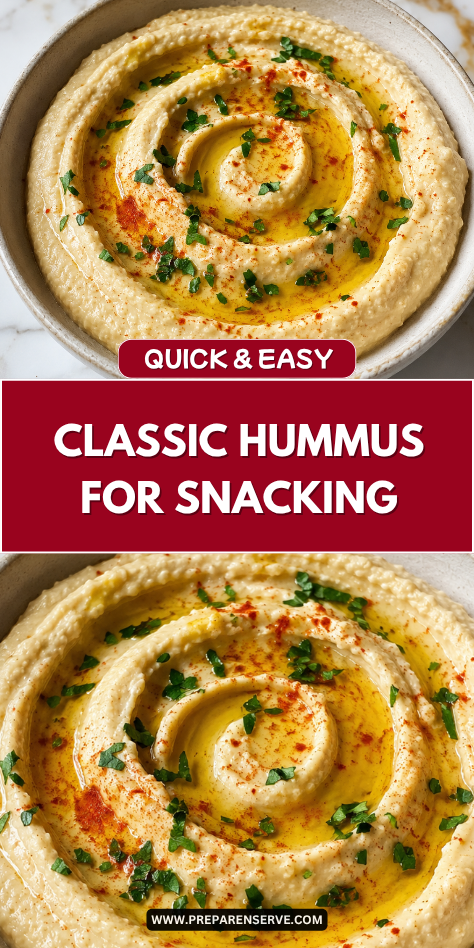
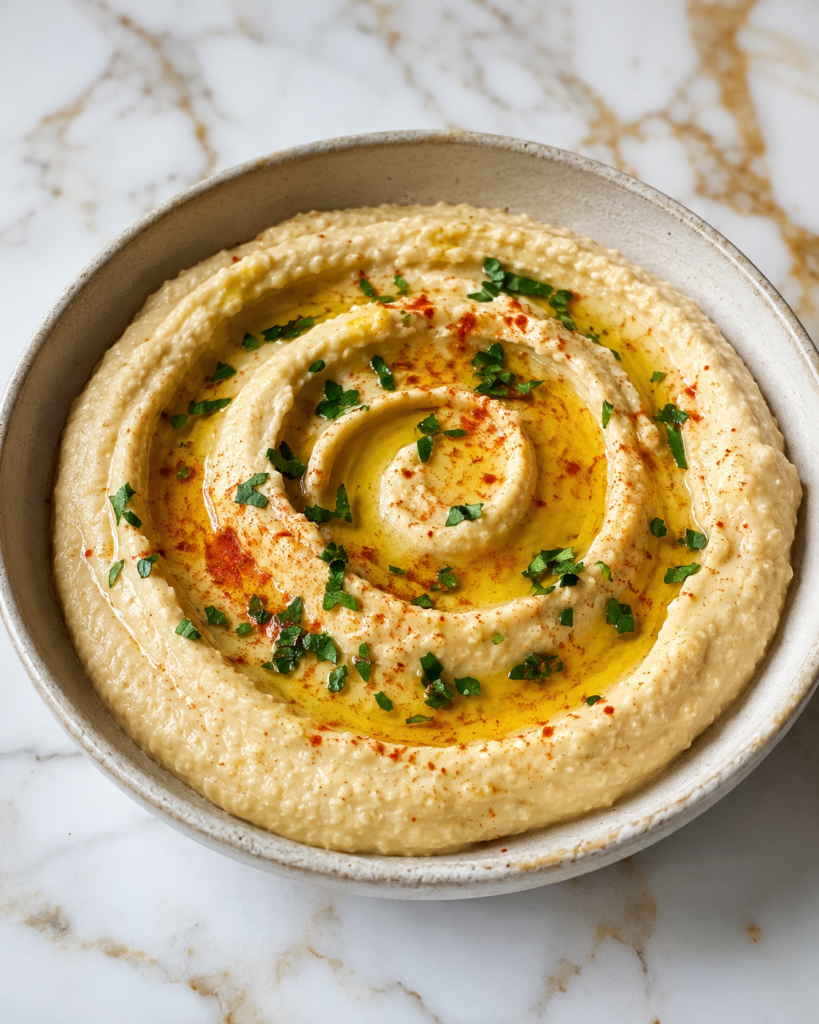
Spoon the hummus into a serving bowl and smooth the top with the back of a spoon. Make a small swirl in the center if you want a place for olive oil.
Drizzle with a little extra olive oil if desired. Sprinkle paprika and chopped parsley on top for color and a simple fresh finish.
Step 9: Serve with Dippers
Serve the hummus with warm pita, pita chips, crackers, or fresh vegetables. Carrot sticks, cucumber slices, bell pepper strips, celery, and snap peas are all easy family-friendly choices.
For younger kids, offer soft pita pieces or mild vegetables cut into safe sizes. Keep toppings simple if serving picky eaters, and add extra flavor to adult portions separately.
Serving Suggestions
Classic hummus is perfect as a dip with warm pita bread or pita chips. The creamy texture pairs well with something soft, crisp, or lightly toasted.
Serve it with fresh vegetables for an easy snack plate. Cucumbers, carrots, bell peppers, celery, cherry tomatoes, and snap peas add crunch and color.
Spread hummus inside wraps or sandwiches instead of mayonnaise. It adds creaminess and flavor while helping hold the fillings together.
Add a spoonful to grain bowls with rice, quinoa, roasted vegetables, chicken, chickpeas, or greens. It works like a creamy sauce and makes simple bowls feel more complete.
Use hummus as part of a lunch box with crackers, cheese, fruit, and cut vegetables. Small containers make it easy to pack and help keep everything neat.
For a simple appetizer, serve hummus in a shallow bowl with olive oil, paprika, parsley, and a few roasted chickpeas on top. It looks pretty but still stays easy and familiar.
Leftovers and Storage
Store leftover classic hummus in an airtight container in the refrigerator for up to 5 days. Smooth the top before sealing the container if you want it to stay neat.
The hummus may thicken as it sits, especially after the first day. Stir in a small spoonful of cold water or olive oil before serving to bring back a creamy texture.
Keep toppings like parsley, paprika, roasted chickpeas, or chopped vegetables separate if you are storing it for several days. This keeps the top from getting watery or soft.
Freezing hummus is possible, though the texture may change slightly after thawing. Freeze it in a small airtight container for up to 3 months, leaving a little space at the top for expansion.
Thaw frozen hummus overnight in the refrigerator and stir well before serving. Add a splash of water, lemon juice, or olive oil if needed to smooth it out.
Nutrition and Benefits
- Chickpeas add plant-based protein and fiber, which help make hummus filling and satisfying. They also give the dip its creamy body and mild flavor.
- Tahini brings richness from ground sesame seeds. It gives hummus its classic nutty flavor and helps create a smooth texture.
- Olive oil adds a silky finish and makes the hummus taste more rounded. A small drizzle on top can make it feel extra fresh and special.
- Lemon juice brightens the dip and balances the richness of the chickpeas and tahini. It also helps the hummus taste fresh after chilling.
- Serving hummus with vegetables can make snack time more colorful and balanced. It is an easy way to help kids and adults enjoy more fresh produce.
Recipe FAQ
Can I make hummus without tahini?
Yes, you can make hummus without tahini. Use extra olive oil, plain Greek yogurt, or sunflower seed butter for creaminess. The flavor will be different, but the dip will still be smooth and useful.
How do I make hummus smoother?
Blend the tahini and lemon juice first, then add the chickpeas and water slowly. You can also peel the chickpeas or simmer them for a few minutes before blending. Blending for an extra minute or two helps a lot.
Can I use dried chickpeas?
Yes, cooked dried chickpeas work very well. Use about 1 1/2 cups cooked chickpeas in place of one 15-ounce can. Make sure they are very tender so the hummus blends smoothly.
Why is my hummus too thick?
Hummus can be too thick if there is not enough liquid or if the chickpeas are firm. Add cold water 1 tablespoon at a time while blending. You can also add a little more lemon juice or olive oil for flavor and softness.
How long does homemade hummus last?
Homemade hummus lasts up to 5 days in the refrigerator when stored in an airtight container. Stir it before serving if it has thickened. Keep fresh toppings separate until serving for the best texture.
Can I freeze hummus?
Yes, hummus can be frozen for up to 3 months. The texture may be slightly grainier after thawing, but stirring in water or olive oil can help. Thaw it in the refrigerator overnight before serving.
What can I serve with hummus?
Warm pita, pita chips, crackers, pretzels, and fresh vegetables all work well. You can also spread it on sandwiches, wraps, toast, or grain bowls. It is a simple way to add creaminess and flavor to many meals.
A Creamy Dip to Keep in the Fridge
Classic hummus is simple, creamy, and easy to make with ingredients that are helpful to keep on hand. The chickpeas, tahini, lemon, garlic, and olive oil blend into a smooth dip that works for snacks, lunches, and quick family meals.
I love having a bowl ready because it makes vegetables, pita, wraps, and lunch boxes feel easier. It is dependable, fresh, and worth making again whenever you need something wholesome, comforting, and simple to serve.