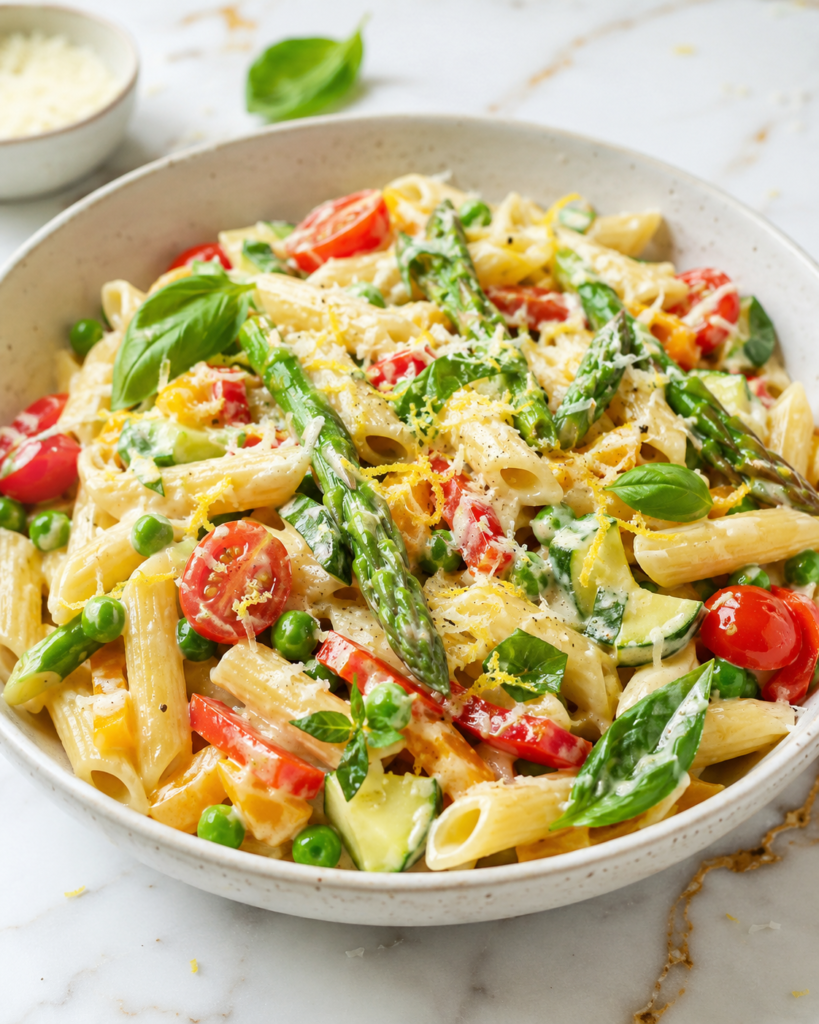
I make this One-Pot Pasta Primavera Recipe when I want a dinner that feels fresh, colorful, and easy to clean up. It has tender pasta, bright vegetables, and a light creamy sauce that brings everything together without feeling too heavy.
I like this meal because it helps me use the vegetables I already have in the fridge. It is simple enough for a weeknight, but it still feels cheerful and homemade when I bring it to the table.
Why You’ll Love This Recipe
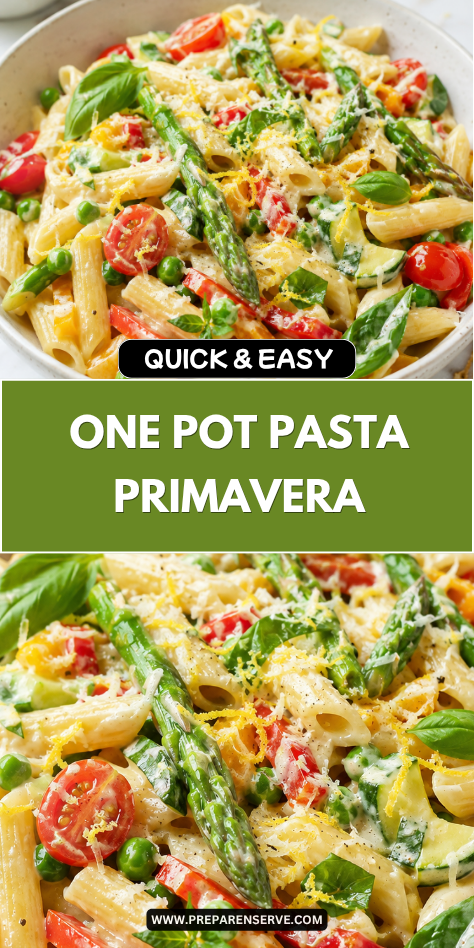
This One-Pot Pasta Primavera Recipe is full of soft pasta, crisp-tender vegetables, and gentle garlic flavor. Everything cooks in one pot, so the pasta absorbs flavor as it simmers and the sauce becomes silky without needing a lot of extra steps.
It is also a great family meal because it feels flexible and friendly. Kids can pick out their favorite vegetables, and adults can add extra pepper, herbs, or Parmesan at the table.
The best part is how practical it is for busy nights. You get pasta, vegetables, and sauce in one dish, with fewer dishes to wash and plenty of room to adjust the flavors to fit your family.
Serves: 4 people
This recipe serves 4 people as a main dish with generous bowls of pasta and vegetables. If you are serving it with bread, salad, or chicken on the side, it can stretch a little further for smaller appetites.
For a larger family, you can increase the pasta and vegetables, but make sure your pot is big enough. A wide Dutch oven or deep skillet gives the pasta room to cook evenly without sticking together.
Ingredients You’ll Need
- 12 ounces penne pasta
- 2 tablespoons olive oil
- 3 garlic cloves, minced
- 1 small yellow onion, thinly sliced
- 1 medium zucchini, sliced into half-moons
- 1 medium yellow squash, sliced into half-moons
- 1 red bell pepper, thinly sliced
- 1 cup broccoli florets, cut small
- 1 cup cherry tomatoes, halved
- 1 cup frozen peas
- 3 cups low-sodium vegetable broth
- 1 cup water
- 1/2 cup heavy cream
- 1/2 cup grated Parmesan cheese, plus more for serving
- 1 teaspoon kosher salt, plus more to taste
- 1/2 teaspoon black pepper
- 1 teaspoon dried Italian seasoning
- 1/4 teaspoon red pepper flakes, optional
- 1 tablespoon fresh lemon juice
- 1 teaspoon lemon zest
- 1/4 cup chopped fresh basil
- 2 tablespoons chopped fresh parsley
Pro Tips
Cut the vegetables into similar-sized pieces so they cook evenly. Smaller pieces work best because they soften quickly while the pasta simmers.
Use a wide pot or deep skillet instead of a narrow saucepan. The pasta needs space to move around so it can cook evenly and soak up the broth.
Stir the pasta often during cooking, especially in the first few minutes. This keeps it from sticking to the bottom of the pot or clumping together.
Add delicate vegetables like peas and tomatoes near the end. This keeps them bright, sweet, and fresh instead of mushy.
Do not add the cream too early. Stir it in near the end so the sauce stays smooth and does not overcook.
Taste before serving and adjust the salt, pepper, and lemon. Pasta absorbs a lot of seasoning, so a small final adjustment can make the whole pot taste brighter.
Tools You’ll Need
- Large Dutch oven or deep skillet with lid
- Cutting board
- Sharp knife
- Measuring cups
- Measuring spoons
- Wooden spoon or silicone spatula
- Microplane or zester
- Garlic press, optional
- Cheese grater
- Liquid measuring cup
- Ladle or serving spoon
- Pasta bowls
Substitutions and Variations
Make It Dairy-Free
Use full-fat coconut milk or an unsweetened dairy-free cream instead of heavy cream. Skip the Parmesan or use a dairy-free Parmesan-style topping to keep the sauce creamy and flavorful.
Change the Pasta Shape
Use rotini, fusilli, farfalle, or shells instead of penne. Choose a pasta shape with a similar cooking time so the liquid amount and texture stay close to the original recipe.
Add Protein
Stir in cooked chicken, shrimp, white beans, or chickpeas near the end of cooking. This makes the meal heartier while keeping the one-pot pasta primavera style fresh and simple.
Use Different Vegetables
Swap in asparagus, carrots, mushrooms, green beans, or spinach based on what you have. Add firm vegetables earlier and tender greens at the very end so everything cooks properly.
Make It Lighter
Use half-and-half instead of heavy cream, or reduce the cream to 1/4 cup and add a splash more broth. The pasta will still taste smooth, but the sauce will feel a little lighter.
Make Ahead Tips
One-Pot Pasta Primavera Recipe is best served fresh, but you can still do some simple prep ahead to make dinner easier. Wash and chop the zucchini, yellow squash, bell pepper, broccoli, onion, and tomatoes up to 1 day ahead, then store them in airtight containers in the refrigerator.
You can also grate the Parmesan, mince the garlic, and measure the broth, cream, and seasonings before you start cooking. Having everything ready matters with one-pot pasta because the recipe moves quickly once the pasta begins to simmer.
I do not recommend fully cooking the pasta ahead of time unless you plan to eat it as leftovers. The pasta will keep soaking up sauce as it sits, so the texture is best right after cooking.
If you want to make it for meal prep, cook the pasta just until al dente and keep a little extra broth nearby for reheating. A splash of broth or cream will help loosen the sauce later and bring back that creamy texture.
Instructions
Step 1: Prepare the Vegetables
Wash and dry all the vegetables before you start cooking. Slice the zucchini and yellow squash into half-moons, thinly slice the bell pepper and onion, cut the broccoli into small florets, and halve the cherry tomatoes.
Try to keep the pieces close in size so they cook at the same pace. This also helps every bite have a nice mix of pasta, sauce, and vegetables.
Step 2: Sauté the Onion and Garlic
Place a large Dutch oven or deep skillet over medium heat and add the olive oil. Once the oil is warm, add the sliced onion and cook for 2 to 3 minutes, stirring often, until it begins to soften.
Add the minced garlic and cook for about 30 seconds, just until fragrant. Do not let the garlic brown too much, because it can turn bitter and make the sauce taste sharp.
Step 3: Add the Firm Vegetables
Add the zucchini, yellow squash, red bell pepper, and broccoli to the pot. Stir everything together so the vegetables are lightly coated in the olive oil, onion, and garlic.
Cook for 3 to 4 minutes, just until the vegetables begin to brighten and soften slightly. They do not need to be fully cooked yet because they will continue cooking with the pasta.
Step 4: Add the Pasta and Liquid
Add the penne pasta, vegetable broth, water, kosher salt, black pepper, Italian seasoning, and red pepper flakes if using. Stir well so the pasta is mostly covered by the liquid and the vegetables are spread evenly through the pot.
Bring the mixture to a gentle boil over medium-high heat. Once it starts bubbling, reduce the heat to medium so it simmers steadily without boiling too hard.
Step 5: Simmer Until the Pasta Is Tender
Cover the pot and cook for 10 to 12 minutes, stirring every few minutes so the pasta does not stick. The pasta should become tender, and most of the liquid should reduce into a light sauce.
If the pot looks too dry before the pasta is done, add a small splash of water or broth. If there is too much liquid at the end, simmer uncovered for 1 to 2 minutes to help it thicken.
Step 6: Add the Peas and Tomatoes
Stir in the frozen peas and halved cherry tomatoes. Cook for 2 to 3 minutes, just until the peas are warm and the tomatoes begin to soften.
This keeps the peas sweet and bright while the tomatoes stay juicy instead of breaking down too much. The pasta should look colorful and fresh at this point.
Step 7: Stir in the Cream and Parmesan
Lower the heat to medium-low and stir in the heavy cream. Add the grated Parmesan cheese and stir until it melts into the sauce.
The sauce should look creamy and lightly glossy, not thick or heavy. If it becomes too thick, add a splash of broth or water until it coats the pasta nicely.
Step 8: Finish with Lemon and Herbs
Turn off the heat and stir in the lemon juice, lemon zest, chopped basil, and chopped parsley. Taste the pasta and add more salt or black pepper if needed.
The lemon and herbs make the whole pot taste fresh and balanced. This final step is small, but it helps keep the dish from tasting too rich.
Step 9: Serve Warm
Spoon the pasta into bowls while it is warm and creamy. Add extra Parmesan on top if your family likes a little more cheesy flavor.
Serve right away for the best texture. One-pot pasta thickens as it sits, so enjoy it while the sauce is still smooth and loose.
Serving Suggestions
This pasta is lovely on its own because it already has noodles, vegetables, and sauce in one bowl. I like to serve it warm with a little extra Parmesan and black pepper on top for a simple family dinner.
Garlic bread or warm breadsticks are a good match when you want the meal to feel more filling. They are also perfect for scooping up any creamy sauce left at the bottom of the bowl.
A crisp green salad helps balance the pasta’s creamy texture. A simple salad with romaine, cucumbers, and a lemony dressing keeps the meal fresh without adding much work.
For extra protein, serve the pasta with grilled chicken, baked salmon, shrimp, or white beans. This is helpful when you want the meal to feel heartier for older kids or adults.
Fresh fruit can be a nice side for younger children. Grapes, berries, melon, or apple slices keep the plate colorful and make the meal feel light.
You can also serve this pasta as a side dish with roasted chicken or turkey meatballs. The vegetables and creamy sauce make it a cheerful addition to a larger family meal.
Leftovers and Storage
Leftover One-Pot Pasta Primavera Recipe keeps well for simple lunches or quick dinners. Let the pasta cool before moving it to an airtight container, but do not leave it sitting out too long.
Store leftovers in the refrigerator for up to 3 days. The pasta will continue to absorb the sauce as it sits, so it may look thicker the next day.
To reheat, add a splash of broth, water, milk, or cream before warming. Heat it gently in a skillet over medium-low heat or in the microwave in short bursts, stirring between each one.
Freezing is not my first choice for this recipe because cream sauces and tender vegetables can change texture after thawing. If you do freeze it, use a freezer-safe container and store it for up to 1 month.
Thaw overnight in the refrigerator before reheating. Add extra liquid and stir gently to help the sauce come back together.
Nutrition and Benefits
- It includes a variety of vegetables. Zucchini, yellow squash, bell pepper, broccoli, peas, and tomatoes add color, texture, and helpful nutrients. This makes the meal feel fresh while still being comforting and easy to eat.
- The pasta makes it filling. Penne gives the dish a satisfying base that works well for family dinners. It helps turn the vegetables and sauce into a complete meal.
- Vegetable broth adds flavor. Cooking the pasta in broth instead of plain water helps build flavor from the start. It also helps create a light sauce as the pasta releases starch.
- Parmesan and cream add comfort. A small amount of cream and Parmesan makes the sauce smooth and cozy. It gives the dish a family-friendly flavor without covering up the vegetables.
- Lemon and herbs keep it fresh. Lemon juice, lemon zest, basil, and parsley brighten the pasta at the end. They help balance the creamy sauce and make the vegetables taste lively.
Recipe FAQ
Can I use a different pasta shape?
Yes, you can use rotini, fusilli, shells, or farfalle instead of penne. Try to choose a shape with a similar cooking time so the liquid amount works well. If the pasta needs more time, add a splash of broth as it cooks. Stir often so the pasta does not stick.
Can I make this recipe gluten-free?
Yes, you can use a gluten-free pasta, but the cooking time and liquid needs may change. Gluten-free pasta can soften quickly, so check it early and stir gently. Add extra broth only as needed. The finished texture may be a little different, but it can still be very tasty.
Can I make it without heavy cream?
Yes, you can use half-and-half, whole milk, or an unsweetened dairy-free cream. The sauce may be lighter and a little less rich, but it will still coat the pasta. If using milk, keep the heat low when adding it. This helps prevent the sauce from separating.
What vegetables work best in pasta primavera?
Zucchini, squash, bell peppers, broccoli, peas, tomatoes, asparagus, carrots, and spinach all work well. Firm vegetables should be added earlier so they have time to cook. Tender vegetables or greens should be added near the end. This keeps the dish colorful and prevents overcooking.
Why did my pasta stick to the pot?
Pasta can stick if it is not stirred enough, especially during the first few minutes of cooking. Use a wide pot and stir every few minutes while it simmers. Make sure there is enough liquid around the pasta. Lower the heat if the bottom of the pot is cooking too quickly.
Can I add chicken or shrimp?
Yes, cooked chicken or cooked shrimp can be stirred in near the end. Add them when you add the cream so they warm through without overcooking. You can also serve protein on top of each bowl. This keeps the main recipe simple and flexible.
How do I keep the sauce creamy when reheating?
Add a splash of broth, water, milk, or cream before reheating. Warm the pasta gently and stir often so the sauce loosens and coats the noodles again. Avoid high heat because it can make the sauce separate. A little extra Parmesan can also help bring back flavor.
A Fresh One-Pot Dinner for Busy Nights
One-Pot Pasta Primavera Recipe is a simple meal that brings color, comfort, and fresh flavor to the table without making a big mess in the kitchen. It is easy to cook, easy to serve, and gentle enough for a family dinner that still feels homemade.
The tender pasta, creamy sauce, and bright vegetables make it worth coming back to again and again. It is dependable for busy nights, flexible for what you have on hand, and comforting in a way that feels light and satisfying.