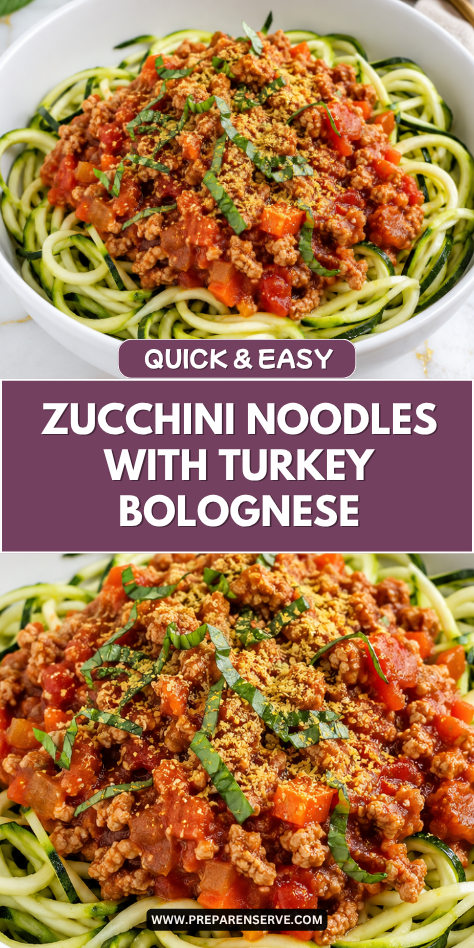
I make Zucchini Noodles with Turkey Bolognese when I want a cozy pasta-style dinner that still feels fresh and light. It has all the comfort of a rich tomato meat sauce, but the zucchini noodles keep the meal a little brighter and easier for weeknights.
This is one of those meals that feels familiar enough for the whole family. The turkey bolognese is warm, savory, and simple, while the zucchini noodles add a gentle flavor that works well with the sauce.
I like this recipe because it gives me a way to serve a vegetable-forward dinner without making it feel like a salad. It is hearty enough for adults, easy enough for kids, and flexible enough to serve with bread, pasta, or extra vegetables if your family wants something more filling.
Why You’ll Love This Recipe
Zucchini Noodles with Turkey Bolognese gives you the comfort of a classic red sauce meal without feeling too heavy. The ground turkey cooks into a rich tomato sauce with garlic, onion, herbs, and a little simmering time, which makes the flavor taste deep and homemade.
This recipe is also helpful for families because it can be served in different ways. Some people can enjoy the sauce over zucchini noodles, while others can have it over regular pasta, spaghetti squash, or a mix of both.
It is a great choice for meal prep because the turkey bolognese stores and reheats well. The zucchini noodles cook quickly, so you can keep them fresh and add them right before serving.
Serves: 4 people
This recipe serves 4 people as a light but satisfying dinner. Each serving includes a generous portion of turkey bolognese over tender zucchini noodles, making it a good option when you want a lower-carb meal that still feels comforting.
If you are feeding bigger appetites, you can add a side salad, roasted vegetables, or a slice of garlic bread. You can also double the sauce and freeze half for another night.
Ingredients You’ll Need
For the Turkey Bolognese
- 1 tablespoon olive oil
- 1 pound lean ground turkey
- 1 small yellow onion, finely diced
- 2 cloves garlic, minced
- 1 medium carrot, finely grated
- 1 celery stalk, finely diced
- 1 tablespoon tomato paste
- 1 can tomato sauce, 15 ounces
- 1 can crushed tomatoes, 14.5 ounces
- 1/2 cup low-sodium chicken broth
- 1 teaspoon dried Italian seasoning
- 1/2 teaspoon dried oregano
- 1/2 teaspoon kosher salt
- 1/4 teaspoon black pepper
- 1/4 teaspoon crushed red pepper flakes, optional
- 1 teaspoon balsamic vinegar
- 2 tablespoons chopped fresh basil or parsley
For the Zucchini Noodles
- 4 medium zucchini, spiralized into noodles
- 1 teaspoon olive oil
- 1/4 teaspoon kosher salt
- 1/8 teaspoon black pepper
For Serving
- 1/4 cup grated Parmesan cheese, optional
- 2 tablespoons chopped fresh basil
- Extra black pepper, to taste
- Lemon wedges, optional
Pro Tips
Do not overcook the zucchini noodles. They only need a few minutes in the pan, and cooking them too long can make them watery and soft.
Salt the zucchini lightly and let it rest if you have extra time. This helps pull out some moisture before cooking, which keeps the finished bowl from becoming too watery.
Finely chop or grate the vegetables for the sauce. Small pieces blend into the bolognese better, which is helpful if you have kids who are not always excited about onions, carrots, or celery.
Let the sauce simmer long enough to thicken. Even 15 to 20 minutes helps the tomato flavor deepen and gives the turkey time to soak up the seasonings.
Use lean ground turkey, but avoid extra-lean if you want a richer sauce. A little fat helps the bolognese taste more tender and satisfying.
Keep the sauce and zucchini noodles separate until serving. This gives you the best texture, especially if you plan to store leftovers or meal prep the recipe.
Tools You’ll Need
- Large skillet or sauté pan
- Medium skillet for zucchini noodles
- Spiralizer or julienne peeler
- Cutting board
- Sharp knife
- Wooden spoon or spatula
- Measuring cups
- Measuring spoons
- Box grater
- Can opener
- Tongs
- Serving bowls
- Airtight containers for leftovers
Substitutions and Variations
Use a Different Protein
Ground chicken, lean ground beef, or Italian turkey sausage can be used instead of ground turkey. Keep the same tomato base and seasonings so the sauce still tastes like a cozy bolognese.
Make It Dairy-Free
Skip the Parmesan cheese or use a dairy-free Parmesan-style topping. The sauce still has plenty of flavor from the garlic, herbs, tomatoes, and balsamic vinegar.
Change the Noodle Base
Use spaghetti squash, hearts of palm noodles, or regular pasta instead of zucchini noodles. You can also mix zucchini noodles with cooked pasta for a family-friendly balance that feels lighter but still familiar.
Add More Vegetables
Stir finely chopped mushrooms, bell peppers, or spinach into the turkey bolognese. These add color, texture, and extra nutrition without changing the main flavor of the dish.
Make It Heartier
Serve the turkey bolognese over zucchini noodles with a side of roasted potatoes, garlic bread, or a small bowl of pasta. This helps stretch the meal for bigger appetites while keeping the core recipe the same.
Make Ahead Tips
Zucchini Noodles with Turkey Bolognese is a smart recipe to make ahead because the sauce gets even better after it rests. You can cook the turkey bolognese up to 4 days in advance and store it in an airtight container in the refrigerator.
For the best texture, keep the zucchini noodles separate until you are ready to serve. Spiralize the zucchini up to 2 days ahead, then store the noodles in a container lined with paper towels to absorb extra moisture.
You can also freeze the turkey bolognese for a quick dinner later. Let the sauce cool completely, then place it in freezer-safe containers or bags and freeze for up to 3 months.
I do not recommend freezing cooked zucchini noodles because they release too much water after thawing. Make a fresh batch of zucchini noodles when you reheat the sauce, and the meal will taste bright and fresh again.
Instructions
Step 1: Prepare the Zucchini Noodles
Spiralize 4 medium zucchini into noodles using a spiralizer or julienne peeler. If the noodles are very long, cut them into shorter pieces so they are easier to serve and eat.
Place the zucchini noodles on a clean towel or paper towel. Sprinkle lightly with 1/4 teaspoon kosher salt and let them sit while you make the sauce.
Step 2: Start the Turkey Bolognese
Heat 1 tablespoon olive oil in a large skillet or sauté pan over medium heat. Add 1 small finely diced yellow onion, 1 finely diced celery stalk, and 1 finely grated carrot.
Cook for 4 to 5 minutes, stirring often, until the vegetables begin to soften. This simple base gives the sauce a richer flavor and helps the turkey bolognese taste more homemade.
Step 3: Add the Garlic and Turkey
Add 2 minced garlic cloves to the skillet and cook for about 30 seconds, just until fragrant. Stir often so the garlic does not burn.
Add 1 pound lean ground turkey and break it apart with a wooden spoon or spatula. Cook for 6 to 8 minutes, until the turkey is no longer pink and the pieces are small and evenly browned.
Step 4: Build the Sauce
Stir in 1 tablespoon tomato paste and cook for 1 minute. This helps deepen the tomato flavor and gives the sauce a warmer, richer taste.
Add 1 can tomato sauce, 1 can crushed tomatoes, 1/2 cup low-sodium chicken broth, 1 teaspoon dried Italian seasoning, 1/2 teaspoon dried oregano, 1/2 teaspoon kosher salt, 1/4 teaspoon black pepper, and 1/4 teaspoon crushed red pepper flakes if using.
Step 5: Simmer the Bolognese
Bring the sauce to a gentle simmer, then reduce the heat to low. Let it cook uncovered for 18 to 25 minutes, stirring now and then, until the sauce thickens and coats the turkey well.
If the sauce becomes too thick, add a small splash of chicken broth. If it seems too thin, let it simmer a few minutes longer so some of the liquid can cook off.
Step 6: Finish the Sauce
Stir in 1 teaspoon balsamic vinegar and 2 tablespoons chopped fresh basil or parsley. Taste the sauce and adjust with a little more salt, pepper, or herbs if needed.
The balsamic vinegar adds a gentle sweetness and helps balance the tomatoes. The fresh herbs make the sauce taste brighter right before serving.
Step 7: Cook the Zucchini Noodles
Pat the zucchini noodles dry with a clean towel to remove extra moisture. Heat 1 teaspoon olive oil in a medium skillet over medium heat.
Add the zucchini noodles and 1/8 teaspoon black pepper. Cook for 2 to 3 minutes, tossing gently with tongs, until the noodles are just tender but not mushy.
Step 8: Assemble and Serve
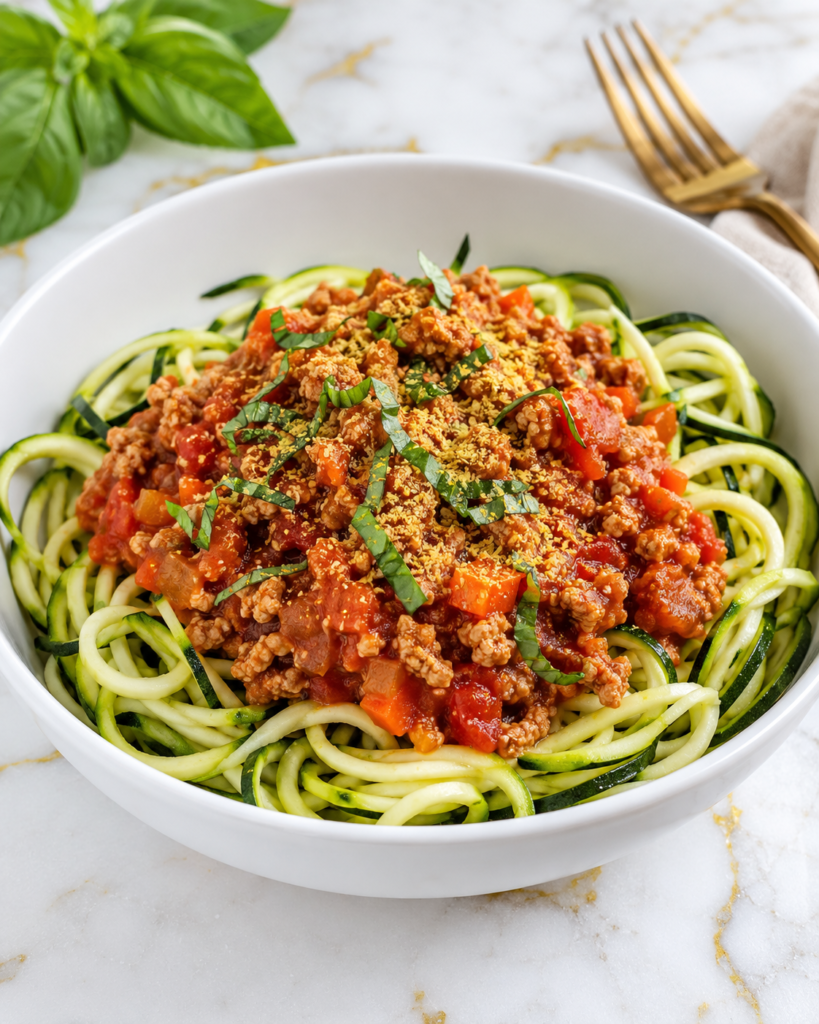
Divide the warm zucchini noodles among 4 serving bowls. Spoon the turkey bolognese over the top, using enough sauce to coat the noodles without drowning them.
Finish with 1/4 cup grated Parmesan cheese if using, 2 tablespoons chopped fresh basil, extra black pepper, and lemon wedges if you like a brighter finish. Serve right away while the sauce is warm and the zucchini noodles are still tender.
Serving Suggestions
Zucchini Noodles with Turkey Bolognese can be served on its own as a lighter dinner. The warm sauce and tender zucchini noodles make it feel complete without needing a heavy side.
For a family meal, serve a basket of warm garlic bread or toasted sourdough on the side. This is helpful when some family members want a heartier plate.
A simple green salad pairs well with the rich tomato sauce. Try romaine, cucumbers, cherry tomatoes, and a light vinaigrette to keep the meal fresh.
You can also serve the turkey bolognese over a mix of zucchini noodles and regular pasta. This is a nice middle ground for kids or anyone who wants the comfort of pasta with extra vegetables.
For a lower-carb dinner, pair the bowls with roasted broccoli, sautéed green beans, or a cucumber salad. These sides keep the plate colorful and light.
If you are meal prepping, pack the sauce in one container and the zucchini noodles in another. Warm the sauce first, then quickly heat or toss the noodles before serving.
Leftovers and Storage
Store leftover turkey bolognese in an airtight container in the refrigerator for up to 4 days. Keep the zucchini noodles in a separate container if possible so they do not become too soft in the sauce.
To reheat the sauce, warm it in a skillet over medium-low heat for 5 to 7 minutes, stirring often. You can also microwave it in short bursts, stirring between each one until heated through.
Cooked zucchini noodles are best eaten within 1 to 2 days. Reheat them gently in a skillet for 1 minute, just until warm, because too much heat can make them watery.
The turkey bolognese freezes very well for up to 3 months. Let it cool fully before freezing, then thaw it overnight in the refrigerator before reheating.
If the sauce thickens after storage, add a splash of broth or water while reheating. This brings it back to a spoonable texture without watering down the flavor too much.
Nutrition and Benefits
- High in protein: Ground turkey gives the bolognese a lean, satisfying protein base. This helps make the meal filling while keeping it lighter than many traditional meat sauces.
- Lower in carbs: Zucchini noodles are a lighter swap for pasta and make the dish feel fresh. They are helpful when you want a pasta-style meal without a heavier noodle base.
- Packed with vegetables: Zucchini, onion, carrot, celery, tomatoes, and herbs all add flavor and nutrition. The vegetables blend into the meal in a way that feels natural and family-friendly.
- Great for meal prep: The turkey bolognese stores and freezes well, which makes weeknight dinners easier. You can make the sauce ahead and cook fresh zucchini noodles in just a few minutes.
- Comforting but balanced: The sauce has the warm, savory flavor of classic bolognese, while the zucchini keeps the bowl lighter. This makes it a good choice for both cozy dinners and simple lunches.
Recipe FAQ
Can I use store-bought zucchini noodles?
Yes, store-bought zucchini noodles work well and save time. Pat them dry before cooking because they often hold extra moisture. Cook them briefly so they stay tender and do not turn watery.
How do I keep zucchini noodles from getting soggy?
Salt them lightly and let them rest on a towel while the sauce cooks. Pat them dry before adding them to the skillet. Also, cook them for only 2 to 3 minutes so they stay firm.
Can I use ground beef instead of turkey?
Yes, lean ground beef can be used in place of ground turkey. It will make the sauce richer and slightly heavier. Drain extra fat from the pan if needed before adding the tomatoes.
Can I make this recipe dairy-free?
Yes, simply leave off the Parmesan cheese or use a dairy-free Parmesan-style topping. The sauce has plenty of flavor from the garlic, tomatoes, herbs, and balsamic vinegar. You can also add extra fresh basil for a bright finish.
Can I serve the sauce over regular pasta?
Yes, the turkey bolognese tastes great over regular pasta. You can serve it over spaghetti, penne, or whole wheat pasta. A mix of pasta and zucchini noodles is also a good family-friendly option.
Can I freeze the whole dish?
Freeze the turkey bolognese only, not the zucchini noodles. Zucchini noodles become soft and watery after freezing and thawing. Make fresh zucchini noodles when you are ready to serve the thawed sauce.
Why is my sauce watery?
The sauce may need more simmering time, or the zucchini noodles may have released extra moisture. Let the sauce simmer uncovered until it thickens before serving. Keep the zucchini noodles separate until the last minute for the best texture.
A Lighter Comfort Dinner Worth Repeating
Zucchini Noodles with Turkey Bolognese brings together the cozy flavor of a slow-simmered sauce with the fresh feel of a vegetable-based meal. It is easy to make, simple to serve, and flexible enough for both lighter dinners and heartier family plates.
I love that this recipe feels dependable without being heavy. The turkey bolognese is warm and comforting, the zucchini noodles keep each bowl fresh, and the leftovers make lunch or meal prep feel easy the next day.