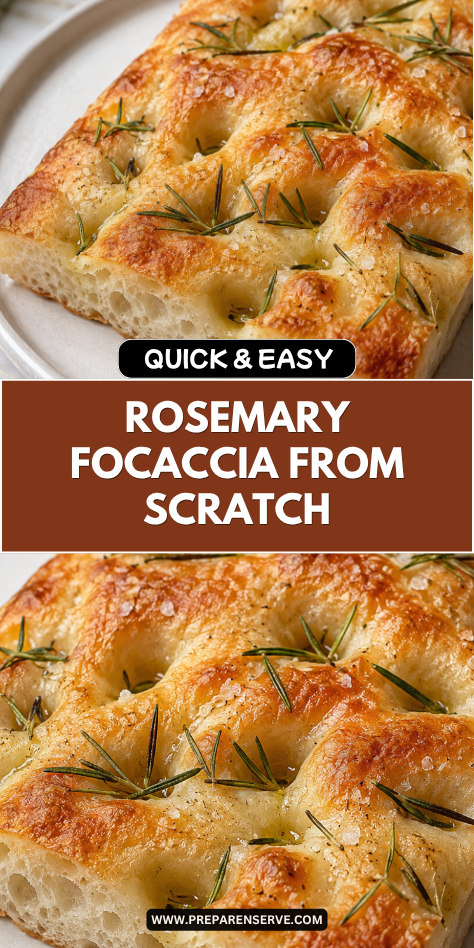
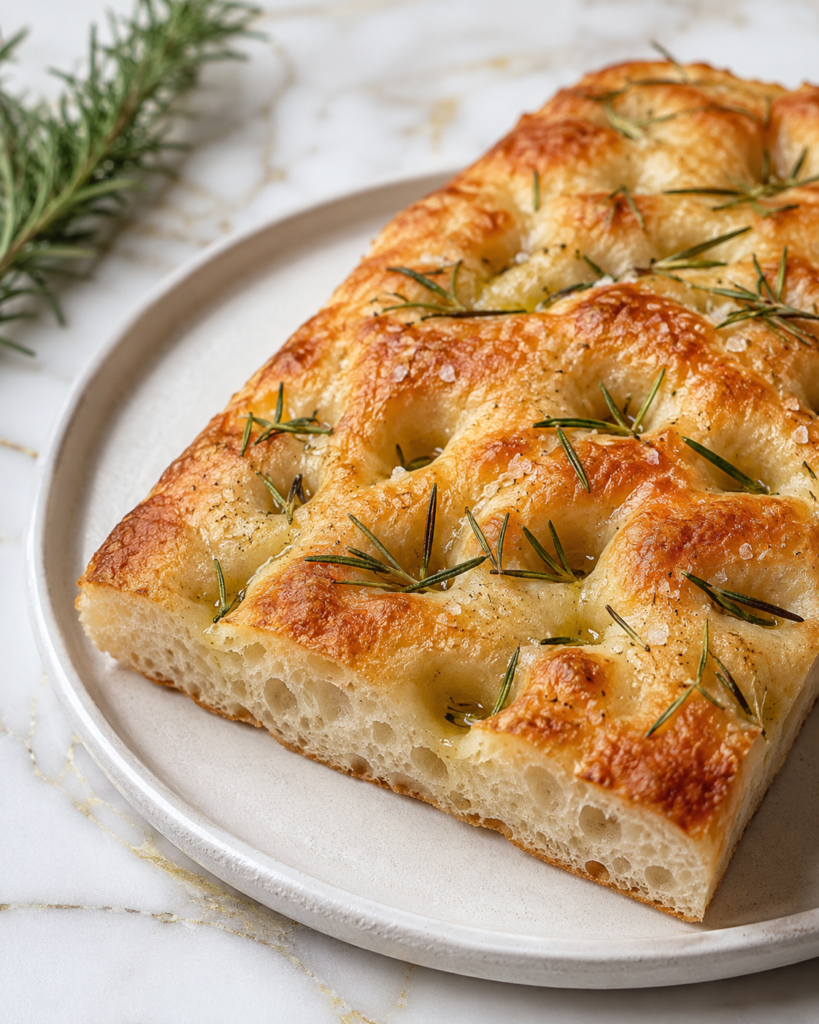
I make Rosemary Focaccia when I want homemade bread that feels warm, simple, and a little special without needing fancy shaping. The dough bakes up soft and airy inside, with golden edges, olive oil, flaky salt, and fresh rosemary on top.
I love this recipe because it is forgiving and peaceful to make. The dough rests, rises, and stretches with very little fuss, and the finished bread is perfect for family dinners, soup nights, sandwiches, or tearing apart while it is still warm.
Why You’ll Love This Recipe
Rosemary Focaccia has a crisp golden top, soft chewy center, and rich olive oil flavor in every bite. The fresh rosemary adds a woodsy, savory smell that makes the bread feel cozy and homemade.
This recipe is also beginner-friendly because the dough does not need complicated shaping. You mix it, let it rise, press it into a pan, dimple it with your fingers, and bake until beautifully golden.
It is a wonderful bread for families because it goes with so many meals. Serve it with pasta, soup, roasted chicken, salads, or use leftovers for sandwiches the next day.
Serves: 8 people
This recipe serves 8 people as a side bread or appetizer. It makes one 9×13-inch pan of focaccia, which can be cut into squares, strips, or larger pieces for sharing.
If you are serving it with a full dinner, one piece per person is usually enough. For a bread-loving family or a gathering, you may want to make two pans because warm focaccia disappears quickly.
Ingredients You’ll Need
For the focaccia dough:
- 4 cups all-purpose flour, plus more for hands if needed
- 2 1/4 teaspoons active dry yeast, 1 standard packet
- 2 teaspoons granulated sugar or honey
- 1 3/4 cups warm water, about 105°F to 110°F
- 2 teaspoons kosher salt
- 1/4 cup extra-virgin olive oil, plus more for the bowl and pan
For the topping:
- 3 tablespoons extra-virgin olive oil
- 2 tablespoons fresh rosemary leaves, roughly chopped
- 1 teaspoon flaky sea salt
- 1/4 teaspoon black pepper, optional
- 2 garlic cloves, thinly sliced, optional
Pro Tips
Use warm water, not hot water, when mixing the yeast. Water that is too hot can stop the yeast from working, while water that is too cool can make the dough rise slowly.
Let the dough rise until it looks puffy and airy. The timing can change depending on your kitchen temperature, so it is better to watch the dough instead of only watching the clock.
Do not skimp on the olive oil. Focaccia gets much of its flavor and texture from olive oil, and it also helps create that golden, crisp bottom.
Be gentle when stretching the dough into the pan. If it springs back, let it rest for 10 minutes, then try again instead of forcing it.
Press deep dimples into the dough before baking. These little pockets hold olive oil, rosemary, and salt, which gives the focaccia its classic texture and flavor.
Add garlic carefully if using it. Thin slices can brown quickly, so tuck them lightly into the dough or use less if your oven runs hot.
Tools You’ll Need
- Large mixing bowl
- Measuring cups
- Measuring spoons
- Wooden spoon or silicone spatula
- Clean kitchen towel or plastic wrap
- 9×13-inch baking pan
- Small bowl for olive oil topping
- Sharp knife, optional for chopping rosemary
- Cutting board
- Oven mitts
- Cooling rack
- Serrated knife or bench scraper for cutting
Substitutions and Variations
Use Bread Flour
Use bread flour in place of all-purpose flour for a chewier focaccia. The bread may have a little more structure, but it will still stay soft and flavorful.
Try Different Herbs
Use thyme, oregano, basil, or a mix of Italian herbs instead of rosemary. Keep the amount moderate so the herbs flavor the bread without making it taste too strong.
Add More Toppings
Top the dough with cherry tomatoes, olives, caramelized onions, or thin potato slices before baking. Keep toppings light so the focaccia can still rise and bake evenly.
Make It Garlic Rosemary Focaccia
Add thinly sliced garlic on top or stir roasted garlic into the dough. Garlic makes the bread extra savory and pairs beautifully with olive oil and rosemary.
Make It Whole Wheat
Replace 1 cup of all-purpose flour with whole wheat flour for a heartier flavor. Add 1 to 2 extra tablespoons of warm water if the dough feels too dry.
Make Ahead Tips
Rosemary Focaccia is a wonderful bread to make ahead because the dough can rest slowly and develop more flavor. You can mix the dough the night before, cover it tightly, and let it rise in the refrigerator for 8 to 18 hours.
A cold rise makes the dough easier to handle and gives the finished focaccia a deeper, more bakery-style taste. When you are ready to bake, let the dough sit at room temperature for about 45 to 60 minutes before stretching it into the pan.
You can also bake the focaccia earlier in the day and warm it before serving. Wrap it loosely in foil and heat it in a 300°F oven until soft and warm again.
For the freshest texture, add the final drizzle of olive oil, rosemary, and flaky salt right before baking. This keeps the top fragrant, golden, and full of flavor.
Instructions
Step 1: Wake Up the Yeast
In a large mixing bowl, stir together the warm water, yeast, and sugar or honey. Let the mixture sit for 5 to 10 minutes, until it looks foamy on top.
The foam means the yeast is active and ready to help the dough rise. If the mixture does not foam, your yeast may be old or the water may have been too hot or too cool.
Step 2: Mix the Dough
Add the all-purpose flour, kosher salt, and olive oil to the yeast mixture. Stir with a wooden spoon or silicone spatula until a sticky, shaggy dough forms.
The dough will look softer and wetter than many bread doughs, and that is normal for focaccia. Do not add too much extra flour, because a wetter dough helps create an airy texture.
Step 3: Let the Dough Rest
Cover the bowl with a clean kitchen towel or plastic wrap. Let the dough rest for 15 minutes at room temperature.
This short rest gives the flour time to absorb the water. It also makes the dough easier to stretch and fold in the next step.
Step 4: Stretch and Fold the Dough
With lightly oiled hands, grab one side of the dough and stretch it up, then fold it over the center. Turn the bowl and repeat this 3 more times, working around the dough.
Cover the bowl again and let the dough rest for another 15 minutes. Repeat the stretch-and-fold process one more time to help build structure without kneading.
Step 5: Let the Dough Rise
Drizzle a little olive oil around the dough and turn it gently so it is lightly coated. Cover the bowl and let the dough rise in a warm spot for 1 to 1 1/2 hours, or until doubled and puffy.
The dough should look airy and soft when it is ready. If your kitchen is cool, it may need a little more time to rise fully.
Step 6: Prepare the Pan
Pour a generous drizzle of olive oil into a 9×13-inch baking pan and spread it across the bottom and sides. Use enough oil so the dough does not stick and the bottom can turn golden.
Transfer the risen dough into the pan. Turn it once so both sides pick up some of the olive oil.
Step 7: Stretch the Dough Into the Pan
Use your fingertips to gently stretch the dough toward the corners of the pan. If it springs back, let it rest for 10 minutes, then continue stretching.
Do not force the dough or tear it. It will relax as it rests and become easier to spread into an even layer.
Step 8: Let the Dough Rise Again
Cover the pan and let the dough rise for 30 to 45 minutes, until it looks puffy and fills the pan. During this time, preheat the oven to 425°F.
The second rise helps the focaccia become soft and airy inside. The dough should jiggle slightly when you move the pan.
Step 9: Add Dimples and Topping
In a small bowl, stir together the olive oil, chopped rosemary, black pepper if using, and thinly sliced garlic if using. Drizzle the mixture evenly over the dough.
Use your fingertips to press deep dimples all over the dough, pushing nearly to the bottom of the pan. Sprinkle the top with flaky sea salt.
Step 10: Bake the Focaccia
Bake the focaccia for 22 to 28 minutes, or until the top is golden brown and the edges look crisp. The bread should smell fragrant from the rosemary and olive oil.
Let it cool in the pan for 5 to 10 minutes before moving it to a cooling rack. Slice it warm or at room temperature.
Serving Suggestions
Rosemary Focaccia is wonderful served warm with a little extra olive oil for dipping. The crisp edges, soft center, rosemary, and flaky salt make it simple but very satisfying.
Serve it with pasta dishes like spaghetti, lasagna, baked ziti, or pesto pasta. It is perfect for scooping up sauce and making a simple dinner feel more complete.
It also pairs beautifully with soups and stews. Tomato soup, minestrone, chicken soup, lentil soup, and vegetable stew all taste cozy with a piece of warm focaccia on the side.
For a family snack board, cut the focaccia into small squares and serve it with cheese, olives, sliced vegetables, and hummus. It makes the board feel homemade without much extra work.
Use leftover focaccia for sandwiches with turkey, mozzarella, roasted vegetables, or chicken salad. The bread has enough flavor to make even simple fillings taste special.
You can also serve it at brunch with scrambled eggs, fruit, and a simple salad. Its savory flavor balances sweeter breakfast foods nicely.
Leftovers and Storage
Leftover Rosemary Focaccia keeps well for a couple of days when stored properly. Let it cool completely, then place it in an airtight container or wrap it tightly.
Store focaccia at room temperature for up to 2 days. The crust will soften a little, but the bread will still taste good.
To bring back some crispness, warm slices in a 350°F oven for 5 to 8 minutes. You can also toast pieces in a skillet with a tiny drizzle of olive oil.
For longer storage, freeze the focaccia in slices or squares. Wrap each piece tightly and place them in a freezer-safe bag for up to 2 months.
Reheat frozen focaccia straight from the freezer in a 350°F oven until warm. Avoid microwaving if you want the edges to stay crisp, because the microwave can make the bread chewy.
Nutrition and Benefits
- Olive oil gives flavor and texture. Focaccia depends on olive oil for its golden crust, tender crumb, and rich taste. It also helps keep the bread moist after baking.
- Rosemary adds fresh savory flavor. Fresh rosemary makes the bread smell warm and inviting. A small amount gives the focaccia a classic flavor without overpowering it.
- Homemade bread uses simple ingredients. Flour, yeast, water, salt, and olive oil come together into a bread that feels special but familiar. Making it at home lets you control the toppings and salt level.
- The dough is beginner-friendly. This recipe does not need complicated shaping or heavy kneading. The stretch-and-fold method helps create structure while keeping the process simple.
- Focaccia works with many meals. It can be served with soup, pasta, salad, roasted meats, or snack boards. This makes it a dependable bread for family dinners and gatherings.
Recipe FAQ
Can I make Rosemary Focaccia without a stand mixer?
Yes, this recipe is easy to make without a stand mixer. The dough is stirred by hand and strengthened with simple stretch-and-fold steps. It will be sticky, so oil your hands instead of adding too much flour. This keeps the bread soft and airy.
Why is my focaccia dense?
Dense focaccia often comes from dough that did not rise long enough or from adding too much flour. The dough should be sticky, soft, and puffy before baking. Make sure your yeast is active and your water is warm, not hot. Give the dough extra time if your kitchen is cool.
Can I let the dough rise overnight?
Yes, an overnight rise works very well. After mixing and folding the dough, cover it tightly and refrigerate it for 8 to 18 hours. Let it warm slightly at room temperature before stretching it into the pan. This gives the bread deeper flavor and a nice texture.
Can I use dried rosemary?
Yes, you can use dried rosemary if fresh rosemary is not available. Use about 1 to 2 teaspoons because dried herbs are stronger than fresh. Crush it lightly between your fingers before adding it to the oil. Fresh rosemary gives the best aroma, but dried rosemary still works.
How do I get a crisp bottom?
Use enough olive oil in the pan and bake the focaccia in a fully preheated oven. A metal 9×13-inch pan usually gives a crisper bottom than glass. Let the bread bake until the edges are golden and slightly crisp. Cooling it briefly on a rack also helps prevent sogginess.
Can I add toppings before baking?
Yes, you can add toppings like olives, cherry tomatoes, caramelized onions, garlic, or thin potato slices. Keep toppings light so the dough can still rise and bake evenly. Press them gently into the dough after dimpling. Too many wet toppings can make the bread heavy.
Can I freeze focaccia?
Yes, focaccia freezes well after baking. Let it cool completely, cut it into pieces, and wrap the pieces tightly. Freeze for up to 2 months. Reheat in the oven until warm for the best texture.
A Warm Rosemary Bread for Sharing
Rosemary Focaccia is soft, golden, and full of simple homemade comfort.
The olive oil, fresh rosemary, airy dough, and flaky salt come together in a bread that feels both rustic and special.
It is worth making again because it works with so many family meals and can be prepared ahead with dependable results.
Whether served with soup, pasta, salad, or a snack board, this focaccia brings warmth and welcome to the table.