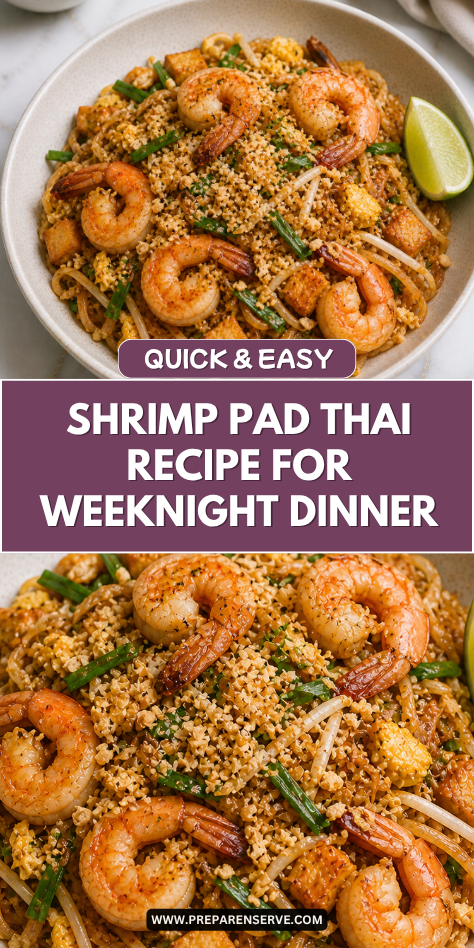
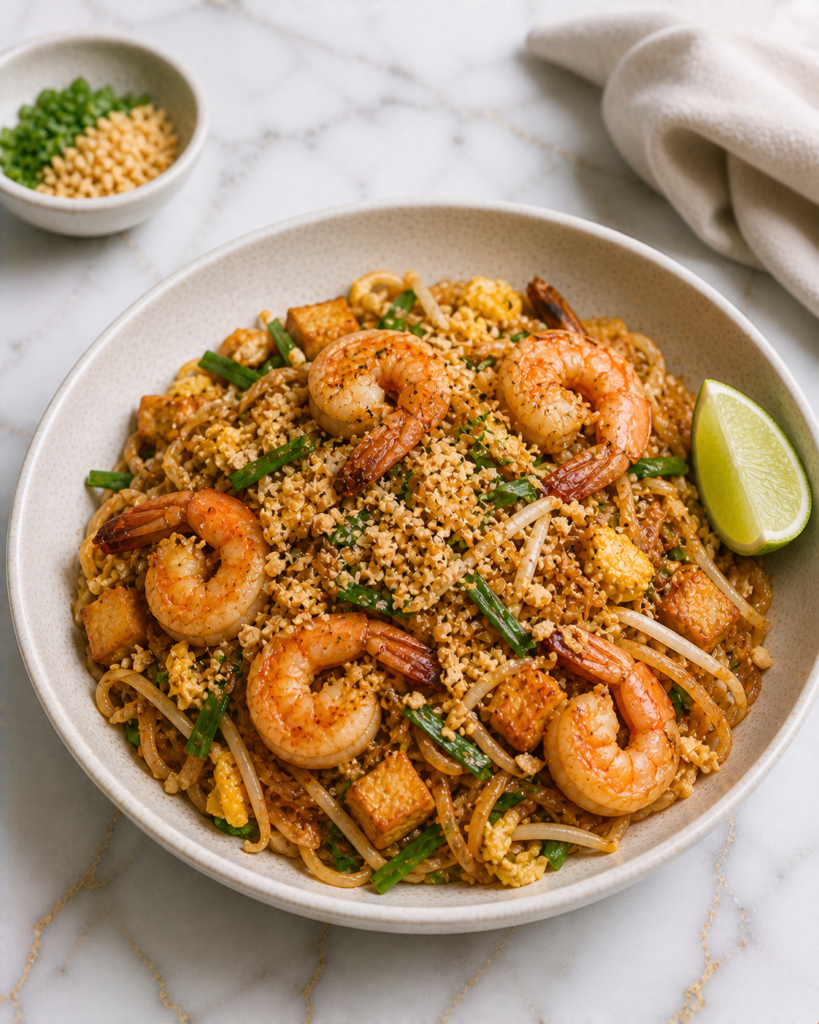
I make Pad Thai with Shrimp when I want a dinner that feels fresh, cozy, and a little fun without being too hard to make at home. The noodles are tender, the shrimp cook quickly, and the sauce brings together sweet, salty, tangy, and savory flavors in a way that makes every bite satisfying.
This is one of those meals that feels special enough for a weekend but fast enough for a weeknight when everything is prepped ahead. I love how the crunchy peanuts, fresh lime, green onions, and bean sprouts make the dish taste bright while still feeling warm and comforting.
Why You’ll Love This Recipe
Pad Thai with Shrimp is full of balanced flavor and texture. The rice noodles are soft and chewy, the shrimp are tender, and the sauce coats everything with a sweet, tangy, lightly salty finish.
This recipe is also quick once the ingredients are ready. Shrimp cook in just a few minutes, and the noodles only need a short soak before they are stir-fried with the sauce, eggs, and vegetables.
It is a great family dinner because everyone can add their favorite toppings at the table. Kids may like extra peanuts and a squeeze of lime, while adults can add chili flakes or extra sauce for more bold flavor.
Serves: 4 people
This recipe serves 4 people as a main dish with generous portions of noodles, shrimp, egg, bean sprouts, and toppings. If you are serving it with spring rolls, soup, or a cucumber salad, the portions can stretch a little further.
For younger kids, you can serve smaller noodle portions with extra scrambled egg or mild shrimp. For bigger appetites, add more vegetables or serve the Pad Thai with a simple side dish.
Ingredients You’ll Need
For the Pad Thai Sauce
- 3 tablespoons tamarind paste or tamarind concentrate
- 3 tablespoons fish sauce
- 2 tablespoons brown sugar or palm sugar
- 1 tablespoon low-sodium soy sauce
- 1 tablespoon fresh lime juice
- 1 teaspoon rice vinegar
- ¼ teaspoon red pepper flakes, optional
For the Noodles and Shrimp
- 8 ounces flat rice noodles
- 1 pound large shrimp, peeled and deveined
- 2 tablespoons neutral oil, such as canola, vegetable, or avocado oil
- 2 garlic cloves, minced
- 2 large eggs, lightly beaten
- 1 cup bean sprouts
- 3 green onions, sliced into 1-inch pieces
- ½ cup shredded carrots
- ¼ cup roasted unsalted peanuts, chopped
- ¼ cup fresh cilantro, chopped, optional
For Serving
- 1 lime, cut into wedges
- Extra chopped peanuts, optional
- Extra bean sprouts, optional
- Extra green onions, optional
- Red pepper flakes or chili sauce, optional
Flat rice noodles are the base of Pad Thai, and they give the dish its classic chewy texture. Look for medium-width rice noodles if you can, since very thin noodles can break and very wide noodles may take longer to soften.
Shrimp are a great protein for this recipe because they cook quickly and pair well with the tangy sauce. Use peeled and deveined shrimp to make prep easier, and pat them dry before cooking so they sear instead of steam.
The sauce is the most important part of the flavor. Tamarind gives Pad Thai its signature tang, fish sauce adds savory depth, and brown sugar or palm sugar balances everything with gentle sweetness.
Eggs add richness and help make the noodles feel more filling. Bean sprouts, green onions, carrots, peanuts, cilantro, and lime bring crunch, freshness, and color to the finished dish.
Pro Tips
Soak the rice noodles until they are flexible but not mushy. They will finish cooking in the pan, so it is better to slightly under-soak them than to let them get too soft.
Have every ingredient ready before you start cooking. Pad Thai moves quickly, and once the pan is hot, there is not much time to chop, measure, or search for toppings.
Pat the shrimp dry with paper towels before cooking. This helps them cook evenly and gives them a better texture.
Do not overcook the shrimp. They are done when they turn pink, curl into a loose C-shape, and look opaque throughout.
Taste the sauce before adding it to the pan. It should taste tangy, salty, and sweet, because the noodles will soften the flavor once everything is mixed.
Use a large skillet or wok so the noodles can toss easily. A crowded pan can make the noodles clump together or turn sticky.
Serve the toppings on the side for family meals. This lets everyone add the amount of peanuts, lime, bean sprouts, cilantro, or heat they like best.
Tools You’ll Need
- Large wok or large nonstick skillet
- Large bowl for soaking noodles
- Small mixing bowl
- Measuring cups
- Measuring spoons
- Whisk or fork
- Cutting board
- Sharp knife
- Tongs
- Wooden spoon or silicone spatula
- Colander
- Paper towels
- Small bowl for beaten eggs
- Serving bowls
- Lime juicer, optional
A large wok or skillet is helpful because rice noodles need space to move. If the pan is too small, the noodles can stick together and the sauce may not coat them evenly.
A large bowl makes soaking the noodles easy. Use warm water rather than boiling water unless the package directions say otherwise, because boiling water can make the noodles too soft before they reach the pan.
Tongs are useful for lifting and tossing the noodles with the sauce. A spatula also helps scrape the bottom of the pan and fold the eggs, shrimp, and vegetables through the noodles.
Substitutions and Variations
Use Chicken or Tofu
Chicken or tofu can be used instead of shrimp if that works better for your family. Cut chicken into small pieces so it cooks quickly, or press tofu first so it browns better in the pan.
Make It Gluten-Free
Use gluten-free tamari instead of soy sauce and check that your fish sauce and tamarind paste are gluten-free. Rice noodles are usually gluten-free, but it is always best to confirm the package label.
Make It Mild for Kids
Leave out the red pepper flakes and serve chili sauce on the side. The dish will still have plenty of flavor from the tamarind, fish sauce, lime, garlic, and peanuts.
Add More Vegetables
Stir in thinly sliced bell peppers, snap peas, broccoli slaw, zucchini, or extra carrots. Keep the vegetables sliced small so they cook quickly and do not overpower the noodles.
Make It Heartier
Add extra egg, more shrimp, or a handful of edamame for a more filling meal. You can also serve the Pad Thai with a side of soup or fresh spring rolls to stretch dinner for a hungry family.
Make Ahead Tips
Pad Thai with Shrimp is best cooked right before serving, but many parts can be prepared ahead to make dinner much easier. You can mix the sauce up to 3 days ahead and store it in a covered jar or container in the refrigerator.
The rice noodles can be soaked earlier in the day, then drained and tossed with a tiny bit of oil to keep them from sticking. Keep them covered in the refrigerator until you are ready to cook.
You can also peel and devein the shrimp, chop the peanuts, slice the green onions, shred the carrots, and rinse the bean sprouts ahead of time. Store everything in separate containers so the ingredients stay fresh and easy to add to the pan.
For the best texture, wait to stir-fry the shrimp and noodles until just before eating. Pad Thai tastes best when the noodles are warm, the shrimp are tender, and the toppings are fresh and crisp.
Instructions
Step 1: Mix the Pad Thai Sauce
In a small bowl, whisk together the tamarind paste, fish sauce, brown sugar or palm sugar, low-sodium soy sauce, fresh lime juice, rice vinegar, and red pepper flakes if using. Stir until the sugar is mostly dissolved and the sauce looks smooth.
Taste the sauce before cooking. It should taste tangy, salty, and sweet because the noodles, shrimp, egg, and vegetables will soften the flavor once everything is mixed together.
Step 2: Soak the Rice Noodles
Place the flat rice noodles in a large bowl and cover them with warm water. Let them soak for 20 to 30 minutes, or until they are flexible but still a little firm.
Drain the noodles well in a colander. Do not let them become too soft, because they will finish cooking in the skillet with the sauce.
Step 3: Prep the Shrimp and Toppings
Pat the shrimp dry with paper towels so they cook evenly. Set out the bean sprouts, sliced green onions, shredded carrots, chopped peanuts, cilantro if using, and lime wedges.
Having everything ready is important because Pad Thai cooks quickly. Once the pan is hot, you will want the ingredients close by so the noodles do not overcook.
Step 4: Cook the Shrimp
Heat 1 tablespoon of neutral oil in a large wok or nonstick skillet over medium-high heat. Add the shrimp in a single layer and cook for 1 to 2 minutes per side, until pink and opaque.
Transfer the shrimp to a clean plate. They will warm back up later when tossed with the noodles and sauce.
Step 5: Scramble the Eggs
Add the remaining 1 tablespoon of oil to the same pan. Pour in the lightly beaten eggs and let them sit for a few seconds before gently stirring.
Scramble the eggs into soft pieces, then push them to one side of the pan. Keep the heat at medium to medium-high so the eggs cook quickly without drying out.
Step 6: Add Garlic and Vegetables
Add the minced garlic, shredded carrots, and white parts of the green onions to the pan. Stir for 30 to 60 seconds, just until the garlic smells fragrant.
Do not let the garlic brown too much because it can taste bitter. The carrots should soften slightly but still keep a little texture.
Step 7: Add the Noodles and Sauce
Add the drained rice noodles to the pan, then pour the Pad Thai sauce over the top. Use tongs to toss everything together so the noodles are coated evenly.
Cook for 2 to 4 minutes, tossing often, until the noodles become tender and glossy. If the pan looks dry before the noodles soften, add a splash of water, one tablespoon at a time.
Step 8: Return the Shrimp to the Pan
Add the cooked shrimp back to the skillet. Toss gently so the shrimp warm through and mix evenly with the noodles, eggs, carrots, garlic, and sauce.
Try not to cook the shrimp much longer than needed. Overcooked shrimp can become firm, so remove the pan from the heat once everything is hot.
Step 9: Add Bean Sprouts and Green Onions
Stir in the bean sprouts and the green parts of the sliced green onions. Toss for about 30 seconds, just long enough to mix them through the hot noodles.
The bean sprouts should stay crisp and fresh. This gives the Pad Thai a nice contrast to the soft noodles and tender shrimp.
Step 10: Finish and Serve
Sprinkle the chopped peanuts and cilantro over the noodles. Serve right away with lime wedges, extra peanuts, extra bean sprouts, and chili sauce or red pepper flakes on the side.
A fresh squeeze of lime right before eating makes the flavors brighter. Let everyone add their own toppings so each bowl tastes just right.
Serving Suggestions
Pad Thai with Shrimp is filling enough to serve as the main meal, especially with plenty of shrimp, egg, noodles, and peanuts. I like to bring it to the table with lime wedges and extra toppings so everyone can make their own bowl taste fresh.
Fresh spring rolls make a lovely side if you want something cool and crisp. The soft rice paper, vegetables, and herbs pair well with the warm noodles and tangy sauce.
A simple cucumber salad also works well beside Pad Thai. Thin cucumbers with rice vinegar, a pinch of sugar, and a little salt add a refreshing crunch.
For a heartier dinner, serve it with a small bowl of soup. A light broth, egg drop soup, or coconut soup can make the meal feel more complete without being too heavy.
Steamed or roasted vegetables are another easy pairing. Broccoli, snap peas, green beans, or bok choy add color and make the meal feel balanced.
For family-style serving, place the noodles on a large platter and set toppings in small bowls. This makes dinner feel relaxed and lets kids choose mild toppings while adults add heat.
Leftovers and Storage
Store leftover Pad Thai with Shrimp in an airtight container in the refrigerator for up to 3 days. Let it cool before storing, but do not leave it at room temperature for more than 2 hours.
The noodles will absorb more sauce as they sit, so leftovers may be a little drier than freshly cooked Pad Thai. Add a small splash of water, broth, or lime juice when reheating to loosen the noodles.
Reheat leftovers in a skillet over medium-low heat, tossing gently until warmed through. This helps the noodles soften without becoming mushy.
You can also microwave individual portions in short intervals. Cover loosely and stir between each interval so the shrimp and noodles heat evenly.
I do not recommend freezing Pad Thai with shrimp. The noodles can become soft and the shrimp can turn rubbery after thawing and reheating.
Store extra toppings separately when possible. Fresh bean sprouts, peanuts, cilantro, and lime taste best when added after reheating.
Nutrition and Benefits
- Good source of protein: Shrimp and eggs add filling protein to the dish. This helps make the noodles more satisfying as a full family meal.
- Quick-cooking seafood: Shrimp cook in just a few minutes, which makes this recipe helpful for busy nights. They also pair nicely with the bright, tangy sauce.
- Balanced flavor: Tamarind, fish sauce, lime, sugar, and soy sauce create a mix of tangy, salty, sweet, and savory flavors. This keeps the dish lively without needing a heavy sauce.
- Fresh toppings: Bean sprouts, green onions, cilantro, lime, and peanuts add crunch, color, and freshness. They make the finished bowl feel brighter and more complete.
- Flexible for families: The spice level is easy to control by leaving out red pepper flakes and serving chili sauce on the side. This makes it easier for kids and adults to enjoy the same meal.
Recipe FAQ
Can I use frozen shrimp?
Yes, frozen shrimp work well for Pad Thai. Thaw them overnight in the refrigerator or under cold running water, then pat them dry before cooking. Removing extra moisture helps them sear better in the pan.
What kind of noodles should I use?
Use flat rice noodles, usually labeled Pad Thai noodles or stir-fry rice noodles. Medium-width noodles work best because they stay chewy without breaking too easily. Follow the package directions, but keep them slightly firm before stir-frying.
Can I make Pad Thai without fish sauce?
Yes, though the flavor will be different. You can use extra soy sauce or tamari with a small splash of lime juice for a simpler substitute. Fish sauce adds savory depth, so taste and adjust the sauce as needed.
Why are my noodles sticky?
The noodles may have been soaked too long or cooked too long in the pan. Soak them until flexible but still firm, then toss them quickly with the sauce. A splash of water can help loosen noodles that start to clump.
Can I make this recipe mild?
Yes, just leave out the red pepper flakes and skip any chili sauce. The Pad Thai will still have plenty of flavor from the tamarind, lime, garlic, fish sauce, and peanuts. Serve spice on the side for anyone who wants it.
Can I use chicken instead of shrimp?
Yes, chicken works well in this recipe. Cut boneless chicken into small, thin pieces and cook it fully before adding it back to the noodles. Chicken thighs stay especially tender, but chicken breast also works.
How do I keep shrimp from getting rubbery?
Cook shrimp just until they turn pink and opaque. Remove them from the pan while you cook the noodles, then add them back near the end. This keeps them warm without overcooking.
A Bright Noodle Dinner with Cozy Family Flavor
Pad Thai with Shrimp is a warm, flavorful meal that feels fresh, comforting, and easy to enjoy at home. The tender noodles, quick-cooked shrimp, tangy sauce, crunchy peanuts, and lime come together in a way that feels balanced and satisfying.
It is a helpful recipe for busy nights because the prep can be done ahead and the cooking moves quickly. With simple toppings and flexible spice, this is a family-friendly dinner worth making again.