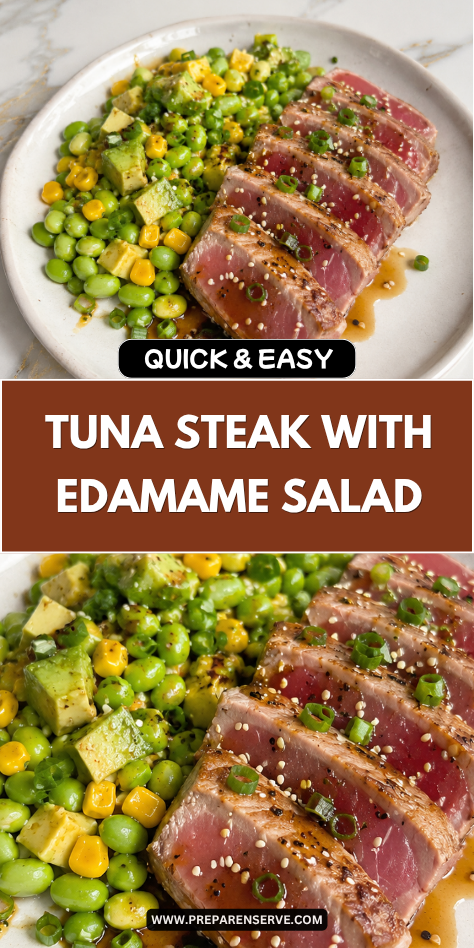
I make Tuna Steak with Edamame Salad when I want a meal that feels fresh, colorful, and a little special without being hard to cook. The tuna sears quickly in a hot pan, and the edamame salad adds a cool, crisp side that makes the plate feel bright and balanced.
I like this recipe because it gives you a lot of flavor with simple steps. The tuna is tender and savory, the dressing is light and tangy, and the edamame salad has enough crunch to make the whole meal feel satisfying.
Why You’ll Love This Recipe
Tuna Steak with Edamame Salad is fresh, protein-rich, and quick enough for a weeknight dinner. The tuna steaks cook in just a few minutes, which makes this recipe helpful when you want something homemade but do not want to spend a long time at the stove.
The edamame salad brings color, texture, and a gentle sweetness from cucumber, carrots, and bell pepper. A simple soy-lime dressing ties everything together with a bright, savory flavor that works well with the seared tuna.
This meal also feels flexible for families. You can serve the tuna sliced over rice, keep the salad mild for kids, or add chili crisp, sesame seeds, or extra lime for adults who want a bolder plate.
Serves: 4 people
This recipe serves 4 people with one tuna steak per person and a generous scoop of edamame salad on the side. If you are serving bigger appetites, add steamed rice, noodles, roasted sweet potatoes, or a simple soup to make the meal more filling.
Ingredients You’ll Need
For the Tuna Steaks
- 4 tuna steaks, about 5 to 6 ounces each
- 1 tablespoon low-sodium soy sauce
- 1 tablespoon fresh lime juice
- 1 tablespoon toasted sesame oil
- 1 teaspoon honey
- 1 garlic clove, finely grated or minced
- 1/2 teaspoon fresh ginger, grated
- 1/2 teaspoon kosher salt
- 1/4 teaspoon black pepper
- 1 tablespoon neutral oil, such as avocado oil, canola oil, or vegetable oil
- 1 tablespoon sesame seeds, optional for coating
For the Edamame Salad
- 2 cups shelled edamame, cooked and cooled
- 1 cup diced English cucumber
- 1 cup shredded carrots
- 1/2 cup diced red bell pepper
- 1/4 cup thinly sliced green onions
- 1/4 cup chopped fresh cilantro
- 2 tablespoons chopped fresh mint, optional
- 1 tablespoon sesame seeds
For the Soy-Lime Dressing
- 3 tablespoons low-sodium soy sauce
- 2 tablespoons fresh lime juice
- 1 tablespoon rice vinegar
- 1 tablespoon toasted sesame oil
- 1 teaspoon honey or maple syrup
- 1 teaspoon fresh ginger, grated
- 1 small garlic clove, finely grated or minced
- 1/4 teaspoon black pepper
- 1 teaspoon chili crisp or sriracha, optional
For Serving
- Lime wedges
- Extra sliced green onions
- Steamed jasmine rice or brown rice, optional
- Chili crisp, optional
Pro Tips
Start with good tuna.
Choose tuna steaks that look firm, moist, and deep pink or red. Since tuna is often served seared with a pink center, buy it from a trusted seafood counter and cook it the same day if possible.
Pat the tuna dry before searing.
Drying the tuna helps it sear instead of steam. A dry surface gives you a better crust while keeping the inside tender.
Do not marinate too long.
Tuna has a delicate texture, and lime juice can start to change the outside if it sits too long. A short 10 to 15 minute marinade is enough to add flavor without making the fish mushy.
Use a hot pan.
A hot skillet helps the outside of the tuna cook quickly while the center stays tender. Let the pan heat before adding the oil, then sear the tuna without moving it too much.
Keep the salad chilled.
The edamame salad tastes best when it is cool and crisp. Make it before cooking the tuna so the vegetables can sit in the dressing while the fish cooks.
Slice tuna against the grain.
After resting, slice the tuna into thin pieces against the grain. This makes each bite feel more tender and easier to eat.
Tools You’ll Need
- Large skillet or grill pan
- Medium mixing bowl
- Small mixing bowl or jar for dressing
- Cutting board
- Sharp knife
- Measuring cups
- Measuring spoons
- Microplane or fine grater
- Tongs
- Whisk or fork
- Paper towels
- Serving platter or plates
Substitutions and Variations
Use a Different Fish
Use salmon, swordfish, mahi-mahi, or halibut instead of tuna steaks. Adjust the cooking time as needed because thicker or fattier fish may need a few extra minutes.
Make It Gluten-Free
Use gluten-free tamari instead of soy sauce in both the tuna marinade and the dressing. Check chili crisp or sriracha labels if using them, since some brands may contain gluten.
Change the Salad Vegetables
Use snap peas, cabbage, radishes, avocado, or mango instead of cucumber, carrots, or bell pepper. Keep the pieces small so the edamame salad stays easy to scoop and serve.
Make It Heartier
Serve the tuna and edamame salad over steamed rice, quinoa, soba noodles, or rice noodles. This turns the recipe into a fuller bowl-style meal while keeping the same fresh flavor.
Add More Flavor
Top the finished dish with chili crisp, pickled ginger, toasted sesame seeds, or extra lime juice. These small additions add brightness, heat, and crunch without changing the core recipe.
Make Ahead Tips
Tuna Steak with Edamame Salad works well for meal prep when you prepare the salad and dressing ahead, then sear the tuna right before serving. The edamame salad can be made up to 1 day ahead and stored covered in the refrigerator.
If making the salad early, keep the herbs and sesame seeds separate until serving so they stay fresh. You can also mix the soy-lime dressing ahead and store it in a small jar in the refrigerator for up to 3 days.
The tuna is best cooked fresh because it only takes a few minutes and has the best texture right after searing. You can pat the tuna dry, mix the marinade, and prep the skillet ahead of time. Wait to marinate the tuna until 10 to 15 minutes before cooking so the lime juice does not affect the texture.
Instructions
Step 1: Make the Soy-Lime Dressing
In a small bowl or jar, combine 3 tablespoons low-sodium soy sauce, 2 tablespoons fresh lime juice, 1 tablespoon rice vinegar, 1 tablespoon toasted sesame oil, 1 teaspoon honey or maple syrup, 1 teaspoon grated fresh ginger, 1 small grated or minced garlic clove, 1/4 teaspoon black pepper, and chili crisp or sriracha if using.
Whisk or shake until the dressing looks smooth and well mixed. Taste and adjust with a little more lime juice for brightness or honey for softness.
Step 2: Prepare the Edamame Salad
In a medium mixing bowl, add 2 cups cooked and cooled shelled edamame, 1 cup diced English cucumber, 1 cup shredded carrots, 1/2 cup diced red bell pepper, 1/4 cup thinly sliced green onions, 1/4 cup chopped fresh cilantro, and 2 tablespoons chopped fresh mint if using.
Pour about half of the soy-lime dressing over the salad and toss gently. Save the rest of the dressing for serving with the tuna.
Step 3: Chill the Salad
Cover the edamame salad and place it in the refrigerator while you cook the tuna. This gives the vegetables time to soak up a little flavor while staying crisp.
Before serving, taste the salad and add a spoonful more dressing if needed. Sprinkle with 1 tablespoon sesame seeds right before plating.
Step 4: Prepare the Tuna Marinade
In a shallow dish, stir together 1 tablespoon low-sodium soy sauce, 1 tablespoon fresh lime juice, 1 tablespoon toasted sesame oil, 1 teaspoon honey, 1 grated or minced garlic clove, and 1/2 teaspoon grated fresh ginger.
This quick marinade gives the tuna a light savory flavor without covering up the fish. Keep it ready before adding the tuna so the fish does not sit too long.
Step 5: Season and Marinate the Tuna
Pat 4 tuna steaks dry with paper towels. Season both sides with 1/2 teaspoon kosher salt and 1/4 teaspoon black pepper.
Place the tuna steaks in the marinade and turn to coat both sides. Let them sit for 10 to 15 minutes at most while you heat the skillet and gather the serving items.
Step 6: Add Sesame Seeds
If using sesame seeds, sprinkle 1 tablespoon over the tuna steaks and press gently so they stick. You can coat one side or both sides, depending on how much sesame flavor you want.
The sesame seeds add a light crunch and toasted flavor once the tuna hits the hot pan. Keep the coating thin so it does not burn before the fish is cooked.
Step 7: Heat the Skillet
Place a large skillet or grill pan over medium-high heat. Let it heat until hot, then add 1 tablespoon neutral oil and swirl to coat the bottom.
The oil should shimmer before the tuna goes in. A hot pan helps create a seared outside while keeping the center tender.
Step 8: Sear the Tuna
Add the tuna steaks to the hot skillet in a single layer. Sear for 1 to 2 minutes per side for a pink center, or 3 to 4 minutes per side for a more cooked-through steak.
Try not to move the tuna too much while it sears. Letting it sit against the hot pan helps build a better crust.
Step 9: Rest and Slice
Transfer the tuna steaks to a cutting board and let them rest for 3 to 5 minutes. This helps the juices settle before slicing.
Use a sharp knife to slice the tuna against the grain into thin pieces. If serving children or anyone who prefers smaller bites, cut the slices into more manageable pieces.
Step 10: Plate and Serve
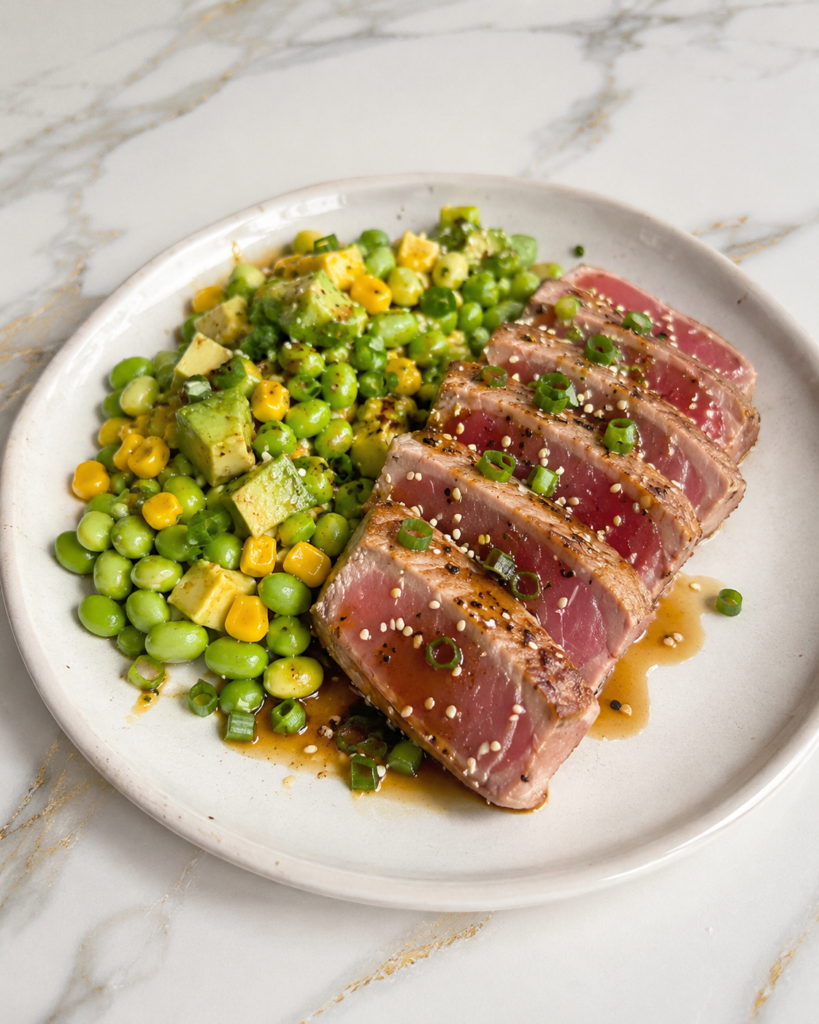
Spoon the edamame salad onto plates or a serving platter. Add the sliced tuna steak on top or alongside the salad.
Drizzle with the remaining soy-lime dressing and add lime wedges, extra sliced green onions, and chili crisp if desired. Serve with steamed jasmine rice or brown rice if you want a heartier meal.
Serving Suggestions
Tuna Steak with Edamame Salad is delicious served over steamed jasmine rice or brown rice. The rice catches the dressing and makes the meal feel more filling without covering up the fresh flavors.
You can also serve the tuna and salad over soba noodles or rice noodles. This turns the recipe into a cool noodle bowl that works well for lunch or dinner.
For a lighter plate, serve the tuna and edamame salad with sliced avocado and extra cucumber. The creamy avocado balances the bright soy-lime dressing and tender fish.
If you want a family-style meal, arrange the sliced tuna on a platter beside the edamame salad. Add small bowls of lime wedges, sesame seeds, chili crisp, and extra dressing so everyone can build their own plate.
This meal also pairs well with miso soup, steamed dumplings, or roasted broccoli. Keep the sides simple so the tuna and crisp salad stay the focus.
For kids, serve the tuna in small slices with rice and a mild portion of edamame salad. Keep chili crisp or spicy sauce on the side for adults.
Leftovers and Storage
Store leftover tuna and edamame salad in separate airtight containers in the refrigerator. The edamame salad will keep well for up to 3 days, while cooked tuna is best eaten within 1 to 2 days.
Tuna steak can dry out if reheated too strongly, so it is often best served cold or at room temperature the next day. Slice it over rice, greens, or noodles for an easy lunch.
If you prefer to reheat it, warm the tuna gently in a skillet over low heat for a short time. Stop as soon as it is just warmed through so it does not become tough.
The edamame salad should not be frozen because cucumber, herbs, and dressing can change texture after thawing. The tuna is also best fresh, so freezing is not recommended for this recipe. Keep leftovers chilled, and add fresh lime juice or extra dressing before serving again.
Nutrition and Benefits
- High in protein: Tuna steaks and edamame both add protein, making this meal filling and satisfying. This helps it work well as a lunch or dinner without feeling too heavy.
- Fresh vegetables: Cucumber, carrots, bell pepper, green onions, and herbs bring color, crunch, and freshness. They make the salad bright and family-friendly.
- Balanced flavor: Soy sauce, lime juice, ginger, garlic, and sesame oil create a dressing that is savory, tangy, and lightly sweet. It adds flavor without needing a heavy sauce.
- Heartier with simple sides: Rice, quinoa, soba noodles, or rice noodles can turn this into a more filling meal. The recipe stays fresh while becoming more flexible for different appetites.
- Quick cooking: Tuna steaks cook in just a few minutes, which makes this recipe helpful for busy evenings. The salad can be made ahead so dinner comes together fast.
Recipe FAQ
How long should I cook tuna steak?
For a pink center, sear tuna steaks for about 1 to 2 minutes per side over medium-high heat. For a more cooked-through steak, cook closer to 3 to 4 minutes per side. The exact time depends on the thickness of the tuna.
Can I use frozen tuna steaks?
Yes, frozen tuna steaks can work well if they are fully thawed first. Thaw them overnight in the refrigerator, then pat them very dry before marinating. Dry tuna sears better and has a nicer texture.
Is tuna steak safe to eat pink in the center?
Many people enjoy tuna steak seared with a pink center, but it is important to buy good-quality tuna from a trusted source. If you are serving young children, pregnant people, older adults, or anyone with health concerns, cook the tuna more fully. When unsure, choose a fully cooked center.
Can I make the edamame salad ahead?
Yes, the edamame salad can be made up to 1 day ahead. Store it covered in the refrigerator and add herbs or sesame seeds right before serving. Keep a little dressing on the side to freshen it up.
What can I use instead of edamame?
You can use chickpeas, green peas, cooked quinoa, or chopped snap peas. The texture will change slightly, but the salad will still taste fresh and bright. Keep the dressing the same for the best flavor balance.
Can I grill the tuna instead of searing it?
Yes, tuna steaks grill nicely over medium-high heat. Oil the grill grates well and cook the tuna for 1 to 2 minutes per side for a pink center. Let it rest before slicing.
What dressing goes best with tuna steak?
A soy-lime dressing works well because it is savory, bright, and not too heavy. Ginger, garlic, sesame oil, and rice vinegar all pair nicely with tuna. You can add chili crisp or sriracha if you want a little heat.
A Fresh Tuna Dinner with Bright Flavor
Tuna Steak with Edamame Salad is fresh, colorful, and easy to bring to the table. The tuna sears quickly, the salad stays crisp, and the soy-lime dressing ties everything together with bright, savory flavor. It feels special without making dinner complicated.
This recipe is worth making again because it works for both light meals and heartier bowls. You can add rice, noodles, avocado, or extra vegetables depending on the day. It is a simple, dependable meal that feels clean, satisfying, and full of flavor.