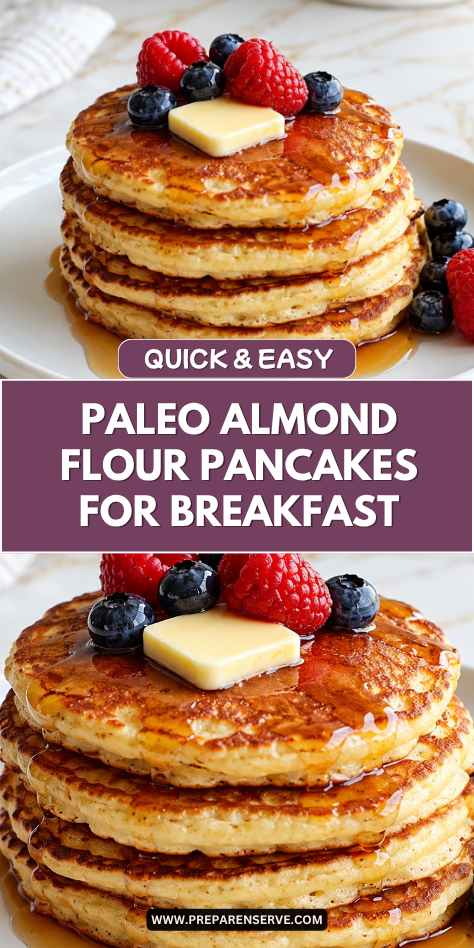
I make Paleo Almond Flour Pancakes when I want a breakfast that feels cozy but still keeps things simple and wholesome. They are soft, lightly nutty, and filling in a way that regular pancakes do not always feel.
These pancakes have become one of those easy weekend breakfasts I can count on. They cook quickly, use basic ingredients, and make the kitchen smell warm and comforting without needing a lot of extra work.
I also like that they are friendly for many different eating styles. Since they are made without regular flour, dairy milk, or refined sugar, they fit well for families who want a breakfast that feels a little lighter but still tastes like a treat.
Why You’ll Love This Recipe
Paleo Almond Flour Pancakes are tender, golden, and naturally rich from the almond flour. They have a gentle sweetness and a soft texture that works well with fruit, maple syrup, nut butter, or a simple sprinkle of cinnamon.
This recipe is easy enough for a slow morning but quick enough for a school day if you make the batter ahead. The ingredients are simple, and the steps are clear, which makes it a good choice for beginner cooks.
Families love these pancakes because they feel special without being too heavy. Kids can add their favorite toppings, and adults can enjoy a breakfast that is grain-free, gluten-free, and made with real ingredients.
Serves: 4 people
This recipe serves 4 people and makes about 8 medium pancakes, depending on how much batter you use for each one. For younger kids, one or two pancakes may be enough, while bigger appetites may want two or three.
You can easily double the recipe if you are feeding a larger family or want leftovers for the next morning. These pancakes also freeze well, so making extra is a helpful way to have a quick breakfast ready for busy days.
Ingredients You’ll Need
For the Pancakes
- 2 cups blanched almond flour
- 1/4 cup tapioca flour or arrowroot starch
- 1 teaspoon baking powder
- 1/2 teaspoon ground cinnamon
- 1/4 teaspoon fine sea salt
- 4 large eggs
- 1/3 cup unsweetened almond milk
- 2 tablespoons pure maple syrup
- 1 teaspoon vanilla extract
- 1 tablespoon melted coconut oil, plus more for the skillet
For Serving
- 1/2 cup fresh blueberries
- 1/2 cup sliced strawberries
- 1/4 cup pure maple syrup
- 2 tablespoons almond butter or cashew butter, optional
- 1 tablespoon chopped walnuts or pecans, optional
Pro Tips
Use blanched almond flour for the best texture. Almond meal is usually coarser and can make the pancakes feel heavier or grainy.
Let the batter rest for 5 minutes before cooking. This gives the almond flour and tapioca flour time to absorb the liquid, which helps the pancakes hold together better.
Keep the pancakes smaller than regular pancakes. Almond flour pancakes are more delicate, so smaller pancakes are easier to flip and less likely to break.
Cook over medium-low heat instead of high heat. Almond flour browns faster than wheat flour, so a gentler heat helps the centers cook through before the outsides get too dark.
Wait until the edges look set before flipping. You may not see as many bubbles as you do with regular pancakes, so look for dry edges and a lightly golden bottom.
Wipe the skillet between batches if needed. Almond flour can leave little browned bits behind, and removing them helps each new batch cook evenly.
Tools You’ll Need
- Large mixing bowl
- Medium mixing bowl
- Whisk
- Measuring cups
- Measuring spoons
- Rubber spatula
- Large nonstick skillet or griddle
- Thin spatula for flipping
- Small ladle or 1/4-cup measuring cup
- Cooling rack or plate
- Clean kitchen towel
Substitutions and Variations
Use a Different Milk
You can use coconut milk, cashew milk, or another unsweetened dairy-free milk instead of almond milk. Keep the amount the same so the batter stays thick but pourable.
Make Them Nut-Free
Almond flour is the base of this recipe, so a true nut-free swap will change the pancake quite a bit. For a nut-free version, try sunflower seed flour, but know the flavor may be stronger and the color can turn slightly green from a natural reaction with baking powder.
Add More Flavor
Stir in 1 teaspoon orange zest, lemon zest, or extra cinnamon for a brighter flavor. These small additions work well with the nutty almond flour without changing the main recipe.
Boost the Texture
Fold in 1/4 cup mini dairy-free chocolate chips, chopped pecans, or fresh blueberries. Keep add-ins small so the pancakes still flip easily and cook evenly.
Make Them Heartier
Serve the pancakes with almond butter, sliced bananas, or a spoonful of coconut yogurt. These toppings make the meal more filling while keeping the breakfast simple and paleo-friendly.
Make Ahead Tips
Paleo Almond Flour Pancakes are easy to prep ahead, which makes breakfast feel much smoother on busy mornings. You can mix the dry ingredients the night before and keep them covered at room temperature, then whisk the wet ingredients together when you are ready to cook.
You can also make the full batter ahead and refrigerate it for up to 24 hours. Since almond flour thickens as it sits, stir the batter well before cooking and add 1 to 2 tablespoons of almond milk if it feels too thick.
Cooked pancakes are also great for make-ahead breakfasts. Let them cool completely, then store them in the refrigerator or freezer with parchment paper between each pancake so they do not stick together.
For school mornings, I like reheating a few pancakes while slicing fruit or packing lunch boxes. They warm up quickly and still taste soft and cozy with a little maple syrup, almond butter, or fresh berries.
Instructions
Step 1: Mix the Dry Ingredients
In a large mixing bowl, whisk together 2 cups blanched almond flour, 1/4 cup tapioca flour or arrowroot starch, 1 teaspoon baking powder, 1/2 teaspoon ground cinnamon, and 1/4 teaspoon fine sea salt. Break up any small clumps of almond flour with the whisk so the batter turns out smooth.
The dry mixture should look light, even, and soft. Taking a minute here helps the pancakes cook with a better texture instead of having little pockets of dry flour.
Step 2: Whisk the Wet Ingredients
In a medium mixing bowl, whisk together 4 large eggs, 1/3 cup unsweetened almond milk, 2 tablespoons pure maple syrup, 1 teaspoon vanilla extract, and 1 tablespoon melted coconut oil. Whisk until the eggs are fully blended and the mixture looks smooth.
Make sure the melted coconut oil is warm, not hot, before adding it to the eggs. If it is too hot, it can make the eggs clump slightly.
Step 3: Combine the Batter
Pour the wet ingredients into the bowl with the dry ingredients. Stir gently with a rubber spatula until the batter is fully combined and no dry streaks remain.
The batter should be thicker than regular pancake batter but still scoopable. Let it rest for 5 minutes so the almond flour and tapioca flour can absorb the liquid and help the pancakes hold together.
Step 4: Heat the Skillet
Place a large nonstick skillet or griddle over medium-low heat. Add a small amount of coconut oil and let it melt, then spread it evenly across the cooking surface.
The skillet is ready when a tiny drop of batter sizzles gently but does not brown right away. If the pan is too hot, the pancakes may darken before the centers cook through.
Step 5: Cook the First Side
Scoop about 1/4 cup of batter onto the skillet for each pancake. Gently spread the batter into a small circle, since almond flour batter does not spread as much as traditional pancake batter.
Cook for 2 to 3 minutes, or until the edges look set and the bottom is golden brown. You may see a few small bubbles, but the dry-looking edges are the best sign that the pancake is ready to flip.
Step 6: Flip and Finish Cooking
Slide a thin spatula under each pancake and flip carefully. Cook for another 1 to 2 minutes, until the second side is golden and the center feels set.
Move the finished pancakes to a plate or cooling rack. Cover them lightly with a clean kitchen towel to keep them warm while you cook the rest of the batter.
Step 7: Repeat with Remaining Batter
Add a little more coconut oil to the skillet as needed between batches. Wipe away any dark browned bits if they start to collect in the pan.
Continue cooking the pancakes in small batches, keeping the heat at medium-low. This steady heat helps each pancake cook through without burning on the outside.
Step 8: Serve Warm
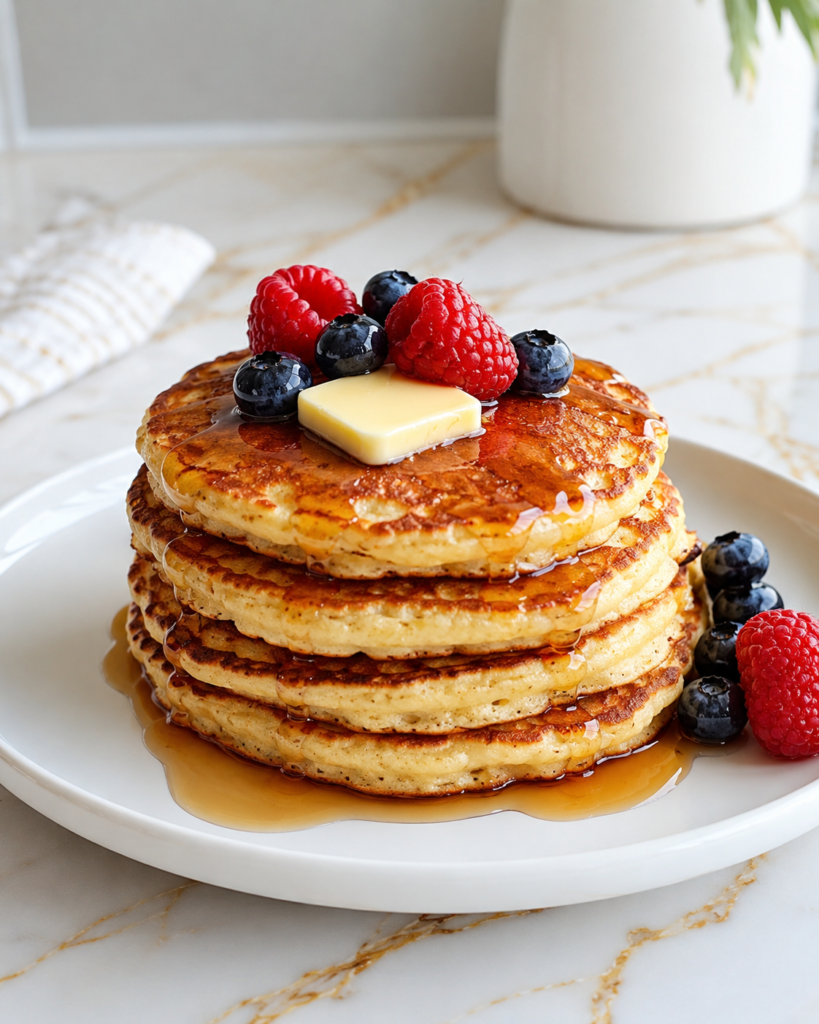
Serve the pancakes warm with fresh blueberries, sliced strawberries, pure maple syrup, almond butter, or chopped walnuts. A small drizzle of maple syrup goes a long way because the pancakes already have a gentle sweetness.
For a family breakfast, set the toppings in small bowls and let everyone build their own plate. This keeps breakfast simple and makes it easier for kids to choose what they like.
Serving Suggestions
Paleo Almond Flour Pancakes are wonderful with fresh berries and a light drizzle of pure maple syrup. Blueberries, strawberries, raspberries, or sliced bananas all add natural sweetness and color.
For a more filling breakfast, spread almond butter or cashew butter over the warm pancakes. The nut butter melts slightly and makes the pancakes feel extra cozy and satisfying.
You can serve these pancakes with crispy bacon, turkey sausage, or scrambled eggs for a bigger weekend meal. The savory sides balance the mild sweetness of the pancakes.
For a lighter plate, add coconut yogurt and a handful of fruit on the side. This keeps the meal fresh while still feeling like a complete breakfast.
These pancakes also work well as a lunch box item when served plain or with a small container of almond butter for dipping. They are soft enough to eat at room temperature and sturdy enough to pack.
For a fun family brunch, make a pancake topping bar with fruit, chopped nuts, coconut flakes, and maple syrup. Everyone can make a plate that feels special without adding much extra work.
Leftovers and Storage
Let leftover pancakes cool completely before storing them. If they are packed away while warm, steam can make them damp and soft in a way that affects the texture.
Store the pancakes in an airtight container in the refrigerator for up to 4 days. Place parchment paper between layers to keep them from sticking together.
To reheat, warm them in a toaster oven, skillet, or microwave. A toaster oven or skillet gives the best texture because it brings back a little of the golden outside while keeping the inside soft.
For freezing, place cooled pancakes in a single layer on a baking sheet and freeze until firm. Then move them to a freezer-safe bag or container with parchment paper between layers, and freeze for up to 2 months.
Reheat frozen pancakes straight from the freezer in a toaster oven or microwave. Add a few extra seconds as needed until they are warm all the way through.
Nutrition and Benefits
- Naturally gluten-free: Almond flour makes these pancakes a good option for families avoiding wheat or gluten. They still feel like a cozy breakfast without using regular flour.
- Higher in protein than traditional pancakes: Almond flour and eggs add protein, which helps make the pancakes more filling. This can be helpful for mornings when you want breakfast to last longer.
- Made with simple ingredients: The recipe uses almond flour, eggs, almond milk, maple syrup, and pantry basics. It is a nice choice when you want a homemade breakfast without a long ingredient list.
- Lower in refined sugar: These pancakes use a small amount of pure maple syrup for sweetness. You can also control the sweetness by choosing lighter toppings like berries or yogurt.
- Good for meal prep: Cooked pancakes store and freeze well, making them useful for quick breakfasts. Having a batch ready can make busy mornings feel much easier.
Recipe FAQ
Can I use almond meal instead of blanched almond flour?
Almond meal can work, but the pancakes will be heavier and a little more grainy. Blanched almond flour gives a softer, smoother texture that feels more like a classic pancake. For the best results, use finely ground blanched almond flour.
Why are my almond flour pancakes falling apart?
They may be too large, flipped too soon, or cooked over heat that is too high. Almond flour pancakes are more delicate than regular pancakes, so smaller pancakes are easier to manage. Let the edges set before flipping and use a thin spatula.
Can I make the batter ahead of time?
Yes, the batter can be made up to 24 hours ahead and stored in the refrigerator. It will thicken as it sits, so stir it well before cooking. Add a splash of almond milk if needed to loosen it.
Are these pancakes dairy-free?
Yes, this recipe is dairy-free as written when made with almond milk and coconut oil. Be sure to choose dairy-free toppings if needed. Coconut yogurt, fruit, nut butter, and maple syrup all work well.
Can I make these pancakes without eggs?
Eggs are important in this recipe because they help almond flour pancakes hold together. A flax egg may work, but the texture will be softer and more fragile. For best results, use the eggs listed.
How do I keep the pancakes warm while cooking batches?
Place cooked pancakes on a plate and cover them lightly with a clean kitchen towel. You can also keep them on a baking sheet in a 200°F oven. Avoid stacking them too tightly, or they may steam and soften.
Can I freeze Paleo Almond Flour Pancakes?
Yes, these pancakes freeze very well. Let them cool fully, freeze them in a single layer, then transfer them to a freezer-safe container. Reheat them in a toaster oven or microwave for a quick breakfast.
A Cozy Paleo Breakfast to Make Again
Paleo Almond Flour Pancakes are simple, warm, and easy to bring to the table without much stress. They have a soft texture, a gentle nutty flavor, and enough heartiness to keep breakfast feeling satisfying for the whole family.
I love keeping this recipe on hand because it works for slow weekends, quick school mornings, and make-ahead breakfasts. It is dependable, comforting, and worth making again whenever you want a homemade breakfast that feels both wholesome and special.