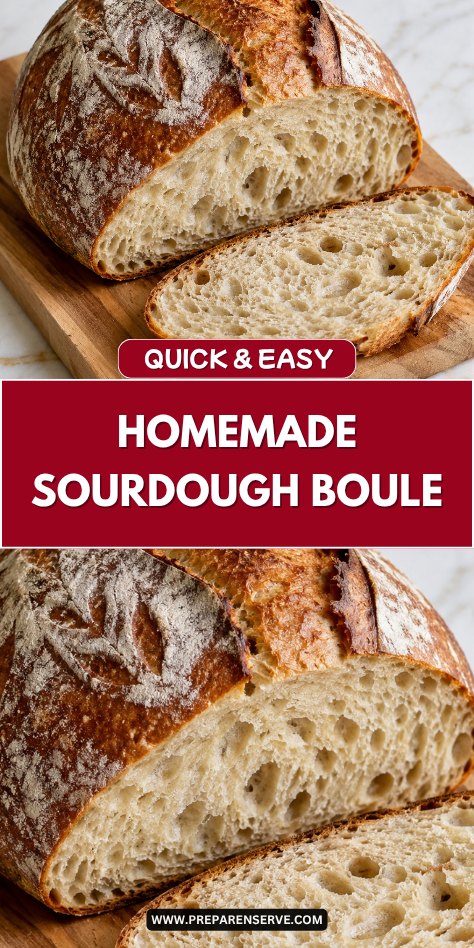
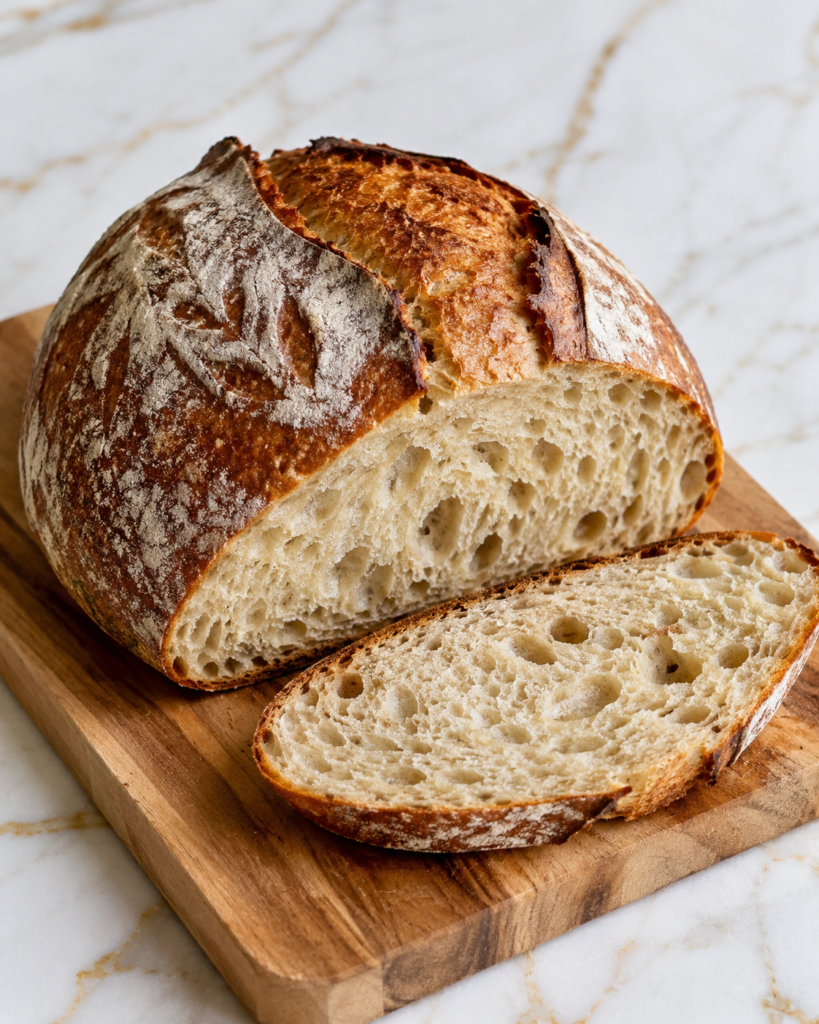
I make a classic sourdough boule when I want bread that feels simple, honest, and deeply comforting. There is something special about turning flour, water, salt, and starter into a round loaf with a crisp crust and soft, chewy center.
Sourdough can feel a little intimidating at first, but it becomes easier once you understand the rhythm. I like that this bread does not need commercial yeast, and most of the work happens during resting time while the dough slowly builds flavor and strength.
This is the kind of loaf I love to slice for breakfast toast, warm soup, sandwiches, or a simple snack with butter. It feels homemade in the best way, and each loaf teaches you something new about your starter, your kitchen, and the dough in your hands.
Why You’ll Love This Recipe
A classic sourdough boule has a golden crust, a tender inside, and a gentle tang that makes it different from regular sandwich bread. It uses simple ingredients, but the slow fermentation gives it deep flavor and a beautiful homemade texture.
This recipe is helpful for home bakers because it focuses on the basic method without making things feel too complicated. You will learn how the dough should look and feel during mixing, stretching, shaping, and rising.
Families love this bread because it works with so many meals. It can be toasted with jam, served with eggs, dipped into soup, used for sandwiches, or set on the table with dinner.
Serves: 8 people
This classic sourdough boule makes 1 medium round loaf, which serves about 8 people depending on how thick you slice it. For a family meal, it gives enough bread for dinner with a few slices left for toast or sandwiches the next day.
Ingredients You’ll Need
- 100 grams active sourdough starter, bubbly and recently fed
- 375 grams warm water, about 75°F to 80°F
- 500 grams bread flour
- 10 grams fine sea salt
- Extra bread flour or rice flour, for dusting
- Cornmeal or parchment paper, for baking support if needed
Pro Tips
Use an active starter that has been fed and is bubbly before you mix the dough. A weak or sleepy starter can make the dough rise slowly and lead to a flatter loaf.
Measure the ingredients with a kitchen scale for the best results. Sourdough is much easier to control when the flour, water, starter, and salt are measured by weight instead of cups.
Watch the dough more than the clock. A cool kitchen can slow fermentation, while a warm kitchen can make the dough rise much faster.
Keep your hands lightly damp when stretching and folding the dough. This helps prevent sticking without adding too much extra flour.
Do not rush the final rise or the oven preheat. A hot Dutch oven and well-rested dough help create a better crust and a higher rise.
Let the bread cool before slicing, even though it is tempting to cut into it right away. The inside keeps setting as it cools, and slicing too early can make the crumb gummy.
Tools You’ll Need
- Kitchen scale
- Large mixing bowl
- Small bowl or jar for starter
- Dough whisk or wooden spoon
- Bench scraper
- Bowl scraper or flexible spatula
- Clean kitchen towel
- Banneton basket or medium bowl lined with a floured towel
- Dutch oven with lid
- Parchment paper
- Sharp bread lame or razor blade
- Cooling rack
- Instant-read thermometer, optional
Substitutions and Variations
Use All-Purpose Flour
You can use all-purpose flour instead of bread flour, but the dough may feel softer and spread a little more. Bread flour gives the boule better structure and a chewier texture.
Add Whole Wheat Flour
Replace 50 to 100 grams of the bread flour with whole wheat flour for a deeper, nuttier flavor. You may need a small splash of extra water because whole wheat flour absorbs more moisture.
Make It Milder
Use the dough sooner during bulk fermentation and do not extend the cold proof too long. A shorter fermentation gives the loaf a lighter sourdough flavor that many kids enjoy.
Make It Tangier
Let the shaped dough rest in the refrigerator overnight for 10 to 14 hours. The longer cold proof helps build a stronger sour flavor and makes the dough easier to score.
Add Simple Mix-Ins
Fold in roasted garlic, fresh herbs, shredded cheese, or seeds during the last stretch and fold. Keep the add-ins modest so the loaf still rises well and keeps the classic sourdough boule shape.
Make Ahead Tips
Classic sourdough boule is naturally a make-ahead bread because it relies on slow fermentation. You can feed your starter the night before or early in the morning, then mix the dough once the starter is bubbly, active, and doubled in size.
The easiest way to plan ahead is to use an overnight cold proof. After the dough is shaped and placed in a floured banneton or towel-lined bowl, cover it and refrigerate it for 8 to 14 hours before baking.
You can also bake the loaf ahead and store it at room temperature for the next day. For the freshest texture, let the bread cool fully, wrap it in a clean kitchen towel, and slice only what you need.
Instructions
Step 1: Feed and Check the Starter
Feed your sourdough starter several hours before you plan to mix the dough. It should look bubbly, active, and slightly domed on top when it is ready.
A simple float test can help if you are unsure. Drop a small spoonful of starter into a glass of water, and if it floats, it is usually ready to use.
Step 2: Mix the Starter and Water
Add 100 grams active sourdough starter and 375 grams warm water to a large mixing bowl. Stir until the starter loosens and the water looks cloudy.
This helps the starter spread evenly through the dough. It also makes the flour easier to mix in during the next step.
Step 3: Add the Flour and Rest the Dough
Add 500 grams bread flour to the bowl and mix until no dry flour remains. The dough will look rough and shaggy at this point, which is exactly what you want.
Cover the bowl with a clean towel and let the dough rest for 30 minutes. This rest gives the flour time to absorb the water and makes the dough easier to handle.
Step 4: Add the Salt
Sprinkle 10 grams fine sea salt over the dough. Use damp hands to pinch and fold the salt into the dough until it feels evenly mixed.
The dough may feel a little slippery at first, but it will come together as you work. Cover the bowl again and let it rest for 30 minutes before the first stretch and fold.
Step 5: Stretch and Fold the Dough
With damp hands, grab one side of the dough and gently stretch it upward. Fold it back over the center, then turn the bowl and repeat on all four sides.
Cover the bowl and let the dough rest for 30 minutes. Repeat this stretch and fold process 3 to 4 times over the next 2 hours.
Step 6: Let the Dough Bulk Ferment
After the last stretch and fold, cover the bowl and let the dough rise at room temperature. This bulk fermentation usually takes 4 to 6 hours, depending on how warm your kitchen is.
The dough is ready when it has risen about 50 percent, looks smoother, and has bubbles along the sides. It should feel airy and slightly jiggly when you move the bowl.
Step 7: Shape the Boule
Lightly flour your counter and turn the dough out gently. Use a bench scraper to shape it into a loose round, then let it rest uncovered for 15 to 20 minutes.
After the bench rest, flip the dough over so the smooth side faces down. Fold the edges toward the center, turn it over, and gently pull it against the counter to build surface tension.
Step 8: Place in the Banneton
Dust a banneton basket or towel-lined bowl with rice flour or bread flour. Place the shaped dough seam-side up into the basket.
Cover the basket with a towel or reusable cover. Let it proof at room temperature for 1 to 2 hours, or refrigerate it overnight for a deeper flavor and easier scoring.
Step 9: Preheat the Dutch Oven
Place your Dutch oven with the lid inside the oven. Preheat to 475°F for at least 30 to 45 minutes so the pot becomes very hot.
A hot Dutch oven helps trap steam around the dough. This steam gives the bread a better oven spring and a crisp, golden crust.
Step 10: Score and Bake the Bread
Turn the dough onto a piece of parchment paper and gently dust off any extra flour. Use a sharp lame or razor blade to make one deep slash across the top.
Carefully place the dough into the hot Dutch oven using the parchment paper as a sling. Cover with the lid and bake at 475°F for 20 minutes.
Step 11: Finish Baking Uncovered
Remove the lid and lower the oven temperature to 450°F. Bake for another 20 to 25 minutes, until the crust is deep golden brown.
The loaf is done when it sounds hollow when tapped on the bottom. If using a thermometer, the center should be about 205°F to 210°F.
Step 12: Cool Before Slicing
Transfer the bread to a cooling rack right away. Let it cool for at least 1 hour before slicing.
This waiting time helps the inside finish setting. Cutting too soon can make the crumb feel sticky, even when the loaf is fully baked.
Serving Suggestions
Serve thick slices of sourdough boule with softened butter and a pinch of flaky salt. It is simple, cozy, and perfect when the bread is still fresh from the day’s bake.
Toast slices for breakfast and top them with jam, honey, peanut butter, or cream cheese. The chewy crumb and crisp edges make even a plain piece of toast feel special.
Use the bread for sandwiches with turkey, ham, cheese, tuna salad, or roasted vegetables. The sturdy crust and tender inside hold up well to fillings without falling apart too quickly.
Serve it beside soup, stew, or chili for dipping. Sourdough is especially good with creamy tomato soup, chicken noodle soup, lentil soup, or beef stew.
Cut older slices into cubes and toast them for croutons. They add crunch to salads, soups, and simple weeknight bowls.
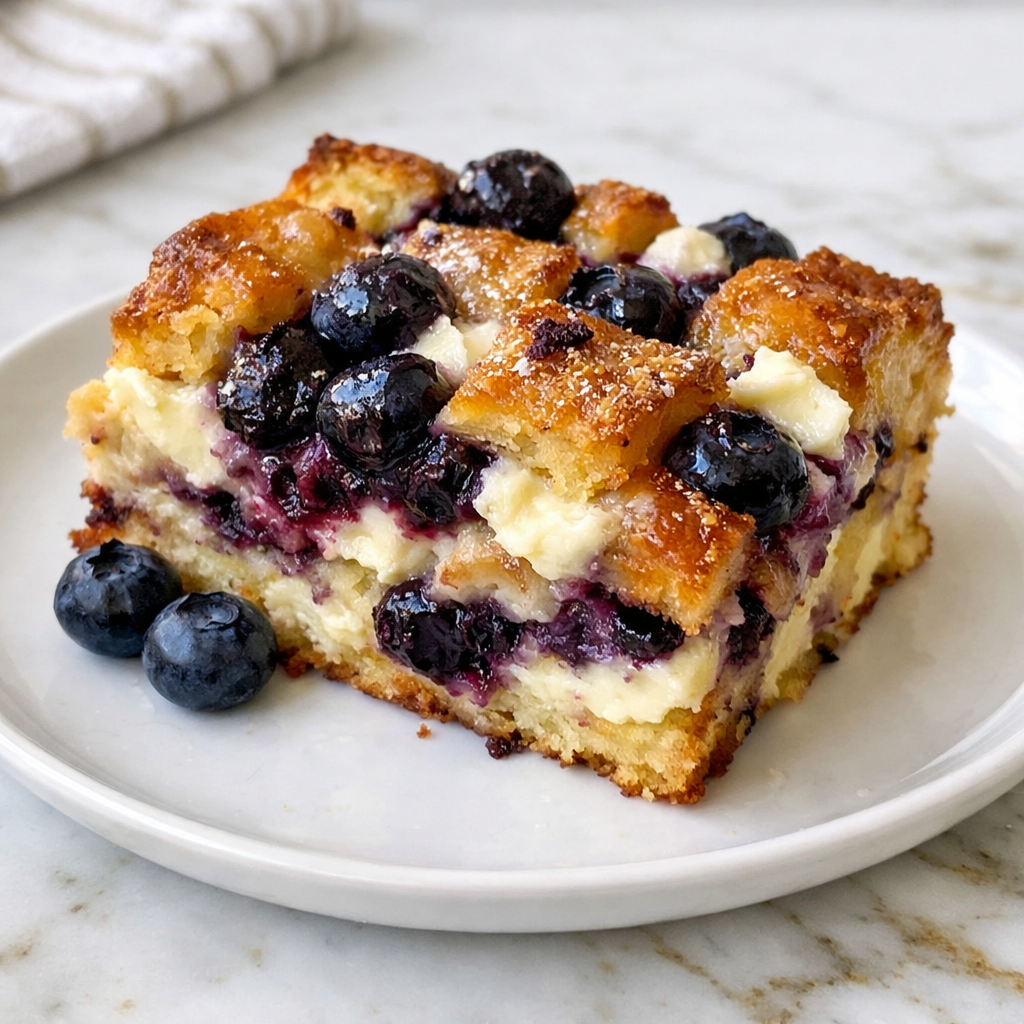
Use leftover slices for French toast or breakfast casseroles. The slightly tangy flavor works well with eggs, milk, cinnamon, and a touch of maple syrup.
Leftovers and Storage
Let the sourdough boule cool fully before storing it. Once cool, keep it at room temperature in a bread bag, paper bag, or wrapped in a clean kitchen towel for up to 3 days.
Avoid storing fresh sourdough in the refrigerator because it can make the bread dry out faster. If the cut side is exposed, place that side down on a cutting board to help keep the inside soft.
For longer storage, slice the loaf and freeze the slices in a freezer-safe bag for up to 3 months. Place parchment between slices if you want to pull out one piece at a time.
To reheat, toast slices straight from frozen or warm the whole loaf in a 325°F oven for 10 to 15 minutes. A light mist of water before reheating can help refresh the crust.
Nutrition and Benefits
- Sourdough uses a slow fermentation process that creates deep flavor from simple ingredients. The longer rest also gives the bread its classic tang and chewy texture.
- Bread flour gives the loaf structure and helps create a satisfying crumb. It also supports a stronger rise, which is helpful for a round boule shape.
- Homemade sourdough lets you control the ingredients. You can keep the loaf simple with flour, water, starter, and salt, without extra sweeteners or preservatives.
- Sourdough bread is flexible for family meals. It can be used for toast, sandwiches, soup sides, snacks, or breakfast recipes throughout the week.
- Baking bread at home can be a calm and rewarding kitchen habit. It teaches patience, timing, and how dough changes as it rests and rises.
Recipe FAQ
Why did my sourdough boule turn out flat?
A flat loaf often comes from weak starter, overproofing, or not enough dough strength. Make sure your starter is bubbly and active before mixing. Stretch and fold the dough during bulk fermentation to help it hold its shape.
Can I make sourdough without a Dutch oven?
Yes, but a Dutch oven gives the best crust because it traps steam. You can bake on a preheated baking stone or sheet pan with a pan of hot water in the oven for steam. The crust may be a little less crisp, but the bread can still turn out well.
How do I know when bulk fermentation is done?
Look for dough that has risen about 50 percent and has bubbles around the sides. It should look smoother and feel lighter than when you first mixed it. The dough should jiggle slightly when you move the bowl.
Can I use all-purpose flour instead of bread flour?
Yes, all-purpose flour can work, but the dough may be softer. Bread flour has more protein, which helps the loaf rise higher and hold its round shape. If using all-purpose flour, handle the dough gently and expect a slightly softer crumb.
Why is my sourdough gummy inside?
Gummy sourdough can happen if the loaf is sliced too soon, underbaked, or overhydrated. Let the bread cool for at least 1 hour before cutting. You can also check the center with a thermometer to make sure it reaches 205°F to 210°F.
How long can I cold proof sourdough?
Most sourdough boules do well with an 8 to 14 hour cold proof. Some doughs can go longer, but the flavor becomes tangier and the dough may weaken. For a first try, overnight is the easiest and most reliable option.
Can I freeze sourdough bread?
Yes, sourdough freezes very well once it is fully cooled. Slice it first so you can toast only what you need. Store the slices in a freezer-safe bag for up to 3 months.
A Crusty Homemade Loaf to Share Often
Classic sourdough boule is a bread that feels steady, simple, and deeply satisfying. With a crisp crust, chewy center, and gentle tang, it brings comfort to breakfast, lunch, dinner, and the little snack moments in between.
It is worth making again because each loaf builds confidence and fills the kitchen with something warm and homemade. Once you learn the rhythm, this bread becomes a dependable family favorite that feels special every time.