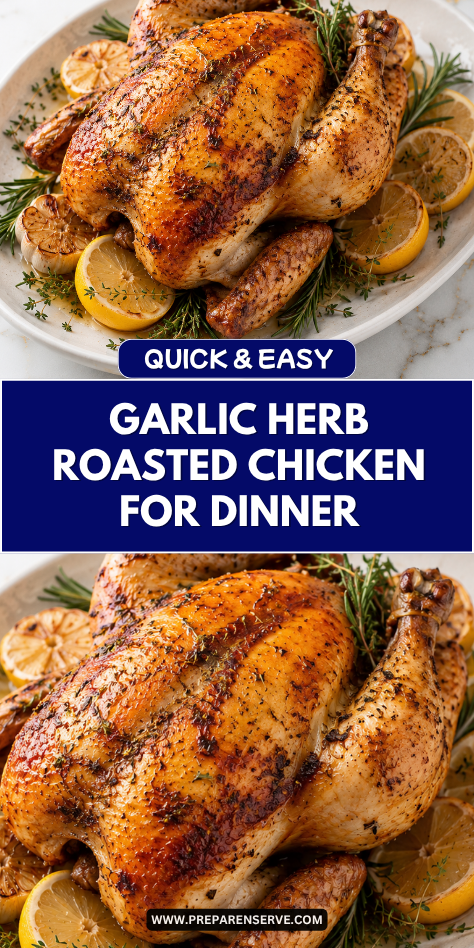
I make Garlic Herb Roasted Chicken when I want a meal that feels classic, comforting, and steady. It is the kind of dinner that makes the kitchen smell warm and inviting while still being simple enough for a regular family meal.
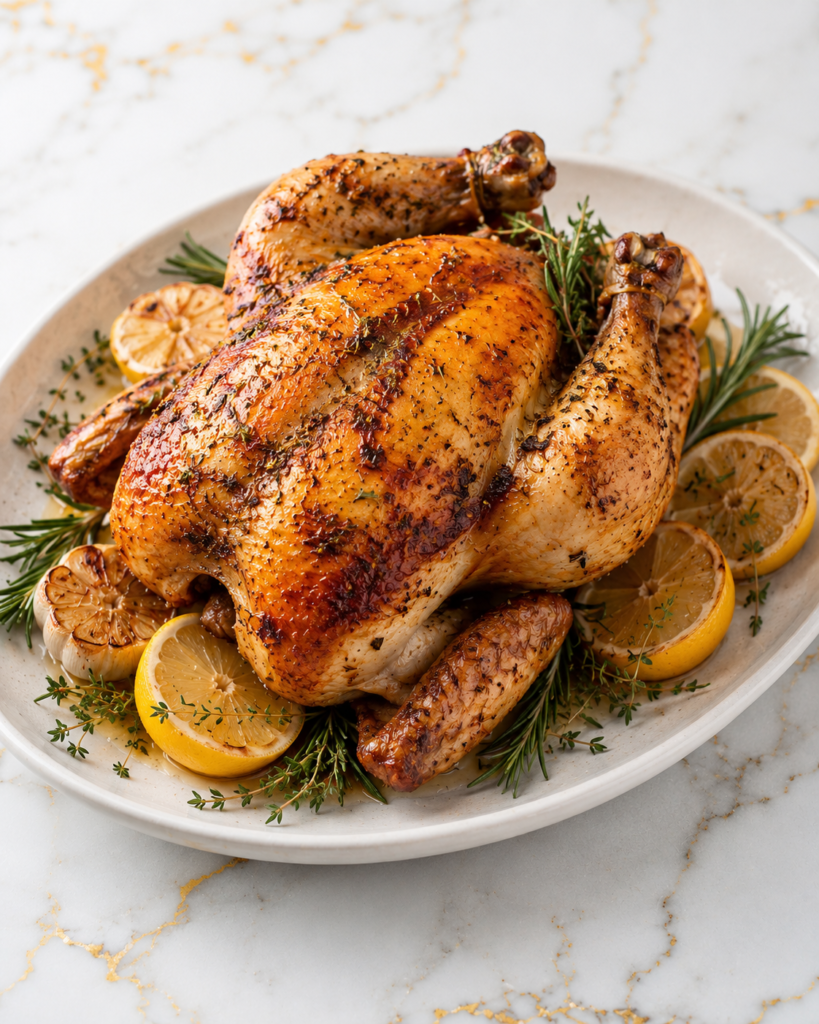
This recipe is one I like to make when I want something dependable without needing a long list of ingredients. The chicken roasts until the skin is golden, the meat stays juicy, and the garlic herb butter melts into every bite.
I also love how flexible this meal can be. It works for Sunday dinner, meal prep, holidays, or a simple weeknight when you want leftovers for sandwiches, salads, soups, or lunch boxes.
Why You’ll Love This Recipe
Garlic Herb Roasted Chicken is simple, flavorful, and full of cozy homemade comfort. The garlic, butter, lemon, and herbs give the chicken a savory flavor that feels special without being hard to make.
This recipe is also very family-friendly because it uses familiar ingredients and gentle flavors. The outside gets golden and crisp, while the inside stays tender enough for kids and adults to enjoy.
It is a helpful recipe to keep in your regular dinner rotation because one whole chicken can stretch into more than one meal. You can serve it fresh from the oven, then use the leftovers in easy lunches or quick dinners later in the week.
Serves: 4 people
This recipe serves 4 people as a main dish, especially when served with vegetables, potatoes, rice, or salad. A 4 to 5 pound whole chicken usually gives enough meat for a family dinner, with a little leftover depending on appetites.
If you are feeding a larger family or want planned leftovers, you can roast two chickens at the same time. Just make sure they have enough space in the roasting pan so the skin can brown evenly.
Ingredients You’ll Need
For the Chicken
- 1 whole chicken, 4 to 5 pounds
- 2 tablespoons olive oil
- 4 tablespoons unsalted butter, softened
- 5 cloves garlic, minced
- 1 tablespoon fresh rosemary, finely chopped
- 1 tablespoon fresh thyme leaves
- 1 tablespoon fresh parsley, finely chopped
- 1 teaspoon kosher salt
- 1/2 teaspoon black pepper
- 1 teaspoon onion powder
- 1/2 teaspoon paprika
- 1 lemon, halved
- 1 small yellow onion, quartered
For the Roasting Pan
- 3 large carrots, cut into 2-inch pieces
- 2 celery stalks, cut into 2-inch pieces
- 1 large yellow onion, cut into wedges
- 1 cup low-sodium chicken broth
- 2 sprigs fresh rosemary
- 3 sprigs fresh thyme
For Finishing
- 1 tablespoon fresh lemon juice
- 2 tablespoons chopped fresh parsley
- Extra pan juices, for serving
Pro Tips
Pat the chicken very dry before adding the garlic herb butter. Dry skin browns better in the oven and gives you a more golden, flavorful outside.
Let the butter soften before mixing it with the garlic and herbs. Soft butter spreads more easily over the chicken and helps the seasoning stay in place while it roasts.
Season under the skin if you can do it gently. Sliding a little garlic herb butter under the breast skin adds flavor directly to the meat and helps keep it juicy.
Use a meat thermometer for the best results. The chicken is done when the thickest part of the thigh reaches 165°F and the juices run clear.
Let the chicken rest before carving. Resting for 15 minutes helps the juices settle, so the meat stays tender instead of drying out on the cutting board.
Do not skip the vegetables in the bottom of the pan. They lift the chicken slightly, add flavor to the pan juices, and make the whole meal smell even better as it roasts.
Tools You’ll Need
- Large roasting pan or oven-safe skillet
- Cutting board
- Sharp knife
- Small mixing bowl
- Measuring spoons
- Measuring cup
- Paper towels
- Kitchen twine, optional
- Silicone brush or spoon
- Meat thermometer
- Tongs
- Carving knife
- Serving platter
- Aluminum foil
Substitutions and Variations
Use Different Herbs
Fresh rosemary, thyme, and parsley give this chicken a classic flavor, but sage, oregano, or marjoram can also work well. Use what your family enjoys and keep the total amount close to the recipe so the herbs do not overpower the chicken.
Make It Dairy-Free
Use olive oil or avocado oil instead of butter for a dairy-free version. The skin may be a little less rich, but the garlic, lemon, and herbs will still give the chicken plenty of flavor.
Add More Vegetables
Potatoes, parsnips, sweet potatoes, or Brussels sprouts can be added to the roasting pan. Cut them into similar-sized pieces so they cook evenly with the chicken.
Change the Citrus
Use orange instead of lemon for a slightly sweeter flavor. This works especially well with rosemary and thyme and gives the roasted chicken a softer, brighter taste.
Make It Heartier
Serve the roasted chicken with mashed potatoes, rice, roasted root vegetables, or warm bread. These simple sides help turn the chicken into a filling family dinner while keeping the main recipe the same.
Make Ahead Tips
Garlic Herb Roasted Chicken can be prepared ahead in a few simple ways, which makes dinner feel much easier. You can mix the garlic herb butter up to 3 days ahead and store it covered in the refrigerator until you are ready to use it.
You can also season the chicken earlier in the day and let it rest uncovered in the refrigerator for several hours. This helps dry the skin a bit, which can make it roast up more golden and crisp.
The vegetables for the roasting pan can be washed, peeled, and chopped the day before. Store them in an airtight container in the refrigerator so they are ready to spread into the pan.
If you are planning this for a family dinner, you can have the chicken seasoned, the vegetables chopped, and the roasting pan ready before the oven turns on. That way, most of the work is done before the busy part of the evening begins.
Instructions
Step 1: Preheat the Oven
Preheat the oven to 425°F. Place the oven rack in the lower third of the oven so the chicken has room to roast evenly.
A hot oven helps the skin begin browning right away. You will lower the heat slightly later if needed, but starting hot gives the chicken a better golden finish.
Step 2: Prepare the Roasting Pan
Add the carrots, celery, and onion wedges to the bottom of a large roasting pan or oven-safe skillet. Pour in 1 cup low-sodium chicken broth, then add the rosemary and thyme sprigs.
These vegetables help lift the chicken slightly while it roasts. They also add flavor to the pan juices, which are wonderful spooned over the carved chicken.
Step 3: Dry the Chicken
Remove the chicken from its packaging and take out any giblets from the cavity. Pat the chicken very dry with paper towels, including the outside and inside cavity.
This step matters because moisture on the skin can stop it from browning well. A dry chicken gives you a better roasted texture and more flavorful skin.
Step 4: Make the Garlic Herb Butter
In a small bowl, mix the softened butter, minced garlic, chopped rosemary, thyme leaves, chopped parsley, kosher salt, black pepper, onion powder, and paprika. Stir until the mixture is smooth and the herbs are evenly spread through the butter.
The butter should be soft enough to spread easily. If it feels too firm, let it sit at room temperature for a few more minutes before using.
Step 5: Season the Chicken
Rub the chicken with olive oil, then spread the garlic herb butter over the outside of the chicken. Gently loosen the skin over the breast with your fingers and rub a little butter underneath if you can do it without tearing the skin.
Place the lemon halves and quartered onion inside the cavity. If you like, tie the legs together with kitchen twine to help the chicken roast evenly and hold its shape.
Step 6: Place the Chicken in the Pan
Set the seasoned chicken breast-side up on top of the vegetables in the roasting pan. Tuck the wing tips under the chicken so they do not brown too quickly.
Make sure the chicken is not sitting fully under the broth. It should rest on the vegetables so the bottom does not become soggy while the top roasts.
Step 7: Roast the Chicken
Roast the chicken at 425°F for 20 minutes. Then reduce the oven temperature to 375°F and continue roasting for 50 to 70 minutes, depending on the size of the chicken.
The chicken is done when the thickest part of the thigh reaches 165°F on a meat thermometer. If the skin browns too quickly before the inside is done, loosely cover the chicken with aluminum foil.
Step 8: Rest Before Carving
Remove the roasting pan from the oven and transfer the chicken to a cutting board. Tent it loosely with foil and let it rest for 15 minutes before carving.
Resting helps the juices settle back into the meat. If you cut into the chicken right away, those juices can run out and leave the meat less tender.
Step 9: Finish and Serve
Squeeze 1 tablespoon fresh lemon juice over the carved chicken and sprinkle with chopped fresh parsley. Spoon some of the warm pan juices over the meat before serving.
Serve the chicken with the roasted vegetables from the pan if they are tender and flavorful. You can also strain the pan juices and serve them on the side for extra moisture.
Serving Suggestions
Garlic Herb Roasted Chicken is wonderful with creamy mashed potatoes and a spoonful of pan juices. The potatoes soak up the garlic, herbs, and lemon in a way that feels very comforting.
It also pairs well with roasted carrots, green beans, Brussels sprouts, or a simple side salad. These sides keep the meal balanced while letting the chicken stay the main focus.
For a lighter dinner, serve the chicken with cauliflower mash or steamed vegetables. This keeps the plate simple but still warm and satisfying.
If you want a heartier family meal, add rice, buttered noodles, or warm dinner rolls. These sides are easy for kids and help stretch the chicken a little further.
Leftover chicken also works well in lunch bowls with greens, roasted vegetables, and a simple vinaigrette. It is a nice way to turn dinner into a fresh meal the next day.
You can serve this roasted chicken for holidays, Sunday dinners, or regular weeknights. It looks special on a platter but does not take a lot of fancy steps.
Leftovers and Storage
Let leftover chicken cool before storing it, but do not leave it at room temperature for more than 2 hours. Remove the meat from the bones and place it in an airtight container for easy reheating and meal prep.
Store cooked chicken in the refrigerator for up to 4 days. Keep the pan juices in a separate small container so you can spoon them over the chicken when reheating.
To reheat, warm the chicken gently in a covered dish at 325°F until heated through. Add a little broth or pan juice to keep it from drying out.
You can also microwave smaller portions in short bursts, covered with a damp paper towel. This helps the chicken stay moist, especially if you are reheating breast meat.
Cooked chicken can be frozen for up to 3 months. Freeze it in meal-size portions, then thaw overnight in the refrigerator before reheating.
Nutrition and Benefits
- Good source of protein: Roasted chicken is naturally rich in protein, which helps make the meal filling. It works well for family dinners, lunches, and meal prep.
- Made with simple ingredients: Garlic, herbs, lemon, butter, and olive oil add flavor without needing packaged sauces. This keeps the recipe classic and easy to trust.
- Flexible for many meals: Leftover chicken can be used in salads, soups, sandwiches, wraps, casseroles, or bowls. One roast chicken can help with several meals during the week.
- Naturally low in carbs: The chicken itself is low in carbohydrates, especially when served with vegetables. You can pair it with low-carb sides or add potatoes and grains for bigger appetites.
- Comforting and family-friendly: The flavors are familiar, savory, and not too spicy. That makes it a dependable choice for kids and adults at the same table.
Recipe FAQ
How long does it take to roast a whole chicken?
A 4 to 5 pound chicken usually takes about 70 to 90 minutes total. The exact time depends on the size of the chicken and your oven. Always use a meat thermometer to check for 165°F in the thickest part of the thigh.
Should I cover the chicken while it roasts?
You do not need to cover it at the start because uncovered roasting helps the skin brown. If the skin gets dark before the chicken is cooked through, loosely tent it with foil. This protects the outside while the inside finishes cooking.
Can I use dried herbs instead of fresh herbs?
Yes, dried herbs can be used if that is what you have. Use about 1 teaspoon dried rosemary, 1 teaspoon dried thyme, and 1 teaspoon dried parsley in place of the fresh herbs. Dried herbs are stronger, so you need less.
How do I know when the chicken is done?
The safest way is to use a meat thermometer. Insert it into the thickest part of the thigh without touching the bone. The chicken is done when it reaches 165°F and the juices run clear.
Can I roast vegetables with the chicken?
Yes, carrots, onions, celery, potatoes, parsnips, and Brussels sprouts all work well. Cut firmer vegetables into smaller pieces so they cook through. If the pan gets too crowded, use a second pan for better roasting.
Why is my roasted chicken dry?
The chicken may have cooked too long, or it may not have rested before carving. Use a thermometer and remove it from the oven as soon as it reaches 165°F. Resting the chicken helps keep the juices in the meat.
Can I make gravy from the pan juices?
Yes, the pan juices make a flavorful base for gravy. Strain the juices, skim off extra fat, and simmer them in a small saucepan. You can thicken them with a little flour or cornstarch slurry if you are not avoiding those ingredients.
A Golden Roast Chicken for Gathered Tables
Garlic Herb Roasted Chicken is the kind of meal that brings comfort without making dinner feel difficult. The golden skin, tender meat, warm garlic, and fresh herbs make it feel special while still being simple enough for a regular family night.
I love making this recipe because it is dependable, useful, and easy to serve in many ways. It gives you a cozy dinner the first night and helpful leftovers for soups, sandwiches, lunch boxes, or quick meal prep later in the week.