I make one-pan chicken thighs with roasted potatoes when I want a dinner that feels hearty, simple, and dependable. It is the kind of meal that fills the kitchen with a warm, savory smell and makes everyone ready to sit down at the table.
I love this recipe because it does not ask much from me, but it still tastes like a full homemade dinner. The chicken turns golden and juicy, the potatoes soak up all the pan flavor, and cleanup stays easy because everything cooks together.
Why You’ll Love This Recipe
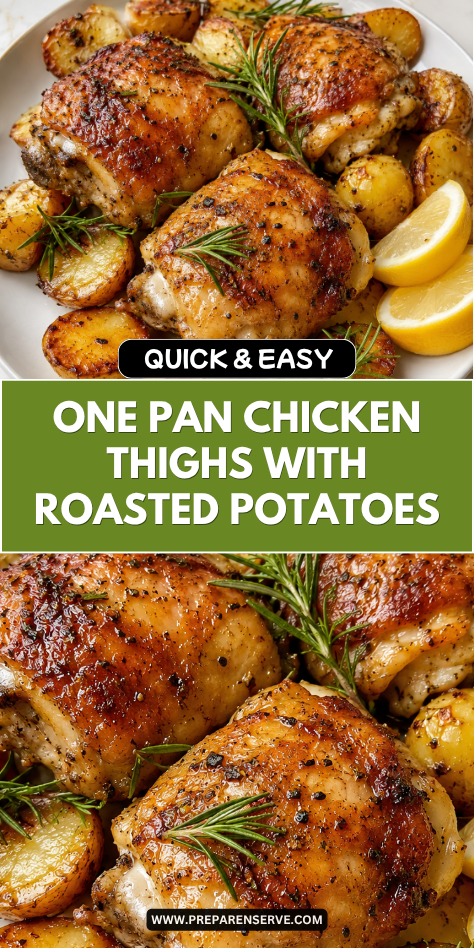
One-pan chicken thighs with roasted potatoes is the kind of meal that works well for busy families. The chicken has crispy skin, tender meat, and a savory flavor from garlic, herbs, olive oil, and pan juices.
The potatoes roast right beside the chicken, so they become soft in the center and golden around the edges. They pick up flavor from the chicken drippings, which makes them taste rich and comforting without needing a lot of extra work.
This recipe is also easy to adjust for different tastes. You can add more vegetables, change the herbs, or make the seasoning mild for kids and stronger for adults.
Serves: 4 people
This recipe serves 4 people with one large chicken thigh per person and a generous scoop of roasted potatoes. If your chicken thighs are smaller, or if you are feeding bigger appetites, you may want to add one or two extra pieces.
The portion size is flexible because the potatoes help stretch the meal. You can also serve it with a salad, green beans, rolls, or rice if you want to make dinner go a little further.
Ingredients You’ll Need
- 4 bone-in, skin-on chicken thighs, about 2 1/2 to 3 pounds total
- 1 1/2 pounds baby potatoes, halved
- 3 tablespoons olive oil, divided
- 1 tablespoon fresh lemon juice
- 1 teaspoon lemon zest
- 4 garlic cloves, minced
- 1 teaspoon kosher salt, divided
- 1/2 teaspoon black pepper, divided
- 1 teaspoon paprika
- 1 teaspoon dried Italian seasoning
- 1/2 teaspoon dried thyme
- 1/2 teaspoon onion powder
- 1/4 teaspoon garlic powder
- 1 small yellow onion, sliced
- 2 tablespoons unsalted butter, melted
- 1 tablespoon chopped fresh parsley, for serving
- Lemon wedges, for serving
Pro Tips
Pat the chicken thighs very dry before seasoning them. Dry skin browns better in the oven and helps you get that golden, crisp finish families love.
Cut the potatoes into similar-sized pieces so they cook evenly. Baby potatoes only need to be halved, but larger potatoes should be cut into 1-inch chunks.
Place the chicken thighs skin-side up on top of or between the potatoes. This lets the skin roast instead of steam, while the juices drip down and flavor the potatoes.
Do not crowd the pan too tightly. If the chicken and potatoes are packed together, they may steam instead of roast, which can keep the potatoes from getting golden.
Use a meat thermometer to check the chicken. Chicken thighs are safe at 165°F, but they become even more tender when cooked closer to 175°F to 185°F.
Let the chicken rest for 5 minutes before serving. This helps the juices settle back into the meat, so every bite stays tender and moist.
Tools You’ll Need
- Large rimmed sheet pan or 9×13-inch baking dish
- Large mixing bowl
- Small mixing bowl
- Measuring spoons
- Measuring cups
- Cutting board
- Sharp knife
- Microplane or zester
- Garlic press, optional
- Tongs
- Paper towels
- Meat thermometer
- Aluminum foil, optional for easier cleanup
- Serving platter or dinner plates
Substitutions and Variations
Use Boneless Chicken Thighs
Boneless, skinless chicken thighs can be used, but they cook faster than bone-in thighs. Add them after the potatoes have roasted for about 15 minutes so the chicken does not dry out.
Swap the Potatoes
Use Yukon gold potatoes, red potatoes, or russet potatoes cut into 1-inch pieces. Sweet potatoes also work, but they will make the dish a little sweeter and softer.
Make It Dairy-Free
Skip the melted butter and use an extra tablespoon of olive oil instead. The chicken and potatoes will still roast beautifully with a rich, savory flavor.
Add More Vegetables
Add carrots, Brussels sprouts, green beans, or bell peppers to make the pan feel fuller. Choose vegetables that can handle roasting, and cut them into pieces that cook at the same pace as the potatoes.
Change the Flavor
Use rosemary, oregano, Cajun seasoning, or a little smoked paprika to give the dish a different taste. Keep the salt and oil the same so the chicken still roasts well and stays balanced.
Make Ahead Tips
One-pan chicken thighs with roasted potatoes can be partly prepped ahead, which makes dinner feel much easier on a busy night. You can mix the olive oil, lemon juice, lemon zest, garlic, salt, pepper, paprika, Italian seasoning, thyme, onion powder, and garlic powder in a small bowl up to 24 hours ahead.
You can also season the chicken thighs earlier in the day and keep them covered in the refrigerator. This gives the seasoning time to settle into the meat and helps the chicken taste even better after roasting.
The potatoes can be washed and halved ahead of time, but keep them covered in cold water in the refrigerator so they do not brown. Drain and dry them very well before roasting, because wet potatoes will steam instead of turn golden.
For the best texture, I recommend roasting the chicken and potatoes right before serving. The prep can be done ahead, but the crispy skin and roasted potato edges are best fresh from the oven.
Instructions
Step 1: Preheat the Oven
Preheat the oven to 425°F. Place the oven rack in the center position so the chicken and potatoes roast evenly.
A hot oven helps the chicken skin brown while the potatoes become tender inside and crisp around the edges. If your oven runs hot, check the pan a few minutes early to prevent the garlic or onions from getting too dark.
Step 2: Prepare the Chicken
Pat the chicken thighs dry with paper towels. This small step makes a big difference because dry chicken skin browns much better than damp skin.
Place the chicken thighs on a plate or cutting board while you prepare the seasoning. Keep the skin facing up so it is easy to coat evenly.
Step 3: Make the Seasoning Mixture
In a small bowl, stir together 2 tablespoons olive oil, lemon juice, lemon zest, minced garlic, 3/4 teaspoon kosher salt, 1/4 teaspoon black pepper, paprika, Italian seasoning, thyme, onion powder, and garlic powder. Mix until the seasoning looks like a loose paste.
This mixture adds flavor to both the chicken and the potatoes. The lemon brightens the dish, while the garlic and herbs give it a cozy, savory flavor.
Step 4: Season the Chicken
Rub about half of the seasoning mixture over the chicken thighs. Try to coat the top, sides, and a little under the skin if you can do it gently without tearing it.
Let the chicken sit while you prepare the potatoes and onions. Even a few minutes of resting with the seasoning helps the flavor cling to the meat.
Step 5: Prepare the Potatoes and Onion
Add the halved baby potatoes and sliced yellow onion to a large mixing bowl. Drizzle with the remaining 1 tablespoon olive oil, melted butter, the rest of the seasoning mixture, the remaining 1/4 teaspoon kosher salt, and the remaining 1/4 teaspoon black pepper.
Toss everything until the potatoes and onions are coated. The potatoes should look lightly glossy, with seasoning spread over the cut sides.
Step 6: Arrange Everything on the Pan
Spread the potatoes and onions on a large rimmed sheet pan or in a 9×13-inch baking dish. Place the potatoes cut-side down when possible so they can brown against the hot pan.
Nestle the chicken thighs among the potatoes with the skin-side facing up. Leave a little room between the chicken pieces so the heat can move around them.
Step 7: Roast the Chicken and Potatoes
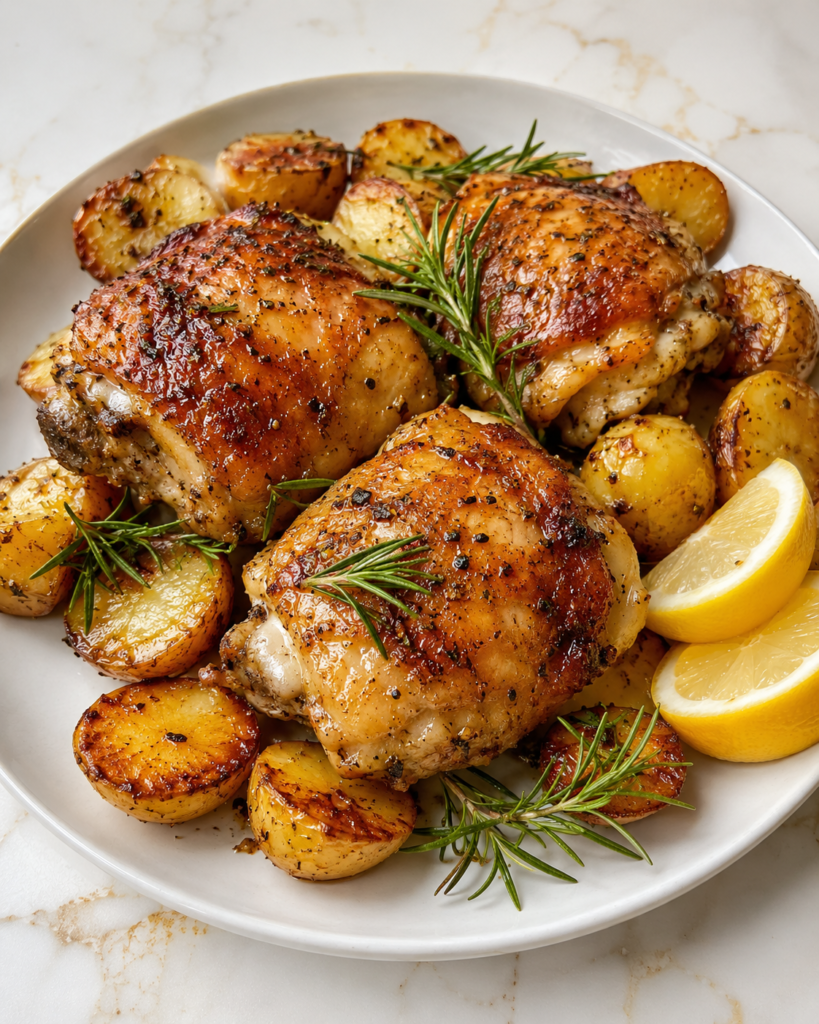
Roast for 35 to 45 minutes, or until the chicken skin is golden and the potatoes are fork-tender. The chicken should reach at least 165°F in the thickest part without touching the bone.
For extra tender chicken thighs, cook them closer to 175°F to 185°F. If the potatoes need more color near the end, you can roast for a few extra minutes while watching closely.
Step 8: Broil for Extra Crispness
If you want crispier chicken skin, turn the broiler on for 2 to 4 minutes at the end. Keep the pan in the center or upper-center rack, depending on how strong your broiler is.
Watch carefully during this step because the skin can brown quickly. The goal is golden and crisp, not burned.
Step 9: Rest and Finish
Remove the pan from the oven and let the chicken rest for 5 minutes. This helps the juices settle so the meat stays moist when you cut into it.
Sprinkle chopped fresh parsley over the chicken and potatoes before serving. Add lemon wedges on the side for anyone who likes a little fresh brightness.
Serving Suggestions
This meal is hearty enough to serve on its own, especially when the potatoes are golden and tender. I like to spoon a little of the pan juice over each plate so none of that savory flavor goes to waste.
A simple green salad pairs well with the rich chicken and roasted potatoes. Use a light dressing with lemon or vinegar to balance the cozy flavors from the pan.
Steamed green beans, roasted broccoli, or peas are easy vegetable sides that work well for families. They add color to the plate without making dinner feel complicated.
Warm dinner rolls or crusty bread are great for soaking up the garlic herb juices. This is especially helpful if your family enjoys a meal that feels extra comforting.
For a lighter plate, serve the chicken with extra roasted vegetables and a smaller scoop of potatoes. This keeps the meal filling but not too heavy.
If you are feeding kids, cut the chicken off the bone and serve it with small potato pieces. A little ketchup, ranch, or mild yogurt sauce on the side can make the meal more familiar for younger eaters.
Leftovers and Storage
Leftover one-pan chicken thighs with roasted potatoes store well and make an easy lunch or second dinner. Let everything cool before moving it to an airtight container so extra steam does not soften the chicken skin too much.
Store the chicken and potatoes in the refrigerator for up to 4 days. You can keep them together in one container, but the chicken skin will stay a little better if the pieces are not packed too tightly.
To reheat, place the chicken and potatoes on a baking sheet and warm in a 350°F oven until heated through. This helps bring back some of the roasted texture, especially on the potatoes and chicken skin.
The microwave works for a faster option, but the skin will soften. If using the microwave, cover the food loosely and heat in short bursts so the chicken does not become tough.
You can freeze the cooked chicken for up to 2 months, but the potatoes may become softer after thawing. For best results, freeze the chicken separately and make fresh potatoes when serving again.
Nutrition and Benefits
- Chicken thighs are flavorful and satisfying. They provide protein and stay juicy during roasting, which makes them a reliable choice for family dinners. The bone-in, skin-on style also adds rich flavor to the potatoes as everything cooks together.
- Potatoes make the meal filling. Baby potatoes add comforting texture and help stretch the meal for a family. They also pair well with simple vegetables, salads, and lighter sides.
- Garlic and herbs add flavor without much fuss. Paprika, thyme, Italian seasoning, onion powder, and garlic create a savory coating without needing a complicated sauce. This keeps the recipe easy while still giving it a homemade taste.
- Lemon brightens the whole pan. Lemon juice and zest help balance the richness of the chicken and butter. A squeeze of fresh lemon at the end can make the dish taste lighter and fresher.
- One-pan cooking keeps dinner manageable. Cooking the chicken, onions, and potatoes together saves time and limits cleanup. That makes this meal helpful for weeknights, meal prep, or Sunday dinner.
Recipe FAQ
Can I use boneless chicken thighs?
Yes, boneless chicken thighs work well, but they cook faster than bone-in thighs. Roast the potatoes for about 15 minutes first, then add the seasoned boneless thighs to the pan. Continue roasting until the chicken reaches 165°F. This keeps the potatoes tender without drying out the chicken.
Can I use chicken breasts instead?
Yes, but chicken breasts are leaner and can dry out more easily. Use medium-sized breasts and check them early with a meat thermometer. They are done when the thickest part reaches 165°F. You may need to remove the chicken before the potatoes are fully browned.
Why are my potatoes not crispy?
Potatoes may not crisp if the pan is crowded or if they are too wet before roasting. Dry them well and place the cut sides down on the pan when possible. A hot oven also helps create golden edges. If needed, roast them a few minutes longer after removing the chicken.
Can I add vegetables to the pan?
Yes, you can add sturdy vegetables like carrots, Brussels sprouts, or cauliflower with the potatoes. Softer vegetables like green beans or bell peppers should be added later so they do not overcook. Cut vegetables into similar sizes for even roasting. Avoid overcrowding the pan.
How do I know the chicken is fully cooked?
Use a meat thermometer and check the thickest part of the thigh without touching the bone. Chicken is safe to eat at 165°F. Bone-in thighs often taste more tender when cooked closer to 175°F to 185°F. The juices should run clear, and the meat should pull from the bone easily.
Can I make this recipe without butter?
Yes, you can replace the melted butter with olive oil. The potatoes will still roast nicely and the chicken will still have good flavor. Butter adds richness, but it is not required for success. This swap also makes the recipe dairy-free.
Can I prepare this in a baking dish instead of a sheet pan?
Yes, a 9×13-inch baking dish works well for this recipe. The potatoes may be a little softer because the sides of the dish hold more moisture. A rimmed sheet pan gives more browning because the ingredients have more space. Either option will still make a comforting family dinner.
A Savory Sheet-Pan Dinner to Count On
One-pan chicken thighs with roasted potatoes is the kind of dinner that feels calm, warm, and dependable after a long day. The chicken turns juicy, the potatoes become tender and golden, and the whole meal comes together with simple ingredients that are easy to love.
It is a recipe worth making again because it works for weeknights, Sunday dinners, and family meals without extra stress. With cozy flavor, easy cleanup, and hearty portions, it brings a homemade dinner to the table in a way that feels simple and satisfying.