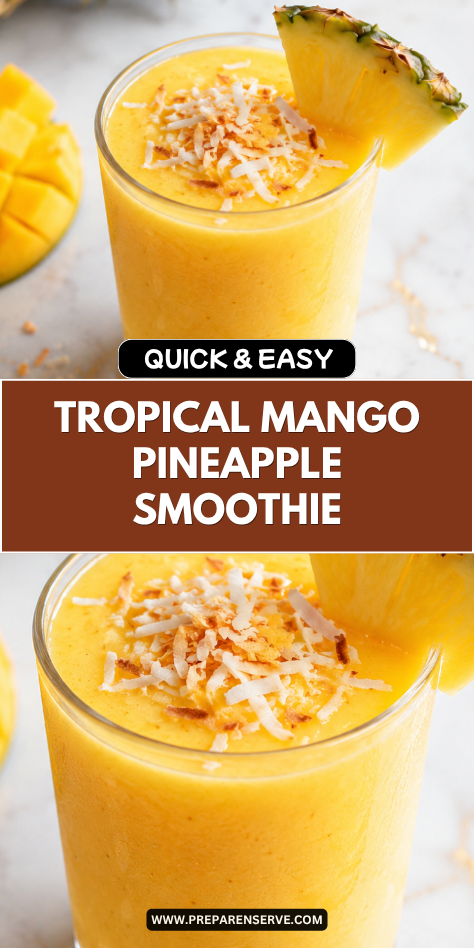
I make Tropical Mango Pineapple Smoothie when I want something cold, bright, and easy to pull together in just a few minutes. It tastes like a little sunshine in a glass, with sweet mango, juicy pineapple, creamy banana, and a splash of coconut milk.
I like this smoothie because it feels refreshing but still filling enough for breakfast or an afternoon snack. It is one of those simple recipes I can make for the whole family, and everyone can adjust their glass with toppings, extra fruit, or a little more creaminess.
Why You’ll Love This Recipe
Tropical Mango Pineapple Smoothie is creamy, fruity, and naturally sweet. The mango gives it a smooth texture, the pineapple adds a bright tangy flavor, and the banana helps everything blend into a thick, soft drink.
This recipe is also easy to make with fresh or frozen fruit. That makes it useful year-round, even when ripe mangoes or pineapples are not easy to find.
It is a family-friendly smoothie that works for breakfast, lunch boxes with a chilled thermos, after-school snacks, or quick meal prep. You can keep it light with coconut water or make it richer with yogurt or full-fat coconut milk.
Serves: 4 people
This recipe serves 4 people with medium smoothie portions. If you are serving it as a full breakfast, you may want to pair it with toast, muffins, boiled eggs, granola, or a simple breakfast wrap.
Ingredients You’ll Need
For the Smoothie
- 2 cups frozen mango chunks
- 1 1/2 cups frozen pineapple chunks
- 1 large ripe banana
- 1 1/2 cups unsweetened coconut milk, almond milk, or regular milk
- 1/2 cup plain Greek yogurt or dairy-free yogurt
- 1 tablespoon honey or maple syrup, optional
- 1 tablespoon fresh lime juice
- 1/2 teaspoon vanilla extract
- 1/2 cup ice cubes, optional for a thicker smoothie
Optional Toppings
- 1/4 cup granola
- 2 tablespoons shredded coconut
- 2 tablespoons chopped fresh mango
- 2 tablespoons chopped fresh pineapple
- 1 tablespoon chia seeds
- Fresh mint leaves, optional
Pro Tips
Use frozen fruit for the best texture.
Frozen mango and pineapple help the smoothie turn thick, cold, and creamy without needing too much ice. This keeps the flavor strong instead of watered down.
Add liquid slowly.
Start with the amount listed, then add a little more only if the blender needs help. Too much liquid at the start can make the smoothie thinner than you want.
Choose a ripe banana.
A ripe banana adds natural sweetness and helps the smoothie blend smoothly. If the banana has a few brown spots, it will taste sweeter and work well here.
Taste before adding sweetener.
Mango, pineapple, and banana can be sweet enough on their own. Blend first, then add honey or maple syrup only if the smoothie needs a little boost.
Blend in stages if needed.
Frozen fruit can be hard on smaller blenders. Pulse a few times first, then blend on high until the mixture becomes smooth and creamy.
Serve right away for the freshest flavor.
Smoothies taste best when they are cold and freshly blended. If it sits too long, the texture can loosen and the fruit may separate a little.
Tools You’ll Need
- High-speed blender
- Measuring cups
- Measuring spoons
- Cutting board
- Sharp knife
- Citrus juicer or fork
- Rubber spatula
- Serving glasses
- Straws, optional
- Small bowls for toppings, optional
Substitutions and Variations
Make It Dairy-Free
Use dairy-free yogurt and coconut milk, almond milk, or oat milk. The smoothie will still be creamy and sweet with the mango, pineapple, and banana.
Add More Protein
Blend in plain Greek yogurt, protein powder, silken tofu, or a spoonful of nut butter. This makes the smoothie more filling for breakfast or after-school snacks.
Make It Lighter
Use coconut water instead of milk and skip the yogurt. The smoothie will be thinner and more refreshing, which is nice on warm days.
Add Greens
Blend in a handful of baby spinach or mild kale. The fruit keeps the flavor sweet while the greens add color and extra nutrients.
Turn It Into a Smoothie Bowl
Use less liquid and blend until very thick. Spoon it into bowls and top with granola, shredded coconut, chia seeds, mango, and pineapple.
Make Ahead Tips
Tropical Mango Pineapple Smoothie is best when freshly blended, but you can prep the ingredients ahead so it takes only a few minutes to make. Portion the frozen mango, frozen pineapple, banana slices, and any add-ins into freezer-safe bags or containers.
You can make several smoothie packs at once and keep them in the freezer for up to 2 months. When you are ready to blend, add one pack to the blender with coconut milk, yogurt, lime juice, vanilla, and sweetener if needed.
You can also blend the smoothie a few hours ahead and store it in the refrigerator in a covered jar. Shake or stir it well before drinking because smoothies naturally separate as they sit. For the freshest texture, add granola, coconut, chia seeds, or fresh fruit toppings right before serving.
Instructions
Step 1: Gather the Ingredients
Set out 2 cups frozen mango chunks, 1 1/2 cups frozen pineapple chunks, 1 large ripe banana, 1 1/2 cups unsweetened coconut milk, almond milk, or regular milk, and 1/2 cup plain Greek yogurt or dairy-free yogurt. Measure 1 tablespoon fresh lime juice, 1/2 teaspoon vanilla extract, and 1 tablespoon honey or maple syrup if using.
Having everything measured before blending makes the smoothie come together quickly. It also helps you avoid adding too much liquid at the start.
Step 2: Add the Liquid First
Pour 1 1/2 cups unsweetened coconut milk, almond milk, or regular milk into the blender first. Add 1/2 cup plain Greek yogurt or dairy-free yogurt.
Adding the liquid first helps the blender blades move more easily. This is especially helpful when using frozen fruit.
Step 3: Add the Fruit
Add 2 cups frozen mango chunks, 1 1/2 cups frozen pineapple chunks, and 1 large ripe banana to the blender. If your banana is very large, break it into a few pieces before adding it.
The frozen fruit makes the smoothie cold and thick. The banana gives it a creamy texture and gentle sweetness.
Step 4: Add Flavor Boosters
Add 1 tablespoon fresh lime juice and 1/2 teaspoon vanilla extract. Add 1 tablespoon honey or maple syrup only if you want the smoothie a little sweeter.
The lime juice brightens the mango and pineapple, while the vanilla gives the smoothie a soft, rounded flavor. If your fruit is already very sweet, you may not need any sweetener.
Step 5: Blend Until Smooth
Place the lid on the blender and start blending on low speed. Increase to high and blend for 45 to 60 seconds, or until the smoothie is thick, creamy, and fully smooth.
If the blender struggles, stop and scrape down the sides with a rubber spatula. Add a small splash of milk if needed, then blend again.
Step 6: Adjust the Texture
Check the smoothie texture before pouring. If it is too thick, add more milk 1 to 2 tablespoons at a time and blend again.
If you want it thicker, add 1/2 cup ice cubes or a few more frozen mango chunks. Blend until the ice or fruit is fully smooth.
Step 7: Taste and Balance
Taste the smoothie before serving. Add a little more lime juice if you want it brighter, or a little honey or maple syrup if the fruit tastes tart.
Blend for another 5 to 10 seconds after any adjustment. This helps the flavor spread evenly through the smoothie.
Step 8: Pour and Top
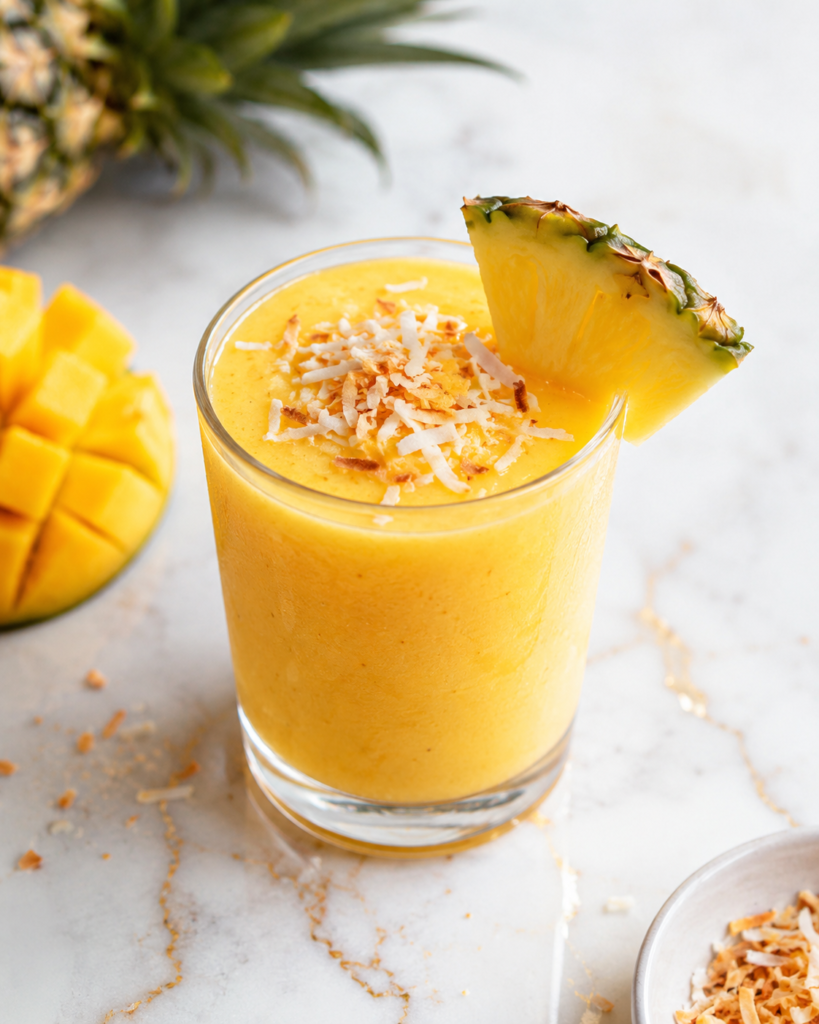
Pour the smoothie into 4 serving glasses. Add optional toppings like granola, shredded coconut, chopped fresh mango, chopped fresh pineapple, chia seeds, or fresh mint leaves.
If serving younger kids, keep toppings soft and simple. A little fresh fruit or shredded coconut is usually easier than crunchy toppings in a drink.
Step 9: Serve Right Away
Serve the smoothie while it is cold and creamy. Add straws or spoons depending on how thick the smoothie is.
Smoothies taste best right after blending because the texture is freshest. If it sits for a few minutes, stir before drinking.
Serving Suggestions
Tropical Mango Pineapple Smoothie is a bright breakfast drink when served with whole grain toast, scrambled eggs, or a breakfast sandwich. The fruit flavor keeps the meal fresh, while the sides make it more filling.
It also works well with muffins, banana bread, granola bars, or oatmeal cups. This makes it a helpful choice for busy mornings when everyone needs something quick and easy.
For an after-school snack, serve smaller smoothie portions with crackers, cheese, or peanut butter toast. The cold fruit and creamy texture feel refreshing after a long day.
You can also pour the smoothie into a bowl and add granola, shredded coconut, chia seeds, and fresh fruit. This makes it feel more like a spoonable meal and gives kids a fun way to add toppings.
For warm days, serve the smoothie in chilled glasses with a small wedge of pineapple or a sprig of mint. It feels special but still takes very little effort.
If you are packing it for later, pour the smoothie into an insulated bottle or chilled thermos. Shake well before drinking because the fruit and yogurt can separate a little over time.
Leftovers and Storage
Store leftover Tropical Mango Pineapple Smoothie in a covered jar or airtight bottle in the refrigerator for up to 24 hours. The texture is best the same day, but it will still taste good after a quick shake or stir.
Smoothies naturally separate as they sit, especially when made with fruit and yogurt. Before serving leftovers, shake the jar well or blend the smoothie again for a few seconds.
You can also freeze leftover smoothie in ice cube trays. Once frozen, transfer the cubes to a freezer-safe bag and store them for up to 2 months.
To use smoothie cubes, blend them with a splash of milk or coconut water until smooth. You can also add the cubes to a fresh smoothie to make it colder and thicker without watering it down. Avoid storing smoothies with granola or toppings mixed in because they can become soggy.
Nutrition and Benefits
- Fruit-filled and refreshing: Mango, pineapple, and banana give this smoothie natural sweetness, bright flavor, and a creamy texture. It is a simple way to add more fruit to breakfast or snack time.
- Good source of vitamin C: Mango and pineapple both bring vitamin C, which supports everyday wellness. Their bright flavor also makes the smoothie taste fresh without needing much added sugar.
- Creamy and filling: Greek yogurt adds protein and creaminess, while dairy-free yogurt works well for a plant-based option. This helps the smoothie feel more satisfying than juice alone.
- Easy to customize: You can make it lighter with coconut water, richer with full-fat coconut milk, or heartier with protein powder or nut butter. The base recipe stays fruity and familiar.
- Helpful for busy mornings: Smoothie packs can be made ahead and blended quickly. This makes the recipe practical for breakfast, snacks, or meal prep.
Recipe FAQ
Can I use fresh fruit instead of frozen?
Yes, fresh mango and pineapple work well, but the smoothie will be thinner and less cold. Add 1/2 cup ice cubes to help thicken it. Frozen fruit gives the creamiest texture with the least effort.
Can I make this smoothie without banana?
Yes, you can leave out the banana if you prefer. Add extra mango, Greek yogurt, or half an avocado for creaminess. The flavor will be a little less sweet, so taste before serving.
What milk tastes best in this smoothie?
Coconut milk gives the smoothie the most tropical flavor. Almond milk and regular milk also work well if that is what you have. Coconut water makes it lighter and more refreshing.
Can I add protein powder?
Yes, you can add a scoop of vanilla or unflavored protein powder. Blend it with the liquid and fruit until smooth. You may need a splash more milk if the smoothie becomes too thick.
How do I make it into a smoothie bowl?
Use less liquid so the smoothie stays thick enough to eat with a spoon. Start with 1 cup milk instead of 1 1/2 cups, then add more only if needed. Top with granola, coconut, chia seeds, mango, and pineapple.
Can I make this smoothie ahead for kids?
Yes, you can blend it a few hours ahead and keep it cold in the refrigerator or an insulated bottle. Shake it well before serving. For the best texture, avoid adding toppings until right before drinking.
Why is my smoothie too thin?
Too much liquid or fresh fruit can make the smoothie thin. Add more frozen mango, frozen pineapple, banana, or ice and blend again. Start with less liquid next time and add more only as needed.
A Sunny Smoothie for Busy Days
Tropical Mango Pineapple Smoothie is cold, creamy, and easy to make with simple fruit and everyday ingredients. The mango, pineapple, banana, and coconut milk blend into a bright drink that feels refreshing but still satisfying. It is a helpful choice for breakfast, snacks, or warm afternoons.
This recipe is worth making again because it is flexible, fast, and family-friendly. You can prep smoothie packs ahead, adjust the sweetness, or turn it into a bowl with toppings. It is a simple homemade smoothie that brings a fresh tropical flavor to any day.