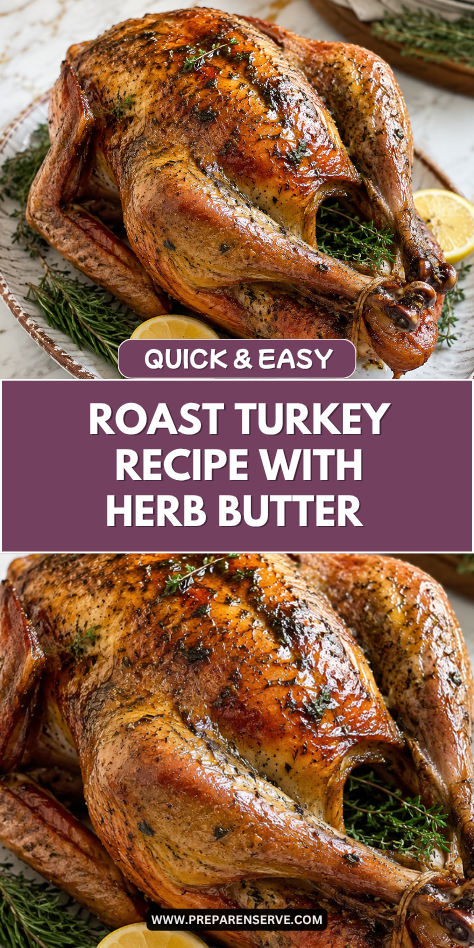
I make roast turkey with herb butter when I want a meal that feels warm, special, and worth gathering around. A golden turkey in the oven always makes the kitchen smell comforting, and it brings a sense of care to the table without needing fancy ingredients.
Turkey can feel like a big job, especially if you only make it once or twice a year. I like this method because the herb butter adds flavor, helps keep the meat moist, and gives the skin a beautiful golden color as it roasts.
This recipe is a good choice for holidays, Sunday dinners, or any time you want a classic centerpiece meal. The butter is mixed with garlic, herbs, salt, and pepper, then tucked under the skin and spread over the outside of the turkey.
I also love that the leftovers are useful for days. Sliced turkey works for sandwiches, soups, casseroles, salads, and easy lunches, so the effort keeps helping long after the main meal is served.
Why You’ll Love This Recipe
Roast turkey with herb butter is classic, comforting, and full of simple homemade flavor. The butter melts into the turkey as it roasts, carrying garlic, rosemary, thyme, parsley, and sage into the meat while helping the skin turn crisp and golden.
This recipe is helpful for home cooks because it keeps the steps clear and manageable. You do not need a long list of special ingredients, just a fully thawed turkey, softened butter, fresh or dried herbs, and enough time for roasting and resting.
Families love this turkey because the flavor is savory but not too strong. It pairs well with mashed potatoes, stuffing, gravy, vegetables, rolls, cranberry sauce, and all the cozy sides people look forward to.
Serves: 10 people
This recipe serves about 10 people using a 12- to 14-pound turkey. If you are feeding a smaller group, you will likely have plenty of leftovers, and if you are feeding a larger crowd, plan on adding extra sides or roasting a second smaller turkey breast.
Ingredients You’ll Need
For the Turkey
- 1 whole turkey, 12 to 14 pounds, fully thawed
- 2 tablespoons olive oil
- 2 teaspoons fine sea salt
- 1 teaspoon black pepper
- 1 large yellow onion, quartered
- 1 lemon, halved
- 1 head garlic, halved crosswise
- 4 fresh rosemary sprigs
- 6 fresh thyme sprigs
- 4 fresh sage leaves
- 2 cups low-sodium chicken broth or turkey broth
For the Herb Butter
- 1 cup unsalted butter, softened
- 4 garlic cloves, minced
- 2 tablespoons chopped fresh parsley
- 1 tablespoon chopped fresh rosemary
- 1 tablespoon chopped fresh thyme
- 1 tablespoon chopped fresh sage
- 1 teaspoon fine sea salt
- 1/2 teaspoon black pepper
- 1 teaspoon lemon zest
Optional for Serving
- Extra fresh herbs, for garnish
- Gravy, for serving
- Lemon wedges, for serving
Pro Tips
Make sure the turkey is fully thawed before roasting. A partially frozen turkey will cook unevenly, and the outside may be done before the center is safe to eat.
Pat the turkey very dry with paper towels before adding the herb butter. Dry skin browns better and helps the butter stay in place as you rub it over the bird.
Soften the butter before mixing it with the herbs. Butter that is too cold will be hard to spread under the skin and may tear the delicate turkey skin.
Use your hands gently when loosening the skin over the breast. Work slowly so you create space for the butter without ripping the skin.
Roast the turkey until the thickest part of the breast reaches 165°F and the thickest part of the thigh reaches 175°F. An instant-read thermometer is the safest and easiest way to know when the turkey is done.
Let the turkey rest before carving. Resting for at least 30 minutes keeps the juices in the meat and makes carving cleaner and easier.
Tools You’ll Need
- Large roasting pan
- Roasting rack
- Cutting board
- Sharp knife
- Kitchen shears, optional
- Small mixing bowl
- Measuring cups
- Measuring spoons
- Wooden spoon or silicone spatula
- Paper towels
- Kitchen twine
- Instant-read meat thermometer
- Basting brush or spoon
- Aluminum foil
- Carving knife
- Serving platter
Substitutions and Variations
Use Dried Herbs
Use dried rosemary, thyme, sage, and parsley if fresh herbs are not available. Since dried herbs are stronger, use about 1 teaspoon dried herbs for every 1 tablespoon fresh herbs.
Make It Dairy-Free
Use a dairy-free butter substitute in place of regular butter. Choose one that softens well and has a mild flavor so the herbs, garlic, and turkey still shine.
Try Citrus Herb Butter
Add orange zest along with the lemon zest for a brighter flavor. You can also place orange wedges inside the turkey cavity with the onion, garlic, and herbs.
Add Gentle Heat
Mix a small pinch of smoked paprika, cayenne pepper, or crushed red pepper into the herb butter. Keep the amount light so the turkey stays family-friendly and does not overpower the classic flavor.
Use a Turkey Breast
Use this same herb butter on a bone-in turkey breast if you are serving a smaller group. The cooking time will be shorter, so use a thermometer and roast until the thickest part reaches 165°F.
Make Ahead Tips
Roast turkey with herb butter is easiest when you prepare a few parts ahead. You can make the herb butter up to 3 days in advance, then store it covered in the refrigerator until you are ready to use it.
Let the herb butter soften at room temperature before spreading it on the turkey. Cold butter is hard to smooth under the skin and can tear the turkey skin if you press too firmly.
You can also chop the onion, halve the garlic, zest the lemon, and gather the fresh herbs the day before. Keep everything in airtight containers in the refrigerator so roasting day feels calmer.
If you want extra flavor, season the turkey with salt the night before and leave it uncovered in the refrigerator. This helps the skin dry out and can lead to a crispier, more golden roast turkey.
Instructions
Step 1: Thaw and Prepare the Turkey
Make sure the turkey is fully thawed before you begin. Remove the neck and giblets from the cavity, then place the turkey on a rack inside a large roasting pan.
Pat the turkey dry all over with paper towels, including inside the cavity. Dry skin helps the herb butter stick better and helps the turkey brown in the oven.
Step 2: Make the Herb Butter
In a small mixing bowl, combine the softened butter, minced garlic, parsley, rosemary, thyme, sage, salt, black pepper, and lemon zest. Stir until the herbs and seasonings are evenly mixed through the butter.
The butter should be soft and spreadable, not melted. If it feels too firm, let it sit at room temperature for a few more minutes before using.
Step 3: Loosen the Turkey Skin
Gently slide your fingers under the skin over the turkey breast. Move slowly to loosen the skin without tearing it.
Try to create pockets over both sides of the breast. This is where some of the herb butter will go so the flavor sits close to the meat.
Step 4: Add Butter Under the Skin
Spoon some of the herb butter under the loosened skin. Use your fingers on the outside of the skin to gently spread the butter into an even layer.
This helps keep the breast meat moist and flavorful as the turkey roasts. Do not worry if it is not perfect, because the butter will melt and spread in the oven.
Step 5: Butter the Outside of the Turkey
Rub the remaining herb butter over the outside of the turkey. Coat the breast, legs, and thighs as evenly as you can.
Drizzle the olive oil over the top, then sprinkle with the salt and black pepper. The oil helps the skin brown while the butter adds flavor.
Step 6: Fill the Cavity
Place the quartered onion, lemon halves, halved garlic head, rosemary sprigs, thyme sprigs, and sage leaves inside the turkey cavity. These aromatics add gentle flavor as the turkey roasts.
Do not pack the cavity too tightly. Air should still move through the bird so it cooks evenly.
Step 7: Tie and Prepare for Roasting
Tie the turkey legs together with kitchen twine if desired. Tuck the wing tips under the turkey so they do not brown too quickly.
Pour the broth into the bottom of the roasting pan. This helps create moisture in the pan and gives you flavorful drippings for gravy.
Step 8: Roast the Turkey
Preheat the oven to 325°F. Place the turkey in the oven and roast for about 3 to 3 1/2 hours, depending on the size of the bird.
Baste the turkey every 45 minutes with the pan juices if you like. If the skin starts to brown too quickly, loosely cover the breast with foil.
Step 9: Check the Temperature
Begin checking the turkey temperature near the end of the roasting time. Insert an instant-read thermometer into the thickest part of the breast and thigh without touching the bone.
The breast should reach 165°F, and the thigh should reach about 175°F. If one area is done before the other, cover it loosely with foil and keep roasting until the turkey is safe throughout.
Step 10: Rest Before Carving
Remove the turkey from the oven and transfer it to a cutting board or serving platter. Tent it loosely with foil and let it rest for at least 30 minutes.
Resting helps the juices settle back into the meat. This makes the turkey easier to carve and keeps each slice more moist.
Step 11: Carve and Serve
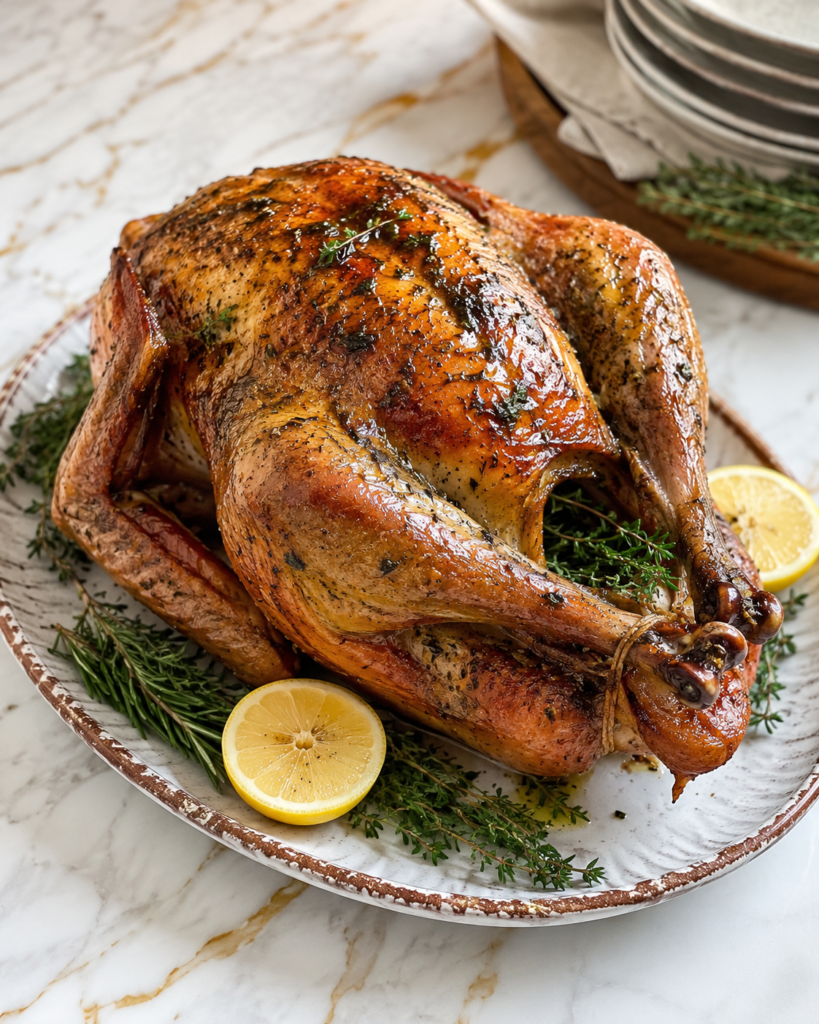
Remove the legs and thighs first, then carve the breast meat into slices. Arrange the turkey on a serving platter with extra herbs, lemon wedges, or gravy if using.
Serve the turkey warm with your favorite sides. Spoon some of the pan juices over the sliced meat for extra flavor.
Serving Suggestions
Roast turkey with herb butter is perfect with mashed potatoes and gravy. The creamy potatoes soak up the pan juices and make the meal feel classic and comforting.
Stuffing or dressing is another cozy side that belongs with this turkey. The herbs in the stuffing pair beautifully with the rosemary, thyme, sage, and garlic in the butter.
Serve it with roasted carrots, green beans, Brussels sprouts, or sweet potatoes for color and balance. These vegetables add sweetness and freshness next to the savory turkey.
Cranberry sauce gives the plate a bright, tart flavor. It helps balance the richness of the butter and gravy.
Warm dinner rolls are always welcome with roast turkey. They are great for scooping up gravy or making small leftover turkey sandwiches later.
For a lighter plate, serve sliced turkey with salad, steamed vegetables, or roasted squash. This keeps the meal fresh while still feeling warm and special.
Leftovers and Storage
Let leftover turkey cool before storing it. Remove the meat from the bones and place it in airtight containers in the refrigerator for up to 4 days.
Store white meat and dark meat together if you want more moisture, or separate them if your family has different preferences. Add a spoonful of pan juices or broth to the container to help keep the turkey from drying out.
Reheat turkey gently in a covered dish with a splash of broth or gravy. Warm it in a 300°F oven until heated through, or microwave single servings in short bursts.
Turkey freezes well for up to 3 months. Slice or shred it first, then freeze it in portions with a little broth to help protect the texture.
Use leftover turkey in sandwiches, soups, casseroles, pot pies, pasta, rice bowls, or wraps. The herb flavor works well in many simple family meals.
Nutrition and Benefits
- Turkey is a lean source of protein, especially the breast meat. It helps make the meal filling and works well for both holiday dinners and leftovers.
- Herb butter adds flavor and moisture, which helps the turkey taste rich and comforting. Using herbs, garlic, and lemon also keeps the flavor fresh and balanced.
- Fresh herbs like rosemary, thyme, sage, and parsley bring savory flavor without needing heavy sauces. They make the turkey smell wonderful while it roasts.
- Roasting a whole turkey can provide several meals from one main dish. Leftovers can be used for lunches, soups, sandwiches, and easy dinners.
- Serving turkey with vegetables, potatoes, salad, or whole grain sides can make the meal more balanced. This gives the table variety while keeping the turkey as the centerpiece.
Recipe FAQ
How long does it take to roast a turkey?
A 12- to 14-pound turkey usually takes about 3 to 3 1/2 hours at 325°F. The exact time depends on the turkey, oven, and whether the bird is fully thawed. Always use a thermometer instead of relying only on time.
How do I know when turkey is done?
Turkey is done when the thickest part of the breast reaches 165°F and the thigh reaches about 175°F. Be careful not to touch the bone with the thermometer. The juices should run clear, but temperature is the safest guide.
Can I make herb butter ahead of time?
Yes, herb butter can be made up to 3 days ahead. Store it covered in the refrigerator, then let it soften before using. Soft butter is much easier to spread under and over the turkey skin.
Should I cover the turkey while roasting?
You do not need to cover it the whole time. If the skin starts browning too fast before the turkey is cooked through, loosely tent the breast with foil. This protects the skin while the inside finishes roasting.
Can I use dried herbs instead of fresh herbs?
Yes, dried herbs work if fresh herbs are not available. Use less dried herbs because their flavor is more concentrated. A good rule is 1 teaspoon dried herbs for every 1 tablespoon fresh herbs.
Why is my turkey dry?
Turkey can become dry if it is overcooked or not rested before carving. Use a thermometer and remove the turkey when it reaches the correct temperature. Resting for at least 30 minutes also helps keep the juices in the meat.
Can I roast a smaller turkey with this recipe?
Yes, you can use the same method for a smaller turkey. The cooking time will be shorter, so begin checking the temperature earlier. The herb butter amount can be reduced if the turkey is much smaller.
A Golden Turkey Made for Gathering
Roast turkey with herb butter is a comforting centerpiece that feels special without being complicated. The garlic, herbs, lemon, and butter help create tender meat, golden skin, and the kind of flavor that fits beautifully with classic family sides.
I love this recipe because it brings people together and keeps giving through leftovers. It is reliable, warm, and worth making again for holidays, Sunday dinners, or any meal that deserves something homemade and memorable.