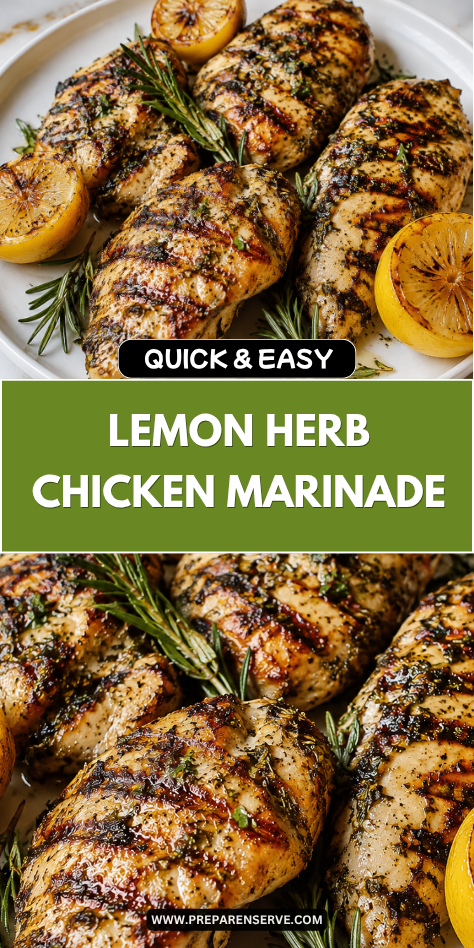
I make Lemon Herb Chicken Marinade when I want chicken that tastes fresh, tender, and full of simple homemade flavor. It is the kind of marinade that works for grilled chicken, baked chicken, skillet chicken, or meal prep, and it always makes dinner feel a little easier.
The lemon keeps the chicken bright, while the olive oil, garlic, and herbs help it stay juicy and flavorful. I like using this marinade because it takes just a few minutes to mix, but it makes plain chicken feel like something the whole family will look forward to eating.
Why You’ll Love This Recipe
Lemon Herb Chicken Marinade is simple, flexible, and made with ingredients many home cooks already keep in the kitchen. The fresh lemon juice gives the chicken a clean, bright flavor, while the herbs add a savory taste that works with so many meals.
This marinade is also great for busy families because it can be used in several ways. You can grill the chicken for a summer dinner, bake it for an easy weeknight meal, or cook it in a skillet when you need something quick.
It is mild enough for kids but still flavorful enough for adults. The garlic, oregano, parsley, and thyme make the chicken taste fresh and comforting without being spicy or too strong.
Serves: 4 people
This recipe makes enough marinade for about 1 ½ to 2 pounds of chicken, which usually serves 4 people. It works well with chicken breasts, thighs, tenders, drumsticks, or even cubed chicken for skewers.
If you are cooking for a larger family or want leftovers, you can easily double the marinade. Just use a large bowl or zip-top bag so the chicken has enough room to be evenly coated.
Ingredients You’ll Need
For the Lemon Herb Marinade
- ⅓ cup olive oil
- ¼ cup fresh lemon juice
- 1 tablespoon lemon zest
- 3 cloves garlic, minced
- 1 tablespoon Dijon mustard
- 1 tablespoon honey
- 1 teaspoon kosher salt
- ½ teaspoon black pepper
- 1 teaspoon dried oregano
- 1 teaspoon dried thyme
- ½ teaspoon dried basil
- 2 tablespoons chopped fresh parsley
- 1 tablespoon chopped fresh rosemary, optional
- ¼ teaspoon red pepper flakes, optional
For the Chicken
- 1 ½ to 2 pounds boneless, skinless chicken breasts, chicken thighs, chicken tenders, or drumsticks
Optional for Serving
- Lemon wedges
- Extra chopped fresh parsley
- Cooked rice
- Roasted vegetables
- Green salad
- Warm pita or flatbread
Pro Tips
Use fresh lemon juice instead of bottled lemon juice when you can. Fresh lemon has a cleaner, brighter flavor that makes the chicken taste lighter and more homemade.
Do not marinate chicken too long in lemon juice. Because lemon is acidic, it can start to change the texture of the chicken if it sits for too many hours.
For chicken breasts, 30 minutes to 4 hours is usually enough. Chicken thighs can handle a little longer because they are naturally juicier and more forgiving.
Pound chicken breasts to an even thickness before marinating. This helps them cook evenly and keeps the thinner ends from drying out.
Save a little marinade before adding the raw chicken if you want extra sauce for serving. Never reuse marinade that touched raw chicken unless it has been boiled safely first.
Let the chicken rest for a few minutes after cooking. This helps the juices settle, so the chicken stays tender when sliced.
Tools You’ll Need
- Medium mixing bowl
- Whisk or fork
- Measuring cups
- Measuring spoons
- Cutting board
- Sharp knife
- Microplane or zester
- Citrus juicer, optional
- Garlic press, optional
- Large zip-top bag or shallow dish with lid
- Tongs
- Meat thermometer
- Grill, grill pan, skillet, or baking dish
Substitutions and Variations
Use Lime Instead of Lemon
Fresh lime juice can replace lemon juice for a slightly different citrus flavor. It gives the chicken a bright taste that works especially well for tacos, rice bowls, or grilled skewers.
Make It Dairy-Free and Gluten-Free
This marinade is naturally dairy-free and can be gluten-free when your Dijon mustard is labeled gluten-free. Always check labels if cooking for someone with a specific dietary need.
Change the Herbs
Use Italian seasoning in place of oregano, thyme, and basil if that is what you have. You can also add fresh dill, cilantro, or chives for a different flavor while keeping the marinade fresh and simple.
Make It Sweeter or More Savory
Use maple syrup instead of honey for a softer sweetness, or leave the honey out for a more savory marinade. The mustard and garlic will still help balance the lemon and herbs.
Add More Flavor for Grilling
Add a pinch of smoked paprika, cumin, or red pepper flakes if you want a deeper flavor. These small additions work well when the chicken is going on the grill and getting a little char.
Make Ahead Tips
Lemon Herb Chicken Marinade is one of the easiest recipes to prepare ahead because the marinade itself can be mixed before you need it. You can whisk together the olive oil, lemon juice, lemon zest, garlic, Dijon mustard, honey, salt, pepper, dried herbs, parsley, rosemary, and red pepper flakes up to 3 days ahead.
Store the marinade in an airtight jar or container in the refrigerator. Shake or whisk it well before using because the oil and lemon juice will naturally separate as they sit.
If you want to prep the chicken ahead, place it in the marinade for the right amount of time based on the cut. Chicken breasts and tenders do best with 30 minutes to 4 hours, while chicken thighs and drumsticks can marinate for 4 to 8 hours.
Avoid leaving chicken in this lemon marinade overnight, especially boneless chicken breasts. The lemon juice is acidic and can make the texture too soft if it sits too long.
For freezer prep, place the chicken and marinade in a freezer-safe bag and freeze right away. As the chicken thaws in the refrigerator later, it will marinate at the same time and be ready to cook.
Instructions
Step 1: Zest and Juice the Lemon
Wash and dry the lemon before zesting. Use a microplane or fine grater to remove the yellow zest, being careful not to grate the bitter white part underneath.
Cut the lemon in half and squeeze out the juice. Fresh lemon juice gives the marinade a bright, clean flavor that tastes much better than bottled juice.
Step 2: Mix the Marinade
In a medium mixing bowl, add the olive oil, fresh lemon juice, lemon zest, minced garlic, Dijon mustard, honey, kosher salt, black pepper, dried oregano, dried thyme, dried basil, chopped parsley, optional rosemary, and optional red pepper flakes. Whisk everything together until the marinade looks smooth and well combined.
The Dijon mustard helps the oil and lemon juice blend together. The honey adds a small amount of sweetness that balances the sharp lemon and savory herbs.
Step 3: Prepare the Chicken
Place the chicken on a cutting board and pat it dry with paper towels. If using chicken breasts, pound them to an even thickness so they cook evenly.
Trim away any extra fat or tough pieces if needed. Keeping the chicken pieces similar in size helps them finish cooking at the same time.
Step 4: Marinate the Chicken
Place the chicken in a large zip-top bag or shallow dish with a lid. Pour the lemon herb marinade over the chicken and turn the pieces until they are evenly coated.
Seal the bag or cover the dish, then place it in the refrigerator. Marinate for at least 30 minutes, or up to 4 hours for chicken breasts and tenders.
Step 5: Preheat Your Cooking Surface
When you are ready to cook, remove the chicken from the refrigerator and let it sit at room temperature for about 15 minutes. This helps it cook more evenly.
Preheat your grill, grill pan, skillet, or oven depending on your cooking method. A hot cooking surface helps the chicken brown nicely on the outside.
Step 6: Grill the Chicken
To grill, preheat the grill to medium-high heat and lightly oil the grates. Remove the chicken from the marinade and let the extra drip off before placing it on the grill.
Cook chicken breasts for about 5 to 7 minutes per side, depending on thickness. Chicken thighs may take 6 to 8 minutes per side, and all chicken should reach 165°F in the thickest part.
Step 7: Bake the Chicken
To bake, preheat the oven to 400°F and place the chicken in a lightly greased baking dish. Arrange the pieces in a single layer so they cook evenly.
Bake chicken breasts for 20 to 25 minutes, or until the internal temperature reaches 165°F. Chicken thighs or drumsticks may take closer to 30 to 40 minutes, depending on size.
Step 8: Cook the Chicken in a Skillet
To cook on the stove, heat a large skillet over medium heat and add a small drizzle of olive oil. Remove the chicken from the marinade and place it in the hot skillet.
Cook chicken breasts or thighs for 5 to 7 minutes per side, depending on thickness. Lower the heat if the outside is browning too quickly before the inside is fully cooked.
Step 9: Rest and Serve
Transfer the cooked chicken to a clean plate and let it rest for 5 minutes. Resting helps the juices settle back into the meat so the chicken stays tender.
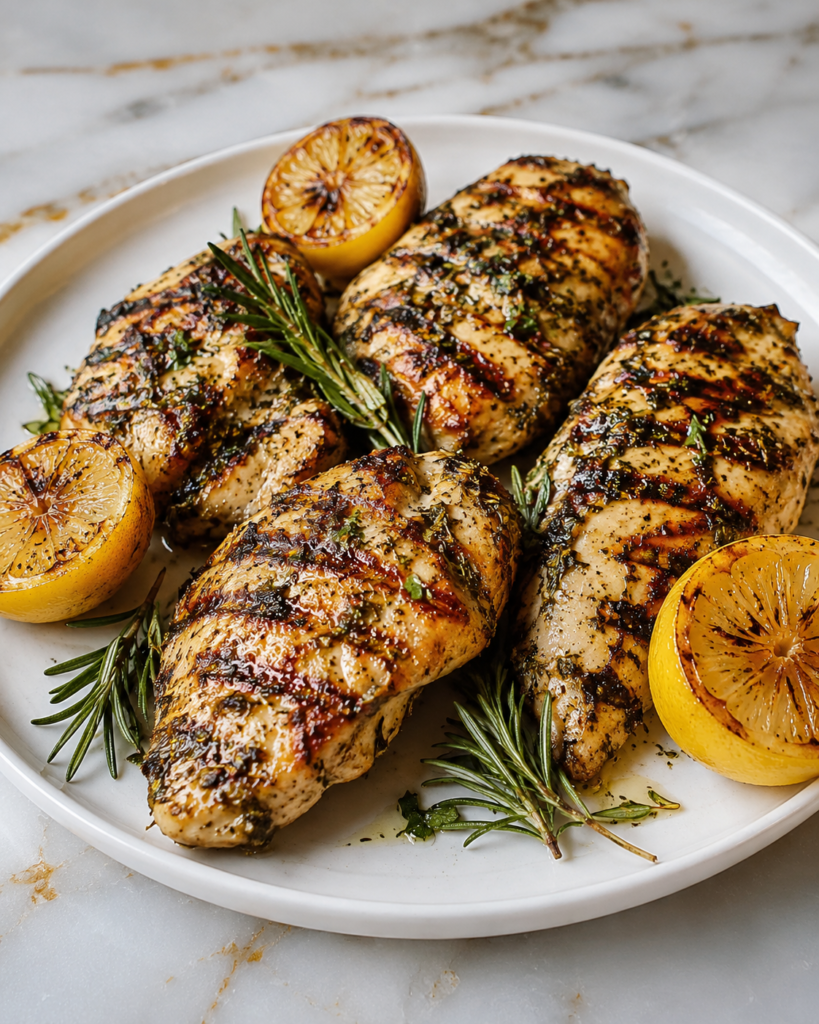
Slice or serve the chicken whole with lemon wedges and extra parsley. It is ready to use in plates, bowls, wraps, salads, or meal prep containers.
Serving Suggestions
Lemon Herb Chicken is wonderful served with rice, roasted potatoes, or couscous because the simple sides soak up the bright, savory juices. Add a few lemon wedges on the plate so everyone can squeeze on extra freshness.
For a lighter meal, slice the chicken and serve it over a green salad with cucumbers, tomatoes, feta, and a simple vinaigrette. The lemon and herbs already in the chicken make the salad taste fresh and complete.
This chicken also works well in wraps or pita pockets with lettuce, tomato, cucumber, and a spoonful of yogurt sauce. It is an easy lunch or dinner that feels filling without being heavy.
For family meal prep, serve the chicken with roasted vegetables and a grain like quinoa or brown rice. Keep the lemon wedges and herbs separate until serving so everything tastes fresh.
You can also use this chicken for pasta bowls, flatbread pizzas, or chopped chicken sandwiches. The flavor is simple enough to fit into many meals without clashing with other ingredients.
For a kid-friendly plate, serve the chicken sliced with buttered noodles, fruit, and a simple vegetable. The mild lemon herb flavor is easy to enjoy and not too spicy.
Leftovers and Storage
Store leftover Lemon Herb Chicken in an airtight container in the refrigerator for up to 4 days. Let the chicken cool before covering it, but do not leave it at room temperature for more than 2 hours.
To reheat, warm the chicken gently in a skillet over medium-low heat with a splash of broth or water. This helps keep it from drying out while it heats through.
You can also reheat single portions in the microwave. Cover the chicken with a damp paper towel and heat in short bursts until warm.
Leftover chicken can be served cold in salads, wraps, lunch boxes, and grain bowls. This is one of the easiest ways to use it because the lemon herb flavor still tastes fresh after chilling.
Cooked chicken can be frozen for up to 2 months. Wrap it tightly or store it in a freezer-safe container, then thaw overnight in the refrigerator before reheating.
Nutrition and Benefits
- Protein-rich: Chicken provides lean protein, making this recipe filling and useful for lunches, dinners, and meal prep.
- Fresh flavor without heavy sauce: Lemon juice, lemon zest, garlic, herbs, and olive oil give the chicken plenty of flavor without needing a creamy or sugary sauce.
- Flexible cooking options: This marinade works for grilling, baking, skillet cooking, and meal prep, which makes it practical for different seasons and schedules.
- Family-friendly: The flavor is bright and savory but still mild enough for kids, especially when served with rice, potatoes, or simple vegetables.
- Simple ingredients: Olive oil, lemon, garlic, mustard, honey, and herbs create a dependable marinade with everyday pantry and refrigerator staples.
Recipe FAQ
How long should chicken marinate in lemon herb marinade?
Chicken should marinate for at least 30 minutes so it can pick up flavor. For boneless chicken breasts or tenders, 2 to 4 hours is usually best. Chicken thighs and drumsticks can handle a little longer because they are juicier cuts.
Can I marinate chicken overnight?
It is better not to marinate this chicken overnight because the lemon juice can affect the texture. The acid may make the outside of the chicken too soft or slightly mushy. For best results, keep the marinating time under 8 hours.
Can I freeze chicken in this marinade?
Yes, you can freeze chicken with this marinade. Add the chicken and marinade to a freezer-safe bag, press out extra air, and freeze right away. The chicken will marinate as it thaws later in the refrigerator.
What cuts of chicken work best?
Chicken breasts, thighs, tenders, drumsticks, and cubed chicken all work well. Thighs are the most forgiving because they stay juicy, while breasts cook quickly and slice nicely for salads or bowls. Just adjust the cooking time based on the cut.
Can I use dried herbs instead of fresh?
Yes, dried herbs work well in this marinade. The recipe already uses dried oregano, thyme, and basil, with fresh parsley added for brightness. If you only have dried parsley or rosemary, use a smaller amount because dried herbs taste stronger.
How do I know when the chicken is done?
Chicken is done when it reaches 165°F in the thickest part. An instant-read thermometer is the easiest and safest way to check. The juices should run clear, and the center should no longer look pink.
Can I use this marinade for other meats?
Yes, this marinade also works well with turkey cutlets, pork chops, shrimp, or fish. Shrimp and fish need much less time, usually 15 to 30 minutes. Pork and turkey can marinate for a few hours like chicken.
A Fresh Marinade for Easy Family Meals
Lemon Herb Chicken Marinade is a simple way to turn everyday chicken into something tender, bright, and full of flavor. The lemon, garlic, olive oil, and herbs work together in a dependable blend that fits grilled dinners, baked meals, salads, wraps, and lunch prep.
It is worth making again because it is quick to mix, easy to adjust, and helpful for busy family cooking. With just a little prep, this marinade gives you chicken that tastes fresh, comforting, and ready for almost any meal.