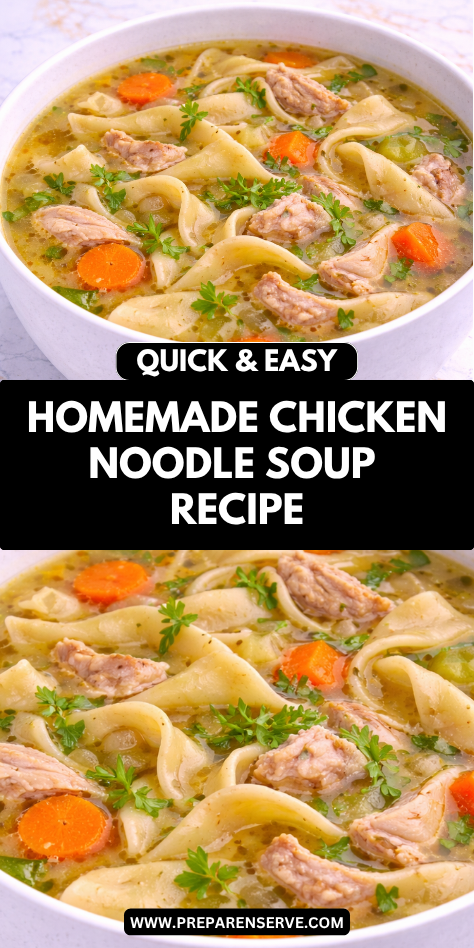
I make this soup on days when someone needs taking care of or the weather calls for something warm and deeply familiar.
A really good chicken noodle starts with the broth, and I’ll show you how to build it so it has that rich, savory depth that makes homemade taste so different from anything in a can.
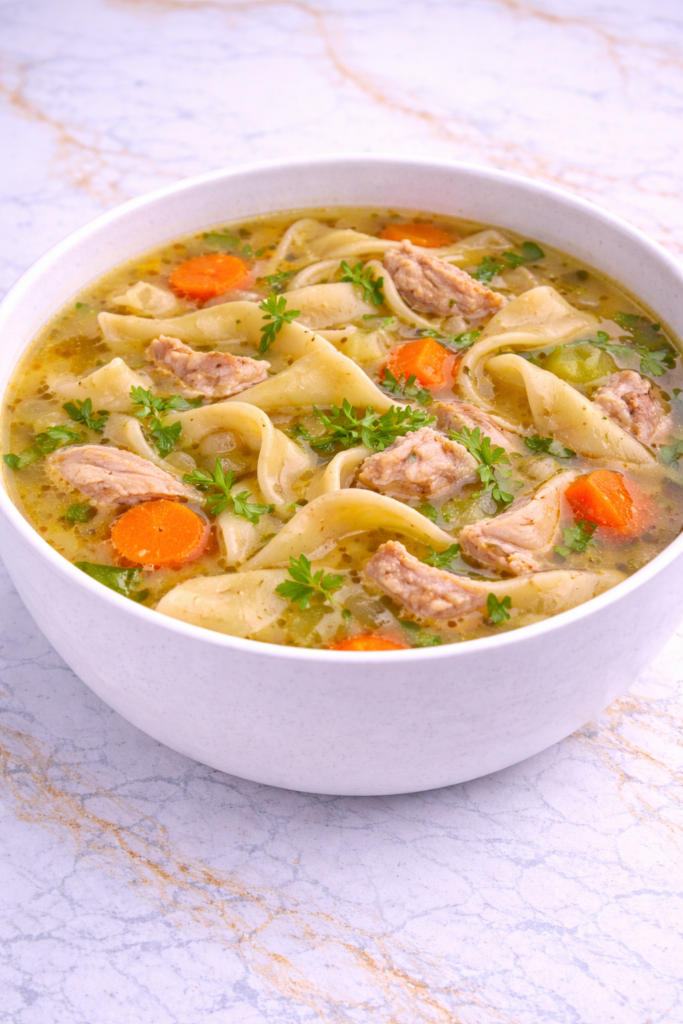
Tender chicken, soft vegetables, and noodles that soak up just enough flavor make every bowl feel complete and nourishing from the first spoonful.
It takes a little more time than a weeknight shortcut but the result is absolutely worth it. It’s the kind of soup that reminds you why cooking from scratch matters.
Why You’ll Love This Recipe
This homemade chicken noodle soup recipe is flavorful, comforting, and easy to customize. The savory broth paired with tender chicken and perfectly cooked noodles makes it a go-to recipe for anyone seeking a nourishing and satisfying meal.
The combination of protein, vegetables, and carbohydrates creates a balanced dish that works for both kids and adults. Families love this recipe because it’s approachable and widely appealing.
The tender chicken and soft noodles are familiar and comforting, while the vegetables add subtle texture and flavor. The mild seasoning ensures that even picky eaters enjoy it, while adults can add herbs, spices, or a touch of citrus to enhance the flavor.
The recipe is also incredibly versatile. You can make it with a simple store-bought chicken broth for convenience or simmer your own homemade broth for a richer, more aromatic result.
Additional vegetables, herbs, or noodles can be added to suit your preferences. This flexibility ensures that homemade chicken noodle soup can be adapted to every family’s taste while maintaining its classic appeal.
Serves: 6–8 people
A single batch of this soup serves six to eight people, making it perfect for family meals, dinner parties, or leftovers. Portion sizes can be adjusted depending on whether the soup is served as a main course or alongside bread, crackers, or a salad. Leftovers are easy to store and often taste even better the next day as the flavors continue to meld.
Ingredients You’ll Need
Chicken
- 1–1.5 pounds boneless, skinless chicken breasts or thighs
- Optional: 2 bone-in chicken thighs for richer flavor
Vegetables
- 3 carrots, peeled and sliced
- 2 celery stalks, sliced
- 1 medium onion, diced
- 2–3 cloves garlic, minced
- Optional: 1 cup chopped spinach or kale for added greens
Broth and Seasoning
- 6 cups chicken broth (homemade or store-bought)
- 1 teaspoon salt, adjust to taste
- 1/2 teaspoon black pepper
- 1 teaspoon dried thyme or 2 teaspoons fresh thyme
- 1 teaspoon dried parsley or 2 teaspoons fresh parsley
- Optional: 1 bay leaf for extra depth
Noodles
- 2 cups egg noodles or your preferred pasta
- Optional: whole-grain or gluten-free noodles
Optional Garnish
- Fresh parsley, chopped
- Lemon wedges for brightness
Pro Tips
Using bone-in chicken can add more depth to the broth, creating a richer, more flavorful base. Remove the bones before serving for tender, bite-sized pieces of meat.
Trim and slice vegetables evenly to ensure they cook uniformly. Carrots, celery, and onions form the flavor foundation of the soup and provide a pleasant texture.
Add noodles toward the end of cooking to prevent them from becoming mushy. Cook just until tender to maintain their texture.
For extra depth of flavor, sauté onions, carrots, and celery in a little olive oil before adding broth. This step caramelizes the vegetables slightly and enhances the overall flavor of the soup.
Adjust herbs and seasoning to taste. Fresh herbs added at the end bring brightness, while dried herbs simmered with the broth add depth.
Homemade chicken noodle soup is forgiving. You can easily substitute vegetables, herbs, or noodles based on availability or preference without losing flavor.
Tools You’ll Need
- Large stockpot or Dutch oven
- Knife and cutting board
- Wooden spoon or spatula for stirring
- Measuring cups and spoons
- Ladle for serving
Substitutions and Variations
Use rotisserie chicken for a quicker version, adding pre-cooked chicken at the end of cooking.
Swap chicken broth with vegetable broth for a lighter, vegetarian-friendly option. Add plant-based chicken substitutes if desired.
Incorporate other vegetables like peas, corn, zucchini, or mushrooms for additional flavor and nutrients. Add them according to their cooking time to maintain texture.
For a heartier soup, use thicker noodles or small pasta shapes like shells or rotini. Adjust cooking time so noodles remain firm.
Add a splash of lemon juice or a pinch of crushed red pepper for a flavor twist.
Homemade chicken noodle soup is comforting, versatile, and nutrient-rich. Its tender chicken, savory broth, fresh vegetables, and perfectly cooked noodles make it a timeless recipe that’s satisfying and nourishing, perfect for sharing with family and friends.
Make Ahead Tips
Homemade chicken noodle soup is perfect for making ahead of time, which makes it ideal for busy weeknights, meal prep, or even preparing for guests.
You can chop all vegetables up to a day in advance and store them in airtight containers in the refrigerator. Prepping the vegetables ahead saves time and ensures even cooking when assembling the soup.
The chicken can also be pre-cooked for convenience. Poach, roast, or bake the chicken, then shred or dice it and store it in a separate container in the refrigerator. Add the cooked chicken toward the end of simmering to heat through without overcooking, keeping the meat tender and juicy.
If making your own broth, it can be prepared ahead and stored in the refrigerator for up to three days or frozen for up to three months. Homemade broth enhances flavor, and using pre-made broth is fine if time is limited. Either method works well for a rich, savory base.
For meal prep, the soup can be stored in individual portions. Cook the noodles separately if you plan to freeze or refrigerate the soup. Adding noodles fresh before serving prevents them from becoming mushy and maintains their texture, making every serving as delicious as the first.
Glaze or seasoning mixes can be prepared in advance to save even more time. Store herbs and garlic in a small container, ready to be added to the broth for easy assembly. This ensures a flavorful, aromatic soup with minimal effort on cooking day.
Instructions
Step 1: Prepare the Broth
Pour chicken broth into a large stockpot or Dutch oven and bring it to a gentle boil over medium heat. Add salt, pepper, thyme, parsley, and the optional bay leaf. Simmering the broth with herbs creates a rich, aromatic foundation for the soup.
Step 2: Add the Vegetables
Add the sliced carrots, celery, and onions to the simmering broth. Reduce the heat to medium-low and let the vegetables cook for 8–10 minutes until slightly tender. This step allows the vegetables to release their flavors into the broth and soften for a pleasant texture.
Step 3: Add the Chicken
If using raw chicken, add it to the pot and simmer for 15–20 minutes until fully cooked. Ensure the internal temperature reaches 165°F (74°C). Remove the chicken from the pot, shred or dice it, and return it to the soup.
If using pre-cooked chicken, add it during the last 5–10 minutes of simmering just to warm through without overcooking.
Step 4: Cook the Noodles
Add the egg noodles or your preferred pasta to the simmering soup during the final 8–10 minutes of cooking. Stir occasionally to prevent sticking. Cook until tender but still firm for the perfect bite.
Step 5: Taste and Adjust Seasoning
Once the noodles are cooked and the chicken is heated through, taste the soup. Adjust salt, pepper, or herbs as needed. Remove the bay leaf if used.
Step 6: Add Optional Greens
If adding greens such as spinach or kale, stir them in during the last 2–3 minutes of cooking. This preserves their vibrant color and delicate texture while adding extra nutrients.
Step 7: Serve
Ladle the soup into bowls, ensuring each serving has a balanced portion of chicken, noodles, and vegetables. Garnish with fresh parsley or a squeeze of lemon for brightness. Serve hot with crusty bread, crackers, or a side salad if desired.
Serving Suggestions
Classic homemade chicken noodle soup pairs beautifully with a variety of sides. Serve it with warm, crusty bread or garlic bread to soak up the flavorful broth.
Pair the soup with a fresh green salad or lightly steamed vegetables for a balanced meal. You can also serve it with grains such as rice or quinoa for a heartier option.
Leftovers can be repurposed into creative dishes. Use shredded chicken and vegetables in sandwiches, wraps, or grain bowls. Turn the broth into a base for casseroles, rice dishes, or stir-fries.
Top each serving with fresh herbs like parsley or thyme for added aroma and visual appeal. A squeeze of lemon adds brightness and balances the richness of the soup.
Homemade chicken noodle soup is versatile, comforting, and nutritious. Its tender chicken, flavorful broth, crisp vegetables, and perfectly cooked noodles make it a meal that’s satisfying for the whole family. It’s equally delightful as a warm, comforting dinner or a convenient, reheatable lunch.
This soup delivers a nourishing, protein-rich, and flavorful meal that’s perfect for cold evenings, busy weekdays, or any time you want a hearty, home-cooked classic.
Leftovers and Storage
Homemade chicken noodle soup is one of those recipes that actually improves in flavor after sitting for a few hours, making it perfect for leftovers and meal prep.
Allow the soup to cool slightly before transferring it to airtight containers. In the refrigerator, it will keep for three to four days, maintaining the savory broth, tender chicken, and perfectly cooked vegetables.
When reheating leftovers, do so gently to preserve the texture of the chicken and vegetables. Warm the soup in a saucepan over medium-low heat, stirring occasionally to prevent the noodles from sticking or overcooking. If the noodles have absorbed too much broth and become soft, add a splash of chicken broth or water to restore the consistency.
For longer-term storage, homemade chicken noodle soup freezes well. Transfer the soup to freezer-safe containers, leaving some space for expansion.
Freeze for up to three months. To thaw, place the container in the refrigerator overnight or use the defrost setting on your microwave. If possible, cook noodles separately before freezing or add them fresh when reheating to prevent them from becoming mushy.
Leftovers can also be creatively repurposed. Shredded chicken and vegetables make excellent additions to casseroles, rice bowls, or pasta dishes.
The rich broth can be used as a base for gravies, sauces, or other soups. This versatility makes homemade chicken noodle soup an excellent recipe for meal planning and family-friendly cooking.
Fresh herbs, a squeeze of lemon, or a pinch of black pepper can be added during reheating to brighten the flavors and refresh the soup. Optional garnishes enhance aroma, appearance, and taste, ensuring that even leftovers feel freshly made.
Nutrition and Benefits
Homemade chicken noodle soup is a nutrient-rich, balanced dish that provides protein, vitamins, and minerals while being low in fat. Chicken supplies high-quality protein, which supports muscle repair, satiety, and overall energy levels.
A serving of this soup can provide approximately 20–25 grams of protein, depending on the portion size and chicken used.
Vegetables like carrots, celery, and onions contribute fiber, vitamins, and antioxidants. Carrots provide beta-carotene and vitamin A, celery adds vitamin K and minerals, and onions contribute antioxidants and flavor. Leafy greens such as spinach or kale, if added, further boost the nutritional profile with iron, calcium, and vitamin C.
Chicken broth contributes hydration and minerals, especially if made from bone-in chicken, which can also provide collagen and amino acids that support joint and skin health. Noodles provide carbohydrates, which are essential for energy, and using whole-grain noodles increases fiber content, promoting digestive health.
The recipe is naturally low in fat and can be adjusted to be low in sodium by using low-sodium broth or reducing added salt. It’s suitable for a variety of dietary needs, including high-protein, heart-healthy, and family-friendly meal plans. The balance of lean protein, fiber-rich vegetables, and nutrient-dense broth makes it a wholesome, nourishing option for any meal.
Recipe FAQ
Can I use rotisserie chicken instead of raw chicken?
Yes. Add shredded rotisserie chicken during the last 5–10 minutes of cooking to heat through. This reduces cooking time while maintaining flavor.
How do I prevent noodles from becoming mushy?
Cook noodles separately or add them during the last 8–10 minutes of simmering. Remove from heat as soon as they are tender.
Can I make this soup vegetarian?
Yes. Use vegetable broth and omit chicken, adding beans, tofu, or plant-based chicken alternatives for protein.
Can I freeze the soup with noodles?
It’s better to freeze the soup without noodles. Cook noodles fresh when serving to prevent them from becoming overly soft.
Can I add other vegetables?
Yes. Peas, corn, zucchini, or mushrooms are great additions. Add them according to their cooking time to maintain texture.
How do I enhance the broth’s flavor?
Sauté onions, carrots, and celery before adding broth. Use bone-in chicken or simmer with herbs like thyme and bay leaf for deeper flavor.
Can I make this soup in a slow cooker?
Yes. Add chicken, vegetables, herbs, and broth to a slow cooker and cook on low for 6–8 hours or on high for 3–4 hours. Add noodles during the last 20–30 minutes of cooking.
A Comforting, Nourishing Soup You’ll Return to Again and Again
Homemade chicken noodle soup is tender, flavorful, and deeply comforting. The combination of savory broth, tender chicken, fresh vegetables, and perfectly cooked noodles creates a timeless dish that feels wholesome and satisfying.
Whether for a chilly evening, a busy weeknight, or meal prep, this soup is one you’ll make again and again, providing warmth, protein, and comfort in every spoonful.