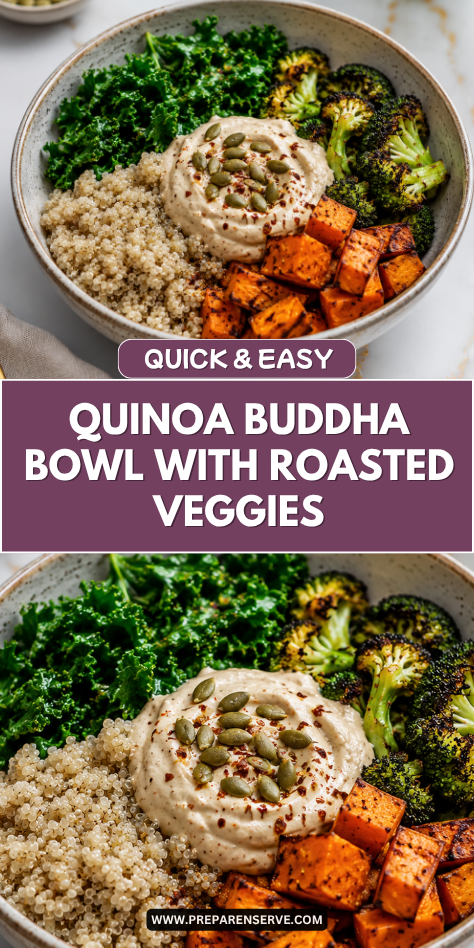
I make a Quinoa Buddha Bowl with Roasted Veggies when I want a meal that feels fresh, colorful, and filling without being complicated. It is the kind of bowl that looks bright on the table but still feels calm and easy to put together.
This recipe is one I like for lunches, simple dinners, and meal prep days. The quinoa gives the bowl a hearty base, the roasted vegetables add warm flavor, and the dressing ties everything together with a creamy, tangy finish.
I also love how flexible this bowl is for families. Everyone can build their own serving with the vegetables, toppings, and dressing they enjoy most, which makes it a helpful recipe for different tastes at the same table.
Why You’ll Love This Recipe
Quinoa Buddha Bowl with Roasted Veggies is colorful, nourishing, and easy to make with everyday ingredients. The roasted vegetables become tender and lightly caramelized, while the quinoa adds a fluffy, nutty base that makes the bowl satisfying.
This recipe is also great for meal prep because the parts store well on their own. You can cook the quinoa, roast the vegetables, and make the dressing ahead, then build bowls during the week.
It is family-friendly because it can be served warm, cold, or at room temperature. Kids can choose milder toppings, while adults can add extra herbs, seeds, avocado, or a little spice.
Serves: 4 people
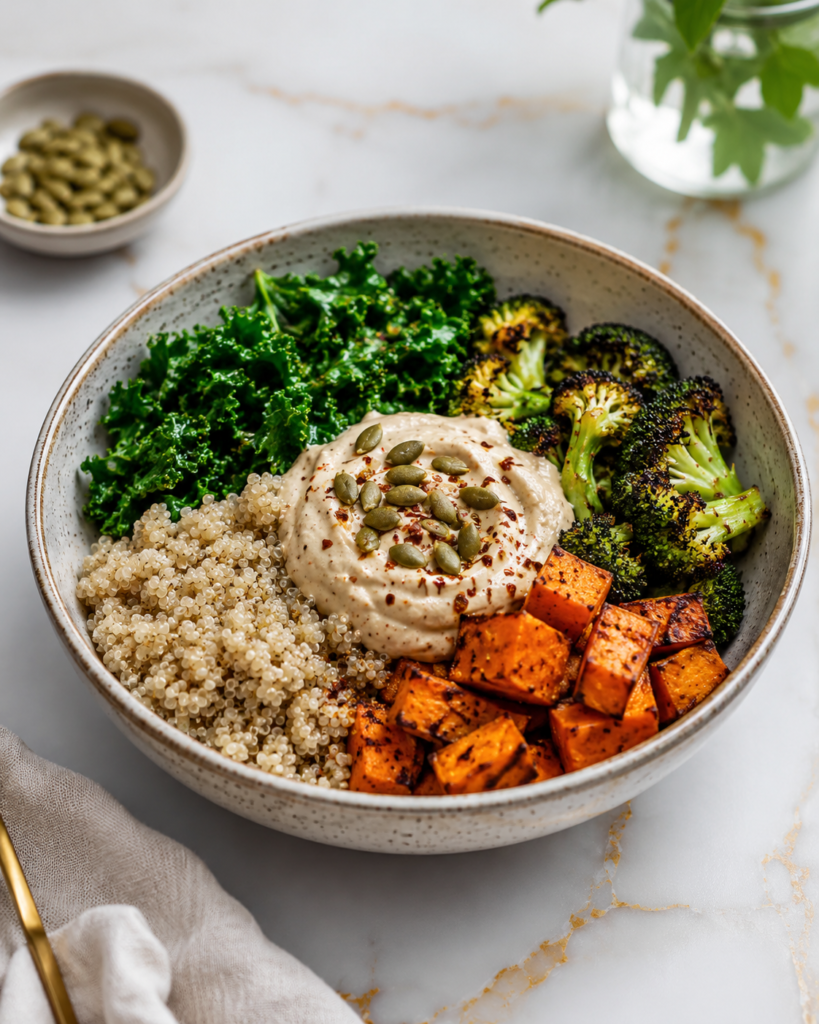
This recipe serves 4 people as a main dish. Each bowl has a generous scoop of quinoa, a mix of roasted vegetables, fresh toppings, and a creamy dressing, so it feels complete and filling.
If you are serving smaller appetites, this recipe may stretch to 5 servings with fruit or soup on the side. For bigger appetites, add chickpeas, grilled chicken, tofu, or an extra spoonful of dressing to make the bowls heartier.
Ingredients You’ll Need
For the Quinoa
- 1 cup uncooked quinoa
- 2 cups low-sodium vegetable broth or water
- 1/4 teaspoon kosher salt
- 1 teaspoon olive oil
For the Roasted Vegetables
- 2 cups sweet potato, peeled and cut into 1/2-inch cubes
- 2 cups broccoli florets
- 1 red bell pepper, sliced
- 1 zucchini, sliced into half-moons
- 1 small red onion, cut into wedges
- 1 cup cauliflower florets
- 2 tablespoons olive oil
- 1 teaspoon garlic powder
- 1 teaspoon smoked paprika
- 1/2 teaspoon ground cumin
- 1/2 teaspoon kosher salt
- 1/4 teaspoon black pepper
For the Creamy Lemon Tahini Dressing
- 1/4 cup tahini
- 2 tablespoons fresh lemon juice
- 1 tablespoon maple syrup or honey
- 1 tablespoon olive oil
- 1 small garlic clove, finely minced
- 1/4 teaspoon kosher salt
- 1/8 teaspoon black pepper
- 2 to 4 tablespoons warm water, as needed
For the Bowl Toppings
- 2 cups baby spinach or mixed greens
- 1 avocado, sliced
- 1/2 cup canned chickpeas, drained and rinsed
- 1/4 cup pumpkin seeds or sunflower seeds
- 1/4 cup crumbled feta cheese, optional
- 2 tablespoons chopped fresh parsley or cilantro
- Lemon wedges, for serving
Pro Tips
Rinse the quinoa before cooking it. This helps remove its natural coating, which can taste a little bitter if left on.
Let the quinoa rest after cooking before fluffing it with a fork. This helps the grains finish steaming and keeps the texture light instead of wet.
Cut the vegetables into similar sizes so they roast evenly. Sweet potatoes should be a little smaller than softer vegetables because they take longer to cook.
Do not crowd the sheet pan. If the vegetables are too close together, they will steam instead of roasting and will not get those lightly browned edges.
Add delicate toppings like avocado, herbs, seeds, and feta right before serving. This keeps the bowl fresh and gives each bite a better mix of textures.
Thin the tahini dressing slowly with warm water. Tahini can thicken at first when liquid is added, but it smooths out as you keep whisking.
Tools You’ll Need
- Medium saucepan with lid
- Large rimmed sheet pan
- Parchment paper, optional
- Cutting board
- Sharp knife
- Measuring cups
- Measuring spoons
- Fine mesh strainer
- Mixing bowl
- Small bowl or jar for dressing
- Whisk or fork
- Spatula
- Serving bowls
- Airtight containers for meal prep
Substitutions and Variations
Use a Different Grain
Brown rice, farro, couscous, or cauliflower rice can be used instead of quinoa. Keep the roasted vegetables and dressing the same so the bowl still feels balanced and familiar.
Make It Vegan
Use maple syrup instead of honey and skip the feta cheese. The tahini dressing, quinoa, chickpeas, vegetables, seeds, and avocado still make the bowl creamy, hearty, and satisfying.
Add More Protein
Add grilled chicken, baked tofu, salmon, hard-boiled eggs, or extra chickpeas. This makes the bowl more filling while keeping the roasted vegetable base the main focus.
Change the Vegetables
Use Brussels sprouts, carrots, mushrooms, asparagus, butternut squash, or green beans in place of some of the listed vegetables. Choose vegetables that roast well and cut firmer ones smaller so everything cooks evenly.
Add More Crunch
Top the bowls with toasted almonds, walnuts, crispy chickpeas, sesame seeds, or crushed pita chips. These toppings add texture and make each bite more interesting without changing the core recipe.
Make Ahead Tips
Quinoa Buddha Bowl with Roasted Veggies is a great recipe to make ahead because each part stores well on its own. You can cook the quinoa up to 4 days in advance and keep it in an airtight container in the refrigerator.
The roasted vegetables can also be made ahead and stored for quick lunches or dinners. Let them cool completely before storing so they do not steam in the container and become too soft.
The creamy lemon tahini dressing can be made up to 5 days ahead. Store it in a jar with a lid, then stir in a splash of warm water if it thickens in the refrigerator.
For meal prep, keep the greens, avocado, seeds, feta, and herbs separate until serving. This keeps the bowls fresh, colorful, and full of texture when you are ready to eat.
Instructions
Step 1: Rinse the Quinoa
Place 1 cup uncooked quinoa in a fine mesh strainer. Rinse it under cool running water for about 30 seconds, rubbing it gently with your fingers.
This helps remove the natural coating that can make quinoa taste bitter. Let the quinoa drain well before cooking.
Step 2: Cook the Quinoa
Add the rinsed quinoa to a medium saucepan with 2 cups low-sodium vegetable broth or water, 1/4 teaspoon kosher salt, and 1 teaspoon olive oil. Bring it to a boil over medium-high heat.
Reduce the heat to low, cover, and simmer for 15 minutes, or until the liquid is absorbed. Remove the pan from the heat and let it sit covered for 5 minutes before fluffing with a fork.
Step 3: Preheat the Oven
Preheat the oven to 425°F. Line a large rimmed sheet pan with parchment paper if you want easier cleanup.
A hot oven helps the vegetables roast instead of steam. This gives them tender centers and lightly browned edges.
Step 4: Season the Vegetables
Place the sweet potato cubes, broccoli florets, red bell pepper slices, zucchini half-moons, red onion wedges, and cauliflower florets on the sheet pan. Drizzle with 2 tablespoons olive oil.
Sprinkle with 1 teaspoon garlic powder, 1 teaspoon smoked paprika, 1/2 teaspoon ground cumin, 1/2 teaspoon kosher salt, and 1/4 teaspoon black pepper. Toss until the vegetables are evenly coated.
Step 5: Roast the Vegetables
Spread the vegetables into a single layer on the sheet pan. Roast for 25 to 30 minutes, stirring halfway through, until the sweet potatoes are tender and the edges of the vegetables are lightly browned.
If the pan feels crowded, use two sheet pans. Giving the vegetables space helps them roast better and keeps the texture from turning soggy.
Step 6: Make the Tahini Dressing
In a small bowl or jar, whisk together 1/4 cup tahini, 2 tablespoons fresh lemon juice, 1 tablespoon maple syrup or honey, 1 tablespoon olive oil, 1 finely minced small garlic clove, 1/4 teaspoon kosher salt, and 1/8 teaspoon black pepper.
Add warm water, 1 tablespoon at a time, until the dressing becomes smooth and pourable. Taste and adjust with a little more lemon juice, salt, or maple syrup if needed.
Step 7: Prepare the Toppings
Wash and dry 2 cups baby spinach or mixed greens. Slice 1 avocado, drain and rinse 1/2 cup canned chickpeas, and chop the fresh parsley or cilantro.
Set out the pumpkin seeds or sunflower seeds, feta cheese if using, and lemon wedges. Having the toppings ready makes assembly quick and easy.
Step 8: Assemble the Bowls
Divide the cooked quinoa among 4 serving bowls. Add a handful of baby spinach or mixed greens to each bowl.
Top with the roasted vegetables, chickpeas, sliced avocado, pumpkin seeds or sunflower seeds, feta cheese if using, and chopped parsley or cilantro. Drizzle with the creamy lemon tahini dressing.
Step 9: Serve and Enjoy
Serve the bowls warm, at room temperature, or chilled. Add a squeeze of fresh lemon over the top right before eating for a brighter flavor.
If serving family-style, place the quinoa, vegetables, toppings, and dressing in separate bowls. This lets everyone build a bowl with the ingredients they like best.
Serving Suggestions
Quinoa Buddha Bowl with Roasted Veggies is filling enough to serve as a complete lunch or dinner. The quinoa, roasted vegetables, greens, chickpeas, avocado, seeds, and dressing give the bowl a nice mix of flavor and texture.
For a heartier meal, serve it with grilled chicken, baked tofu, salmon, or hard-boiled eggs. These add extra protein while keeping the bowl fresh and balanced.
You can also serve the bowl with warm pita, naan, or a small cup of soup. This works well for family dinners when some people want something a little more filling on the side.
For kids, keep the dressing on the side and let them dip the vegetables or drizzle a small amount over their bowl. This makes the meal feel more familiar and less mixed together.
If you want a lighter plate, serve the roasted vegetables over extra greens with a smaller scoop of quinoa. The tahini dressing still makes it creamy and satisfying.
For meal prep lunches, pack the quinoa and roasted vegetables together, then keep the greens, avocado, seeds, and dressing separate. Add the fresh toppings right before eating for the best texture.
Leftovers and Storage
Store leftover quinoa in an airtight container in the refrigerator for up to 4 days. Store the roasted vegetables separately if possible so each part keeps its best texture.
The roasted vegetables will keep for up to 4 days in the refrigerator. Reheat them in a 375°F oven, air fryer, or skillet if you want the edges to crisp back up a little.
The tahini dressing can be stored in a sealed jar for up to 5 days. It may thicken as it chills, so stir in a small splash of warm water before drizzling.
Keep fresh greens, avocado, herbs, seeds, and feta separate until serving. Greens can wilt, avocado can brown, and seeds can lose crunch if mixed too early.
Freezing the full bowl is not recommended because the fresh toppings and dressing do not thaw well. You can freeze cooked quinoa on its own for up to 2 months, then thaw and use it for quick bowls later.
Nutrition and Benefits
- Good source of plant-based protein: Quinoa and chickpeas add protein, which helps make the bowl filling. You can add tofu, eggs, chicken, or salmon if you want even more protein.
- Full of colorful vegetables: Sweet potato, broccoli, bell pepper, zucchini, red onion, cauliflower, and greens add color and variety. This makes the bowl feel fresh, hearty, and balanced.
- Rich in fiber: Quinoa, vegetables, chickpeas, seeds, and avocado all bring fiber to the meal. Fiber helps the bowl feel satisfying and supports a steady, wholesome meal.
- Healthy fats from toppings: Tahini, olive oil, avocado, and seeds add creamy texture and richness. These ingredients help the bowl feel comforting without needing a heavy sauce.
- Great for meal prep: The quinoa, vegetables, and dressing can all be made ahead. Keeping the toppings separate makes it easy to build fresh bowls throughout the week.
Recipe FAQ
Can I use leftover quinoa?
Yes, leftover quinoa works very well in this recipe. Warm it slightly if you want a cozy bowl, or use it cold for a meal prep lunch. Fluff it with a fork before serving so it does not clump together.
Can I make this bowl vegan?
Yes, this bowl is easy to make vegan. Use maple syrup instead of honey in the dressing and skip the feta cheese. You can add extra avocado, chickpeas, seeds, or tofu to keep it hearty.
What vegetables roast best for this bowl?
Sweet potatoes, broccoli, cauliflower, bell peppers, zucchini, red onion, carrots, Brussels sprouts, and mushrooms all work well. Cut firmer vegetables smaller so they cook at the same time as softer vegetables. Try to keep everything in a single layer on the pan.
Can I serve this bowl cold?
Yes, this bowl tastes good warm, cold, or at room temperature. For cold bowls, let the roasted vegetables cool before assembling. Add the dressing and avocado right before serving for the freshest texture.
How do I keep the dressing from getting too thick?
Tahini dressing often thickens as it sits, especially in the refrigerator. Stir in warm water, 1 tablespoon at a time, until it becomes smooth again. Whisk well because tahini can look grainy before it turns creamy.
Can I add meat to this Buddha bowl?
Yes, grilled chicken, turkey, salmon, or shrimp can be added if your family wants a heartier meal. Keep the quinoa, roasted vegetables, and tahini dressing the same. The bowl will still taste fresh and balanced.
How do I keep meal prep bowls fresh?
Store the quinoa, roasted vegetables, dressing, and fresh toppings separately. Add greens, avocado, herbs, seeds, and dressing right before eating. This keeps the bowl from getting soggy and helps the toppings stay bright.
A Colorful Bowl for Fresh, Easy Meals
Quinoa Buddha Bowl with Roasted Veggies is a simple meal that feels bright, filling, and dependable. The fluffy quinoa, warm roasted vegetables, creamy tahini dressing, and fresh toppings make each bowl comforting without feeling heavy.
I love keeping this recipe ready for lunches, easy dinners, and meal prep days. It is flexible enough for the whole family, easy to adjust with favorite toppings, and worth making again whenever you want a fresh homemade bowl.