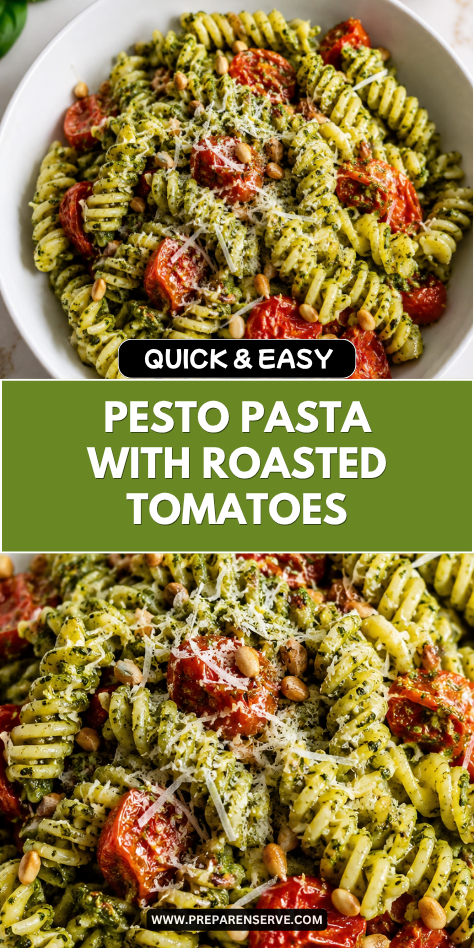
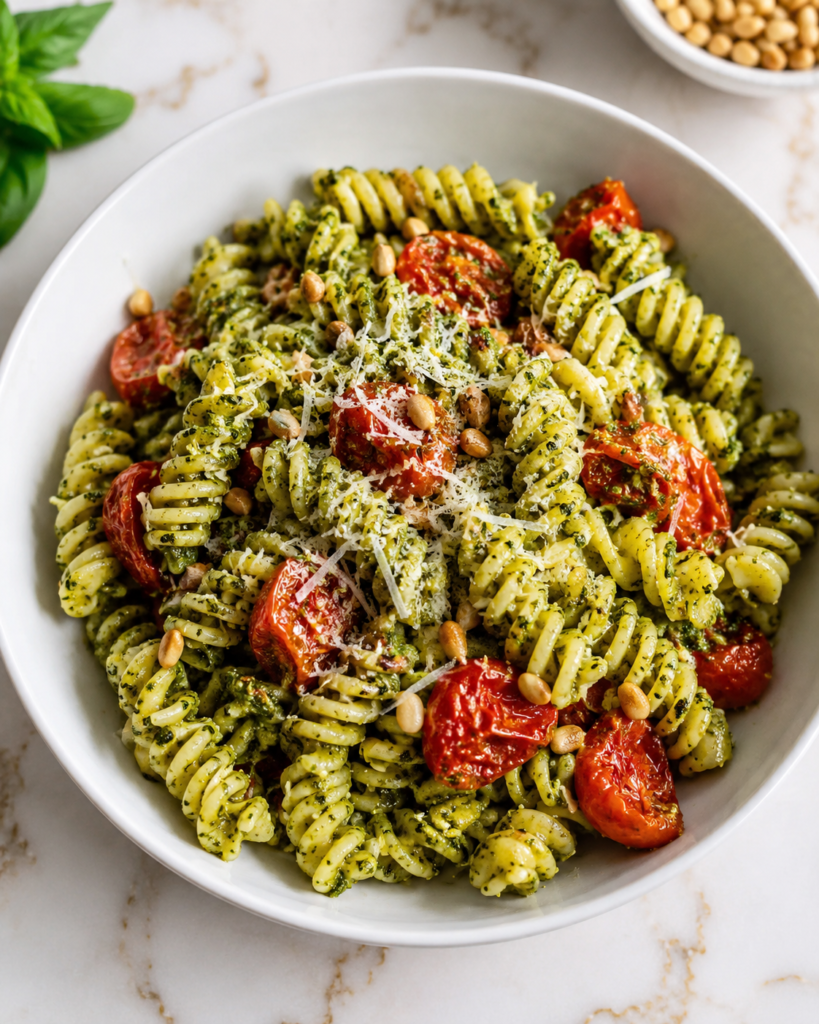
I make Pesto Pasta with Roasted Tomatoes when I want a meal that feels fresh, cozy, and easy at the same time. The pasta is tossed with bright basil pesto, and the roasted tomatoes add sweet, juicy flavor that makes the whole dish taste homemade.
I love this recipe because it works for busy nights but still feels special enough for a weekend lunch. The tomatoes roast while the pasta cooks, and everything comes together in a simple bowl with plenty of color, flavor, and comfort.
Why You’ll Love This Recipe
Pesto Pasta with Roasted Tomatoes is simple, flavorful, and full of fresh ingredients. The pesto gives the pasta a rich basil and garlic taste, while the roasted tomatoes become soft, sweet, and a little caramelized in the oven.
This recipe is also very family-friendly because it can be served warm, room temperature, or chilled. Kids often enjoy the pasta and Parmesan, while adults can add extra basil, red pepper flakes, or toasted nuts for more flavor.
It is a flexible meal that works for dinner, lunch, potlucks, or meal prep. You can keep it vegetarian, add chicken or shrimp, or serve it as a side dish with grilled meat or roasted vegetables.
Serves: 4 people
This recipe serves 4 people as a main dish with hearty portions of pasta, pesto, and roasted tomatoes. If you serve it with bread, salad, or protein on the side, it can stretch a little further.
For smaller appetites, this recipe can serve 5 to 6 people as a side dish. It is also easy to double for a gathering, but use a large bowl so the pasta and pesto can be tossed evenly.
Ingredients You’ll Need
For the roasted tomatoes:
- 2 cups cherry tomatoes or grape tomatoes, halved
- 1 tablespoon olive oil
- 1 garlic clove, minced
- 1/2 teaspoon kosher salt
- 1/4 teaspoon black pepper
- 1/4 teaspoon dried oregano
- 1/4 teaspoon sugar, optional
For the pasta:
- 12 ounces pasta, such as penne, rotini, fusilli, or spaghetti
- 1/2 teaspoon kosher salt, plus more for pasta water
- 3/4 cup basil pesto, homemade or store-bought
- 1/4 cup reserved pasta water, as needed
- 1 tablespoon fresh lemon juice
- 1/2 cup grated Parmesan cheese, plus more for serving
- 1/4 teaspoon black pepper
- 1/4 teaspoon red pepper flakes, optional
- 1/4 cup toasted pine nuts or chopped walnuts, optional
- 1/4 cup fresh basil leaves, torn
Optional add-ins:
- 1 cup cooked chicken, sliced or diced
- 1 cup cooked shrimp
- 1 cup mozzarella pearls
- 2 cups baby spinach
- 1 cup roasted zucchini or bell peppers
Pro Tips
Roast the tomatoes cut-side up so their juices concentrate instead of spilling too much onto the pan. This helps them become sweet, soft, and full of flavor.
Use a pasta shape that holds pesto well. Short shapes like penne, rotini, and fusilli are great because the pesto clings to the ridges and curves.
Save some pasta water before draining. The starchy water helps loosen the pesto and makes it coat the pasta in a smooth, glossy way.
Do not cook the pesto over high heat. Pesto tastes best when tossed with warm pasta off the heat, so the basil stays fresh and the sauce does not turn oily.
Taste before serving and adjust with lemon, salt, or Parmesan. Pesto and Parmesan can vary in saltiness, so a final taste helps keep the dish balanced.
Add fresh basil at the end for the brightest flavor. It makes the pasta smell fresh and gives the finished bowl a simple homemade touch.
Tools You’ll Need
- Large pot
- Colander
- Large baking sheet
- Parchment paper
- Cutting board
- Sharp knife
- Measuring cups
- Measuring spoons
- Large mixing bowl
- Wooden spoon or tongs
- Cheese grater
- Citrus juicer, optional
- Small skillet, optional for toasting nuts
- Serving bowls or plates
Substitutions and Variations
Make It Gluten-Free
Use your favorite gluten-free pasta in place of regular pasta. Cook it just until tender and toss it gently, since gluten-free pasta can be more delicate.
Make It Dairy-Free
Use dairy-free pesto and skip the Parmesan, or use a dairy-free Parmesan-style topping. Add extra toasted nuts or a drizzle of olive oil to keep the pasta rich and satisfying.
Add Protein
Stir in cooked chicken, shrimp, salmon, white beans, or chickpeas. This turns the pasta into a heartier main dish while keeping the pesto and roasted tomatoes as the main flavors.
Change the Vegetables
Add roasted zucchini, bell peppers, mushrooms, asparagus, or baby spinach. Keep the vegetables simple so they support the pesto and tomatoes without taking over the dish.
Make It Creamier
Stir in a splash of heavy cream, a spoonful of ricotta, or mozzarella pearls. This gives the pasta a softer, richer texture while still keeping the fresh pesto flavor easy to taste.
Make Ahead Tips
Pesto Pasta with Roasted Tomatoes can be partly made ahead, which helps dinner come together faster. You can roast the tomatoes up to 2 days ahead and store them in an airtight container in the refrigerator.
The pesto can also be made or measured ahead of time. If using homemade pesto, keep it covered with a thin layer of olive oil on top to help preserve the bright green color.
You can cook the pasta ahead if you plan to serve this as a cold or room temperature pasta dish. Toss the drained pasta with a little olive oil, cool it fully, and store it in the refrigerator until you are ready to add the pesto and tomatoes.
For the best warm pasta, cook the noodles right before serving. Freshly cooked pasta holds the pesto better and helps the Parmesan melt gently into the sauce.
Instructions
Step 1: Preheat the Oven
Preheat the oven to 400°F. Line a large baking sheet with parchment paper for easy cleanup.
This temperature is hot enough to soften and sweeten the tomatoes without drying them out too quickly. Make sure the oven is fully heated before adding the pan.
Step 2: Prepare the Tomatoes
Place the halved cherry tomatoes or grape tomatoes on the prepared baking sheet. Add olive oil, minced garlic, kosher salt, black pepper, dried oregano, and sugar if using.
Toss gently until the tomatoes are lightly coated. Spread them out in a single layer, with the cut sides facing up when possible.
Step 3: Roast the Tomatoes
Roast the tomatoes for 20 to 25 minutes, or until they are soft, juicy, and slightly caramelized around the edges. They should look wrinkled but still moist.
If the tomatoes release a lot of juice, that is fine. Those juices can be spooned into the pasta for extra flavor.
Step 4: Cook the Pasta
While the tomatoes roast, bring a large pot of salted water to a boil. Add the pasta and cook according to the package directions until al dente.
Before draining, scoop out about 1/4 cup of pasta water and set it aside. Drain the pasta well, but do not rinse it if you are serving the dish warm.
Step 5: Toss Pasta with Pesto
Add the warm drained pasta to a large mixing bowl. Spoon the basil pesto over the pasta and toss gently with tongs or a large spoon.
Add reserved pasta water 1 tablespoon at a time until the pesto coats the pasta smoothly. The pasta should look glossy, not dry or oily.
Step 6: Add Lemon and Parmesan
Add the fresh lemon juice, grated Parmesan cheese, black pepper, and red pepper flakes if using. Toss again until everything is evenly combined.
Taste the pasta and adjust with more salt, lemon, or Parmesan if needed. Pesto can vary in flavor, so this small taste check helps the dish feel balanced.
Step 7: Fold in the Roasted Tomatoes
Add the roasted tomatoes and any pan juices to the pesto pasta. Gently fold them in so the tomatoes stay mostly whole.
The warm tomato juices will mix with the pesto and make the sauce taste sweeter and richer. Try not to stir too hard, or the tomatoes may break down too much.
Step 8: Add Optional Mix-Ins
If using cooked chicken, shrimp, mozzarella pearls, baby spinach, or roasted vegetables, fold them in now. Warm pasta will slightly soften spinach and mozzarella without needing more cooking.
Add only what fits the meal you want to serve. The pesto and roasted tomatoes should still be the main flavors in the bowl.
Step 9: Finish and Serve
Sprinkle the pasta with toasted pine nuts or chopped walnuts if using. Add torn fresh basil leaves and extra Parmesan on top.
Serve the pasta warm, at room temperature, or chilled. It should taste fresh, savory, and lightly sweet from the roasted tomatoes.
Serving Suggestions
Pesto Pasta with Roasted Tomatoes makes a simple main dish for a busy family dinner. It is filling enough on its own, especially with Parmesan, nuts, or an added protein.
Serve it with garlic bread or warm focaccia when you want the meal to feel more comforting. The bread is perfect for catching any pesto and tomato juices left on the plate.
A crisp green salad pairs nicely with the rich pesto. Use a light lemon or balsamic dressing so the salad feels fresh beside the pasta.
For extra protein, serve the pasta with grilled chicken, baked salmon, shrimp, or white beans. These options make the dish heartier without covering up the basil and tomato flavor.
For kids, serve the pasta with extra Parmesan and keep the red pepper flakes on the side. You can also chop the roasted tomatoes smaller if that makes the texture easier for them to enjoy.
This pasta is also great for picnics, potlucks, and lunch containers. It holds up well at room temperature for a short time and still tastes good after chilling.
Leftovers and Storage
Leftover Pesto Pasta with Roasted Tomatoes should be stored in an airtight container in the refrigerator. It keeps well for up to 4 days, especially if no seafood has been added.
The pasta may absorb some of the pesto as it sits. Before serving leftovers, stir in a small spoonful of pesto, a drizzle of olive oil, or a splash of water to loosen it.
To reheat, warm the pasta gently in a skillet over low heat. Add a small splash of water to help the pesto coat the pasta again without becoming oily.
You can also microwave leftovers in short bursts, stirring between each one. Warm it just until heated through, since pesto tastes best when it is not overheated.
Freezing is not recommended for this pasta. The pesto can darken, the tomatoes can become watery, and the pasta may soften after thawing.
Nutrition and Benefits
- Pesto brings fresh herb flavor. Basil pesto adds a bright mix of herbs, garlic, olive oil, nuts, and cheese. It gives the pasta a rich taste without needing a heavy sauce.
- Roasted tomatoes add natural sweetness. Roasting tomatoes deepens their flavor and makes them juicy and tender. They balance the pesto with a sweet, slightly tangy bite.
- Pasta makes the meal satisfying. Pasta gives the dish a filling base that works well for dinner, lunch, or meal prep. Short pasta shapes also hold the pesto nicely.
- Parmesan adds savory depth. Parmesan gives the pasta a salty, nutty finish. A little goes a long way in making the dish taste complete.
- Optional add-ins make it flexible. Chicken, shrimp, beans, spinach, or mozzarella can make the pasta heartier. This helps the recipe fit different family meals and appetites.
Recipe FAQ
Can I use store-bought pesto?
Yes, store-bought pesto works very well and keeps this recipe quick. Choose one with a flavor you enjoy because it is the main sauce for the pasta. If it tastes too thick, loosen it with a little reserved pasta water. You can brighten it with lemon juice and extra Parmesan.
What pasta shape is best for this recipe?
Short pasta shapes like penne, rotini, fusilli, and farfalle work especially well. They hold the pesto and roasted tomato juices in their ridges and curves. Spaghetti or linguine can also be used if you prefer long noodles. Just toss gently so the pesto coats evenly.
Can I serve this pasta cold?
Yes, this pasta can be served cold or at room temperature. Let the pasta cool before adding delicate toppings like fresh basil or mozzarella pearls. If it tastes dry after chilling, stir in a little pesto, olive oil, or lemon juice. It makes a great lunch or potluck dish.
How do I keep pesto from turning oily?
Avoid cooking pesto over high heat. Toss it with warm pasta off the heat, then loosen it with reserved pasta water as needed. Too much heat can cause the oil to separate from the herbs and cheese. Gentle mixing keeps the sauce smooth and fresh.
Can I add chicken to this recipe?
Yes, cooked chicken is a great addition. Stir in sliced grilled chicken, diced baked chicken, or rotisserie chicken when you combine the pasta and roasted tomatoes. It makes the dish more filling for dinner or meal prep. Add a little extra pesto if the pasta seems dry.
Can I use sun-dried tomatoes instead of roasted tomatoes?
Yes, sun-dried tomatoes can be used for a stronger, sweeter flavor. Slice them thinly and add them directly to the pasta. If they are packed in oil, drain them lightly first. The dish will taste more intense than with fresh roasted tomatoes.
Why is my pasta dry after storing?
Pasta absorbs sauce as it sits in the refrigerator. This is normal with pesto pasta. Stir in extra pesto, olive oil, lemon juice, or a splash of water before serving. Add a little at a time until the pasta tastes fresh and glossy again.
A Fresh Pesto Pasta Worth Repeating
Pesto Pasta with Roasted Tomatoes is simple, colorful, and comforting without feeling heavy.
The basil pesto, tender pasta, sweet roasted tomatoes, and Parmesan come together in a way that feels fresh and dependable.
It is worth making again because it works for quick dinners, easy lunches, potlucks, and meal prep.
With flexible add-ins and family-friendly flavor, this pasta brings bright homemade comfort to the table with very little fuss.