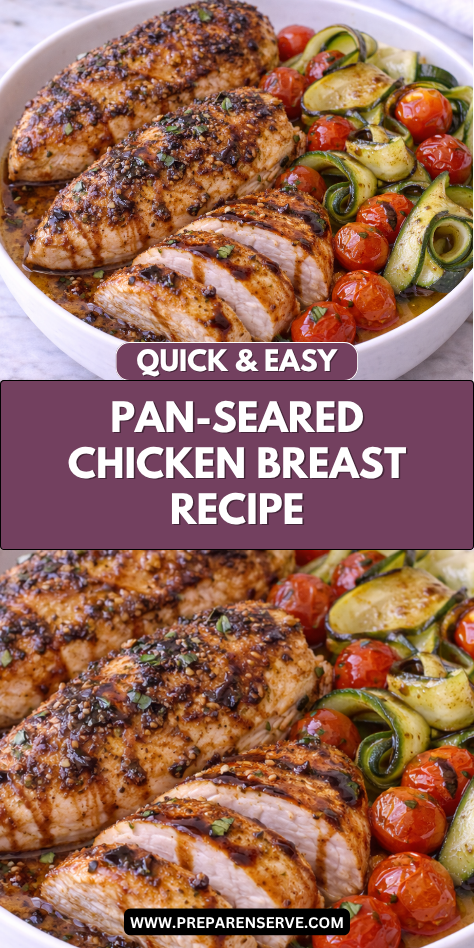
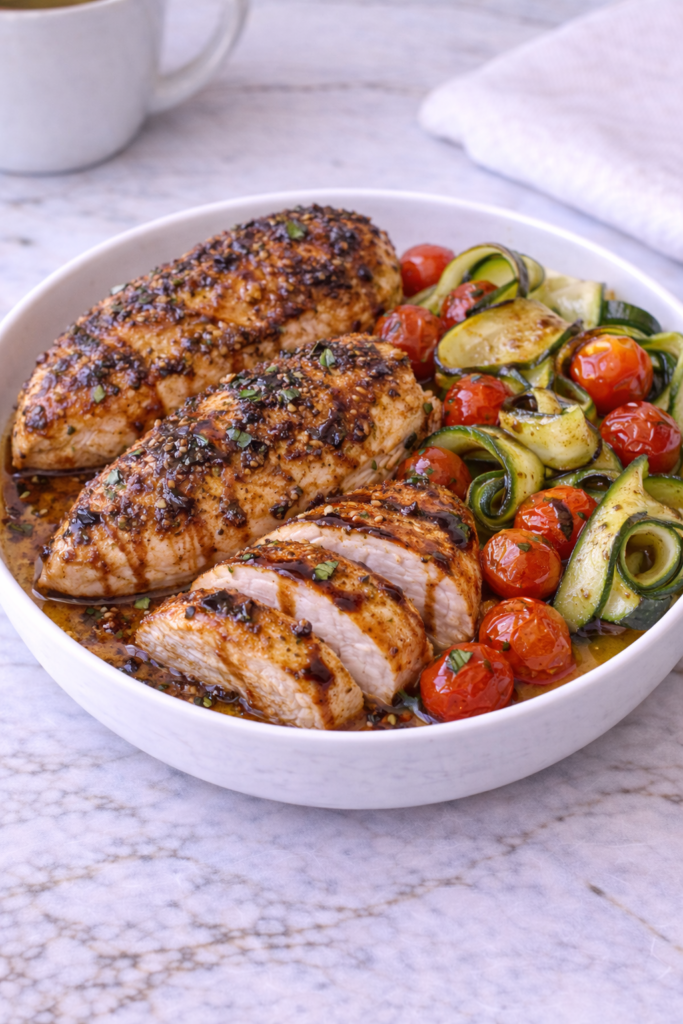
Pan-seared chicken breast is a quick, flavorful, and versatile way to enjoy tender, juicy chicken. Cooking the chicken on the stovetop allows you to achieve a beautifully golden, slightly crispy exterior while keeping the inside moist and flavorful.
In my kitchen, this method has become a go-to for weeknight dinners because it requires minimal ingredients, little prep time, and produces restaurant-quality results every time.
What makes pan-seared chicken breast so appealing is its versatility. It works well as a main dish served with vegetables, grains, or potatoes, and it can also be sliced and used in salads, sandwiches, pasta dishes, or wraps.
By adjusting the seasoning or adding a simple pan sauce, you can create a variety of flavor profiles—from classic garlic and herb to lemon butter or spicy paprika. This makes pan-seared chicken breast a flexible option for multiple meals and dietary preferences.
Why You’ll Love This Recipe
Pan-seared chicken breast is fast, flavorful, and dependable. The high heat of the pan locks in juices while forming a golden crust, resulting in perfectly cooked chicken that’s tender inside. It requires just a few simple ingredients, yet delivers a rich, satisfying flavor that appeals to both adults and children.
Families love this recipe because it’s quick to make, kid-friendly, and customizable. Children enjoy the mild, savory taste, while adults can experiment with herbs, spices, or citrus to elevate the dish.
This method is also ideal for meal prep because the chicken reheats well and maintains its moist, tender texture, making it perfect for salads, wraps, or grain bowls.
Another reason to love pan-seared chicken breast is its reliability. With proper seasoning, pan temperature, and resting time, you can achieve consistent results every time. This makes it an excellent choice for busy weeknights, casual family dinners, or when preparing meals in advance.
Serves: 4 people
This recipe serves four people as a main course. The portion size is ideal for a family meal or small gathering. Leftovers can be stored in the refrigerator for up to three days and are perfect for meal prep, quick lunches, or adding to various dishes like salads, pasta, and sandwiches.
Ingredients You’ll Need
Chicken
- 4 boneless, skinless chicken breasts (6–8 ounces each)
- Optional: 1 teaspoon kosher salt for brining
Seasoning and Flavoring
- 2 tablespoons olive oil or butter
- 1 teaspoon garlic powder
- 1 teaspoon onion powder
- 1 teaspoon paprika (smoked or sweet)
- 1/2 teaspoon black pepper
- Optional: 1 teaspoon dried herbs such as thyme, rosemary, or Italian seasoning
- Optional: 1 tablespoon lemon juice or zest for brightness
Optional Garnishes
- Fresh parsley, chopped
- Lemon wedges for serving
Pro Tips
Brine chicken for 15–30 minutes to retain moisture and enhance tenderness.
Pat the chicken dry before seasoning to ensure even browning and prevent steaming.
Use a heavy-bottomed skillet, such as cast iron or stainless steel, for even heat distribution and a good sear.
Do not overcrowd the pan; cook chicken in a single layer to ensure proper browning and even cooking.
Monitor internal temperature using a meat thermometer—chicken is done at 165°F (74°C) at the thickest part.
Allow chicken to rest for 5–10 minutes after cooking to redistribute juices for maximum tenderness.
Optional: Add fresh herbs, garlic, or lemon juice toward the end of cooking to enhance flavor and aroma.
Tools You’ll Need
- Heavy-bottomed skillet or cast iron pan
- Meat thermometer for precise cooking
- Sharp knife and cutting board
- Measuring spoons and cups
- Tongs or spatula for flipping chicken
Substitutions and Variations
Use boneless skinless chicken thighs for a juicier, slightly richer flavor.
Replace olive oil with butter, ghee, or avocado oil for different flavor profiles.
Experiment with different seasonings: Cajun, smoked paprika, chili powder, Italian herbs, or garlic blends.
Add a splash of white wine, chicken broth, or lemon juice to the pan at the end for a simple pan sauce.
For a creamy variation, top chicken with garlic herb butter, cream, or a light cheese sauce just before serving.
Pan-seared chicken breast is a versatile, flavorful, and fast-cooking protein option. Its golden exterior, juicy interior, and customizable seasoning make it perfect for weeknight dinners, meal prep, or special occasions.
Minimal prep and simple cooking techniques yield restaurant-quality results that can be paired with countless sides or incorporated into various dishes.
Make Ahead Tips
Pan-seared chicken breast is a great recipe to prepare ahead of time, making it ideal for weeknight dinners, meal prep, or entertaining. One of the easiest ways to ensure moist, tender chicken is to brine it in salted water for 15–30 minutes prior to cooking.
Brining enhances juiciness and flavor, ensuring the chicken remains tender during searing. After brining, drain and pat the chicken dry before seasoning, or store it in the refrigerator until ready to cook.
The seasoning mix can also be prepared in advance. Combine garlic powder, onion powder, paprika, black pepper, and optional dried herbs in a small bowl or jar. Store in an airtight container until ready to use.
When cooking, brush the chicken with olive oil or melted butter and sprinkle the seasoning evenly over both sides. Having the seasonings ready saves time and makes weeknight cooking quicker and easier.
For meal prep, pan-seared chicken can be stored in an airtight container in the refrigerator for up to three days. Keeping the chicken whole rather than slicing preserves moisture. Reheat gently in a skillet over low heat, in the oven, or in the microwave with a splash of water or broth to maintain tenderness.
If you want to assemble the dish entirely ahead of time, season the chicken with the spice mix and refrigerate it until ready to cook. Cooking it just before serving allows the exterior to form a golden crust while keeping the meat juicy inside.
Optional garnishes, such as fresh herbs or lemon wedges, can be added just before serving to enhance freshness, flavor, and visual appeal.
Leftover pan-seared chicken is highly versatile. Slice or dice it for salads, wraps, sandwiches, grain bowls, pasta dishes, stir-fries, or tacos. Its mild, flavorful profile and tender texture make it a reliable protein for a wide range of meals.
Instructions
Step 1: Prepare the Chicken
Trim any excess fat or tendons from the chicken breasts. Pat them dry with paper towels to remove moisture, which helps ensure even browning and prevents steaming in the pan. Optional: Brine the chicken for 15–30 minutes to enhance juiciness.
Step 2: Season the Chicken
Brush the chicken breasts lightly with olive oil or melted butter to help the seasonings adhere and to promote a golden exterior. In a small bowl, combine garlic powder, onion powder, paprika, black pepper, and optional dried herbs such as thyme, rosemary, or Italian seasoning.
Sprinkle the seasoning mixture evenly over both sides of each chicken breast. Optional: add lemon zest or a splash of lemon juice for a fresh, bright note.
Step 3: Heat the Pan
Use a heavy-bottomed skillet or cast iron pan for even heat distribution and the best sear. Preheat the skillet over medium-high heat for several minutes. Add a small amount of olive oil or butter to coat the bottom of the pan. Ensure the pan is hot before adding the chicken to get a golden crust without sticking.
Step 4: Sear the Chicken
Place the chicken breasts in the hot skillet in a single layer without crowding the pan. Sear for 5–7 minutes on the first side without moving them. This allows the chicken to develop a golden, flavorful crust. Flip the chicken and cook for an additional 5–7 minutes on the other side, adjusting time for thickness.
Check the internal temperature using a meat thermometer—it should reach 165°F (74°C) at the thickest part to ensure it is fully cooked and safe to eat. Optional: add fresh herbs, garlic cloves, or a splash of butter to the pan during the last few minutes of cooking for extra flavor and aroma.
Step 5: Rest the Chicken
Remove the chicken from the skillet and let it rest for 5–10 minutes. Resting allows the juices to redistribute throughout the meat, keeping it tender and juicy. Avoid slicing immediately, as this can cause the juices to escape.
Step 6: Slice or Serve Whole
Serve chicken breasts whole for a classic presentation, or slice against the grain for salads, sandwiches, wraps, or grain bowls. Slicing against the grain ensures the chicken remains tender. Optional: drizzle with pan juices, melted butter, or a light sauce to enhance flavor.
Step 7: Pair and Serve
Pan-seared chicken breast pairs beautifully with roasted or steamed vegetables, mashed or roasted potatoes, rice, quinoa, or fresh salads. Its mild flavor and tender texture make it compatible with various cuisines, from Mediterranean to Asian-inspired dishes.
Serving Suggestions
Pan-seared chicken breast is ideal for a family dinner, paired with roasted vegetables and a grain like rice or quinoa.
Slice and serve on top of salads, pasta dishes, or grain bowls for a quick and nutritious meal.
Use leftover chicken in sandwiches, wraps, tacos, or stir-fries for easy lunches or dinners.
Add a drizzle of olive oil, pan juices, or a squeeze of lemon for added flavor.
Garnish with fresh herbs or a sprinkle of paprika to make the dish visually appealing.
Pan-seared chicken breast is a quick, flavorful, and versatile dish. Its golden exterior and juicy interior make it perfect for weeknight dinners, meal prep, or family meals.
With simple seasoning and proper technique, this recipe delivers consistently tender, delicious chicken that can be enjoyed in a wide variety of meals.
Leftovers and Storage
Pan-seared chicken breast is best enjoyed fresh, but leftovers can be safely stored and remain delicious for later meals. Transfer any uneaten chicken to an airtight container and refrigerate promptly. Stored properly, cooked chicken breasts will remain fresh for up to three days.
To preserve moisture, it’s best to store the chicken whole rather than slicing it, as cutting can cause the juices to escape, resulting in drier meat.
When storing alongside side dishes or sauces, keep the chicken separate to avoid sogginess or flavor dilution. Reheating should be done gently: in a skillet over low heat, in the oven at low temperature, or in the microwave with a splash of water or broth.
Avoid high heat, which can dry out the chicken. For added richness and flavor, drizzle with a little olive oil, melted butter, or leftover pan juices during reheating.
Pan-seared chicken breasts can also be frozen for longer-term storage. Wrap each breast tightly in plastic wrap or aluminum foil, then place in a freezer-safe container or bag. Frozen chicken can last up to two months.
To thaw, transfer it to the refrigerator overnight. Reheat gently in a skillet, oven, or microwave, adding optional fresh herbs, lemon juice, or a drizzle of olive oil to refresh flavor and appearance.
Leftover pan-seared chicken is versatile and can be repurposed in countless dishes. Slice or dice it for salads, sandwiches, wraps, or grain bowls.
Add it to pasta, stir-fries, tacos, or soups for a quick protein boost. The mild, savory flavor and tender texture make it suitable for a variety of cuisines, ensuring that leftovers remain enjoyable and adaptable.
Nutrition and Benefits
Pan-seared chicken breast is a lean, nutrient-dense source of protein, making it excellent for supporting muscle repair, satiety, and overall health. Each serving provides high-quality protein with minimal carbohydrates and moderate fat, depending on the amount of oil or butter used for cooking.
Chicken breast is rich in essential vitamins and minerals, including niacin (vitamin B3), vitamin B6, phosphorus, and selenium. Niacin and vitamin B6 help with energy metabolism and nervous system function, phosphorus supports healthy bones and teeth, and selenium functions as an antioxidant, contributing to immune support.
Using herbs, spices, and garlic adds flavor without adding calories, while optional lemon juice or zest provides vitamin C and a bright, fresh taste. Pan-seared chicken breast is low in carbohydrates and can easily fit into a variety of dietary plans, including low-carb, gluten-free, paleo, and high-protein diets.
Pairing the chicken with vegetables, whole grains, or salads creates a well-rounded meal that is both filling and healthful. Optional toppings such as a light garlic herb butter or a drizzle of pan juices enhance flavor without compromising nutritional value.
Recipe FAQ
Can I use frozen chicken breasts?
Yes, but they must be fully thawed before pan-searing. Cooking frozen chicken can result in uneven cooking, with dry edges and an undercooked center.
What temperature should I cook pan-seared chicken breast?
Cook over medium-high heat for 5–7 minutes per side for standard-sized breasts. Internal temperature should reach 165°F (74°C) for safe consumption.
How can I prevent the chicken from drying out?
Brine briefly before cooking, use a light coating of oil or butter, and allow the chicken to rest for 5–10 minutes after cooking. Avoid overcooking.
Can I change the flavor?
Absolutely. Try different herbs, spices, or marinades, such as paprika, Cajun seasoning, Italian herbs, garlic blends, or lemon juice.
Is pan-seared chicken breast healthy?
Yes. It’s lean, high in protein, and low in carbs. Using moderate oil or butter enhances flavor without making it unhealthy.
Can I make this ahead of time?
Yes. Brine or season the chicken in advance and cook when ready. Cooked chicken can also be stored in the refrigerator for three days or frozen for longer storage.
What can I do with leftovers?
Slice or dice for salads, wraps, sandwiches, grain bowls, pasta dishes, tacos, stir-fries, or soups. Its mild flavor and tender texture make it extremely versatile.
A Simple, Juicy Chicken You’ll Make Again and Again
Pan-seared chicken breast is tender, juicy, and flavorful.
The hot skillet creates a golden, lightly crisp exterior while keeping the interior moist and succulent.
Whether served with vegetables, grains, salads, or used in wraps and sandwiches, this chicken is a recipe you’ll return to again and again, delivering consistent, satisfying flavor and a reliable, easy-to-make main dish every time.