I started making this when I wanted homemade pizza on a weeknight without the planning or waiting that yeast dough requires.
No-yeast dough comes together in about ten minutes and still bakes into something with a good crispy edge and enough chew to feel like real pizza rather than a cracker.
I’ve worked out the ratio and the technique so yours handles easily and rolls out without fighting you.
I’ll walk you through the mixing, the shaping, and the baking so everything comes together quickly and delivers a satisfying result every time. It’s the kind of shortcut that doesn’t feel like one once the pizza is on the table.

Why You’ll Love This Recipe
This no-yeast pizza dough recipe is perfect when you want homemade pizza without waiting hours for dough to rise. It comes together quickly using simple pantry ingredients. The result is a tender, flavorful crust that’s ready to bake almost immediately.
Another reason this recipe is so appealing is how approachable it feels. There’s no yeast to activate and no long resting times to manage. Even if you’re new to baking, the steps are straightforward and forgiving.
Families love this recipe because it keeps pizza night stress-free. Kids can help mix and shape the dough without worrying about timing. This no-yeast pizza dough recipe makes homemade pizza feel easy and relaxed.
It’s also versatile enough to handle different toppings and styles. Whether you prefer a classic cheese pizza or something more creative, the dough adapts well. That flexibility makes it a dependable option for everyday meals.
Serves: 2 people
This recipe makes enough dough for two personal-sized pizzas or one medium pizza. The portions are filling without being overwhelming. If you need more, the recipe can be doubled easily.
Ingredients You’ll Need
Dough Ingredients
- 1 1/2 cups all-purpose flour
- 2 teaspoons baking powder
- 1/2 teaspoon salt
- 2 tablespoons olive oil
- 1/2 cup milk
Pro Tips
Mix the dry ingredients thoroughly before adding the liquids. This ensures the baking powder is evenly distributed. Even mixing helps the dough bake consistently.
Avoid overworking the dough once it comes together. Overmixing can make the crust tough. Stop mixing as soon as the dough is smooth.
If the dough feels sticky, add flour a tablespoon at a time. Small adjustments make a big difference. The dough should feel soft but manageable.
Let the dough rest for a few minutes before shaping. This allows the flour to hydrate fully. Resting makes the dough easier to roll or press out.
Roll or press the dough evenly to avoid thin spots. Uneven dough can bake inconsistently. A uniform thickness gives the best results.
Keep toppings light to prevent a soggy crust. This dough bakes best when not overloaded. Balanced toppings help it cook evenly.
Tools You’ll Need
- Mixing bowl
- Measuring cups
- Measuring spoons
- Wooden spoon or spatula
- Rolling pin or clean hands
Substitutions and Variations
Milk can be replaced with water or a non-dairy milk. Almond milk or oat milk work well. Choose an unsweetened variety for best flavor.
You can use whole wheat flour in place of up to half of the all-purpose flour. This adds a heartier texture. You may need a splash of extra liquid.
Olive oil can be swapped with another neutral oil if needed. Vegetable oil or avocado oil both work. The texture will remain similar.
For added flavor, mix herbs or garlic powder into the dough. Add them with the dry ingredients. This creates a seasoned crust without extra effort.
This dough can also be used for flatbreads or quick breadsticks. Adjust the shape and baking time as needed. It’s a versatile base beyond pizza.
Make Ahead Tips
No-yeast pizza dough is best used shortly after mixing, but a small amount of advance prep is still possible. You can mix the dry ingredients ahead of time and store them in an airtight container at room temperature. This makes the dough come together even faster when you’re ready to cook.
If needed, the fully mixed dough can rest for up to 30 minutes before shaping. Cover it tightly with plastic wrap or a clean towel to prevent drying out. This short rest can actually improve texture and make shaping easier.
Because there is no yeast, this dough is not ideal for long refrigeration or freezing before baking. The baking powder activates quickly once mixed with liquid. For best results, plan to bake the dough the same day it is made.
If you want to get ahead for dinner, prepare toppings in advance instead. Chopping vegetables, shredding cheese, or cooking meats early keeps pizza night relaxed. This approach works especially well for busy evenings.
Instructions
Step 1: Preheat the Oven
Begin by preheating your oven to 425°F. A hot oven is important for helping no-yeast dough bake evenly and develop structure. Place a baking sheet or pizza stone in the oven if you prefer a crisper bottom.
Lightly grease a baking sheet or prepare parchment paper. This prevents sticking and makes cleanup easier. Set it aside while you prepare the dough.
Step 2: Combine Dry Ingredients
In a large mixing bowl, add the flour, baking powder, and salt. Stir well to ensure everything is evenly combined. Even distribution is important for proper rise and texture.
Take a moment to break up any clumps in the flour. This helps the dough come together smoothly. Proper mixing at this stage prevents uneven baking.
Step 3: Add Wet Ingredients
Pour the olive oil and milk into the bowl with the dry ingredients. Stir gently using a wooden spoon or spatula. Mix until a soft dough begins to form.
The dough should come together easily without being overly sticky. If it feels too dry, add a small splash of milk. If too sticky, add flour a tablespoon at a time.
Step 4: Form the Dough
Once the dough comes together, transfer it to a lightly floured surface. Gently knead it a few times just until smooth. Avoid overworking the dough.
Shape the dough into a ball and let it rest for 5 minutes. This allows the flour to fully hydrate. Resting makes the dough easier to roll or press out.
Step 5: Shape the Crust
Press or roll the dough into a circle or rectangle, depending on your pan. Aim for an even thickness across the dough. Uneven spots can bake inconsistently.
If the dough springs back, let it rest for another minute or two. Short rests relax the dough. This makes shaping much easier.
Transfer the shaped dough to the prepared baking sheet. Adjust edges gently to maintain shape. Make sure it is evenly positioned.
Step 6: Add Toppings
Spread sauce evenly over the dough, leaving a small border for the crust. Use a light hand to avoid sogginess. Even coverage helps the pizza bake evenly.
Add cheese and desired toppings next. Keep toppings balanced and not too heavy. This dough performs best with moderate amounts.
Step 7: Bake the Pizza
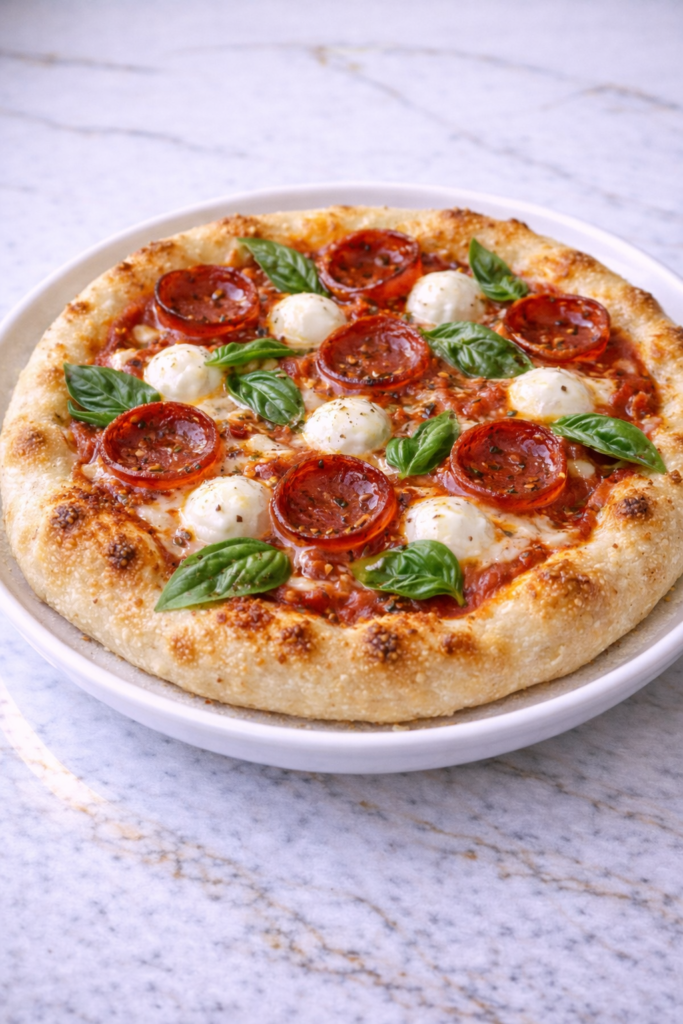
Place the pizza in the preheated oven. Bake for 12 to 15 minutes, or until the crust is lightly golden. The cheese should be melted and bubbly.
Rotate the pan halfway through baking if needed. This helps ensure even cooking. Baking time may vary slightly depending on thickness.
Remove the pizza from the oven and let it cool for a few minutes. Cooling helps the crust set. This makes slicing easier.
Serving Suggestions
Serve this no-yeast pizza hot and fresh from the oven. Slice it into wedges and enjoy immediately. The texture is best when warm.
Pair pizza with a simple side salad for balance. Crisp greens contrast nicely with the warm crust. A light dressing keeps the meal fresh.
This dough also works well for personal-sized pizzas. Smaller pizzas bake quickly and are easy to customize. This is ideal for families.
You can cut the baked pizza into small squares for sharing. This works well for casual meals or gatherings. It keeps serving relaxed and informal.
Leftover slices pair well with soup or roasted vegetables. This makes a simple second meal. The crust holds up nicely when reheated.
Leftovers and Storage
No-yeast pizza dough is best enjoyed fresh, but leftovers can still be stored successfully. Once the pizza has cooled completely, place slices in an airtight container or wrap them tightly. Stored in the refrigerator, leftovers will keep well for up to three days.
When reheating, use the oven or a skillet for the best texture. This helps the crust firm up again instead of becoming soft. Reheat just until warmed through to avoid drying it out.
Because this dough relies on baking powder, unbaked dough does not store well long term. It is not recommended to refrigerate or freeze raw dough. Baking the pizza first is the best option for leftovers.
Nutrition and Benefits
Making no-yeast pizza dough at home allows you to control ingredients and portions. Using simple pantry staples keeps the recipe straightforward and approachable. This makes it easier to fit into everyday meals.
The dough provides carbohydrates that supply energy and help make the meal satisfying. When paired with protein and vegetables, it becomes part of a balanced plate. This flexibility works well for families.
Olive oil adds flavor and a small amount of healthy fat. This helps improve texture without making the dough heavy. Using moderate amounts keeps the crust tender.
Because the dough comes together quickly, it supports homemade meals even on busy days. That convenience encourages cooking at home more often. This benefit goes beyond nutrition alone.
Recipe FAQ
Does no-yeast pizza dough taste different from regular dough?
Yes, the flavor is slightly different because there is no fermentation. The crust is more bread-like and tender. It is still very enjoyable and satisfying.
Can I make this dough gluten-free?
You can try using a gluten-free all-purpose flour blend. Results may vary depending on the brand. Follow the package recommendations for best results.
Why is my crust dense?
Overmixing the dough can make it dense. Mixing just until combined works best. Also check that your baking powder is fresh.
Can I make this dough dairy-free?
Yes, you can replace milk with water or unsweetened non-dairy milk. The texture remains similar. Choose a neutral-flavored option.
Is this dough good for thin crust pizza?
Yes, you can roll it thinner for a crispier crust. Watch baking time closely. Thinner crusts bake faster.
Can I use this dough for something other than pizza?
This dough works well for flatbreads and quick breadsticks. Adjust shaping and baking time as needed. It’s a versatile option.
Why doesn’t this dough need to rise?
Baking powder provides the lift instead of yeast. It activates quickly once baked. This is what allows the dough to be used right away.
A Quick Solution for Homemade Pizza Nights
No-yeast pizza dough is perfect for those moments when you want homemade pizza without planning ahead. It removes waiting time while still delivering a satisfying crust. That ease makes it incredibly useful.
This recipe proves that homemade pizza doesn’t have to be complicated. With simple ingredients and fast preparation, dinner comes together smoothly. That reliability builds confidence in the kitchen.
Whether for a last-minute meal or a relaxed family dinner, this dough fits right in. It supports flexibility and comfort without stress. That balance is what makes it worth keeping.