I started making beef stew in the Instant Pot when I wanted that slow-cooked, deeply flavored result without committing to hours of simmering on the stove.
Pressure cooking breaks down tough cuts of beef into something incredibly tender and drives all the flavors of the broth and vegetables together in a way that tastes like it cooked all day.
I’ve worked out the timing and the liquid ratio so yours comes out rich, thick, and satisfying every single time without any guesswork.
I’ll walk you through the whole process from browning the beef to finishing the stew so everything comes out exactly the way it should. It’s a fast, reliable recipe that makes hearty beef stew possible on a regular weeknight.

Why You’ll Love This Recipe
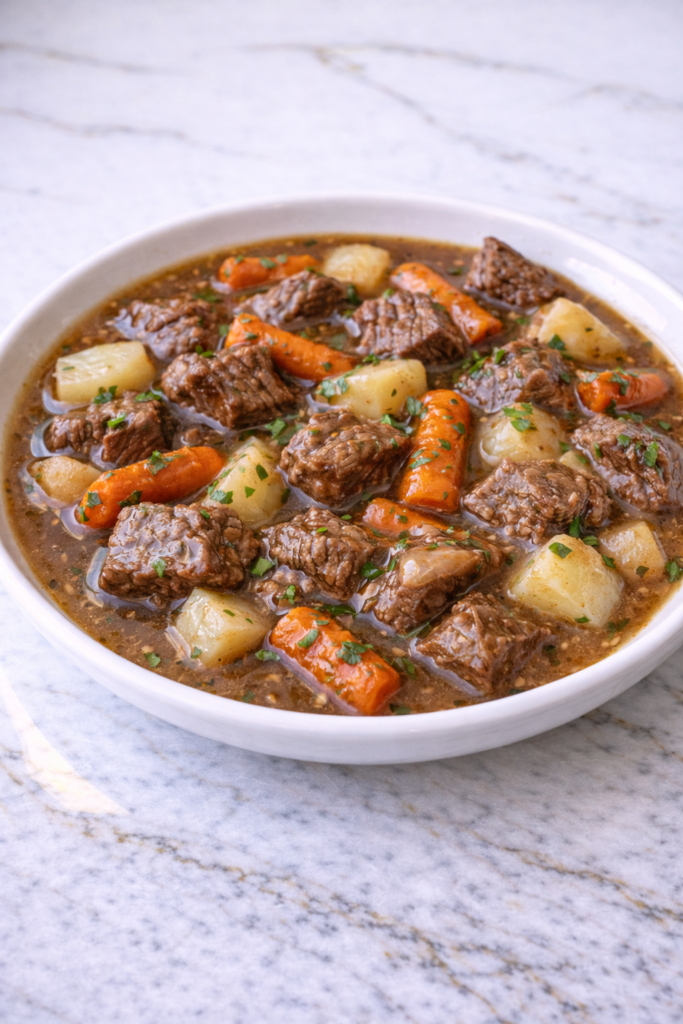
This Instant Pot Beef Stew Recipe delivers all the rich, slow-simmered flavor of traditional beef stew in a fraction of the time. The pressure cooking process locks in moisture, resulting in beef that is incredibly tender and vegetables that are perfectly cooked without being mushy. Every spoonful tastes hearty, savory, and deeply satisfying.
You’ll also love how approachable this recipe is, even if you’re new to using an Instant Pot. The steps are straightforward, the ingredients are familiar, and the results are consistently reliable. It’s the kind of meal you can confidently make for your family without worrying about complicated techniques.
Another reason this recipe shines is its flexibility. You can adjust the vegetables, seasoning, or thickness of the stew to suit your family’s preferences. This Instant Pot Beef Stew Recipe adapts easily, making it a dependable choice you’ll return to again and again.
Serves: 2 people
This recipe is designed to comfortably serve two people with generous portions. It’s perfect for a cozy dinner for two, with enough stew to feel satisfying and filling. If you want leftovers or are cooking for more people, the recipe can be easily doubled as long as you stay within your Instant Pot’s capacity.
Ingredients You’ll Need
- 1 pound beef chuck, cut into 1-inch cubes
- 1 tablespoon olive oil
- 1 small yellow onion, diced
- 2 cloves garlic, minced
- 2 cups beef broth
- 1 tablespoon tomato paste
- 1 tablespoon Worcestershire sauce
- 1 teaspoon salt
- 1/2 teaspoon black pepper
- 1/2 teaspoon paprika
- 1/2 teaspoon dried thyme
- 2 medium carrots, peeled and sliced
- 2 medium Yukon gold potatoes, diced
- 1 stalk celery, sliced
- 1 tablespoon cornstarch
- 1 tablespoon cold water
Each ingredient in this list plays an important role in building flavor and texture. Beef chuck is ideal because it becomes tender and flavorful under pressure, making it perfect for stew. The combination of broth, tomato paste, and Worcestershire sauce creates a rich base that tastes like it has simmered for hours.
The vegetables add sweetness, body, and balance to the dish. Carrots and potatoes absorb the savory broth while holding their shape, and celery adds subtle depth without overpowering the stew. Simple pantry spices round everything out, ensuring the flavors stay comforting and familiar.
Pro Tips
Choose the right cut of beef for the best results. Beef chuck has enough marbling to stay juicy and tender during pressure cooking. Leaner cuts can become dry or chewy, which can affect the overall texture of the stew.
Take a few extra minutes to brown the beef using the sauté function. This step adds a deep, savory flavor that carries through the entire dish. While it may be tempting to skip it, browning truly elevates the final result.
Cut your vegetables into evenly sized pieces. Uniform cuts ensure that everything cooks at the same rate and prevents some vegetables from turning too soft while others remain undercooked. This is especially important when cooking under pressure.
Deglaze the pot thoroughly after browning the beef. Scraping up the browned bits from the bottom prevents burn warnings and adds incredible flavor to the broth. A splash of broth works perfectly for this step.
Let the pressure release naturally for a few minutes before doing a quick release. This helps the beef stay tender and prevents hot liquid from splattering. It’s a small step that makes a noticeable difference.
If you’re serving kids, consider cutting the vegetables slightly larger. Larger pieces tend to hold their shape better and are easier to pick out for selective eaters. This small adjustment can make mealtime smoother for everyone.
Tools You’ll Need
- Instant Pot or electric pressure cooker
- Cutting board
- Sharp knife
- Measuring cups
- Measuring spoons
- Wooden spoon or silicone spatula
- Small bowl for slurry
Having the right tools ready before you start makes the cooking process much more enjoyable. The Instant Pot does most of the work, but good prep tools help everything come together smoothly. A sturdy spoon is especially helpful for stirring and deglazing without scratching the pot.
Substitutions and Variations
If you don’t have beef chuck on hand, stew meat can be used as a substitute. Just be aware that different cuts may vary in tenderness. You may need to adjust the cooking time slightly depending on the cut.
For a richer flavor, you can replace one-half cup of beef broth with red wine. This adds depth and a subtle complexity to the stew without overpowering it. The alcohol cooks off during pressure cooking, leaving only the flavor behind.
Vegetable substitutions are easy with this recipe. Parsnips, turnips, or sweet potatoes can be used in place of regular potatoes. Each option adds its own unique flavor while still fitting the comforting nature of the dish.
If you prefer a thicker stew, you can increase the cornstarch slurry slightly. Add it gradually and use the sauté function to thicken until you reach your desired consistency. This allows you to customize the texture without over-thickening.
For a lighter version, you can reduce the amount of potatoes and add extra vegetables like green beans or mushrooms. This keeps the stew hearty while adding more variety and color. The recipe remains flexible without losing its classic appeal.
Make Ahead Tips
This Instant Pot beef stew is an excellent recipe to prepare ahead of time, especially if your week tends to fill up quickly. You can chop all the vegetables and cube the beef up to 24 hours in advance, then store everything in separate airtight containers in the refrigerator. Doing this simple prep step makes the cooking process feel effortless when it’s time to start dinner.
You can also fully cook the stew a day or two before you plan to serve it. In fact, the flavors continue to deepen as it rests, making it taste even better the next day. Once cooled, store the stew in an airtight container in the refrigerator and reheat gently when ready to eat.
If freezing is part of your routine, this recipe freezes very well. Allow the stew to cool completely before transferring it to freezer-safe containers or bags. Leave a little room at the top for expansion, and freeze for up to three months without losing quality.
When reheating from frozen, thaw the stew overnight in the refrigerator if possible. Reheat slowly on the stovetop or using the sauté function on the Instant Pot, stirring occasionally. Add a splash of beef broth if needed to loosen the texture.
Instructions
Step 1: Prepare the Ingredients
Begin by cutting the beef chuck into evenly sized one-inch cubes. Pat the beef dry with paper towels, which helps it brown properly and develop more flavor. Season the beef lightly with salt and pepper to start building layers of seasoning.
Dice the onion, mince the garlic, and prepare all the vegetables before turning on the Instant Pot. Having everything ready and within reach makes the cooking process smoother and less stressful. This is especially helpful if you are cooking during a busy evening.
Measure out the broth, tomato paste, Worcestershire sauce, and spices ahead of time. Pre-measuring ensures nothing is forgotten and allows you to focus on each step without interruption. This small habit makes pressure cooking much more enjoyable.
Step 2: Brown the Beef
Set the Instant Pot to the sauté function and allow it to heat for a minute or two. Add the olive oil, letting it warm until it shimmers slightly. Carefully add the beef cubes in a single layer, working in batches if necessary to avoid overcrowding.
Let the beef sear without moving it for a few minutes to develop a deep brown crust. Turn the pieces and brown all sides evenly, which adds richness and depth to the stew. Remove the browned beef and set it aside on a plate.
Repeat this process until all the beef has been browned. Although this step takes a little extra time, it greatly improves the final flavor. The browned bits left in the pot will become part of the stew’s savory base.
Step 3: Sauté the Aromatics
With the Instant Pot still on sauté, add the diced onion to the pot. Stir it into the remaining oil and browned bits, cooking until the onion becomes soft and translucent. This usually takes about three to four minutes.
Add the minced garlic and stir continuously for about 30 seconds. Garlic cooks quickly and should be fragrant but not browned. This step creates a flavorful foundation for the rest of the stew.
If the bottom of the pot looks dry, add a small splash of beef broth. Scrape up any stuck-on bits with a wooden spoon, fully deglazing the pot. This prevents burn warnings and captures all that flavor.
Step 4: Build the Stew Base
Return the browned beef to the Instant Pot along with any juices collected on the plate. Stir to combine the beef with the onions and garlic. Add the tomato paste and stir well, coating the beef evenly.
Pour in the beef broth, Worcestershire sauce, salt, pepper, paprika, and dried thyme. Stir thoroughly to ensure the seasonings are evenly distributed throughout the liquid. The mixture should look rich and slightly thickened at this stage.
Take a moment to scrape the bottom of the pot again to ensure nothing is stuck. This final check helps the Instant Pot come to pressure smoothly. Once everything is well combined, turn off the sauté function.
Step 5: Add the Vegetables
Add the carrots, potatoes, and celery to the pot. Gently stir them into the broth, making sure they are mostly submerged. Avoid over-stirring, which can break up the vegetables before cooking.
The vegetables will cook perfectly under pressure, absorbing flavor while maintaining their shape. Keeping them slightly chunky helps them hold up during cooking. This also creates a more satisfying texture in the finished stew.
At this point, do not add the cornstarch slurry yet. Thickening will be done after pressure cooking to better control the final consistency. This ensures the stew is not overly thick or gummy.
Step 6: Pressure Cook the Stew
Secure the Instant Pot lid and set the valve to the sealing position. Select the pressure cook or manual setting and cook on high pressure for 35 minutes. This cooking time allows the beef to become tender while the vegetables cook through.
Once the cooking cycle is complete, allow the pressure to release naturally for 10 minutes. This gradual release helps the meat stay tender and prevents liquid from spraying. After 10 minutes, carefully perform a quick release to release any remaining pressure.
Open the lid slowly and give the stew a gentle stir. The beef should be fork-tender, and the vegetables should be soft but intact. At this stage, the broth will still be fairly thin.
Step 7: Thicken the Stew
Turn the Instant Pot back to the sauté function. In a small bowl, whisk together the cornstarch and cold water until smooth. Slowly pour the slurry into the stew while stirring continuously.
Allow the stew to simmer for a few minutes, stirring often, until it thickens to your desired consistency. The broth should become glossy and coat the back of a spoon. If you prefer a thicker stew, add a bit more slurry in small increments.
Once thickened, turn off the Instant Pot. Taste the stew and adjust seasoning if needed with additional salt or pepper. Let the stew rest for a few minutes before serving.
Serving Suggestions
This beef stew is perfect served on its own in a deep bowl, allowing the rich broth to shine. A slice of crusty bread on the side is ideal for soaking up every last bit of sauce. This simple pairing keeps the meal comforting and classic.
For a heartier presentation, serve the stew over mashed potatoes. The creamy texture pairs beautifully with the savory broth and tender beef. This option is especially satisfying during colder months.
You can also serve this stew alongside buttered egg noodles or rice. These neutral bases absorb the flavors well and make the meal feel extra filling. It’s a great way to stretch portions if needed.
If you prefer something lighter, pair the stew with a simple green salad. The fresh crunch balances the richness of the dish nicely. A light vinaigrette works best without overpowering the stew.
For family meals, consider serving the stew with warm dinner rolls. Kids especially enjoy dipping bread into the broth. This makes the meal feel cozy and interactive for everyone at the table.
Leftovers and Storage
Leftover Instant Pot beef stew is one of those meals that feels like a gift waiting in the refrigerator. Once the stew has cooled to room temperature, transfer it into an airtight container to preserve freshness. Stored properly, it will keep well in the refrigerator for up to four days.
When reheating refrigerated stew, gentle heat is key to maintaining texture and flavor. Warm it on the stovetop over medium-low heat, stirring occasionally to prevent sticking. You can also reheat individual portions in the microwave, covering the bowl loosely to avoid splatters.
If the stew thickens too much after chilling, simply add a splash of beef broth or water while reheating. Stir well to restore the original consistency without diluting the flavor. This small adjustment keeps leftovers just as enjoyable as the first serving.
For longer storage, this beef stew freezes beautifully. Allow it to cool completely, then portion it into freezer-safe containers or heavy-duty freezer bags. Label with the date and freeze for up to three months for best quality.
To reheat frozen stew, thaw it overnight in the refrigerator whenever possible. Reheat slowly on the stovetop or using the sauté function of the Instant Pot, stirring frequently. This method helps maintain the tender texture of the beef and vegetables.
Nutrition and Benefits
This Instant Pot beef stew is a well-rounded meal that offers both comfort and nourishment. Beef provides a rich source of protein, which supports muscle health and helps keep you feeling full longer. The slow pressure cooking process helps retain nutrients while enhancing flavor.
The vegetables in this stew contribute essential vitamins and minerals. Carrots offer beta-carotene for eye health, while potatoes provide potassium and energy-sustaining carbohydrates. Celery adds fiber and subtle flavor without adding extra calories.
Using homemade or low-sodium beef broth allows you to control the sodium content. This makes the stew a more balanced option for families mindful of salt intake. Adjusting seasoning at the end helps tailor it to your needs.
Cooking with the Instant Pot also reduces the need for excess fats. The pressure cooking environment creates rich flavor without requiring large amounts of oil. This keeps the stew hearty without feeling overly heavy.
Because this recipe includes protein, vegetables, and a flavorful broth, it works well as a complete meal. It provides sustained energy and comfort, making it especially satisfying during colder months or busy weeks.
Recipe FAQ
Can I use frozen beef for this recipe?
Frozen beef is not ideal for browning, which is an important step for building flavor. For best results, thaw the beef completely before starting. This allows you to properly sear the meat and develop a richer stew.
What size Instant Pot works best for this recipe?
A 6-quart Instant Pot works perfectly for this recipe and allows enough space for pressure buildup. You can also use an 8-quart model if that’s what you have available. Just be sure not to exceed the maximum fill line.
Can I add the cornstarch before pressure cooking?
It’s best to wait until after pressure cooking to add the cornstarch slurry. Adding it too early can cause the stew to thicken unevenly or trigger a burn warning. Thickening at the end gives you more control over the final texture.
Why is my beef not tender enough?
If the beef is still tough, it may need more cooking time. Some cuts require additional pressure cooking to fully break down connective tissue. You can reseal the Instant Pot and cook for another 5 to 10 minutes if needed.
Can I make this stew dairy-free?
Yes, this recipe is naturally dairy-free as written. Just be sure any bread or side dishes served with it also meet your dietary needs. This makes it a great option for families with mixed preferences.
What vegetables should I avoid adding?
Very soft vegetables like zucchini or bell peppers can become mushy under pressure. If you want to include them, stir them in after pressure cooking and simmer briefly. This keeps their texture more appealing.
Does this stew taste better the next day?
Many people find that beef stew tastes even better after resting overnight. The flavors have more time to meld, resulting in a deeper, richer taste. Leftovers often become a favorite part of the meal.
A Cozy Bowl Worth Coming Back To
Instant Pot beef stew is the kind of recipe that quickly becomes a household staple. It offers the comfort of a classic meal with the convenience modern schedules demand. Each bowl delivers warmth, flavor, and a sense of familiarity that never gets old.
This recipe proves that hearty, home-cooked meals don’t have to take all day. With simple ingredients and reliable steps, it fits easily into everyday life. It’s a dish you can turn to again and again with confidence and satisfaction.
Whether you’re making it for a quiet dinner or planning ahead for busy days, this stew always delivers. It’s comforting, dependable, and deeply satisfying from the first bite to the last.