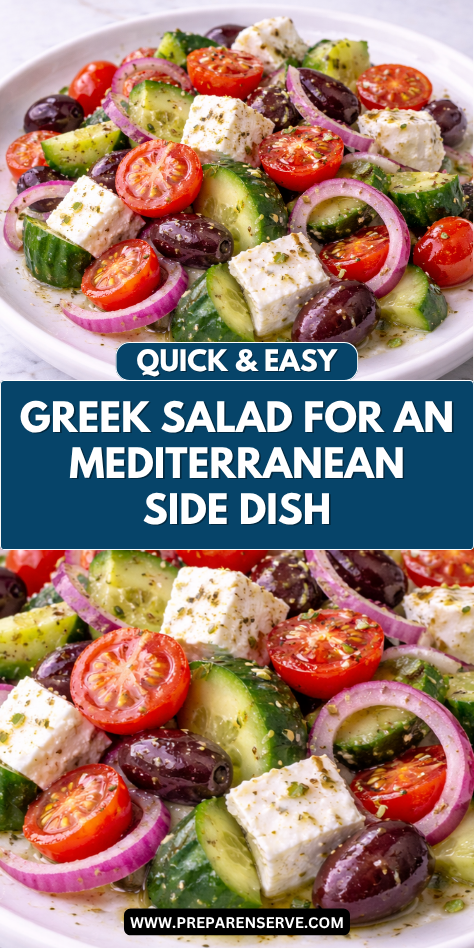
I make this salad when I want something fresh and vibrant that comes together in minutes without any cooking at all.
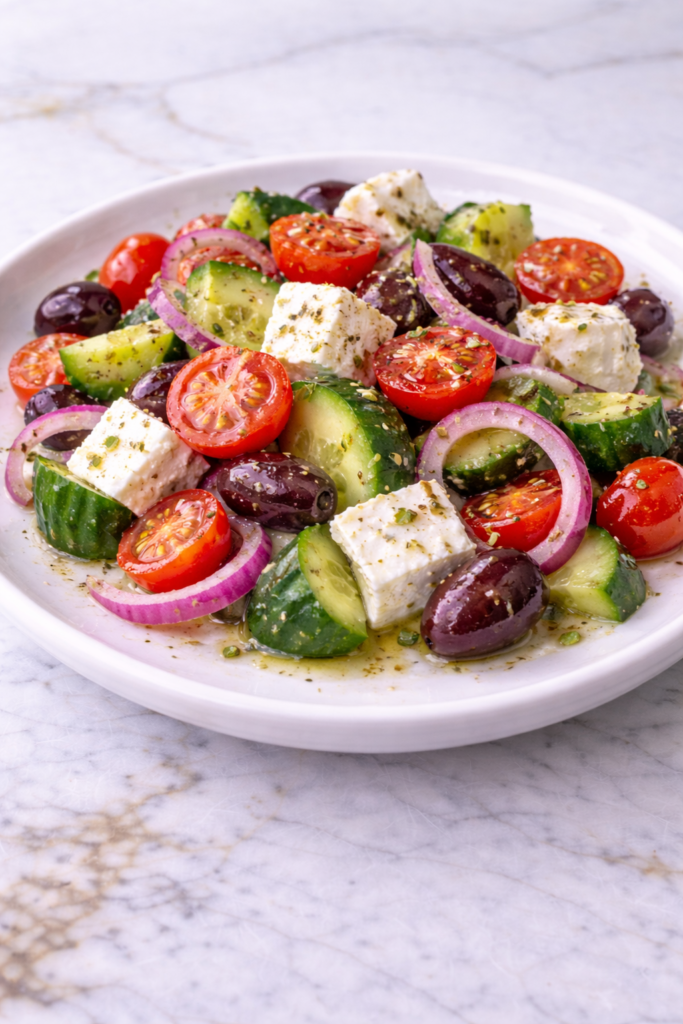
Crisp cucumbers, ripe tomatoes, briny olives, and creamy feta with a simple lemon and olive oil dressing is one of those combinations that tastes far greater than the sum of its parts.
The key is using good ingredients and letting them speak for themselves without overcomplicating the dressing.
I’ll show you how to cut everything, balance the dressing, and put it all together so every bite has that clean, bright flavor that makes a great Greek salad so satisfying. It’s a reliable, crowd-pleasing dish that works just as well as a side as it does on its own.
Why You’ll Love This Recipe
Greek Salad Recipe is beloved for its combination of fresh, crisp vegetables, briny olives, creamy feta, and vibrant dressing. It’s simple to prepare yet full of flavor, making it a versatile side or a light main dish.
This salad is naturally healthy, with fresh vegetables providing vitamins, minerals, and fiber. The olive oil in the dressing adds healthy fats, while feta cheese contributes protein and calcium. It’s a dish that feels indulgent without being heavy.
Families love Greek Salad because it’s easy to customize. You can adjust ingredients according to taste, adding extra olives, cucumber, or feta as desired. The flavors are bold yet approachable, making it a dish everyone enjoys.
Serves: 2 people
This recipe is designed to serve two people generously. The portion size is perfect for a light meal or as a side for dinner. The ingredients can easily be scaled up to serve a larger group, and leftovers store well in the refrigerator for a short time if the dressing is kept separate.
Ingredients You’ll Need
Salad Ingredients
- 1 cup cherry tomatoes, halved
- 1 medium cucumber, diced
- 1/2 red onion, thinly sliced
- 1/2 cup Kalamata olives, pitted
- 1/2 cup feta cheese, cubed or crumbled
- 1/4 cup green bell pepper, diced (optional)
- 1/4 cup red bell pepper, diced (optional)
Dressing Ingredients
- 3 tablespoons extra-virgin olive oil
- 1 tablespoon red wine vinegar
- 1 teaspoon fresh lemon juice
- 1 teaspoon dried oregano
- 1/2 teaspoon garlic powder or 1 small clove minced garlic
- Salt and black pepper to taste
Pro Tips
Use high-quality extra-virgin olive oil for the best flavor in the dressing. The olive oil is a primary flavor component, so quality matters.
Cut the vegetables into uniform sizes to ensure each bite has a balanced combination of flavors.
Add the dressing just before serving to keep the vegetables crisp. Pre-mixing can cause the salad to become watery.
Taste and adjust seasoning in the dressing. A little extra lemon juice or salt can brighten the flavors beautifully.
For extra flavor, allow the salad to rest for 5–10 minutes after dressing is added. This lets the ingredients meld slightly without compromising crispness.
Optional garnishes like fresh parsley, dill, or a sprinkle of paprika on the feta enhance visual appeal and flavor.
Tools You’ll Need
- Large mixing bowl
- Small bowl for dressing
- Whisk or fork for dressing
- Chef’s knife
- Cutting board
- Measuring cups and spoons
Substitutions and Variations
Feta cheese can be replaced with goat cheese for a slightly tangier flavor. Plant-based feta alternatives are also available for dairy-free versions.
Kalamata olives can be substituted with green olives or other briny varieties if preferred.
Red wine vinegar can be replaced with balsamic or apple cider vinegar for a different flavor profile. Lemon juice adds brightness and can be adjusted to taste.
Bell peppers, cucumbers, or tomatoes can be swapped or omitted depending on personal preference. Zucchini, radishes, or artichoke hearts can also be added for variation.
For a heartier salad, add protein like grilled chicken, shrimp, or chickpeas. This transforms it into a main course while maintaining fresh, vibrant flavors.
Make Ahead Tips
Greek Salad Recipe is a wonderful option for preparing ahead of time, especially for lunch, dinner, or entertaining. You can chop the vegetables in advance and store them in an airtight container in the refrigerator for up to 24 hours. Keep the olives and feta separate to prevent the salad from becoming too watery or the cheese from losing texture.
Prepare the dressing ahead of time and store it in a small jar or container in the refrigerator. Shake or whisk it just before serving. This allows the flavors to develop while keeping the salad fresh.
Assemble the salad just before serving for optimal crispness. Adding the dressing too early can cause the vegetables to release water, making the salad soggy.
Optional garnishes like fresh herbs or a sprinkle of paprika can also be prepared in advance and added at the last minute for visual appeal and enhanced flavor.
For larger gatherings, you can prepare the vegetables and dressing separately in bulk, then toss everything together when ready to serve. This method keeps the salad fresh and vibrant while saving time on the day of your event.
Instructions
Step 1: Prepare the Vegetables
Wash and dry all vegetables thoroughly. Slice the cherry tomatoes in half, dice the cucumbers, and thinly slice the red onion. Dice bell peppers if using.
Place all the prepared vegetables in a large mixing bowl. Combine gently to ensure the different textures and colors are evenly distributed.
Step 2: Add Olives and Feta
Add the Kalamata olives to the bowl. If using whole or pitted olives, cut them in half to make them easier to eat.
Cube or crumble the feta cheese and gently fold it into the salad. Take care not to break the cheese too much, as larger chunks maintain both flavor and visual appeal.
Step 3: Make the Dressing
In a small bowl or jar, whisk together the extra-virgin olive oil, red wine vinegar, lemon juice, oregano, garlic, salt, and black pepper. Taste and adjust seasoning if necessary.
Pour the dressing over the prepared vegetables, olives, and feta. Toss gently until everything is coated evenly. Be careful not to overmix, which can break down the vegetables and cheese.
Step 4: Rest Before Serving
Allow the salad to sit for 5–10 minutes after tossing with the dressing. This step lets the flavors meld together while keeping the vegetables crisp and fresh.
Taste again before serving and adjust seasoning if necessary. A little extra salt, pepper, or lemon juice can brighten the flavors just before serving.
Step 5: Serve the Salad
Transfer the Greek salad to a serving bowl or plate. Optional garnishes like fresh parsley, dill, or a sprinkle of paprika can be added for extra color and flavor.
Serve as a side dish alongside grilled meats, seafood, or a main course. It also works beautifully as a light, refreshing lunch or part of a Mediterranean-inspired spread.
Serving Suggestions
Greek Salad Recipe pairs well with grilled chicken, fish, or lamb for a complete meal. The bright, tangy flavors complement the richness of roasted or grilled proteins.
It is a perfect side for Mediterranean meals such as gyros, pita sandwiches, or grilled vegetables.
For a vegetarian option, serve it with hummus, falafel, or stuffed grape leaves. The fresh vegetables and creamy feta create a balanced and satisfying dish.
The salad also works beautifully as part of a picnic or potluck. Its bright colors, crisp textures, and bold flavors make it visually appealing and universally loved.
Leftovers can be stored in the refrigerator, but keep the dressing separate until just before serving. This prevents the vegetables from becoming soggy and ensures the salad stays fresh and vibrant.
Greek Salad also pairs well with grains like quinoa, couscous, or farro to turn it into a more substantial main dish. Toss with additional olive oil and herbs for a filling, flavorful meal.
Leftovers and Storage
Greek Salad Recipe is best enjoyed fresh, but leftovers can be stored carefully for up to one day. Allow the salad to cool if it was just tossed, and transfer it to an airtight container. To preserve texture and prevent the vegetables from becoming soggy, keep the dressing separate until serving.
If you have already mixed the dressing into the salad, store it in the refrigerator but consume it within 12–24 hours. The cucumbers, tomatoes, and peppers will release water over time, which can make the salad slightly watery but still flavorful.
For longer storage of prepped ingredients, keep chopped vegetables, olives, and feta in separate containers. This allows you to assemble the salad quickly when ready to serve. The dressing can also be made ahead and refrigerated for up to a week.
To serve leftovers, drain any excess liquid and toss gently with fresh olive oil or additional lemon juice. This refreshes the flavors and restores a slightly crisp texture. Avoid freezing the salad, as the fresh vegetables and feta will not hold up well after thawing.
Optional garnishes like parsley, dill, or paprika can be added at the last minute to enhance flavor and presentation. This keeps the salad vibrant and appetizing even when prepared ahead.
Nutrition and Benefits
Greek Salad Recipe is naturally nutrient-rich, making it a healthy addition to any meal. Tomatoes provide vitamin C, antioxidants, and lycopene, which support immune health and overall wellness.
Cucumbers add hydration and fiber, along with important vitamins and minerals. They provide a refreshing crunch that balances the richer ingredients in the salad.
Feta cheese contributes protein and calcium, supporting bone health and helping you feel satisfied. While slightly salty, feta adds flavor without overpowering the fresh vegetables.
Olives are rich in healthy monounsaturated fats and antioxidants, promoting heart health. Combined with olive oil in the dressing, they create a flavorful and nutritious source of healthy fats.
Optional additions like bell peppers, red onions, and fresh herbs enhance the salad with additional vitamins, minerals, and antioxidants. This makes Greek Salad a well-rounded, colorful, and satisfying dish.
Overall, Greek Salad Recipe is a versatile dish that is both light and filling, perfect for everyday meals or as a side for more indulgent dishes.
Recipe FAQ
Can I make Greek Salad Recipe ahead of time?
Yes, you can prepare the vegetables and dressing separately in advance. Assemble the salad just before serving to preserve crispness and freshness.
Can I use other types of olives?
Absolutely. Kalamata olives are traditional, but green olives or Castelvetrano olives work as well. Adjust the quantity to taste based on saltiness and flavor.
Can I make this salad vegan?
Yes, omit the feta or use a plant-based cheese alternative. The salad will still be flavorful, fresh, and satisfying.
Can I store the salad with dressing already mixed in?
You can, but it is best to consume it within 12–24 hours. Vegetables may release water, which can make the salad slightly watery, but the flavor will remain intact.
Can I add protein to make this a main course?
Yes, grilled chicken, shrimp, chickpeas, or tofu can be added to turn the salad into a more substantial meal. The flavors pair beautifully with the fresh vegetables and tangy dressing.
How long will the dressing keep?
Homemade dressing can be stored in the refrigerator for up to a week in a sealed container. Shake or whisk before using.
Can I use fresh herbs in the salad?
Yes, fresh parsley, dill, oregano, or mint enhance the flavor and presentation. Add them just before serving for best results.
A Fresh Taste of the Mediterranean
Greek Salad Recipe is a vibrant, refreshing dish that brings the flavors of the Mediterranean to your table. Crisp cucumbers, juicy tomatoes, sweet bell peppers, briny olives, and creamy feta combine to create a salad full of color, texture, and flavor.
A simple dressing of olive oil, lemon, and oregano ties all the ingredients together for a balanced, light, and satisfying dish.
Perfect as a side, a light lunch, or part of a Mediterranean-inspired meal, this salad is versatile, quick, and full of fresh, wholesome ingredients. Greek Salad Recipe is a timeless classic that deserves a spot in every home kitchen, ready to make meals bright, flavorful, and refreshing.