I started making this salad when I wanted something high in protein that felt fresh and satisfying without requiring any cooking at all.
Cottage cheese is mild and creamy in a way that works really well as a base — it holds everything together and adds substance without making the salad feel heavy.
A few simple vegetables and the right seasoning is all it takes to turn it into something genuinely good.
I’ll show you how to build it so the flavors are balanced and every bite has good texture. It’s a quick, nourishing dish that works just as well for a light lunch as it does as a side on a bigger table.
Why You’ll Love This Recipe
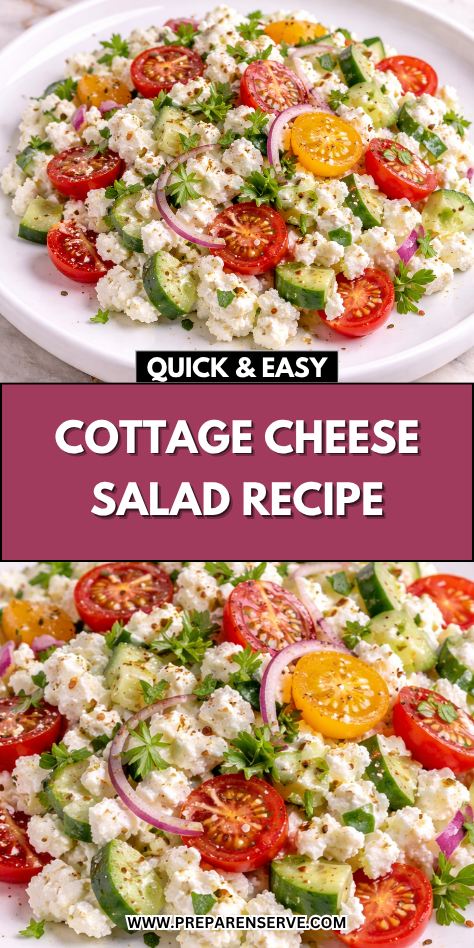
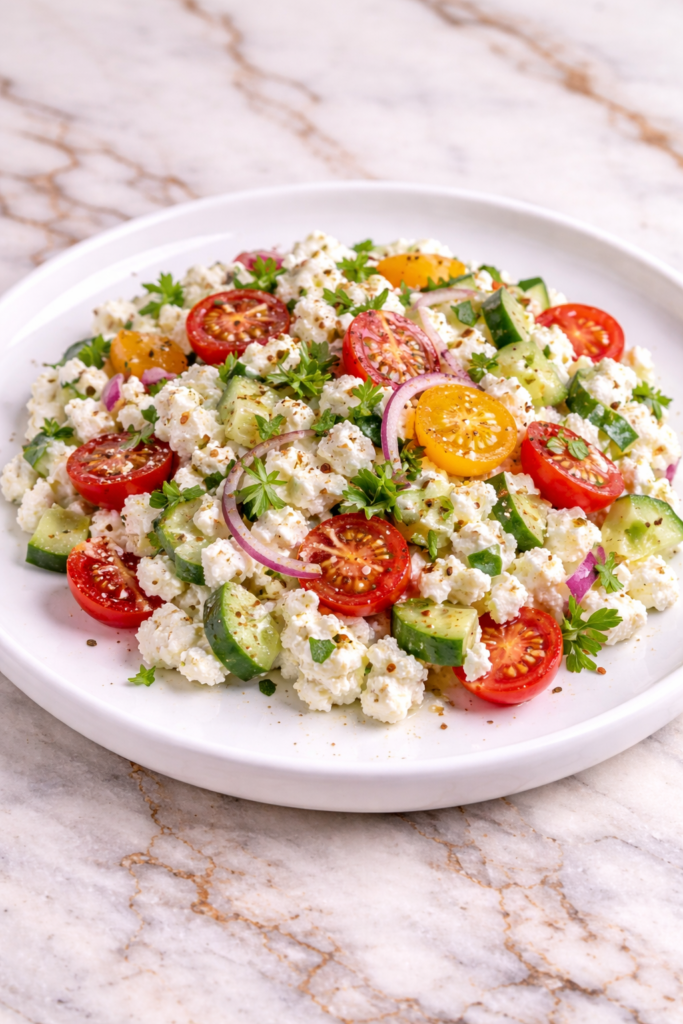
Cottage cheese salad is incredibly versatile, allowing for a variety of flavors, textures, and nutrient combinations. You can enjoy it as a light lunch, pair it with whole-grain crackers or toast, or serve it as a side dish alongside your main meal. The creamy cottage cheese binds the ingredients together while still letting the freshness of the vegetables shine.
Families love this recipe because it’s easy to prepare and appealing to all ages. Children often enjoy the mild creaminess of cottage cheese, while adults appreciate the salad’s balance of protein, fiber, and flavor. It’s also a convenient option for meal prep since it holds up well in the refrigerator for a few hours.
The recipe is also highly customizable. You can add vegetables like cucumber, bell pepper, or tomatoes, or include fruits such as berries or pineapple for a touch of natural sweetness. Nuts, seeds, or fresh herbs enhance the flavor, texture, and nutrition, making it suitable for many dietary preferences.
Serves: 2–3 people
This recipe makes approximately two to three servings, depending on portion size. It is perfect for a light lunch or side salad. The recipe scales easily for larger groups or for meal prepping multiple portions for the week.
Ingredients You’ll Need
Base Ingredients
- 1 cup cottage cheese (full-fat or low-fat)
- 1 cup chopped cucumber
- 1/2 cup cherry tomatoes, halved
- 1/2 cup diced bell pepper (red, yellow, or green)
- 1/4 cup diced red onion
Optional Add-Ins
- 1/4 cup shredded carrots
- 1/4 cup corn kernels (fresh, canned, or frozen)
- 1/4 cup sliced olives
- 1/4 cup chopped celery
Herbs and Seasonings
- 1 tablespoon fresh parsley or cilantro, chopped
- 1 teaspoon fresh dill, chopped (optional)
- Salt and black pepper to taste
- Optional: 1/2 teaspoon garlic powder or smoked paprika
Optional Protein Boosters
- 2 hard-boiled eggs, chopped
- 1/4 cup cooked chicken, diced
- 1/4 cup beans (chickpeas, kidney beans, or black beans)
Optional Toppings
- Nuts or seeds (sunflower seeds, pumpkin seeds, or chopped almonds)
- Sliced avocado
- Lemon or lime juice for brightness
- Drizzle of olive oil or a light vinaigrette
Pro Tips
Use full-fat cottage cheese for a creamier texture and richer flavor. Low-fat or non-fat options work but may be slightly less creamy.
Chop vegetables into small, uniform pieces for even distribution and easier eating.
Add herbs last for maximum freshness and flavor. Fresh parsley, cilantro, or dill enhance taste and presentation.
If adding fruit like pineapple or berries, fold in gently at the end to prevent crushing and maintain texture.
For a creamier salad, you can mix the cottage cheese with a spoonful of Greek yogurt before combining with vegetables.
Season the salad gradually, tasting as you go. Cottage cheese has a mild tang that pairs well with salt, pepper, and optional spices, but adding too much seasoning at first can overpower the natural flavors.
Tools You’ll Need
- Medium mixing bowl
- Knife and cutting board
- Spoon or spatula for mixing
- Measuring cups and spoons
- Optional: small bowls for prep and portioning
Substitutions and Variations
Use Greek yogurt as a substitute for cottage cheese for a smoother, tangier base.
Mix in any vegetables you have on hand: zucchini, radishes, or snap peas work well.
Swap fresh herbs based on preference: basil, chives, or tarragon can provide unique flavor profiles.
Add fruit for a sweeter salad: diced apples, grapes, or pineapple pairs beautifully with the creamy cottage cheese.
Include cooked protein like chicken, turkey, tofu, or beans to make it a complete meal.
Sprinkle nuts or seeds for added crunch, healthy fats, and texture.
Cottage cheese salad is a versatile, nutrient-packed dish that’s easy to make, adaptable to many tastes, and perfect for a quick, healthy meal. Its creamy base, fresh vegetables, and customizable toppings make it a recipe you’ll return to again and again.
Make Ahead Tips
Cottage cheese salad is perfect for prepping ahead, which makes it ideal for busy mornings, lunches, or even light dinners. You can chop and portion vegetables such as cucumbers, bell peppers, cherry tomatoes, carrots, or celery the night before. Store each type of vegetable separately in airtight containers in the refrigerator to maintain freshness.
If you plan to include fruits like pineapple, apples, or berries, slice or dice them and store them separately to prevent them from releasing too much moisture before mixing. Pre-portion herbs, nuts, or seeds into small containers so they are ready to add at the last minute.
Cottage cheese itself can also be pre-seasoned. Combine it with a pinch of salt, black pepper, and optional herbs like dill or parsley, and store in the refrigerator for up to 24 hours. Mixing seasoning ahead of time ensures that the salad comes together quickly without compromising flavor.
If adding cooked proteins like chicken, turkey, eggs, or beans, prep them in advance and store separately until ready to assemble. This helps maintain the salad’s texture and prevents sogginess, while making it easy to customize portions for multiple servings.
Assembling the salad right before serving is ideal to preserve texture. Combine the cottage cheese, vegetables, herbs, and optional add-ins only when ready to eat. This ensures a fresh, crisp, and vibrant salad every time.
Instructions
Step 1: Prepare the Vegetables
Wash and chop all vegetables into bite-sized pieces. Chop cucumbers, halve cherry tomatoes, dice bell peppers and red onions, and shred carrots if using.
Uniform pieces make the salad easier to eat and ensure each bite has a balanced mix of flavors and textures.
Step 2: Mix the Base
In a medium mixing bowl, combine the cottage cheese with seasonings. Add a pinch of salt, black pepper, and optional garlic powder or smoked paprika. Mix gently to incorporate the flavors without breaking up the cottage cheese too much.
Seasoning the cottage cheese first ensures even distribution of flavor throughout the salad.
Step 3: Combine Vegetables and Cottage Cheese
Fold the chopped vegetables into the seasoned cottage cheese gently using a spatula or spoon. Mix until all ingredients are evenly coated with the creamy base.
This step helps the flavors meld while maintaining the crispness of the vegetables. Avoid overmixing to prevent the salad from becoming watery.
Step 4: Add Optional Proteins and Toppings
Incorporate cooked proteins such as diced chicken, hard-boiled eggs, or beans for a more filling salad. Add optional toppings like nuts, seeds, or avocado slices for extra texture and nutrition.
Layering these ingredients carefully ensures that each bite is flavorful and that toppings retain their distinct textures.
Step 5: Taste and Adjust
Taste the salad and adjust seasoning as needed. Add extra salt, pepper, herbs, or a squeeze of lemon or lime juice to brighten the flavors.
This final adjustment ensures the salad is perfectly balanced, with the creaminess of the cottage cheese complementing the freshness of the vegetables.
Step 6: Serve Immediately
Serve the salad chilled or at room temperature. Pair it with whole-grain bread, crackers, or as a side to a main dish like grilled chicken, fish, or tofu for a complete, balanced meal.
For a brunch or picnic presentation, portion the salad into individual bowls or mason jars and add garnishes such as fresh herbs, sliced avocado, or a sprinkle of nuts just before serving.
Serving Suggestions
Cottage cheese salad can be enjoyed as a standalone meal or as a side dish. Pair it with a slice of toasted whole-grain bread or crackers for a light lunch.
Add it to a bowl with fresh greens or quinoa for a heartier salad. Top with sliced avocado, nuts, seeds, or fresh fruit to add flavor, texture, and nutrients.
It works well as a protein-packed side for grilled meats, fish, or roasted vegetables. The creamy cottage cheese complements savory main dishes while adding protein and balance.
For a colorful presentation, layer the salad in mason jars with vegetables, protein, and toppings. This not only looks appealing but also makes it portable for on-the-go meals or packed lunches.
Cottage cheese salad is easy to adapt for sweet or savory preferences. Sweet versions can include fruits like berries, apples, or mango with a drizzle of honey, while savory versions can feature tomatoes, cucumbers, herbs, and spices.
The recipe is flexible, quick, and nutritious, making it a recipe you’ll return to again and again for breakfasts, lunches, snacks, or side dishes.
Cottage cheese salad is a creamy, protein-rich, and versatile dish that balances nutrition and flavor. Its tender, rich base, fresh vegetables, and customizable toppings make it an ideal addition to any meal, and a recipe you’ll keep coming back to.
Leftovers and Storage
Cottage cheese salad is best enjoyed fresh to maintain the crisp texture of the vegetables and the creamy consistency of the cottage cheese. However, leftovers can be stored safely and enjoyed later with just a few considerations. Transfer the salad to an airtight container and refrigerate for up to 24 hours. Beyond this, the vegetables may begin to release moisture, making the salad slightly watery, and delicate toppings like avocado or herbs may wilt.
If you plan to store the salad for a few hours before serving, keep the cottage cheese and vegetables separate from more perishable toppings, such as avocado, fresh herbs, or fruit. Combine them just before serving to maintain optimal texture and flavor. This is particularly useful for meal prepping lunches or preparing the salad for gatherings or picnic-style meals.
For long-term storage, some ingredients like cooked protein (chicken, turkey, or beans) can be stored separately in airtight containers in the refrigerator for up to 3–4 days. Combine with freshly prepared cottage cheese and vegetables as needed. Frozen vegetables are not recommended for this salad as they may become too watery when thawed, affecting the texture.
Leftover salad can also be repurposed creatively. Use it as a filling for wraps or sandwiches, layering the creamy mixture with greens or roasted vegetables. Spoon it over whole grains such as quinoa, rice, or couscous for a hearty, protein-rich grain bowl. Alternatively, use it as a dip for raw vegetables or whole-grain crackers, turning it into a quick, protein-packed snack.
Nutrition and Benefits
Cottage cheese salad is a nutrient-dense, high-protein meal that supports energy, satiety, and overall wellness. Cottage cheese provides high-quality protein, calcium, phosphorus, and vitamin B12, which are essential for muscle maintenance, bone health, and overall metabolism.
The vegetables contribute fiber, vitamins, and antioxidants. For example, bell peppers and tomatoes are rich in vitamin C, which supports immunity, while leafy greens add iron and folate. Optional add-ins like beans, chicken, or eggs further enhance protein content and create a balanced meal.
Healthy fats from avocado or nuts can be added to increase satiety and provide essential fatty acids that support heart and brain health. Using fresh herbs adds flavor without added sodium or calories while boosting micronutrient content.
This salad is a lighter alternative to creamy, mayonnaise-based salads. By using cottage cheese as the base, you achieve a rich, creamy texture with fewer saturated fats and added calories. It’s suitable for a variety of dietary preferences, including high-protein, low-calorie, and vegetarian diets.
Compared to typical side salads, cottage cheese salad keeps you full longer due to its protein content. This makes it an excellent choice for a balanced breakfast, lunch, or light dinner. It’s also ideal for post-workout meals or meal prep because it provides sustained energy without heaviness.
Recipe FAQ
Can I make this salad vegan?
Yes. Use a plant-based cottage cheese alternative, such as soy or almond-based “cottage cheese,” and substitute any animal protein with beans, chickpeas, or tofu.
Can I make this salad ahead of time?
Yes. Chop vegetables and mix the cottage cheese base up to 24 hours in advance. Store separate perishable toppings like avocado or fresh herbs and add them before serving.
Can I add fruits to this salad?
Absolutely. Diced apples, grapes, pineapple, or berries pair well with the creamy texture and add natural sweetness.
Can I use frozen vegetables?
It’s not recommended. Frozen vegetables can release excess moisture when thawed, resulting in a watery salad. Use fresh vegetables for best texture and flavor.
How can I make this salad more filling?
Add protein-rich ingredients like hard-boiled eggs, cooked chicken, turkey, beans, or tofu. Nuts and seeds can also increase satiety and add healthy fats.
Can I change the seasoning?
Yes. Herbs like basil, cilantro, parsley, or dill can be used. Spices such as smoked paprika, garlic powder, or black pepper can enhance flavor without adding calories.
Can I serve this salad as a main meal?
Yes. Combine it with whole grains like quinoa, rice, or couscous, or add extra protein for a complete, balanced meal.
A Fresh, Protein-Packed Salad You’ll Make Again and Again
Cottage cheese salad is fresh, creamy, and packed with protein and nutrients. The combination of cottage cheese, crisp vegetables, and optional fruits or protein creates a light yet satisfying dish.
Whether served for breakfast, lunch, a snack, or as a side dish, this salad is a recipe you’ll return to again and again, offering balance, flavor, and nourishment in every bite.