I make Classic Hollandaise when I want a simple sauce that makes breakfast or brunch feel extra comforting. It is smooth, buttery, bright with lemon, and just rich enough to turn eggs, vegetables, or toast into something special.
I know hollandaise can sound a little fussy at first, but it is really about gentle heat and steady whisking. Once you understand the simple steps, it becomes a dependable sauce you can make for family brunch, holiday mornings, or a quiet weekend breakfast at home.

Why You’ll Love This Recipe
Classic Hollandaise is one of those sauces that feels fancy but uses only a few basic ingredients. Egg yolks, butter, lemon juice, and a little seasoning come together to make a silky sauce with a rich flavor and a fresh finish.
It is especially loved because it can make simple foods taste complete. Spoon it over poached eggs, roasted asparagus, steamed broccoli, breakfast potatoes, or toasted English muffins, and the whole plate feels warm and special.
This recipe is also helpful because it teaches a basic kitchen skill in a calm, manageable way. With gentle heat, a little patience, and a steady whisk, you can make a smooth homemade sauce that tastes much better than anything from a packet.
Serves: 4 people
This recipe makes about 1 cup of hollandaise sauce, which is enough for 4 people. Each serving gives you a generous spoonful for eggs Benedict, vegetables, fish, or a brunch plate.
If you only need a small amount, you can make the full batch and use leftovers carefully the same day. If you are serving a larger brunch, it is better to make a fresh second batch instead of doubling in one bowl, since smaller batches are easier to control.
Ingredients You’ll Need
- 3 large egg yolks
- 1 tablespoon fresh lemon juice
- 1 teaspoon warm water
- 1/2 cup unsalted butter, melted and warm
- 1/4 teaspoon kosher salt, plus more to taste
- 1/8 teaspoon cayenne pepper, optional
- 1/8 teaspoon white pepper or black pepper, optional
- 1 teaspoon Dijon mustard, optional for extra tang
Pro Tips
Use fresh eggs for the best flavor and texture. Since egg yolks are the base of the sauce, good eggs help the hollandaise taste rich, smooth, and clean.
Melt the butter gently and keep it warm, not boiling hot. If the butter is too hot, it can scramble the egg yolks, but if it is too cool, the sauce may not thicken properly.
Whisk constantly while the egg yolks warm. This keeps the mixture moving, helps it thicken evenly, and lowers the chance of the yolks cooking too quickly.
Keep the heat low and gentle. Hollandaise does not need strong heat, and a barely simmering pot of water is enough to help the sauce come together.
Add the butter slowly at first. A thin drizzle helps the egg yolks and butter blend into a smooth sauce instead of separating.
Serve hollandaise soon after making it. It tastes best warm and fresh, and it is safest and smoothest when enjoyed shortly after it is prepared.
Tools You’ll Need
- Small saucepan
- Medium heat-safe mixing bowl
- Whisk
- Measuring spoons
- Liquid measuring cup or small pitcher for melted butter
- Small microwave-safe bowl or pan for melting butter
- Rubber spatula
- Kitchen towel
- Instant-read thermometer, optional
- Small serving bowl or sauce cup
Substitutions and Variations
Use Salted Butter
You can use salted butter if that is what you have on hand. Start with less added salt, then taste at the end and adjust gently so the sauce does not become too salty.
Make It Brighter
Add a little extra lemon juice if you like a sharper, fresher sauce. Add it slowly, a few drops at a time, so the hollandaise stays balanced and does not become too thin.
Add a Mild Mustard Flavor
Whisk in 1 teaspoon Dijon mustard with the egg yolks for a gentle tang. It gives the sauce a little more depth while keeping the classic buttery flavor.
Change the Seasoning
Use cayenne pepper for a tiny bit of warmth, or use white pepper for a softer look and taste. Black pepper works too, but it will leave small specks in the sauce.
Make It Herb-Finished
Stir in a small amount of finely chopped chives, parsley, dill, or tarragon right before serving. This gives the sauce a fresh flavor while keeping the classic hollandaise base recognizable.
Make Ahead Tips
Classic Hollandaise is best made fresh because it has the smoothest texture right after whisking. The sauce is delicate, and the butter and egg yolks can separate if it sits too long or gets too hot.
You can still prepare a few parts ahead to make the process easier. Separate the egg yolks, juice the lemon, and melt the butter shortly before cooking so everything is ready when you start whisking.
If you need to hold the sauce for a short time, keep it in a warm spot for up to 30 minutes. Set the bowl over a pot of warm water with the heat turned off, and whisk now and then to keep it smooth.
Avoid making hollandaise the night before if you want the best result. It can be tricky to reheat without breaking, so fresh is always the most dependable choice for brunch or breakfast.
Instructions
Step 1: Set Up a Gentle Double Boiler
Fill a small saucepan with about 1 inch of water. Bring the water to a gentle simmer over low heat, then reduce the heat so it stays warm but does not boil hard.
Place a medium heat-safe mixing bowl over the saucepan, making sure the bottom of the bowl does not touch the water. Gentle steam is enough to warm the egg yolks without scrambling them.
Step 2: Melt the Butter
Melt 1/2 cup unsalted butter in a small pan or microwave-safe bowl. Keep it warm, but do not let it bubble or brown.
If the butter is very hot, let it cool for a minute before using. Warm butter blends into the yolks more smoothly and helps the sauce thicken without curdling.
Step 3: Whisk the Egg Yolks
Add 3 large egg yolks, 1 tablespoon fresh lemon juice, and 1 teaspoon warm water to the heat-safe bowl. Whisk constantly until the mixture becomes slightly lighter in color and a little thicker.
This should take about 1 to 2 minutes over gentle heat. The yolks should look smooth and creamy, not grainy or scrambled.
Step 4: Warm the Yolks Slowly
Keep whisking the yolk mixture over the warm steam. The mixture should thicken enough to lightly coat the whisk.
If the bowl feels too hot or the yolks start to look lumpy, remove the bowl from the heat right away. Whisk off the heat for a few seconds, then return it only when the mixture looks smooth again.
Step 5: Add the Butter Slowly
Begin adding the warm melted butter in a very thin stream while whisking constantly. Start slowly so the egg yolks and butter can blend into a stable sauce.
Once the sauce begins to thicken, you can pour the butter a little faster. Keep whisking the whole time so the hollandaise stays silky and smooth.
Step 6: Season the Sauce
When all the butter is added, whisk in 1/4 teaspoon kosher salt. Add 1/8 teaspoon cayenne pepper, 1/8 teaspoon white pepper or black pepper, and 1 teaspoon Dijon mustard if you are using them.
Taste the sauce and adjust gently. A few extra drops of lemon juice can brighten it, while a tiny pinch of salt can bring out the buttery flavor.
Step 7: Adjust the Texture
If the hollandaise is too thick, whisk in warm water 1 teaspoon at a time. Stop as soon as the sauce is smooth and spoonable.
If the sauce is too thin, place the bowl back over gentle heat and whisk for another 30 to 60 seconds. It should be thick enough to coat the back of a spoon but still pour easily.
Step 8: Keep Warm Briefly
If you are not serving right away, keep the bowl in a warm spot for a short time. You can place it over warm water with the heat off and whisk every few minutes.
Do not leave hollandaise over direct heat. Too much heat can make the sauce break or turn the eggs grainy.
Step 9: Serve the Hollandaise
Spoon the warm hollandaise over poached eggs, toasted English muffins, asparagus, broccoli, potatoes, or fish. Serve it soon after making for the best flavor and texture.
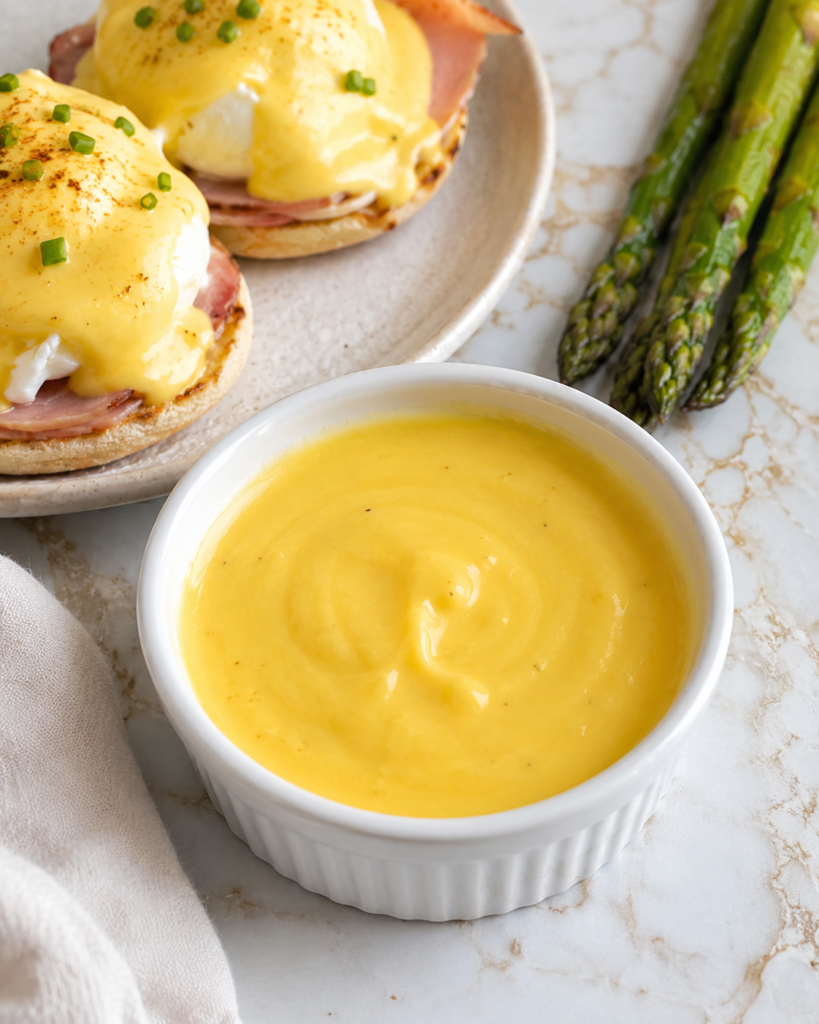
The sauce should look smooth, glossy, and pale yellow. It should taste buttery, lightly tangy, and balanced with just enough seasoning.
Serving Suggestions
Classic Hollandaise is most often served with eggs Benedict. The creamy sauce, poached eggs, Canadian bacon, and toasted English muffins make a warm brunch plate that feels special without being too complicated.
It is also wonderful over steamed or roasted asparagus. The lemony butter flavor pairs well with the tender vegetables and makes a simple side dish feel more finished.
Spoon hollandaise over roasted breakfast potatoes for a cozy weekend meal. The sauce settles into the crisp edges and makes the potatoes taste rich and comforting.
For a lighter plate, serve it with steamed broccoli, green beans, or roasted carrots. A small drizzle is enough to add flavor without making the vegetables feel too heavy.
Hollandaise also works well with fish, especially salmon, cod, or crab cakes. The buttery lemon flavor adds richness while still tasting fresh.
For a family brunch board, serve hollandaise in a small bowl with eggs, toast, ham, potatoes, and vegetables. Everyone can add a spoonful to the foods they like best.
Leftovers and Storage
Classic Hollandaise is best enjoyed fresh, but small leftovers can be stored carefully. Place the cooled sauce in an airtight container and refrigerate it for up to 1 day.
Reheating hollandaise takes patience because the sauce can separate if it gets too hot. Warm it very gently in a heat-safe bowl set over warm water, whisking often until it loosens.
You can also microwave it at very low power in short 5 to 10 second bursts. Stir well between each burst and stop as soon as the sauce is warm.
If the sauce looks too thick after chilling, whisk in a few drops of warm water. If it starts to separate, whisking may bring it back together, but the texture may not be as smooth as fresh.
Do not freeze hollandaise sauce. Freezing changes the texture of the egg and butter mixture, and it usually becomes grainy or separated after thawing.
For food safety, do not leave hollandaise sitting at room temperature for long periods. Serve it warm, store leftovers promptly, and reheat only what you plan to use.
Nutrition and Benefits
- Egg yolks give hollandaise its rich texture and help create a smooth, creamy sauce. They also provide nutrients like choline, vitamin A, and healthy fats.
- Butter adds the classic flavor and silky body that makes this sauce so comforting. Because hollandaise is rich, a small spoonful can add plenty of flavor to a meal.
- Lemon juice brings brightness and helps balance the richness of the butter. It keeps the sauce from tasting too heavy and gives it a fresh finish.
- Making hollandaise at home lets you control the salt, lemon, and seasoning. This is helpful when serving family members with different taste preferences.
- Hollandaise can encourage kids and adults to enjoy vegetables like asparagus, broccoli, or green beans. A small drizzle can make simple vegetables feel more inviting.
Recipe FAQ
Can I make hollandaise without a double boiler?
Yes, you can use a heat-safe bowl set over a small saucepan of simmering water. This works like a double boiler and gives the eggs gentle heat. Just make sure the bowl does not touch the water.
Why did my hollandaise sauce break?
Hollandaise usually breaks when the butter is added too quickly or the sauce gets too hot. Start with a slow drizzle and whisk constantly. If it breaks, try whisking in 1 teaspoon warm water to help bring it back together.
Can I use a blender for hollandaise?
Yes, blender hollandaise is a common shortcut. Blend the egg yolks and lemon juice, then slowly stream in hot melted butter while the blender runs. The stovetop method gives you more control, but the blender method can be quicker.
How do I know when hollandaise is thick enough?
The sauce should coat the back of a spoon and pour in a smooth ribbon. It should not be watery, but it should also not be stiff. If it is too thick, whisk in warm water a little at a time.
Is hollandaise safe to eat?
Hollandaise uses gently warmed egg yolks, so it is important to use fresh eggs and handle the sauce carefully. Keep the heat gentle, serve it soon after making, and refrigerate leftovers promptly. People who need to avoid undercooked eggs should use caution.
Can I make hollandaise less rich?
Yes, you can serve a smaller amount or add a little extra lemon juice for a brighter taste. You can also thin the sauce with warm water so it feels lighter. The butter is still key to the classic texture, so avoid reducing it too much.
What should I do if my hollandaise gets too thick?
Whisk in warm water 1 teaspoon at a time until the sauce loosens. Add the water slowly so it does not become too thin. The goal is a smooth sauce that can be spooned or poured easily.
A Buttery Brunch Sauce Worth Learning
Classic Hollandaise is one of those simple sauces that can make breakfast, brunch, or vegetables feel warm and special. With egg yolks, butter, lemon juice, and gentle whisking, it turns into a smooth, rich sauce that tastes comforting and homemade.
I love having this recipe ready for slow mornings, holiday plates, or family brunches. Once you learn the steady method, it becomes a dependable sauce worth making again for eggs, asparagus, potatoes, and more.