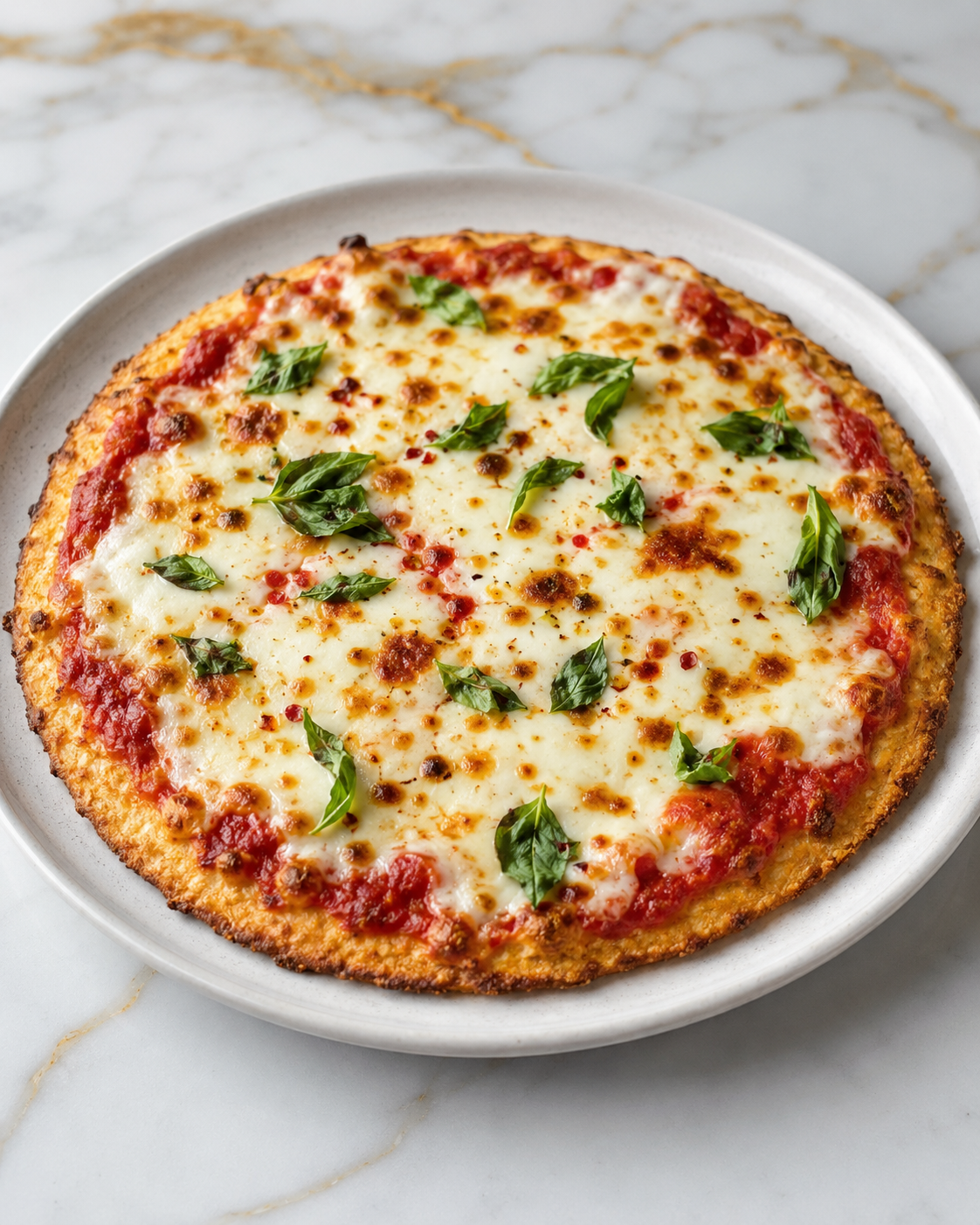
I make Almond Flour Pizza Crust when I want pizza night to feel a little lighter but still warm, fun, and satisfying. It has a tender bite, slightly crisp edges, and a mild nutty flavor that works well with classic pizza toppings.
I like this crust because it uses simple pantry ingredients and does not need yeast or a long rise time. It is a nice option for family pizza night when you want something homemade, dependable, and easy to shape on a busy evening.

Why You’ll Love This Recipe
Almond Flour Pizza Crust is a great recipe when you want a homemade crust without waiting for dough to rise. The dough comes together quickly in one bowl, and the crust bakes into a sturdy base that can hold sauce, cheese, and toppings.
The flavor is mild and cozy, with just enough nuttiness from the almond flour to make it taste special. It pairs well with marinara, mozzarella, vegetables, pepperoni, chicken, or simple herbs.
This crust is also helpful for families because it gives everyone a chance to build their own pizza. You can make one larger crust or divide the dough into smaller personal pizzas so kids can choose their favorite toppings.
Serves: 4 people
This recipe makes one medium pizza crust, about 10 to 12 inches wide, which serves 4 people when paired with a salad, vegetables, or another side. For hungry adults or older kids, you may want to double the recipe or make two crusts. If you are serving smaller children, one crust can stretch well with simple sides and fruit.
Ingredients You’ll Need
- 2 cups blanched almond flour
- 2 tablespoons coconut flour
- 1 teaspoon baking powder
- 1/2 teaspoon garlic powder
- 1/2 teaspoon dried oregano
- 1/2 teaspoon kosher salt
- 1/4 teaspoon black pepper
- 2 large eggs
- 2 tablespoons olive oil
- 1/2 cup shredded mozzarella cheese
- 1 tablespoon grated Parmesan cheese
- 1/4 cup pizza sauce, for topping
- 3/4 cup shredded mozzarella cheese, for topping
- 1/4 cup sliced pepperoni, optional
- 1/4 cup sliced bell peppers, optional
- 2 tablespoons sliced black olives, optional
- 1 tablespoon chopped fresh basil, optional
Pro Tips
Use blanched almond flour instead of almond meal for the best texture. Almond flour is finer and gives the crust a smoother, more tender bite.
Do not skip the coconut flour, even though the amount is small. It helps absorb moisture and keeps the crust from feeling too soft in the middle.
Press the dough thin and even before baking. Almond flour crust does not stretch like regular pizza dough, so shaping it carefully helps it bake evenly.
Pre-bake the crust before adding sauce and toppings. This helps the base firm up and keeps the finished pizza from getting soggy.
Keep the toppings light, especially if you are making this crust for the first time. Too much sauce or too many wet vegetables can make the crust softer than you want.
Let the pizza rest for a few minutes after baking. This makes it easier to slice and helps the crust hold together better.
Tools You’ll Need
- Large mixing bowl
- Whisk
- Rubber spatula
- Measuring cups
- Measuring spoons
- Baking sheet or pizza pan
- Parchment paper
- Rolling pin or clean hands for pressing
- Fork
- Pizza cutter or sharp knife
- Cooling rack, optional
Substitutions and Variations
Make It Dairy-Free
Use dairy-free shredded cheese in the crust and on top of the pizza. Choose a variety that melts well so the crust still holds together and the topping feels close to classic pizza.
Change the Seasoning
Swap the oregano for Italian seasoning, dried basil, or a pinch of rosemary. This keeps the crust familiar but lets you match the flavor to your toppings.
Use Different Toppings
Try cooked sausage, grilled chicken, mushrooms, spinach, tomatoes, or red onion. Keep watery toppings thin or pre-cook them so the crust stays firm.
Make It Heartier
Add extra protein on top, such as pepperoni, cooked ground turkey, shredded chicken, or bacon. This makes the pizza more filling while keeping the almond flour crust as the base.
Keep It Lighter
Use a thin layer of sauce, part-skim mozzarella, and plenty of vegetables. A lighter topping layer helps the crust bake well and keeps the meal fresh.
Make Ahead Tips
Almond Flour Pizza Crust can be made ahead in a few simple ways, which is helpful on busy family nights. You can mix the dry ingredients up to 3 days ahead and store them in an airtight container at room temperature. When it is time to cook, add the eggs, olive oil, and cheese, then shape and bake the crust.
You can also pre-bake the crust ahead of time and store it for later. Let the baked crust cool completely, then wrap it tightly and refrigerate it for up to 2 days. When you are ready for pizza, add the sauce, cheese, and toppings, then bake until hot and melted.
For longer storage, freeze the pre-baked crust without toppings. Place parchment between crusts if you make more than one, wrap well, and freeze for up to 2 months. Bake from frozen or thaw in the refrigerator overnight before topping.
Instructions
Step 1: Preheat the Oven
Preheat the oven to 400°F. Line a baking sheet or pizza pan with parchment paper so the crust does not stick.
If you have a pizza stone, you can place it in the oven while it preheats. A hot surface helps the bottom of the crust bake a little firmer.
Step 2: Mix the Dry Ingredients
In a large mixing bowl, whisk together the blanched almond flour, coconut flour, baking powder, garlic powder, dried oregano, kosher salt, and black pepper. Break up any small clumps of almond flour with the whisk.
The mixture should look even and lightly speckled with seasoning. Mixing the dry ingredients first helps the crust taste balanced in every bite.
Step 3: Add the Wet Ingredients
Add the eggs and olive oil to the bowl with the dry ingredients. Stir with a rubber spatula until the dough starts to come together.
The dough will be softer and more delicate than regular pizza dough. It should feel moist but not runny, and it should hold together when pressed.
Step 4: Stir in the Cheese
Add the shredded mozzarella cheese and grated Parmesan cheese to the dough. Stir until the cheese is evenly mixed throughout.
The cheese helps bind the almond flour crust and adds a familiar pizza flavor. If the dough feels sticky, let it sit for 2 to 3 minutes so the coconut flour can absorb a little more moisture.
Step 5: Shape the Crust
Transfer the dough to the prepared parchment paper. Use clean hands or a rolling pin with another piece of parchment on top to press it into a 10 to 12 inch circle.
Try to keep the crust about 1/4 inch thick across the center, with slightly thicker edges if you like a more classic pizza shape. Even thickness helps the crust bake without soft spots.
Step 6: Dock the Dough
Use a fork to prick the surface of the crust several times. This helps steam escape and keeps the crust from puffing unevenly in the oven.
Do not press all the way through the dough. Small shallow holes are enough to help the crust bake evenly.
Step 7: Pre-Bake the Crust
Bake the plain crust at 400°F for 10 to 12 minutes. It should look lightly golden around the edges and set in the center.
If the middle still looks very soft, bake it for 1 to 2 more minutes before adding toppings. A firm pre-baked crust gives the best final texture.
Step 8: Add the Sauce and Toppings
Remove the crust from the oven and spread the pizza sauce over the top, leaving a small border around the edges. Sprinkle with shredded mozzarella cheese, then add pepperoni, bell peppers, black olives, or any toppings you like.
Keep the toppings in an even layer so the crust does not get weighed down. If using watery vegetables, pat them dry first or cook them briefly before adding.
Step 9: Bake the Pizza
Return the pizza to the oven and bake for 6 to 8 minutes. The cheese should be melted, the toppings should be hot, and the edges of the crust should look golden.
For a more browned top, broil the pizza for 1 minute at the end. Watch closely because almond flour can darken quickly.
Step 10: Rest and Slice
Let the pizza rest on the pan for 5 minutes before slicing. This helps the crust firm up and makes it easier to lift each piece.
Use a pizza cutter or sharp knife to slice the pizza into wedges or squares. Add fresh basil after baking if you want a bright, fresh finish.
Serving Suggestions
Serve Almond Flour Pizza Crust with a simple green salad for an easy dinner that feels balanced. The crisp lettuce and light dressing pair well with the warm cheese and tender crust.
Roasted vegetables are another good side, especially broccoli, zucchini, carrots, or asparagus. They add color and make the meal feel more filling without needing another main dish.
For a kid-friendly pizza night, set out small bowls of toppings and let everyone build their own section. This makes dinner feel fun while still keeping the recipe simple and manageable.
You can serve this pizza with marinara or ranch on the side for dipping. A little dip can make the crust more fun for kids and adds extra flavor to each bite.
For a lighter lunch, pair a slice or two with sliced cucumbers, cherry tomatoes, or fruit. It keeps the plate fresh and easy without making the meal feel too heavy.
This crust also works well as a flatbread base. Top it with pesto, grilled chicken, mozzarella, and fresh herbs for a simple change from classic pizza sauce.
Leftovers and Storage
Store leftover pizza slices in an airtight container in the refrigerator for up to 3 days. Let the slices cool completely before storing so they do not steam and soften too much. Place parchment between slices if you need to stack them.
To reheat, use the oven, toaster oven, or air fryer for the best texture. Warm slices at 350°F for 5 to 8 minutes, or until the cheese is melted and the crust is heated through. The microwave works for a quick option, but the crust will be softer.
You can also freeze leftover slices. Wrap each slice tightly and freeze for up to 2 months. Reheat from frozen in the oven or air fryer until hot, adding a few extra minutes as needed.
Nutrition and Benefits
- Almond flour adds healthy fats, plant-based protein, and a naturally tender texture to the crust.
- This crust is lower in carbohydrates than many traditional wheat-based pizza crusts, depending on the toppings used.
- Eggs help bind the dough and add protein, making the crust more satisfying.
- Using simple toppings like cheese, vegetables, and lean protein can turn this into a balanced family meal.
- Making pizza at home lets you control the amount of sauce, cheese, salt, and toppings for your family’s needs.
Recipe FAQ
Can I use almond meal instead of almond flour?
Almond meal can work, but the texture will be more coarse and rustic. Blanched almond flour gives the smoothest, most tender crust. If using almond meal, expect a slightly heavier bite.
Why is my almond flour crust soft in the middle?
The crust may need a longer pre-bake, or the toppings may have added too much moisture. Make sure the center looks set before adding sauce and cheese. Use a light layer of sauce and pat wet toppings dry.
Can I make this crust without coconut flour?
Coconut flour helps absorb moisture, so leaving it out can make the crust softer. If you do not have it, you can try adding 1 to 2 extra tablespoons of almond flour. The texture may still be more delicate.
Is this crust gluten-free?
Yes, this crust is gluten-free as long as all packaged ingredients are labeled gluten-free. Almond flour, coconut flour, eggs, oil, and cheese are naturally gluten-free. Always check labels if cooking for someone with celiac disease or a serious sensitivity.
Can I make personal pizzas with this dough?
Yes, this dough works well for personal pizzas. Divide it into 2 to 4 smaller portions and press each one into a thin round. The pre-bake time may be a little shorter, so check them early.
Can I cook this crust on a pizza stone?
Yes, a pizza stone can help the bottom bake firmer. Shape the crust on parchment, then slide the parchment onto the hot stone carefully. Pre-bake as directed, then add toppings and finish baking.
How do I keep the crust from breaking?
Let the pizza rest for 5 minutes after baking before slicing. Almond flour crust is more delicate than regular pizza dough, especially when very hot. A thin, even shape and proper pre-bake also help it hold together.
A Homemade Pizza Night That Feels Easy
Almond Flour Pizza Crust is a simple way to make pizza night feel homemade, cozy, and a little lighter. The crust is tender, flavorful, and sturdy enough for favorite toppings when it is shaped evenly and baked with care.
I love that it does not need yeast, rising time, or complicated steps. It is a dependable recipe for family dinners, quick lunches, or meal prep when you want something warm and satisfying.