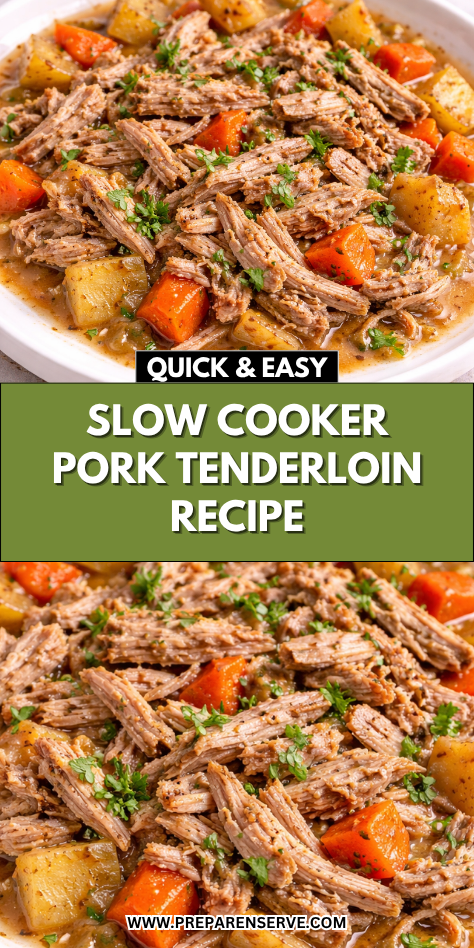
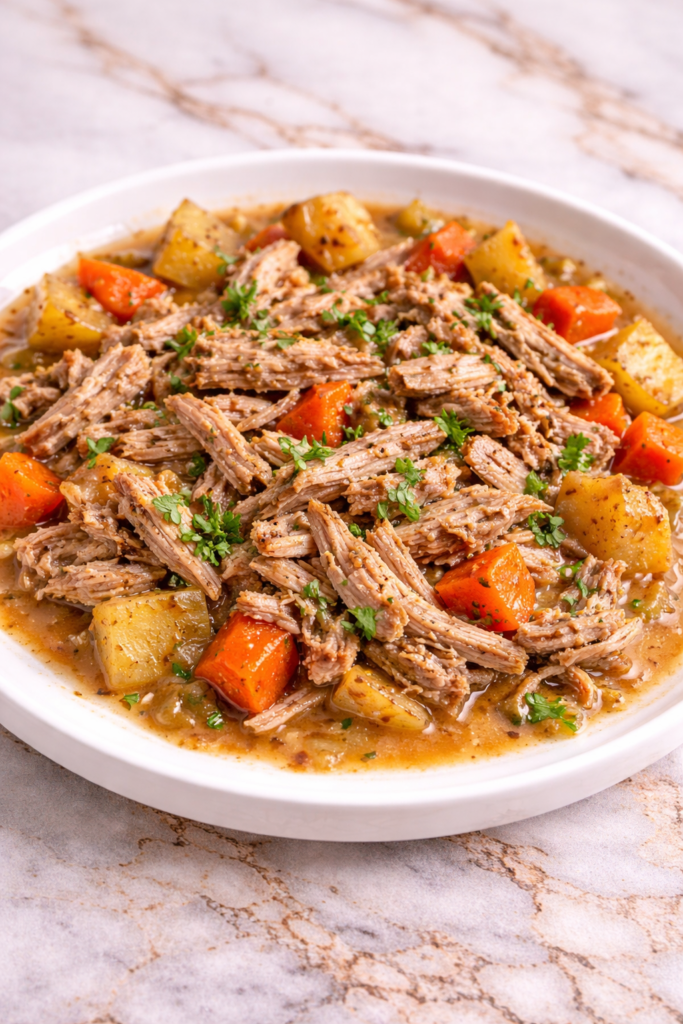
Slow cooker pork tenderloin is a simple, flavorful, and hands-off main dish that’s perfect for busy weeknights, family dinners, or meal prep. Cooking pork tenderloin in a slow cooker ensures tender, juicy meat infused with herbs, spices, and optional sauces, while freeing you from standing over the stove.
In my kitchen, this recipe has become a favorite because it’s easy to prepare, requires minimal effort, and consistently delivers succulent, flavorful pork.
What makes slow cooker pork tenderloin special is the combination of convenience and taste. The slow cooking process allows the flavors from garlic, herbs, and seasonings to penetrate the meat deeply, while maintaining tenderness.
Unlike oven-baked tenderloin, the slow cooker creates a slightly different texture, almost meltingly soft, making it ideal for shredding or slicing.
Why You’ll Love This Recipe
This slow cooker pork tenderloin recipe is perfect for anyone who loves delicious, juicy pork without spending hours in the kitchen. Simply season the pork, add it to the slow cooker with a few ingredients, and let it cook while you focus on other tasks. The result is a tender, aromatic, and flavorful main dish with minimal effort.
Families appreciate this recipe because it’s foolproof and widely appealing. The pork remains juicy, the seasoning is mild but flavorful, and it pairs beautifully with a variety of sides.
Kids and adults alike enjoy the tender texture and rich taste, making it a reliable go-to for busy weeknights or casual family meals.
The recipe is also incredibly versatile. You can cook the pork with vegetables like carrots, potatoes, or onions in the slow cooker for a complete one-pot meal.
Optional sauces or glazes can be added to create sweet, tangy, or savory variations depending on your preference. It’s a hands-off recipe that doesn’t compromise on flavor or nutrition.
Serves: 4–6 people
A single pork tenderloin, typically weighing 1 to 1.5 pounds, serves four to six people depending on portion size. This recipe scales easily if you need to prepare multiple tenderloins for larger gatherings or meal prep.
Ingredients You’ll Need
Pork Tenderloin
- 1–1.5 pounds pork tenderloin, trimmed of silver skin and excess fat
Slow Cooker Seasonings
- 2 tablespoons olive oil
- 3 cloves garlic, minced
- 1 teaspoon salt
- 1/2 teaspoon black pepper
- 1 teaspoon dried thyme or rosemary
- Optional: 1/2 teaspoon smoked paprika for depth of flavor
Optional Sauce or Glaze
- 1/4 cup low-sodium chicken broth or apple cider
- 2 tablespoons honey or maple syrup
- 1 tablespoon Dijon mustard
- 1 teaspoon balsamic vinegar
Optional Vegetables
- 2 carrots, sliced
- 1 medium onion, sliced
- 2–3 potatoes, diced
- 1 cup green beans or broccoli florets (added near end of cooking)
Optional Garnish
- Fresh parsley or thyme
- Lemon or lime wedges
Pro Tips
Trim silver skin and excess fat before cooking. Silver skin does not break down during slow cooking and can make the tenderloin tough.
Pat the pork dry before seasoning to help the rub adhere and enhance flavor.
Use a meat thermometer to check internal temperature if desired. While slow cookers vary, pork is perfectly cooked at 145°F (63°C) internally and can be left to cook longer for shredding.
If adding vegetables, place root vegetables like carrots and potatoes at the bottom of the slow cooker for even cooking. Add quick-cooking vegetables like green beans or broccoli near the last 30 minutes to prevent overcooking.
Optional sauces or glazes can be added at the start for deep flavor or during the last 30 minutes of cooking to create a sticky, caramelized finish.
Slow cooker pork tenderloin is ideal for meal prep. Cook the pork and vegetables together, then portion into containers for easy lunches or dinners throughout the week.
Tools You’ll Need
- Slow cooker (4–6 quart size recommended)
- Knife and cutting board
- Small bowl for mixing seasonings or glaze
- Tongs or spatula for handling the pork
- Measuring cups and spoons
Substitutions and Variations
Use fresh herbs instead of dried for a brighter flavor; double the amount of fresh herbs to match intensity.
Swap honey or maple syrup with brown sugar or agave for a different sweetness profile.
Try different liquids: apple juice, chicken broth, or even white wine can add flavor to the slow cooker.
Add root vegetables like sweet potatoes, parsnips, or turnips for extra flavor and nutrition.
For a tangy variation, incorporate mustard, balsamic vinegar, or lemon juice into the slow cooker during the last hour of cooking.
Slow cooker pork tenderloin is a hands-off, protein-packed dish that’s easy to prepare, versatile, and consistently tender and flavorful. Its juicy texture, aromatic seasoning, and adaptability make it a recipe you’ll return to again and again.
Make Ahead Tips
Slow cooker pork tenderloin is perfect for preparing ahead of time, making it an ideal recipe for busy weeknights, meal prep, or family gatherings. You can season or marinate the pork tenderloin up to 24 hours in advance and store it in the refrigerator.
Use a resealable bag or airtight container with olive oil, garlic, and herbs. This allows the flavors to penetrate the meat, creating a more flavorful and tender final dish.
Vegetables that accompany the pork can also be prepped in advance. Slice carrots, onions, and potatoes, and store them in separate containers in the refrigerator. This ensures that the vegetables cook evenly in the slow cooker and allows for quick assembly when you’re ready to cook.
If you plan to use a glaze or sauce, prepare it ahead of time and store it in a small airtight container. Brush it over the tenderloin during the last 30–60 minutes of cooking for a slightly caramelized finish, or mix it with the slow cooker juices for a flavorful sauce.
For meal prep purposes, cooked pork tenderloin can be stored in the refrigerator for up to three days. Slice the pork immediately after cooking and portion it with cooked vegetables for easy lunches or dinners throughout the week. This makes slow cooker pork tenderloin a convenient, protein-rich meal option for busy days.
For long-term storage, the cooked tenderloin can be frozen. Wrap tightly in plastic wrap, then place in a freezer-safe bag or container. Freeze for up to three months. Thaw overnight in the refrigerator before reheating gently in a skillet, oven, or microwave. Avoid high heat to maintain the tender, juicy texture.
Instructions
Step 1: Prepare the Slow Cooker
Lightly grease the slow cooker with olive oil or nonstick spray. This prevents the pork and vegetables from sticking and helps with cleanup.
Step 2: Season the Pork
Pat the pork tenderloin dry with paper towels to remove any moisture. Trim off silver skin and excess fat to ensure even cooking.
In a small bowl, combine olive oil, minced garlic, salt, black pepper, and dried herbs like rosemary or thyme. Rub the mixture evenly over the pork, coating all sides.
Step 3: Sear the Pork (Optional)
For enhanced flavor and color, sear the pork tenderloin in a hot skillet over medium-high heat for 2–3 minutes per side. This step is optional but creates a golden-brown crust that adds aroma and depth.
Step 4: Add Vegetables
Place chopped root vegetables like carrots, onions, and potatoes at the bottom of the slow cooker. They form a flavorful base for the pork and cook evenly while absorbing the juices.
Step 5: Place Pork in Slow Cooker
Lay the seasoned pork tenderloin on top of the vegetables. Add optional liquids, such as chicken broth, apple cider, or a small amount of water, to keep the pork moist and create a flavorful sauce.
Step 6: Cook on Low or High
Cover and cook on low for 6–8 hours or on high for 3–4 hours, depending on your schedule. The pork is done when it reaches an internal temperature of 145°F (63°C). Root vegetables should be tender, and the pork should be juicy and easy to slice or shred.
Step 7: Add Quick-Cooking Vegetables (Optional)
If adding quick-cooking vegetables like green beans or broccoli, add them during the last 30–45 minutes of cooking. This prevents overcooking and maintains their bright color and texture.
Step 8: Optional Glaze
Brush a glaze, such as a honey-Dijon mixture or balsamic reduction, over the pork during the last 30–60 minutes of cooking. This adds a lightly caramelized finish and enhances flavor.
Step 9: Rest and Slice
Remove the pork tenderloin from the slow cooker and place it on a cutting board. Tent loosely with foil and allow it to rest for 5–10 minutes. Slice into 1/2–inch medallions and serve with the cooked vegetables and sauce from the slow cooker.
Serving Suggestions
Serve slow cooker pork tenderloin with the cooked root vegetables for a one-pot meal. Pair with steamed greens, rice, quinoa, or mashed potatoes to create a complete dinner.
For a lighter option, serve the pork over a bed of fresh salad greens, adding roasted or steamed vegetables and a drizzle of the slow cooker juices as dressing.
Leftover tenderloin slices can be used in sandwiches, wraps, grain bowls, or salads. Combine with roasted vegetables or whole grains for quick, nutritious lunches throughout the week.
Add fresh herbs like parsley, thyme, or rosemary for garnish and visual appeal. A squeeze of lemon or lime over the top brightens the flavors and balances the richness of the pork.
Slow cooker pork tenderloin is versatile enough for casual weeknight dinners or special occasions. Its tender, juicy texture and flavorful seasoning make it a recipe you’ll return to again and again, whether served fresh, in meal prep containers, or as part of a creative leftover dish.
This slow cooker method delivers a hands-off, protein-rich, and nutrient-dense meal that’s easy to prepare, adaptable, and satisfying. It’s a dependable recipe that combines convenience, flavor, and nutrition for busy households or family dinners.
Leftovers and Storage
Slow cooker pork tenderloin is delicious fresh, but it also stores very well, making it ideal for meal prep or quick weekday dinners. Once cooked, allow the pork tenderloin to cool slightly before transferring it to an airtight container.
Properly stored, cooked pork tenderloin will remain fresh in the refrigerator for three to four days, maintaining its tender, juicy texture.
If you have leftover slices, reheat gently to preserve flavor and moisture. Place the pork in a baking dish, cover lightly with foil, and warm in a 325°F (163°C) oven for 10–15 minutes. Alternatively, reheat in a nonstick skillet over low heat or use short microwave intervals, checking frequently to avoid drying out the meat.
For longer-term storage, pork tenderloin can be frozen. Wrap the meat tightly in plastic wrap or aluminum foil and place it in a freezer-safe bag or container. Frozen tenderloin will maintain quality for up to three months.
Thaw overnight in the refrigerator and reheat gently in the oven or skillet to retain tenderness. This is especially useful for meal prepping multiple portions or for having protein on hand for quick meals.
Leftover pork tenderloin can also be repurposed creatively. Slice or dice it for sandwiches, wraps, or sliders. Add it to salads, grain bowls, pasta dishes, or stir-fries to create protein-rich meals with minimal effort. You can even shred the pork and mix it with a light sauce or glaze for tacos or burritos, making it extremely versatile for quick weeknight meals.
Optional sauces or glazes can be added when reheating to enhance flavor and moisture. A light drizzle of balsamic reduction, honey-mustard glaze, or reserved slow cooker juices will help restore freshness and ensure the pork remains juicy.
Nutrition and Benefits
Slow cooker pork tenderloin is a lean, protein-packed main dish that provides essential nutrients while remaining low in fat. A 3-ounce serving of pork tenderloin contains approximately 22 grams of high-quality protein, making it an excellent option for muscle repair, satiety, and sustained energy.
In addition to protein, pork tenderloin is a source of essential vitamins and minerals, including B vitamins (B6 and B12), selenium, phosphorus, and zinc. These nutrients support energy metabolism, nervous system function, and immune health.
Compared to other cuts of pork, tenderloin is naturally lean yet remains tender and juicy. The slow-cooking method enhances the flavor without requiring excessive fats or oils, making it a healthier choice for families or individuals focused on balanced nutrition.
When paired with vegetables such as carrots, potatoes, and green beans, the meal provides fiber, vitamins, and antioxidants. Adding whole grains like quinoa, brown rice, or farro creates a balanced, nutrient-dense dinner. Optional garnishes like fresh herbs or a drizzle of olive oil further increase nutrient content and add visual appeal.
This slow cooker pork tenderloin recipe is also highly adaptable to a variety of dietary needs, including high-protein, low-fat, and family-friendly meal plans. Its versatility allows it to serve as a main course, part of meal prep, or a component of creative leftover dishes.
Recipe FAQ
Can I cook pork tenderloin without searing it?
Yes. Searing is optional but recommended for a golden-brown exterior and added flavor. You can place the pork directly into the slow cooker and it will still cook tender and juicy.
How do I know when the pork is done?
Use a meat thermometer to ensure the thickest part reaches 145°F (63°C). While slow cookers vary, pork tenderloin is safe to eat at this temperature and will be juicy and tender.
Can I marinate the pork overnight?
Yes. Marinating for 30 minutes to 24 hours enhances flavor and tenderness. Use a sealed bag or container in the refrigerator.
Can I make this recipe gluten-free?
Absolutely. The basic recipe is naturally gluten-free. Just ensure that any glazes or sauces used are also gluten-free.
Can I cook more than one tenderloin at a time?
Yes. Make sure there’s space between tenderloins in the slow cooker for even cooking. Adjust cooking times slightly if the slow cooker is crowded.
What sides pair well with slow cooker pork tenderloin?
Roasted or steamed vegetables, mashed or roasted potatoes, rice, quinoa, or a fresh salad pair beautifully with this pork tenderloin.
Can leftovers be used for meal prep?
Yes. Slice or dice leftover pork for salads, wraps, grain bowls, or sandwiches. Reheat gently to maintain tenderness and flavor.
A Hands-Off, Flavorful Pork Dish You’ll Make Again and Again
Slow cooker pork tenderloin is tender, juicy, and packed with flavor.
The combination of garlic, herbs, and optional sauces infuses the meat with savory richness while keeping preparation simple.
Whether for a weeknight dinner, family meal, or meal prep, this recipe is one you’ll return to again and again, delivering protein, flavor, and satisfaction in every bite.