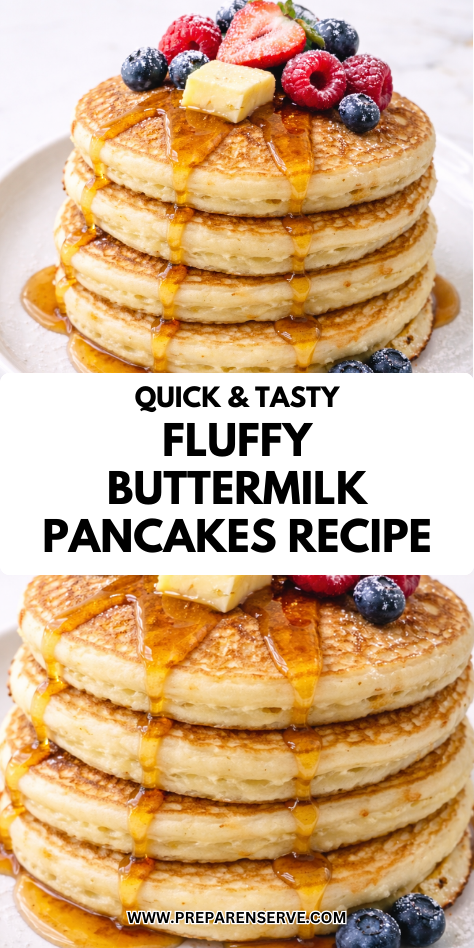
Fluffy buttermilk pancakes are one of those recipes that instantly make a morning feel special. The smell of pancakes cooking on the griddle has a way of bringing everyone into the kitchen, no matter how early it is. In my home, these pancakes are tied to slow weekends, cozy mornings, and the simple joy of sitting down together.
This recipe came together after many batches that were either too flat, too dense, or lacking that soft, airy texture everyone hopes for. I wanted pancakes that were tall, tender, and light, with just a hint of tang from the buttermilk. These fluffy buttermilk pancakes have become our go-to because they turn out beautifully every single time.
Why You’ll Love This Recipe
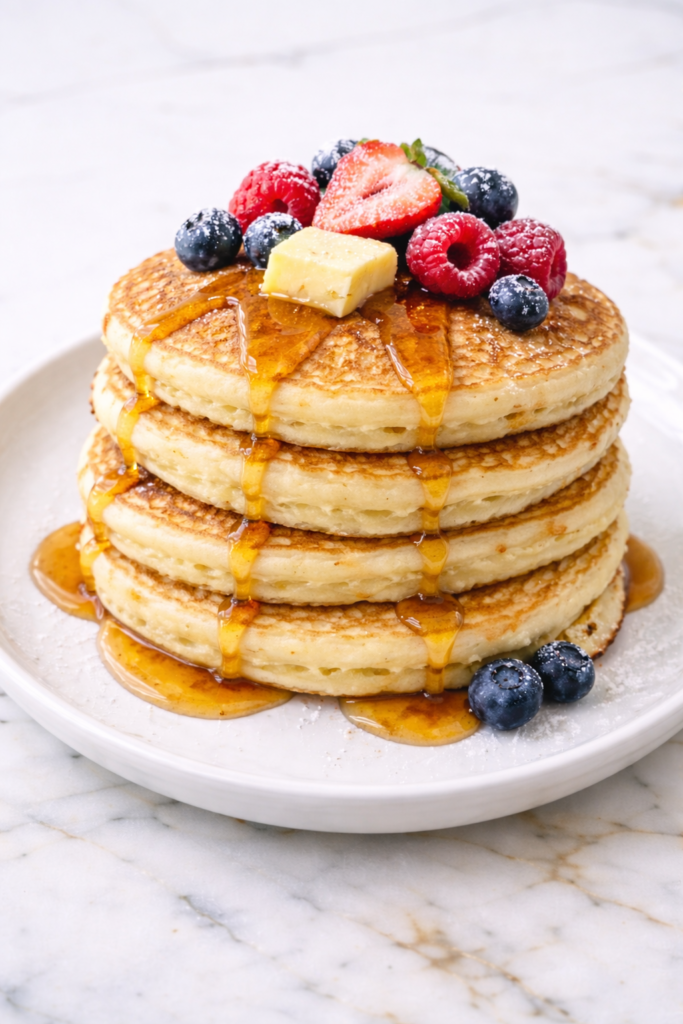
This Fluffy Buttermilk Pancakes Recipe creates pancakes that are soft, thick, and incredibly tender. The buttermilk adds a gentle tang that balances the richness and sweetness perfectly. Each bite feels light and comforting without being heavy.
The recipe is simple and approachable, even for beginners. It uses basic ingredients and straightforward steps that are easy to follow. You don’t need any special equipment or advanced techniques.
Families love this recipe because it’s familiar and crowd-pleasing. Kids enjoy the fluffy texture and mild flavor, while adults appreciate the balance and homemade feel. These pancakes work for everyday breakfasts or special mornings.
Serves: 2 people
This recipe makes enough pancakes for two generous servings. It’s perfect for a relaxed breakfast or brunch at home. The recipe can easily be doubled or tripled for larger families or guests.
Ingredients You’ll Need
Pancake Batter
- 1 cup all-purpose flour
- 1 tablespoon granulated sugar
- 1 teaspoon baking powder
- 1/2 teaspoon baking soda
- 1/4 teaspoon salt
- 1 cup buttermilk
- 1 large egg, room temperature
- 2 tablespoons melted butter or oil
- 1 teaspoon vanilla extract
For Cooking
- Butter or oil, for greasing the pan
Pro Tips
Do not overmix the batter. Pancake batter should look slightly lumpy. Overmixing can make pancakes tough instead of fluffy.
Use real buttermilk for best results. The acidity reacts with the baking soda to create lift. This helps the pancakes rise and stay airy.
Let the batter rest for a few minutes before cooking. Resting allows the flour to hydrate and the leavening to activate. This leads to better texture.
Cook pancakes over medium heat. Heat that is too high can burn the outside before the inside cooks through. Steady heat gives evenly cooked pancakes.
Flip pancakes only once. Wait until bubbles form and the edges look set. This helps them rise properly and stay fluffy.
Tools You’ll Need
- Mixing bowls
- Whisk or fork
- Measuring cups and spoons
- Griddle or nonstick skillet
- Spatula
Substitutions and Variations
If you don’t have buttermilk, you can make a substitute by mixing milk with a little lemon juice or vinegar. Let it sit for a few minutes before using. This mimics the acidity of buttermilk.
Whole wheat flour can replace part of the all-purpose flour for a heartier pancake. Start by swapping half the flour. This keeps the pancakes fluffy while adding flavor.
For a dairy-free version, use plant-based milk with lemon juice and dairy-free butter. The pancakes will still be soft and tender. Choose unsweetened milk for best results.
You can add blueberries, chocolate chips, or sliced bananas to the batter. Fold them in gently at the end. Keep add-ins light so the pancakes cook evenly.
For extra richness, separate the egg and whip the egg white before folding it in. This adds even more fluffiness. It’s optional but gives great results.
Make Ahead Tips
Fluffy buttermilk pancakes are best enjoyed fresh, but a little planning can make busy mornings easier. The dry ingredients can be mixed together the night before and stored in an airtight container. This cuts down on prep time and keeps mornings relaxed.
The batter itself can be mixed a few hours ahead and kept covered in the refrigerator. Give it a gentle stir before cooking, as it may thicken slightly. Avoid making the batter too far in advance, as the leavening works best when fresh.
Cooked pancakes can also be made ahead and reheated. Let them cool completely, then store them stacked with parchment paper between each pancake. This keeps them from sticking and makes reheating simple.
Instructions
Step 1: Mix the Dry Ingredients
In a large mixing bowl, whisk together the flour, sugar, baking powder, baking soda, and salt. Whisking helps distribute the leavening evenly. This step ensures consistent rise and texture.
Set the bowl aside once everything is well combined. Keeping dry ingredients ready makes mixing faster. It also prevents overmixing later.
Step 2: Mix the Wet Ingredients
In a separate bowl, whisk together the buttermilk, egg, melted butter or oil, and vanilla extract. Mix until smooth and fully combined. The mixture should look creamy and uniform.
Using room temperature ingredients helps everything blend smoothly. This improves the final texture of the pancakes. Cold ingredients can affect rise.
Step 3: Combine Wet and Dry Ingredients
Pour the wet ingredients into the bowl with the dry ingredients. Stir gently with a spatula or spoon until just combined. The batter should be slightly lumpy.
Do not overmix the batter. A few lumps are perfectly fine. Overmixing can make pancakes dense instead of fluffy.
Step 4: Rest the Batter
Let the batter rest for about 5 minutes. This allows the flour to hydrate and the leavening to activate. Resting improves the overall texture.
During this time, the batter may thicken slightly. This is normal and helpful. It leads to thicker, fluffier pancakes.
Step 5: Heat the Pan
Heat a griddle or nonstick skillet over medium heat. Lightly grease with butter or oil. The pan should be hot but not smoking.
Test the heat by adding a small drop of batter. It should sizzle gently. Proper heat ensures even cooking.
Step 6: Cook the Pancakes
Pour about 1/4 cup of batter onto the hot pan for each pancake. Cook until bubbles form on the surface and the edges look set. This usually takes 2 to 3 minutes.
Flip the pancakes carefully and cook the other side for 1 to 2 minutes. The pancakes should be golden brown and cooked through. Remove from the pan and repeat with remaining batter.
Step 7: Keep Pancakes Warm
If cooking in batches, keep finished pancakes warm. Place them on a plate and cover loosely with foil. You can also keep them in a low oven.
Keeping pancakes warm helps everything finish at the same time. This makes serving easier. Warm pancakes taste best.
Serving Suggestions
Serve fluffy buttermilk pancakes warm with butter and maple syrup. This classic combination highlights their soft texture. It’s simple and always satisfying.
Fresh fruit like berries or sliced bananas pairs beautifully with pancakes. The freshness balances the richness. It also adds color and brightness.
For a more filling breakfast, serve pancakes with eggs or breakfast sausage. The savory sides complement the mild sweetness. This works well for brunch.
Pancakes are also delicious with a dollop of whipped cream or yogurt. These toppings add creaminess without overpowering the flavor. They make the meal feel special.
You can drizzle pancakes with honey or fruit syrup for variety. Small changes keep breakfast exciting. Pancakes are easy to customize for everyone.
Leftovers and Storage
Leftover fluffy buttermilk pancakes should be cooled completely before storing. Place them in an airtight container or stack them with parchment paper between each pancake. They can be stored in the refrigerator for up to three days.
To reheat, warm pancakes in the microwave for short intervals until heated through. You can also reheat them in a toaster or on a skillet over low heat. These methods help restore softness without drying them out.
Pancakes freeze very well for longer storage. Wrap individual pancakes or stack them with parchment paper and place them in a freezer-safe bag. Freeze for up to one month and reheat directly from frozen.
Nutrition and Benefits
Fluffy buttermilk pancakes provide a comforting and satisfying breakfast option. They contain carbohydrates that offer energy to start the day. When paired with protein or fruit, they become a more balanced meal.
Buttermilk adds a gentle tang and contributes to a tender texture. It also contains calcium and protein. Using real buttermilk enhances both flavor and structure.
Making pancakes at home allows you to control ingredients and portion sizes. You can adjust sugar, toppings, and sides to suit your family’s needs. This makes homemade pancakes a thoughtful and flexible breakfast choice.
Recipe FAQ
Why are my pancakes flat instead of fluffy?
Flat pancakes are often caused by overmixing the batter or expired leavening. Stir just until combined and check that baking powder and baking soda are fresh. Letting the batter rest also helps.
Can I make these pancakes without buttermilk?
Yes, you can use milk mixed with lemon juice or vinegar. Let it sit for a few minutes before using. This creates the acidity needed for fluffiness.
Why are my pancakes burning on the outside?
The heat may be too high. Cook pancakes over medium heat for even cooking. Lower heat helps the inside cook through without burning.
Can I add fruit directly to the batter?
Yes, blueberries, bananas, or chocolate chips work well. Fold them in gently after mixing the batter. Avoid adding too many to keep pancakes cooking evenly.
How do I know when to flip pancakes?
Flip when bubbles form on the surface and the edges look set. This usually takes a few minutes. Flipping too early can prevent proper rising.
Can I double this recipe?
Yes, this recipe doubles easily. Simply double all ingredients and cook in batches. Keep pancakes warm until ready to serve.
Are these pancakes kid-friendly?
Yes, they are very kid-friendly. The flavor is mild and soft, making them easy to enjoy. Toppings can be customized for different tastes.
A Breakfast Worth Slowing Down For
Fluffy buttermilk pancakes are the kind of breakfast that turns ordinary mornings into something special. Their soft texture, gentle sweetness, and comforting warmth make them a favorite for all ages.
Whether enjoyed on a quiet morning or shared around the table, they bring a sense of ease and comfort to the day.