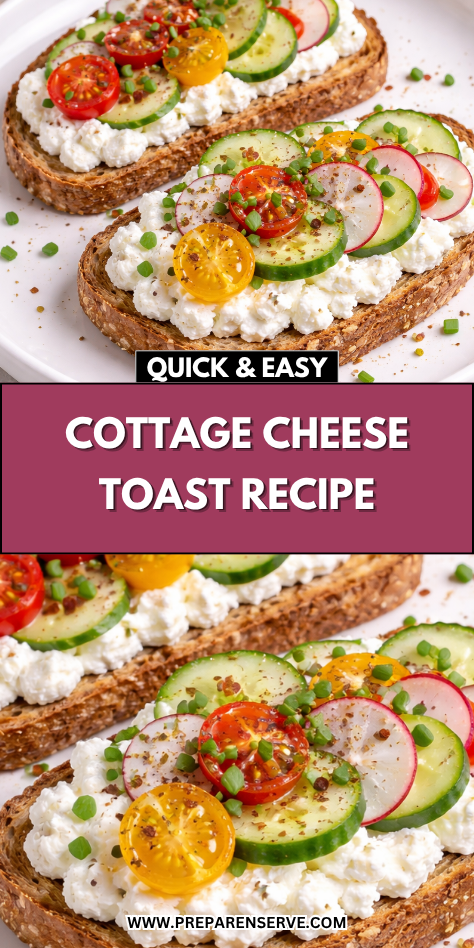
Cottage cheese toast is a simple, nutritious, and versatile breakfast or snack option that’s both creamy and satisfying. The combination of rich, protein-packed cottage cheese on crisp, toasted bread creates a balanced base that can be customized with fruits, vegetables, herbs, or seasonings.
In my kitchen, this recipe has become a go-to for quick breakfasts because it’s easy to prepare, endlessly adaptable, and keeps you full for hours.
What makes cottage cheese toast special is its combination of creamy protein and a crunchy base, which makes each bite delicious and satisfying.
Unlike other spreads, cottage cheese provides a subtle tang and a rich texture, which pairs perfectly with sweet toppings like berries or honey and savory additions like avocado, tomatoes, or smoked salmon.
Why You’ll Love This Recipe
Cottage cheese toast is a versatile, nutrient-dense option for breakfast, lunch, or a snack. It is high in protein, making it a filling choice that helps sustain energy levels throughout the day. The toast can be dressed up with a variety of toppings, from fresh fruits and nuts to savory vegetables and herbs, allowing endless creativity.
Families love this recipe because it’s easy to prepare, appealing to both kids and adults, and allows each person to customize their toast to taste. It’s an excellent way to sneak extra protein into breakfast or a snack while keeping meals simple and satisfying.
The recipe is also incredibly flexible. Use your favorite bread—whole grain, sourdough, rye, or gluten-free—to suit dietary needs and flavor preferences. Add sweet or savory toppings depending on the mood, and it can easily transition from breakfast to lunch or even a light dinner.
Serves: 2–3 people
This recipe makes approximately 2–3 servings, depending on portion size. Each serving typically consists of one or two slices of toast topped with cottage cheese and additional toppings. The recipe scales easily for larger families or gatherings.
Ingredients You’ll Need
Base Ingredients
- 2–3 slices whole-grain bread, sourdough, or bread of choice
- 1 cup cottage cheese (full-fat or low-fat)
- 1 teaspoon olive oil or butter (optional, for brushing bread)
- Pinch of salt and pepper
Sweet Topping Options
- Fresh berries (strawberries, blueberries, raspberries)
- Banana slices
- Honey or maple syrup drizzle
- Chopped nuts (walnuts, almonds, or pecans)
- Cinnamon or nutmeg
Savory Topping Options
- Sliced avocado
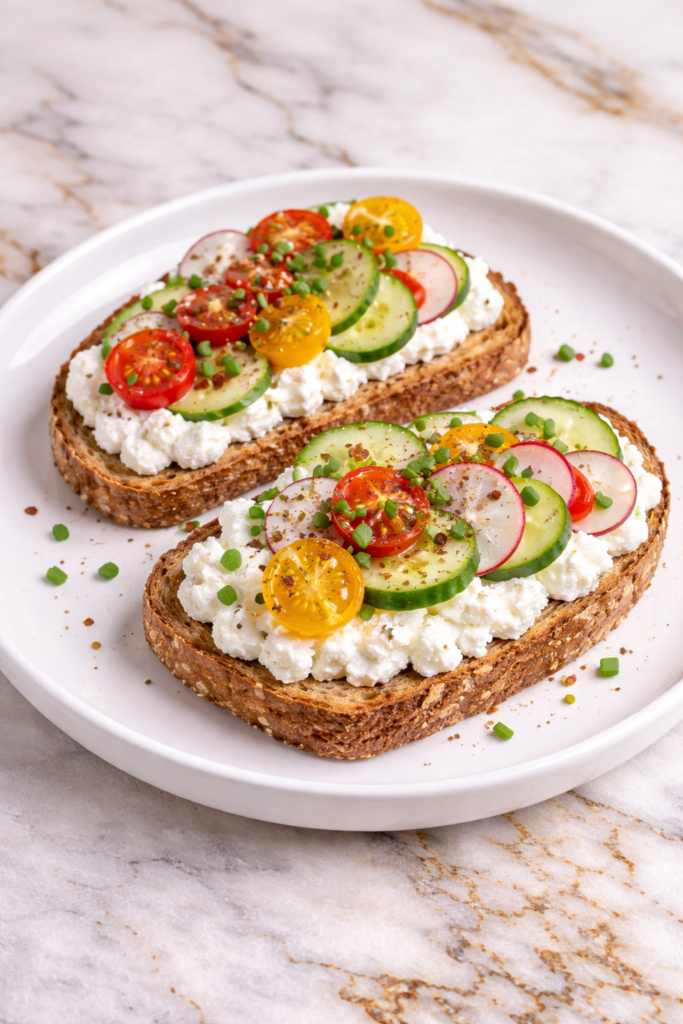
- Cherry tomatoes, halved
- Cucumber slices
- Smoked salmon
- Fresh herbs (chives, parsley, or basil)
- Red pepper flakes or everything bagel seasoning
Optional Enhancements
- Lemon zest for brightness
- Balsamic glaze drizzle
- Microgreens or arugula for extra freshness
Pro Tips
Use full-fat cottage cheese for a creamier, richer toast. Low-fat or non-fat options will work but may be slightly less creamy.
Toast the bread until golden and crispy. A sturdy base ensures the toast can hold toppings without becoming soggy.
Season the cottage cheese lightly with salt and pepper before spreading for enhanced flavor. Optional spices like smoked paprika or garlic powder can add a subtle savory note.
Layer toppings thoughtfully. For example, place a base layer of avocado or cucumber slices under cottage cheese to prevent sogginess and add texture.
Customize toppings based on seasonality. Fresh fruits in summer or roasted vegetables in winter keep the toast interesting year-round.
Cottage cheese toast is versatile and can be adapted to suit sweet or savory preferences, making it ideal for breakfast, lunch, or even a light dinner.
Tools You’ll Need
- Toaster or toaster oven
- Small bowl for mixing cottage cheese and seasonings
- Spoon or spatula for spreading
- Knife and cutting board
- Optional: baking sheet if roasting vegetables for toppings
Substitutions and Variations
Bread can be swapped for gluten-free, rye, multigrain, or low-carb alternatives depending on preference.
Use Greek yogurt as a cottage cheese substitute for a slightly tangier flavor and smoother texture.
Sweet toppings can vary: try roasted apples, pears, or figs, or seasonal berries for different flavors.
Savory toppings are versatile. Add sautéed mushrooms, roasted bell peppers, or poached eggs to increase protein and flavor.
Add seeds like pumpkin, sunflower, or flax for crunch, texture, and additional nutrients.
Cottage cheese toast is an easy, protein-packed option that’s both flexible and flavorful. Its creamy texture, nutritious base, and endless topping options make it a recipe you’ll return to again and again.
Make Ahead Tips
Cottage cheese toast is ideal for making ahead, which makes it perfect for busy mornings or quick snack prep. You can prepare the bread slices and toppings separately so assembly is quick when you’re ready to eat. Toast the bread in advance and store in an airtight container for up to 24 hours; reheat lightly in a toaster or oven to refresh the crunch.
The cottage cheese can also be pre-seasoned ahead of time. Mix it with a pinch of salt, pepper, or herbs and store in a small container in the refrigerator. This ensures that the flavor is ready to go, saving a few minutes during breakfast or snack time.
If you’re planning to include fruit toppings like berries, slice or portion them into small containers ahead of time. For savory toppings like avocado or tomatoes, prep them in the morning to maintain freshness and prevent sogginess. Pre-chopped herbs can also be stored in small airtight containers for easy garnish.
For a meal prep approach, assemble the base toast with cottage cheese but add delicate toppings such as avocado, fresh fruit, or microgreens just before serving. This prevents moisture from softening the bread and keeps each bite crisp and flavorful.
Cottage cheese toast is also freezer-friendly if you plan to store extra bread for later. Simply freeze the bread slices, then toast from frozen when ready to use. This makes it easy to have a quick, protein-rich breakfast on hand without daily prep.
Instructions
Step 1: Toast the Bread
Start by toasting your chosen bread until golden and crisp. You can use a toaster, toaster oven, or skillet. For extra flavor, lightly brush the bread with olive oil or melted butter before toasting.
A sturdy and crisp base prevents the bread from becoming soggy once the cottage cheese and toppings are added. Toasting also enhances the flavor and texture of the final dish.
Step 2: Prepare the Cottage Cheese
Place cottage cheese in a small bowl and season with a pinch of salt and black pepper. Optionally, add garlic powder, smoked paprika, or chopped herbs for additional flavor. Mix gently to combine.
Seasoning the cottage cheese enhances its natural tang and makes each bite more flavorful. It’s the creamy element that balances the crunch of the toasted bread.
Step 3: Assemble the Toast
Spread a generous layer of seasoned cottage cheese over each slice of toasted bread. Use the back of a spoon or spatula to create an even layer.
The cottage cheese layer should be thick enough to provide creaminess but not so thick that it overwhelms the toast or toppings.
Step 4: Add Toppings
Add your choice of toppings over the cottage cheese. Sweet options include berries, banana slices, honey, or a sprinkle of cinnamon. Savory options include sliced avocado, cherry tomatoes, cucumber, smoked salmon, or fresh herbs.
Layer thoughtfully for best results. For example, place avocado or cucumber slices directly on the cottage cheese, then add delicate toppings like herbs or microgreens on top. This keeps everything in place and maintains texture.
Step 5: Optional Enhancements
Drizzle honey, maple syrup, or balsamic glaze over the assembled toast for extra flavor. Add seeds, nuts, or shredded coconut for crunch and visual appeal. A little lemon zest or a pinch of red pepper flakes can elevate the flavor profile further.
These enhancements make the toast feel more indulgent while still being wholesome and protein-rich.
Step 6: Serve Immediately
Serve the cottage cheese toast immediately for the best texture. Pair with fresh fruit, a smoothie, or a side of eggs for a complete breakfast or snack.
For a brunch gathering, arrange multiple slices on a platter with a variety of toppings so everyone can customize their toast. The colorful presentation makes the meal visually appealing as well as nutritious.
Serving Suggestions
Cottage cheese toast pairs beautifully with both sweet and savory accompaniments. Serve with fresh berries, sliced banana, or a drizzle of honey for a naturally sweet breakfast.
For savory options, pair with avocado, cherry tomatoes, or smoked salmon. A sprinkle of microgreens or herbs adds freshness and color.
Serve alongside eggs, yogurt, or a high-protein smoothie for a complete, balanced meal. The toast is also great as a quick snack with a cup of coffee or tea.
Cottage cheese toast can be adapted to suit any meal or dietary preference. It’s an easy, protein-packed, and versatile option that works for breakfast, brunch, lunch, or even a light dinner.
Its creamy texture, hearty protein content, and endless topping possibilities make it a recipe you’ll return to again and again. It’s quick, nourishing, and customizable—perfect for everyday meals.
Leftovers and Storage
Cottage cheese toast is best enjoyed immediately, as the bread retains its crisp texture and the toppings stay fresh. However, if you have leftovers, there are ways to store and enjoy them later. The toasted bread can be kept separate from the cottage cheese and toppings for up to 24 hours in an airtight container at room temperature or in the refrigerator. Keeping the components separate prevents the toast from becoming soggy.
Cottage cheese itself should always be refrigerated. Store any unused portion in a sealed container in the fridge for up to five days. Before assembling additional toast, give the cottage cheese a gentle stir to restore its creamy consistency.
For toppings like fresh fruits, sliced vegetables, or avocado, it’s best to store them in separate airtight containers in the fridge and assemble the toast just before serving. This ensures the flavors stay fresh and textures remain appealing. Toppings like microgreens, herbs, or nuts should be added last to maintain their crispness and visual appeal.
If you prefer to prepare the toast ahead of time, you can partially assemble it by spreading cottage cheese on the toast and keeping it covered in the refrigerator for a few hours. Add perishable or delicate toppings, like avocado or fresh fruit, just before serving to preserve freshness.
For long-term storage, bread can be frozen before toasting. Freeze slices in a zip-top bag and toast directly from frozen when ready to use. This makes it easy to enjoy a protein-rich, quick breakfast any day of the week without preparing bread fresh each time.
Leftover toast can also be repurposed in creative ways. Cube the toast and use it as croutons in a salad, or layer it in a savory breakfast casserole with eggs and vegetables. You can also chop it and fold it into a baked dish for extra texture and protein. This makes cottage cheese toast versatile and helps reduce food waste.
Nutrition and Benefits
Cottage cheese toast is a high-protein, nutrient-rich breakfast or snack option. Cottage cheese provides high-quality protein and calcium, which support muscle function and bone health. Eggs or additional protein toppings, such as nuts or seeds, enhance the protein content even further, making it a filling and satisfying meal.
Whole-grain or multigrain bread adds fiber, B vitamins, and minerals that contribute to digestive health and sustained energy. Toppings like fresh fruits or vegetables provide vitamins, antioxidants, and minerals, while nuts or seeds offer healthy fats, protein, and extra crunch.
Compared to traditional toast with butter or jam, cottage cheese toast is more balanced, offering protein, fiber, and healthy fats in addition to carbohydrates. This balance helps maintain stable blood sugar levels and keeps you full longer.
Using herbs, spices, or seasonings adds flavor without adding extra calories. Toppings like avocado, microgreens, or seeds also increase nutrient density, making cottage cheese toast a wholesome and satisfying option for any meal.
Recipe FAQ
Can I use low-fat or non-fat cottage cheese?
Yes. Full-fat cottage cheese produces a creamier, richer texture, but lower-fat options are fine if you want to reduce calories.
Can I use gluten-free bread?
Absolutely. Any bread of choice works, including gluten-free, whole wheat, or sourdough. Toasting ensures a sturdy base for the cottage cheese and toppings.
Can I make this ahead of time?
Yes, but keep the bread and toppings separate from the cottage cheese until ready to serve to prevent sogginess. Prepping toppings in advance also saves time.
Can I add protein toppings?
Yes. Sliced hard-boiled eggs, smoked salmon, or cooked chicken can be added for extra protein. Nuts, seeds, or nut butter also increase protein content.
Can I make it sweet instead of savory?
Yes. Use fruit, honey, maple syrup, or cinnamon for a sweet version. The creaminess of cottage cheese pairs beautifully with natural sweetness.
Can I include vegetables?
Absolutely. Cherry tomatoes, cucumber, roasted bell peppers, or spinach all work well. They add flavor, color, and extra nutrients.
How do I keep the toast crispy?
Serve immediately after assembling, or store bread and toppings separately. Toast bread just before serving or lightly reheat to refresh the crunch.
A Quick, Protein-Packed Toast You’ll Love Again and Again
Cottage cheese toast is creamy, satisfying, and versatile for any meal of the day.
The combination of protein-rich cottage cheese, crisp toast, and flavorful toppings creates a balanced and nourishing dish.
Whether for breakfast, a snack, or a light lunch, this recipe is one you’ll return to again and again, providing ease, flavor, and nourishment in every bite.