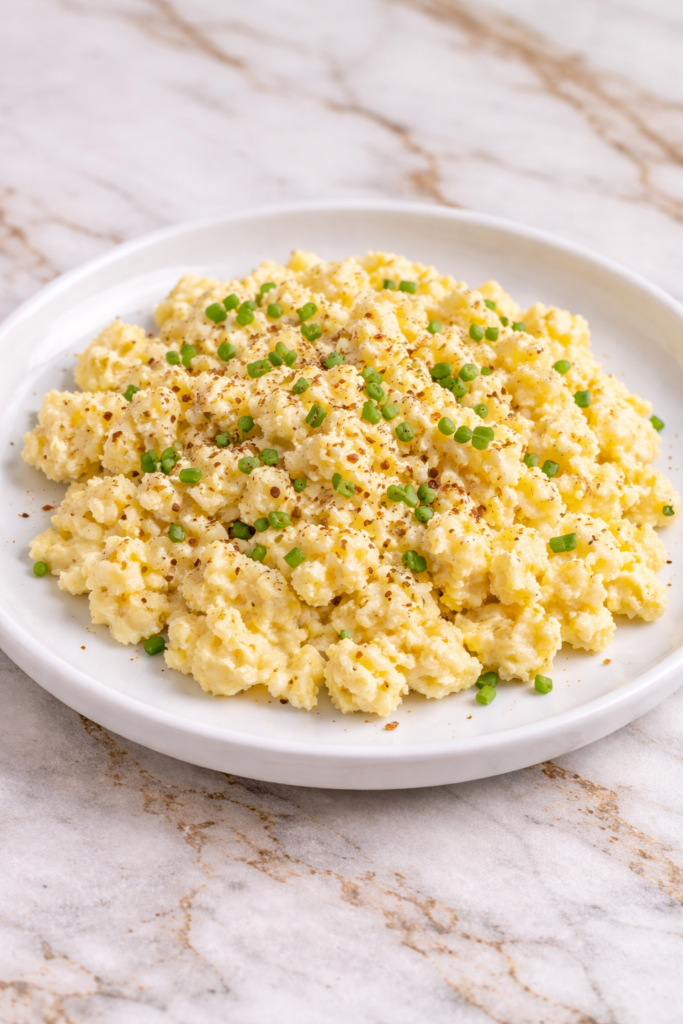
Cottage cheese scrambled eggs are a simple, protein-packed breakfast that feels indulgent while remaining healthy. The addition of cottage cheese transforms ordinary scrambled eggs into a creamy, tender, and flavorful dish.
In my kitchen, this recipe has become a go-to for busy mornings because it comes together quickly while providing a satisfying and nourishing start to the day.
What sets these scrambled eggs apart is the creamy texture and subtle tang from the cottage cheese. Unlike traditional scrambled eggs, which can sometimes become dry or rubbery, the cottage cheese keeps the eggs moist and soft.

This simple addition elevates the flavor, adds protein, and makes the dish filling enough to power you through a busy morning or post-workout refueling.
Why You’ll Love This Recipe
Cottage cheese scrambled eggs are not only creamy and delicious but also highly versatile. You can enjoy them plain, add herbs and spices, or fold in vegetables like spinach, tomatoes, or bell peppers for extra nutrients. Optional cheese or avocado toppings can take the flavor to the next level without compromising the light, creamy texture.
Families love this recipe because it is quick, easy, and suitable for kids and adults alike. The creamy texture appeals to picky eaters, while the protein content makes it a hearty breakfast for anyone looking for sustained energy. Additionally, the recipe is beginner-friendly yet delivers a restaurant-quality texture and flavor.
This scrambled egg recipe is also easy to customize based on dietary preferences. Use dairy-free cottage cheese alternatives if needed, or add extra vegetables or herbs to suit your taste. The recipe is forgiving, so slight variations in cooking time or ingredients still produce consistently delicious results.
Serves: 2–3 people
This recipe makes approximately two to three servings, depending on portion size. It’s perfect for a small family breakfast, brunch, or a quick, protein-rich meal for one or two adults. The recipe can be easily doubled or tripled for larger groups or meal prep.
Ingredients You’ll Need
Eggs and Dairy
- 4 large eggs
- 1/2 cup cottage cheese (full-fat or low-fat)
- 1–2 tablespoons milk (optional, for extra creaminess)
Seasonings
- 1/4 teaspoon salt
- 1/4 teaspoon black pepper
- Optional: 1/4 teaspoon garlic powder or onion powder
- Optional: 1/2 teaspoon fresh or dried herbs (chives, parsley, or dill)
Optional Add-Ins
- 1/2 cup fresh spinach, chopped
- 1/4 cup diced tomatoes
- 1/4 cup diced bell pepper
- 1–2 tablespoons shredded cheese (cheddar, mozzarella, or feta)
- Sliced avocado for topping
Pro Tips
Use full-fat cottage cheese for a richer, creamier texture. Low-fat versions are fine, but the eggs may be slightly less creamy.
Whisk the eggs and cottage cheese gently to combine without overmixing. Overmixing can make the eggs less tender.
Cook the eggs over low to medium-low heat. Gentle heat is key to achieving soft, creamy scrambled eggs without overcooking.
Add vegetables and herbs at the right time. Softer vegetables, like tomatoes or spinach, can be added at the beginning, while firmer vegetables, like bell peppers, should be sautéed first.
Remove the eggs from the heat slightly before they are fully cooked. Residual heat continues cooking them, which helps maintain a creamy texture.
Tools You’ll Need
- Medium nonstick skillet or frying pan
- Whisk or fork for beating eggs
- Spatula for stirring
- Measuring cups and spoons
- Knife and cutting board
Substitutions and Variations
You can substitute cottage cheese with ricotta cheese for a slightly sweeter, creamier flavor.
Add extra vegetables like mushrooms, zucchini, or asparagus for more fiber and nutrients.
For a dairy-free option, use plant-based cottage cheese alternatives. The texture will be slightly different but still creamy.
Fold in cooked bacon, ham, or smoked salmon for a protein-packed, savory twist.
Herbs and spices can be varied based on preference. Try basil, cilantro, or paprika for a different flavor profile.
Cottage cheese scrambled eggs are a quick, nutritious breakfast that’s both creamy and satisfying. The tender texture, subtle tang, and versatility make them a recipe you’ll return to again and again.
Make Ahead Tips
Cottage cheese scrambled eggs are surprisingly easy to prepare ahead of time, making them ideal for busy mornings or brunch gatherings. You can mix the eggs, cottage cheese, milk, and seasonings in a bowl the night before and store it in the refrigerator.
Cover the bowl tightly with plastic wrap or transfer the mixture to an airtight container. In the morning, give it a gentle stir before cooking to ensure everything is well combined.
For meal prep purposes, vegetables and other add-ins can also be prepped in advance. Chop spinach, tomatoes, bell peppers, or herbs and store them in separate airtight containers in the fridge. This allows for quick assembly in the morning without extra chopping or preparation time.
Optional toppings, like shredded cheese or avocado, can be prepped ahead as well. Shred the cheese or slice the avocado and store in small containers to keep everything organized for a fast breakfast assembly.
Cooked scrambled eggs can also be stored for later use. Allow the eggs to cool slightly, then transfer to an airtight container and refrigerate for up to two days. Gently reheat in a nonstick skillet over low heat to maintain their creamy texture. Avoid microwaving at high heat, as this can make the eggs dry or rubbery.
Cottage cheese scrambled eggs are also freezer-friendly. While texture may slightly change, you can freeze cooked eggs in individual portions for up to two months. Thaw overnight in the refrigerator and reheat gently in a skillet. This makes them perfect for batch cooking or preparing in advance for multiple meals.
Instructions
Step 1: Prepare the Egg Mixture
In a medium bowl, combine the eggs, cottage cheese, milk, salt, and black pepper. Whisk gently until just combined. The cottage cheese should remain slightly lumpy; this contributes to the creamy texture of the finished eggs.
Add optional flavorings such as garlic powder, onion powder, or fresh herbs at this stage. Gently fold in any raw vegetables you wish to include, such as chopped spinach or diced tomatoes.
Step 2: Heat the Skillet
Place a medium nonstick skillet over low to medium-low heat. Add a small amount of butter or oil to prevent sticking. Ensure the skillet is warm before adding the egg mixture to avoid overcooking the eggs immediately.
Cooking over gentle heat is key to achieving tender, creamy scrambled eggs. High heat can cause the eggs to cook too quickly and become dry or rubbery.
Step 3: Cook the Eggs
Pour the egg mixture into the preheated skillet. Let it sit undisturbed for 15–20 seconds to allow the edges to begin setting. Using a spatula, gently stir and fold the eggs from the edges toward the center. Continue cooking slowly, stirring occasionally, until the eggs are mostly set but still slightly runny.
Add firmer vegetables, such as sautéed bell peppers or mushrooms, at this stage. For softer vegetables like spinach, fold them in when the eggs are almost finished cooking to prevent overcooking.
Step 4: Add Optional Toppings
Once the eggs are nearly cooked through, fold in shredded cheese or sprinkle it on top to melt slightly. Remove the skillet from the heat when the eggs are still slightly softer than your preferred consistency, as residual heat will finish cooking them.
Top with avocado slices, fresh herbs, or additional seasonings if desired. This enhances both flavor and visual appeal, making the scrambled eggs feel fresh and indulgent.
Step 5: Serve Immediately
Transfer the eggs to plates and serve hot. Pair with toast, fresh fruit, or roasted vegetables for a complete, balanced meal. These scrambled eggs can also be served alongside a protein source like bacon, sausage, or smoked salmon for a more filling breakfast.
Serving Suggestions
Cottage cheese scrambled eggs are versatile and pair well with many breakfast or brunch accompaniments. Serve with whole-grain toast, English muffins, or fresh croissants for a satisfying meal.
Fresh fruit or berries complement the creamy texture and add natural sweetness. Sliced avocado, roasted vegetables, or sautéed greens add color, nutrients, and extra flavor.
For a high-protein meal, pair the scrambled eggs with additional protein like turkey bacon, smoked salmon, or grilled chicken sausage. This makes the breakfast more filling and ideal for post-workout recovery.
For a low-carb or keto-friendly option, serve the eggs with avocado and sautéed spinach or zucchini. They’re also suitable for a family-style breakfast where everyone can customize toppings, such as cheese, herbs, or hot sauce.
Cottage cheese scrambled eggs are a quick, creamy, and satisfying breakfast. Their tender texture, protein content, and versatility make them perfect for everyday meals or special brunch occasions.
The recipe is forgiving and easy to adapt, so you can adjust vegetables, seasonings, or protein to suit your family’s tastes. It’s a recipe you’ll return to again and again for a nourishing, flavorful start to the day.
Leftovers and Storage
Cottage cheese scrambled eggs are a dish that can be enjoyed immediately or stored for later use. Allow the eggs to cool slightly before transferring them to an airtight container. Store in the refrigerator for up to two days to preserve flavor and texture.
When reheating, use a nonstick skillet over low heat and stir gently until warmed through. This method helps maintain the creamy texture. Microwaving is also an option, but use short intervals (20–30 seconds) and stir between heating sessions to prevent overcooking and drying out the eggs.
For longer-term storage, cooked scrambled eggs can be frozen. Place them in single-serving portions in freezer-safe containers or bags. Freeze for up to two months. Thaw overnight in the refrigerator and reheat gently in a skillet to restore creaminess. While frozen eggs may have a slightly different texture, the flavor remains rich and satisfying.
Optional add-ins like cooked vegetables or shredded cheese can be frozen along with the eggs. Fresh toppings such as avocado or herbs should be added after reheating for best results. This approach allows you to enjoy a protein-packed breakfast anytime, even on busy mornings.
Leftover scrambled eggs can also be repurposed creatively. Chop the eggs and fold them into a breakfast burrito, sandwich, or wrap. Use them as a filling for a breakfast casserole with layers of vegetables, cheese, or hash browns. You can also serve the eggs over a bed of greens for a high-protein, savory salad option. These variations make cottage cheese scrambled eggs versatile and convenient.
Nutrition and Benefits
Cottage cheese scrambled eggs are a nutrient-dense, protein-rich breakfast option. Cottage cheese provides high-quality protein and calcium, which support bone health and muscle maintenance. Eggs contribute additional protein, vitamins, and minerals, creating a well-rounded meal.
Adding vegetables like spinach, bell peppers, or tomatoes increases fiber content, vitamins A and C, and antioxidants, which support overall health and immunity. Optional herbs such as parsley, chives, or dill add flavor without extra calories while also contributing micronutrients.
Compared to traditional scrambled eggs, cottage cheese enhances protein content while keeping the eggs moist and tender. This combination helps maintain satiety, making the breakfast more filling and sustaining. It’s an excellent option for active adults, athletes, or anyone looking to increase protein intake without heavy meals.
Adding toppings such as avocado provides healthy fats, while shredded cheese adds flavor and calcium. Together, these elements create a balanced breakfast that supports energy, focus, and overall wellness throughout the morning.
Recipe FAQ
Can I use low-fat or non-fat cottage cheese?
Yes, though full-fat cottage cheese produces a creamier texture. Low-fat or non-fat options may result in slightly less moist eggs.
Can I make this recipe vegan?
Traditional eggs cannot be substituted directly, but you can use scrambled tofu combined with dairy-free cottage cheese alternatives for a plant-based version. Flavor with turmeric and nutritional yeast for color and richness.
Can I prepare the mixture ahead of time?
Yes. Mix the eggs, cottage cheese, milk, and seasonings up to 24 hours in advance. Store in the refrigerator and gently stir before cooking.
Can I add vegetables?
Absolutely. Spinach, tomatoes, bell peppers, or mushrooms can be folded in while cooking. Adjust timing depending on vegetable type to maintain texture.
Can I add cheese to the eggs?
Yes, shredded cheese like cheddar, mozzarella, or feta can be added for extra flavor. Fold it in toward the end of cooking to melt without overcooking the eggs.
Can I make this in a microwave?
Yes. Cook in short intervals, stirring in between, to avoid overcooking. Cooking slowly ensures creamy, tender eggs.
How can I keep the eggs creamy?
Cook over low to medium-low heat, stir gently, and remove slightly before fully set. Residual heat continues cooking while preserving moisture.
A Creamy, Protein-Packed Breakfast You’ll Make Again and Again
Cottage cheese scrambled eggs are a simple, nourishing breakfast that is creamy, tender, and satisfying. The combination of eggs, cottage cheese, and optional vegetables or toppings creates a rich, protein-packed meal that keeps you full and energized.
Whether for weekday mornings, leisurely brunches, or meal prep, this recipe is one you’ll return to again and again, delivering flavor, nutrition, and comfort in every bite.