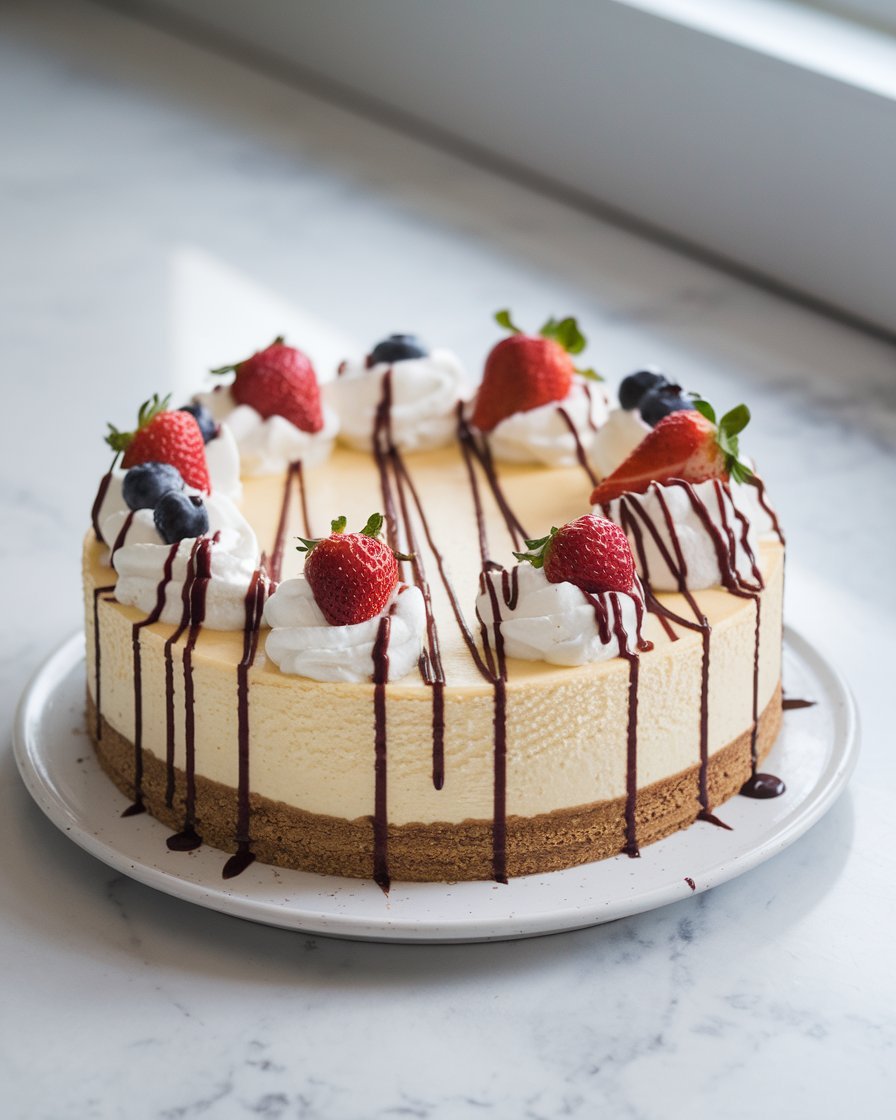
Classic vanilla cake is one of those recipes that feels timeless and comforting no matter when you make it. It is the cake I turn to for birthdays, celebrations, or simple weekends when we want something homemade and familiar.
The smell of vanilla baking in the oven always brings everyone into the kitchen before it is even finished.
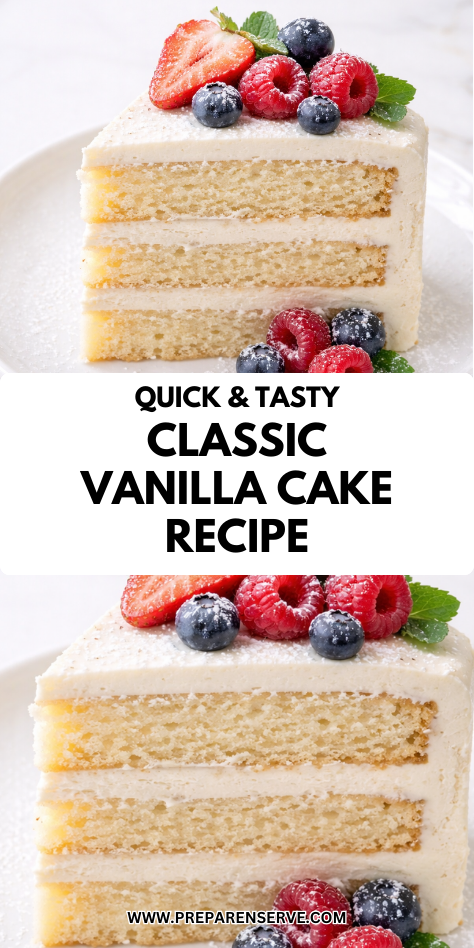
This recipe was shaped by years of testing and small adjustments to get the texture just right. I wanted a cake that was soft and fluffy but still sturdy enough to frost and slice cleanly. Every time I bake this classic vanilla cake, it reminds me why simple recipes often become the most loved.
Why You’ll Love This Recipe
This Classic Vanilla Cake Recipe delivers a tender crumb with a rich but balanced vanilla flavor. It is moist without being heavy and soft without falling apart. Each bite tastes clean, comforting, and perfectly sweet.
The recipe is easy to follow and uses basic pantry ingredients. You do not need special equipment or complicated techniques to get great results. This makes it ideal for both beginner bakers and experienced home cooks.
Families love this cake because it works for almost any occasion. It pairs well with many frostings, fillings, and toppings. It is the kind of cake everyone recognizes and happily enjoys.
Serves: 2 people
This recipe makes a small cake that serves two people generously. It is perfect for a quiet celebration or a simple dessert without leftovers. The recipe can easily be doubled for larger gatherings.
Ingredients You’ll Need
Cake Batter
- 1 cup all-purpose flour
- 3/4 teaspoon baking powder
- 1/4 teaspoon salt
- 1/2 cup unsalted butter, softened
- 1/2 cup granulated sugar
- 1 large egg, room temperature
- 1 teaspoon vanilla extract
- 1/4 cup whole milk
Optional Frosting Ingredients
- 1/2 cup unsalted butter, softened
- 1 1/2 cups powdered sugar
- 1/2 teaspoon vanilla extract
- 1 to 2 tablespoons milk
Pro Tips
Use room temperature ingredients for the best texture. Butter, egg, and milk blend more smoothly when they are not cold. This helps create a lighter and more even batter.
Cream the butter and sugar thoroughly. This step adds air to the batter and helps the cake rise properly. The mixture should look pale and fluffy before moving on.
Measure flour carefully to avoid a dense cake. Spoon the flour into the measuring cup and level it off. Too much flour can make the cake dry.
Do not overmix the batter once the flour is added. Overmixing can lead to a tough texture. Mix just until everything is combined.
Check the cake early during baking. Every oven runs a little differently. Removing the cake as soon as it is done keeps it soft and moist.
Tools You’ll Need
- Mixing bowls
- Electric mixer or whisk
- Measuring cups and spoons
- Rubber spatula
- Small cake pan
- Cooling rack
Substitutions and Variations
You can replace whole milk with almond milk or oat milk if needed. This works well for dairy-sensitive households. The texture may be slightly lighter but still soft.
For a richer flavor, you can substitute part of the butter with vegetable oil. This adds moisture and keeps the cake tender. Use equal amounts when swapping.
If you prefer a stronger vanilla flavor, add an extra half teaspoon of vanilla extract. Vanilla bean paste also works beautifully. This adds small specks and deeper flavor.
You can turn this into a citrus vanilla cake by adding lemon or orange zest. The zest brightens the flavor without changing the texture. It pairs well with simple vanilla frosting.
For a slightly lighter cake, you can separate the egg and whip the egg white before folding it in. This adds air and softness. It is optional but gives a delicate crumb.
Make Ahead Tips
Classic vanilla cake is a great option when you want to prepare dessert ahead of time without sacrificing quality.
The cake layers can be baked up to two days in advance and stored tightly wrapped at room temperature. Keeping them well wrapped prevents drying and preserves softness.
If you prefer to bake further ahead, the unfrosted cake can be frozen for up to one month. Wrap it securely in plastic wrap and then foil to protect it from freezer burn. Thaw the cake overnight at room temperature before frosting.
The frosting can also be made in advance and stored in the refrigerator for up to three days. Let it sit at room temperature and rewhip briefly before using. This restores a smooth, spreadable texture.
Assembling the cake the day you plan to serve it gives the best presentation. This keeps the cake looking fresh and clean. It also ensures the frosting stays light and fluffy.
Instructions
Step 1: Prepare the Pan and Oven
Preheat the oven to 350°F. Lightly grease a small cake pan and line the bottom with parchment paper. This helps prevent sticking and ensures easy removal.
Set the prepared pan aside while you make the batter. Proper preparation makes baking stress-free. This step helps the cake bake evenly.
Step 2: Mix the Dry Ingredients
In a medium bowl, whisk together the flour, baking powder, and salt. Whisking helps evenly distribute the leavening. Set the mixture aside.
Keeping dry ingredients separate ensures even texture. This step prevents uneven rising. It also keeps the batter smooth.
Step 3: Cream the Butter and Sugar
In a large mixing bowl, beat the softened butter and granulated sugar together. Mix until pale, light, and fluffy. This usually takes two to three minutes.
This step adds air to the batter. Air helps create a soft crumb. Do not rush this process.
Step 4: Add the Egg and Vanilla
Add the egg to the butter mixture and beat until fully combined. Scrape down the sides of the bowl as needed. The mixture should look smooth.
Mix in the vanilla extract. This adds the classic flavor. Make sure it is evenly incorporated.
Step 5: Add Dry Ingredients and Milk
Add half of the dry ingredients to the batter and mix gently. Pour in the milk and mix until just combined. Add the remaining dry ingredients and mix again.
Avoid overmixing at this stage. Overmixing can make the cake dense. Stop mixing as soon as the batter is smooth.
Step 6: Bake the Cake
Pour the batter into the prepared cake pan and smooth the top. Tap the pan gently on the counter to release air bubbles. Place the pan in the oven.
Bake for 22 to 28 minutes until a toothpick inserted in the center comes out clean. The top should be lightly golden. Remove the cake from the oven.
Step 7: Cool the Cake
Let the cake cool in the pan for about 10 minutes. Carefully turn it out onto a cooling rack. Remove the parchment paper.
Allow the cake to cool completely before frosting. Cooling fully prevents melting. This step ensures clean frosting.
Step 8: Make the Frosting
Beat the softened butter until smooth and creamy. Gradually add powdered sugar while mixing on low speed. Scrape the bowl as needed.
Add vanilla extract and milk a little at a time. Beat until light and fluffy. Adjust milk for desired consistency.
Step 9: Frost the Cake
Spread frosting evenly over the cooled cake. Use a spatula to smooth the top and sides. Keep the layer even and clean.
Decorate simply or add toppings if desired. Keep it classic for a timeless look. The cake is now ready to serve.
Serving Suggestions
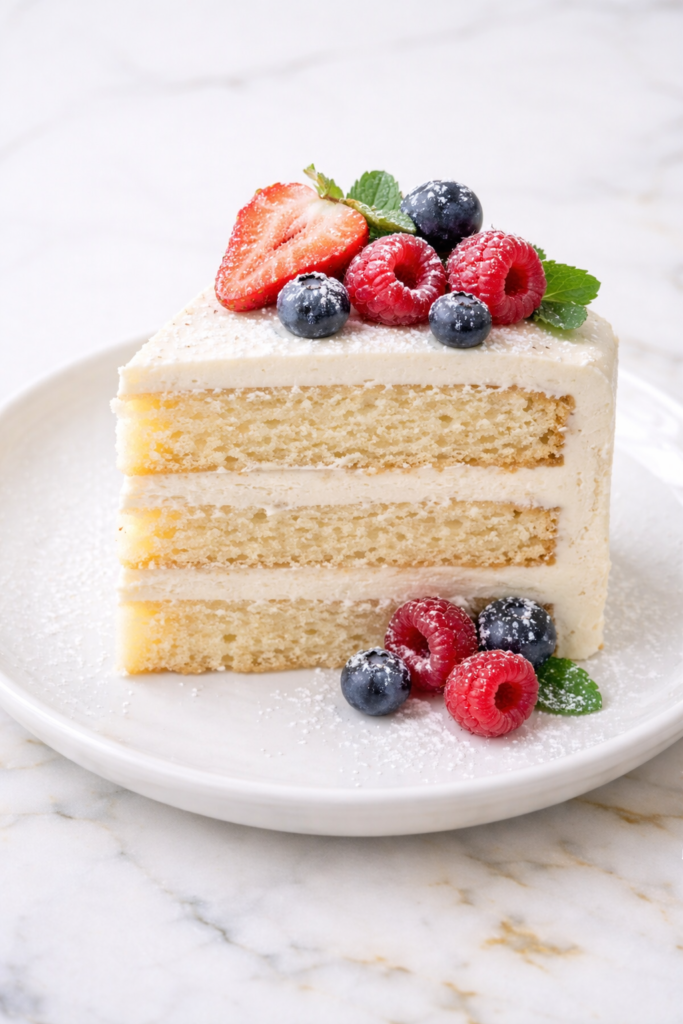
Serve classic vanilla cake with fresh berries for a light and refreshing contrast. Strawberries or raspberries work especially well. The fruit balances the sweetness.
This cake pairs beautifully with tea or coffee. The mild vanilla flavor complements warm drinks. It makes a perfect afternoon treat.
You can serve it as a simple dessert after dinner. Add a scoop of ice cream if desired. This makes it feel extra special.
For celebrations, decorate with sprinkles or piped frosting. Simple decorations keep the cake elegant. It works well for birthdays or small gatherings.
Leftover slices can be wrapped and enjoyed the next day. The flavor often improves after resting. This makes it great for make-ahead desserts.
Leftovers and Storage
Leftover classic vanilla cake should be stored properly to keep it soft and flavorful. Cover the cake tightly or place slices in an airtight container. It can be kept at room temperature for up to two days if unfrosted or lightly frosted.
If the cake is fully frosted, refrigeration is best. Store it in a covered container in the refrigerator for up to four days. Bring slices to room temperature before serving for the best texture and flavor.
The cake also freezes well for longer storage. Wrap individual slices tightly in plastic wrap and place them in a freezer-safe bag. Frozen cake can be stored for up to one month and thawed at room temperature when ready to enjoy.
Nutrition and Benefits
Classic vanilla cake is a simple dessert made with basic, familiar ingredients. It provides carbohydrates for energy and fats that contribute to satiety. Enjoyed in moderation, it fits well into a balanced lifestyle.
Using real butter and milk adds richness and flavor without relying on artificial ingredients. Baking at home allows you to control sweetness and portion size. This makes it a thoughtful alternative to store-bought desserts.
Vanilla adds flavor without needing excessive sugar. This helps keep the cake balanced and approachable. It’s a dessert that feels comforting rather than overwhelming.
Sharing homemade cake also has emotional benefits. Baking and enjoying dessert together creates connection. It turns simple moments into special memories.
Recipe FAQ
Why did my vanilla cake turn out dense?
A dense cake is often caused by overmixing the batter. Mixing too much develops gluten, which affects texture. Mixing just until combined helps keep the cake light.
Can I use cake flour instead of all-purpose flour?
Yes, cake flour can be used for a softer crumb. Replace the all-purpose flour with the same amount of cake flour. The cake will be slightly lighter and more tender.
How do I know when the cake is done baking?
The cake is done when a toothpick inserted in the center comes out clean. The top should spring back lightly when touched. Avoid opening the oven too early.
Can I make this cake without frosting?
Yes, the cake is delicious on its own. You can dust it with powdered sugar or serve it plain. It works well as a simple snack cake.
Why did my cake sink in the middle?
Sinking can happen if the oven temperature is too low or if the cake is underbaked. Opening the oven door too early can also cause this. Make sure the oven is fully preheated.
Can I add sprinkles or mix-ins to the batter?
Yes, sprinkles or chocolate chips can be gently folded into the batter. Add them at the very end and mix lightly. This keeps the texture even.
Is this cake good for birthdays or celebrations?
Yes, this cake is perfect for small celebrations. It decorates easily and pairs well with many frostings. Its classic flavor appeals to all ages.
A Simple Cake for Every Occasion
Classic vanilla cake is the kind of recipe that never goes out of style. Its soft texture, gentle sweetness, and familiar flavor make it comforting and reliable.
Whether served plain or dressed up for a celebration, it’s a dessert that always feels just right.