Baked pork tenderloin is a tender, flavorful, and versatile main dish that’s perfect for family dinners, weeknight meals, or even special occasions. With minimal prep and simple seasoning, this lean cut of pork transforms into a juicy, satisfying entrée in the oven.
In my kitchen, this recipe has become a favorite because it’s reliable, easy to make, and produces tender, flavorful meat every time.
What makes baked pork tenderloin special is its combination of juiciness, mild flavor, and adaptability. The tenderloin itself is lean and quick-cooking, which means it can be prepared in under an hour while delivering a restaurant-quality result.
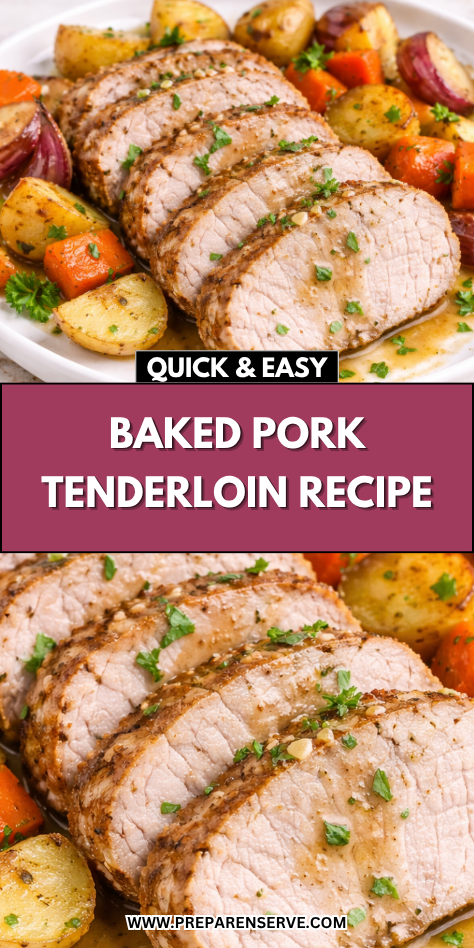
Seasonings and marinades enhance the natural flavor of the pork, making it suitable for a variety of tastes, from classic herb and garlic to sweet and tangy glazes.
Why You’ll Love This Recipe
This baked pork tenderloin recipe is simple yet delivers impressive results. The pork remains juicy and tender, thanks to careful roasting at the right temperature. A light coating of herbs, spices, or a marinade infuses the meat with flavor without overpowering its natural taste.
Families love this recipe because it’s easy to prepare and pairs well with countless sides, including roasted vegetables, mashed potatoes, rice, or a fresh salad. The mild flavor makes it approachable for both kids and adults, while the tender texture ensures a satisfying bite every time.
The recipe is also highly versatile. You can adjust the seasoning to your preference, use a marinade for added depth, or glaze it with honey, mustard, or balsamic reduction for a touch of sweetness. It’s a recipe that’s both comforting and customizable.
Serves: 4–6 people
This recipe serves four to six people, depending on portion sizes. A typical pork tenderloin weighs around 1 to 1.5 pounds, which is enough for a small family dinner or for meal prep. The recipe scales easily if you need to cook multiple tenderloins for larger gatherings.
Ingredients You’ll Need
Pork Tenderloin
- 1–1.5 pounds pork tenderloin, trimmed of silver skin and excess fat
Seasonings and Marinade
- 2 tablespoons olive oil
- 2 cloves garlic, minced
- 1 teaspoon salt
- 1/2 teaspoon black pepper
- 1 teaspoon dried thyme or rosemary
- Optional: 1 teaspoon smoked paprika or chili powder for extra flavor
Optional Glaze
- 2 tablespoons honey or maple syrup
- 1 tablespoon Dijon mustard
- 1 teaspoon apple cider vinegar
Optional Garnish
- Fresh herbs like parsley, thyme, or rosemary
- Lemon or lime wedges for brightness
Pro Tips
Pat the pork tenderloin dry before seasoning. This ensures even browning and prevents steaming in the oven.
Trim excess fat and silver skin from the tenderloin for a tender, even cook. Silver skin does not break down during cooking and can be tough if left intact.
Use a meat thermometer to ensure perfect doneness. Pork tenderloin is best at an internal temperature of 145°F (63°C), followed by a resting period.
Let the meat rest after baking. Resting allows juices to redistribute, keeping the tenderloin moist and flavorful.
For extra flavor, marinate the pork for 30 minutes to 2 hours before baking. Simple marinades with olive oil, garlic, herbs, and a touch of vinegar enhance tenderness and flavor.
Tools You’ll Need
- Oven-safe baking dish or roasting pan
- Meat thermometer
- Small bowl for mixing seasonings or glaze
- Knife and cutting board
- Tongs or spatula for handling tenderloin
Substitutions and Variations
Use chicken breast or pork chops if tenderloin is unavailable. Adjust cooking times accordingly to prevent overcooking.
Substitute fresh herbs for dried if preferred; double the quantity of fresh herbs for the best flavor.
Change the glaze to suit taste: try a balsamic reduction, mustard-honey sauce, or teriyaki glaze for different flavor profiles.
For a smoky variation, sprinkle the pork with smoked paprika or add a small amount of liquid smoke to the marinade.
Stuff the tenderloin with spinach, cheese, or roasted vegetables before baking for a special, restaurant-style presentation.
Baked pork tenderloin is an easy, elegant, and protein-rich main dish that’s adaptable to many cuisines and flavor preferences. Its tender texture, simple preparation, and customizable seasoning make it a recipe you’ll return to again and again.
Make Ahead Tips
Baked pork tenderloin is perfect for preparing ahead of time, which makes it ideal for weeknight dinners, meal prep, or even entertaining. You can season or marinate the pork tenderloin up to 24 hours in advance and store it in the refrigerator. Use a resealable bag or airtight container for marinating to allow the flavors to infuse the meat fully.
Vegetables that you plan to roast alongside the pork can also be prepped in advance. Chop carrots, potatoes, Brussels sprouts, or other vegetables and store them in airtight containers or zip-top bags in the refrigerator. This saves time on busy cooking days and ensures a quick assembly when ready to bake.
If you’re using a glaze or sauce, prepare it ahead of time and store it in a small airtight container in the refrigerator. Reheat slightly before brushing over the tenderloin toward the end of baking to enhance flavor and create a beautiful caramelized finish.
For meal prep, cooked pork tenderloin can be stored in the refrigerator for up to three days in an airtight container. Slice or portion the meat immediately after cooking and cooling. This makes it easy to reheat for quick lunches, dinners, or protein-packed salads.
Pork tenderloin can also be frozen for longer-term storage. Wrap it tightly in foil or plastic wrap and then place it in a freezer-safe bag. Freeze for up to three months. Thaw in the refrigerator overnight and reheat gently in the oven or skillet to maintain tenderness.
Instructions
Step 1: Preheat the Oven
Preheat your oven to 400°F (200°C). This temperature is ideal for cooking the tenderloin evenly while creating a slight caramelized crust on the exterior.
A properly preheated oven ensures that the pork cooks consistently and achieves the desired tender, juicy interior.
Step 2: Prepare the Pork
Pat the pork tenderloin dry with paper towels to remove excess moisture. Trim off any silver skin or excess fat to ensure even cooking and tender results.
In a small bowl, combine olive oil, minced garlic, salt, black pepper, and dried herbs such as thyme or rosemary. Rub this mixture evenly over the pork tenderloin.
Step 3: Sear the Tenderloin (Optional)
For extra flavor, sear the tenderloin in a hot skillet over medium-high heat for 2–3 minutes on each side before baking. This step is optional but helps develop a rich, golden-brown crust.
Searing locks in the juices and enhances the aroma and presentation of the pork.
Step 4: Bake the Pork
Place the seasoned pork tenderloin in an oven-safe baking dish or roasting pan. Insert a meat thermometer into the thickest part of the tenderloin to monitor doneness.
Bake in the preheated oven for 20–25 minutes, or until the internal temperature reaches 145°F (63°C). Avoid overcooking to maintain the juiciness and tenderness of the pork.
Step 5: Add Optional Glaze
During the last 5 minutes of baking, brush the tenderloin with a prepared glaze such as a mixture of honey, Dijon mustard, and apple cider vinegar. Return to the oven to caramelize slightly.
This creates a flavorful, slightly sweet, and visually appealing finish without overpowering the natural flavor of the pork.
Step 6: Rest the Meat
Remove the pork tenderloin from the oven and transfer it to a cutting board. Tent loosely with foil and allow it to rest for 5–10 minutes.
Resting allows the juices to redistribute throughout the meat, ensuring a tender and moist result when sliced.
Step 7: Slice and Serve
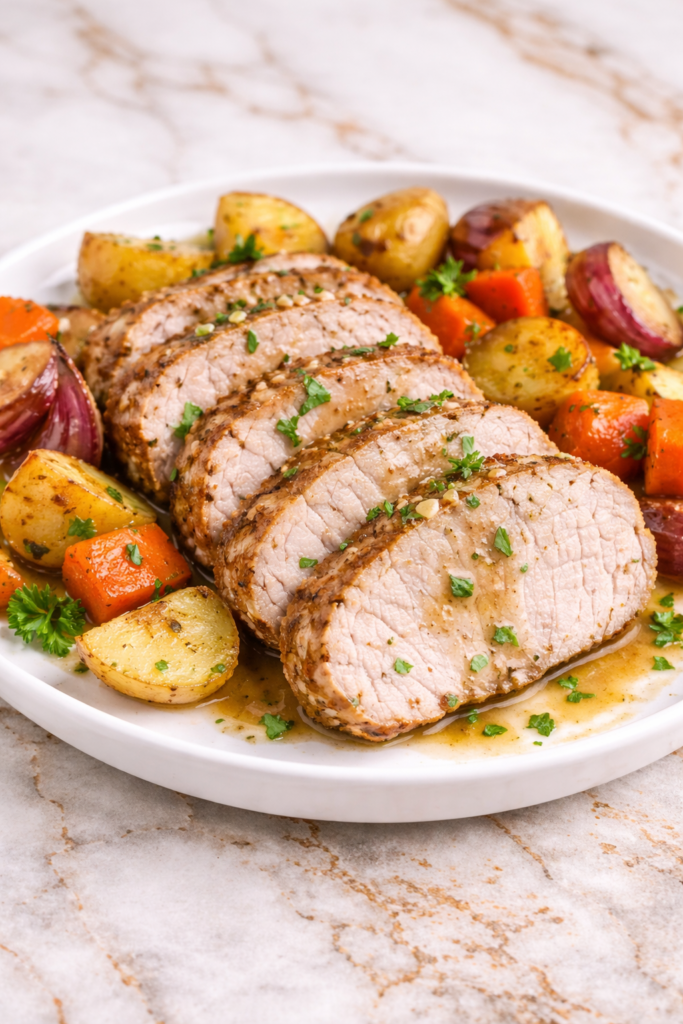
Slice the pork tenderloin into 1/2–inch thick medallions and serve immediately. Pair with roasted vegetables, mashed potatoes, rice, or a fresh salad for a complete meal.
Garnish with fresh herbs or a squeeze of citrus for brightness and visual appeal. The tender, juicy medallions are ready to enjoy, providing a satisfying, protein-rich main course.
Serving Suggestions
Baked pork tenderloin pairs beautifully with roasted or steamed vegetables such as carrots, green beans, Brussels sprouts, or asparagus.
Serve with a side of whole grains, like rice, quinoa, or farro, for a balanced, nutrient-rich meal. Mashed or roasted potatoes are also a classic accompaniment that complement the tender pork.
Add a fresh salad with citrus vinaigrette to lighten the meal and balance the richness of the pork. For a more indulgent side, try creamy mashed sweet potatoes or a garlic-parmesan cauliflower mash.
Leftovers can be sliced for sandwiches, wraps, or salads. Warm slices of pork paired with avocado, fresh greens, and a light vinaigrette make a quick and healthy lunch option.
Baked pork tenderloin is versatile enough to serve as a weeknight dinner, a family gathering main dish, or even a special holiday entrée. Its mild flavor, tender texture, and customizable seasoning options make it a recipe you’ll return to again and again.
This recipe delivers a simple, flavorful, and protein-packed main course that’s easy to prepare, versatile, and satisfying. The combination of tender meat, optional glaze, and easy pairings makes it ideal for everyday meals or special occasions.
Leftovers and Storage
Baked pork tenderloin is not only delicious fresh out of the oven but also stores beautifully for later use. After cooking, allow the tenderloin to cool completely before storing it in an airtight container in the refrigerator.
Properly stored, cooked pork tenderloin will stay fresh for up to three to four days, making it ideal for meal prep or quick weekday dinners.
If you have leftover slices, reheat them gently to preserve moisture. Place slices in a baking dish, cover lightly with foil, and warm in a 325°F (163°C) oven for 10–15 minutes. You can also reheat individual slices in a nonstick skillet over low heat or briefly in the microwave using short intervals to prevent drying.
For longer-term storage, pork tenderloin can be frozen. Wrap the meat tightly in plastic wrap, then place it in a heavy-duty freezer bag or container. Frozen pork tenderloin can be stored for up to three months. Thaw in the refrigerator overnight and reheat gently in the oven or skillet to maintain tenderness. Avoid high heat to prevent drying out the meat.
Leftovers are incredibly versatile. Sliced tenderloin can be used in sandwiches, wraps, or grain bowls. Combine slices with roasted vegetables, quinoa, or salads for a high-protein, balanced meal. You can also chop leftover pork and incorporate it into stir-fries, tacos, or pasta dishes for a quick and flavorful weeknight dinner.
Adding sauces or glazes at the time of reheating can enhance the flavor and prevent the meat from becoming dry. For example, brush with a small amount of honey-mustard, balsamic glaze, or pan juices before warming to maintain juiciness and boost flavor.
Nutrition and Benefits
Baked pork tenderloin is a lean, protein-rich main course that provides essential nutrients while remaining low in fat. A 3-ounce serving of cooked pork tenderloin contains approximately 22 grams of protein, making it an excellent choice for muscle repair, satiety, and overall energy.
Pork is also a good source of essential vitamins and minerals, including B vitamins (B6 and B12), selenium, phosphorus, and zinc. These nutrients support energy metabolism, immune function, and overall health.
Compared to fattier cuts of pork, tenderloin is naturally lean, making it ideal for those looking to reduce saturated fat intake while maintaining flavor and tenderness. Pairing the pork with vegetables or whole grains creates a balanced meal rich in protein, fiber, vitamins, and minerals.
Optional toppings or glazes can enhance flavor without significantly increasing calories. Fresh herbs add antioxidants and micronutrients, while a light glaze made with honey, mustard, or vinegar provides depth and visual appeal.
Including baked pork tenderloin as part of a balanced diet supports weight management, muscle maintenance, and nutrient intake. Its versatility allows for integration into a wide variety of cuisines and meal plans.
Recipe FAQ
Can I cook pork tenderloin without searing it?
Yes. Searing is optional but adds flavor and a golden crust. You can skip this step and bake directly in the oven; it will still be juicy and tender.
How do I know when the pork is cooked?
Use a meat thermometer inserted into the thickest part. The internal temperature should reach 145°F (63°C) for perfectly cooked pork. Allow the meat to rest for 5–10 minutes before slicing.
Can I marinate the pork overnight?
Yes. Marinating for 30 minutes to 24 hours enhances flavor and tenderness. Store in a sealed bag or container in the refrigerator.
Can I make this recipe gluten-free?
Yes. The basic recipe is naturally gluten-free. Just ensure that any glazes or marinades you use are gluten-free.
Can I bake more than one tenderloin at a time?
Absolutely. Ensure that there is space between each tenderloin in the pan for even cooking. Adjust the baking time slightly if the oven is crowded.
What sides pair well with baked pork tenderloin?
Roasted vegetables, mashed potatoes, rice, quinoa, fresh salads, or steamed green vegetables all pair beautifully with pork tenderloin.
Can I use the leftovers for meal prep?
Yes. Slice or chop leftover tenderloin and store it in the refrigerator for quick lunches, grain bowls, wraps, or salads throughout the week.
A Juicy, Flavorful Pork Tenderloin You’ll Make Again and Again
Baked pork tenderloin is tender, juicy, and packed with flavor. The combination of simple seasoning, optional glaze, and careful baking creates a protein-rich main dish that is both elegant and approachable.
Whether for a weeknight dinner, a family gathering, or meal prep, this recipe is one you’ll return to again and again, providing satisfying, flavorful, and versatile pork in every bite.