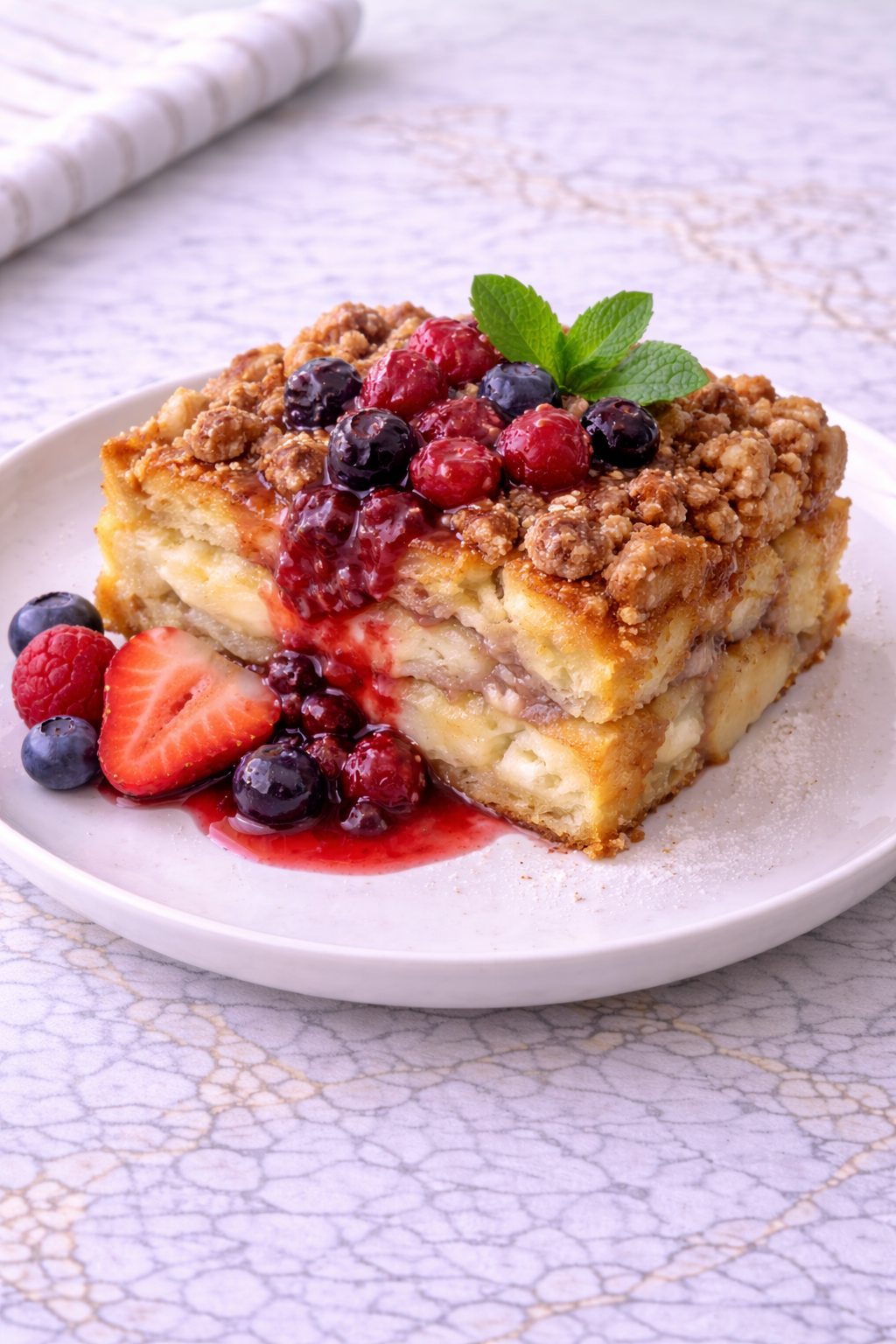
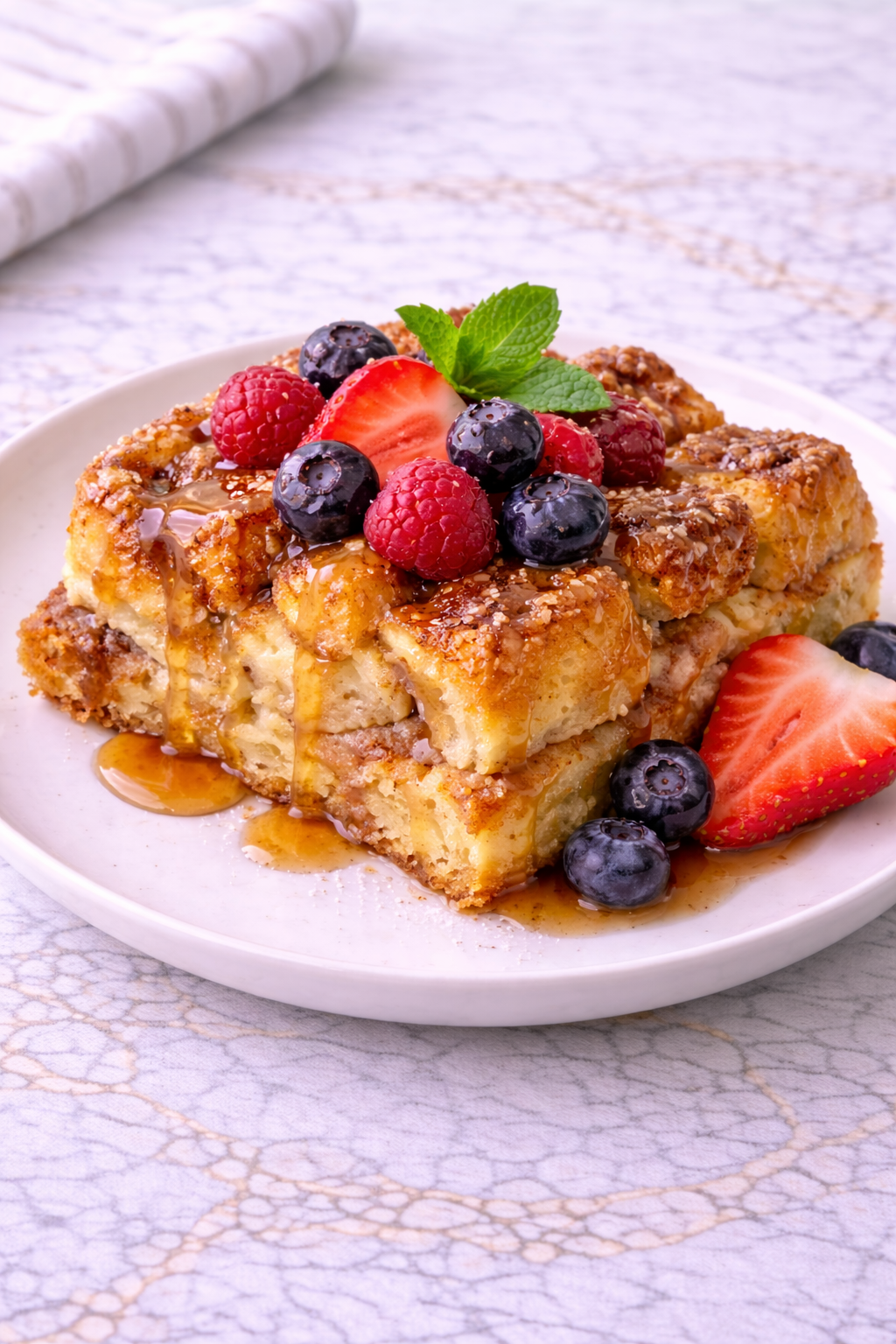
This Baked French Toast Casserole Recipe is one of those breakfasts that instantly makes a morning feel calmer and more welcoming. It is warm, comforting, and meant to be shared, which is exactly why it became a favorite in our home. Whenever I know we will all be together in the morning, this is the dish I reach for.
I first started making baked French toast when I wanted something easier than standing over the stove flipping slices one by one. I loved the idea of assembling everything ahead of time and letting the oven do the work. It felt like a small gift to myself on busy or special mornings.
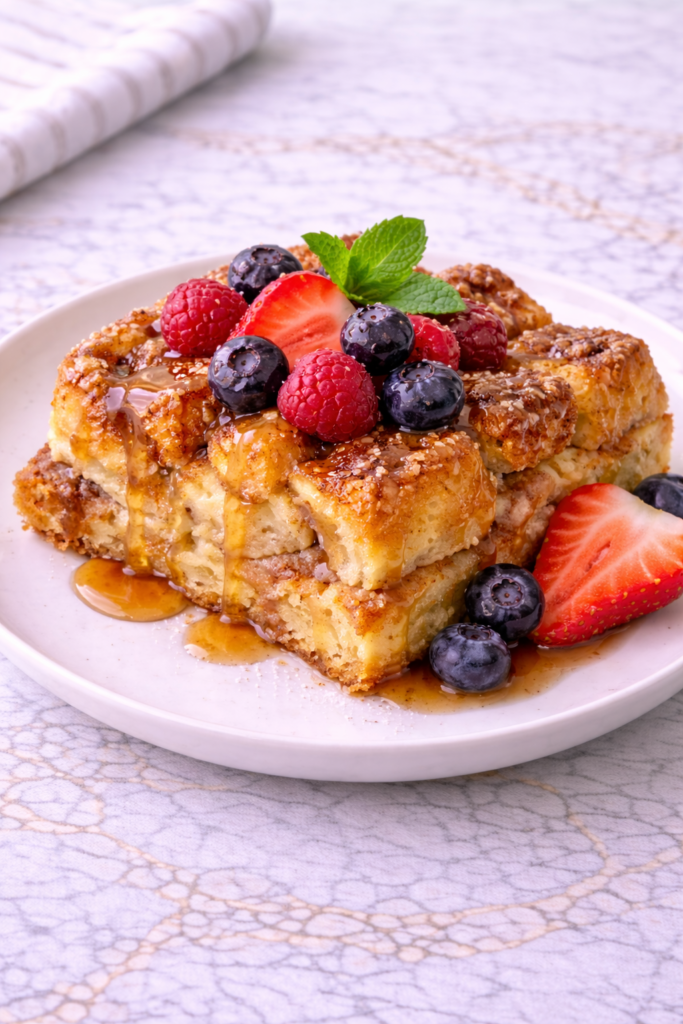
What makes this casserole so appealing is how familiar it tastes. It has all the flavors of classic French toast, but in a softer, scoopable form. The top turns golden and lightly crisp, while the inside stays tender and custardy.
Over time, this recipe became part of our holiday mornings and weekend traditions. It is dependable, cozy, and always feels a little special. It is the kind of breakfast that brings everyone to the table without needing to call twice.
Why You’ll Love This Recipe
This casserole has a soft, custardy center with a lightly crisp top that feels comforting and satisfying. The cinnamon and vanilla flavors are warm and familiar without being overpowering. Every bite tastes like classic French toast made easier.
Another reason this recipe works so well is its convenience. You can prepare it ahead of time and bake it when you are ready. That makes this Baked French Toast Casserole Recipe perfect for busy mornings, holidays, or brunch gatherings.
This recipe is also very family-friendly. It is easy to customize with different breads, toppings, or add-ins. Whether served plain or dressed up, this casserole fits easily into many occasions.
Serves: 4–6 people
This recipe comfortably serves four to six people, depending on portion size. It works well as a main breakfast dish or as part of a larger brunch spread. The recipe can be doubled easily for larger groups.
Ingredients You’ll Need
This casserole uses simple ingredients that come together into something comforting and flavorful. Each ingredient plays an important role in texture and taste.
- 1 loaf day-old bread, cut into cubes
- 6 large eggs
- 2 cups milk
- 1/2 cup heavy cream
- 1/3 cup granulated sugar
- 1/3 cup brown sugar
- 1 tablespoon vanilla extract
- 1 1/2 teaspoons ground cinnamon
- 1/4 teaspoon ground nutmeg
- Pinch of salt
- Butter, for greasing the baking dish
Day-old bread works best because it absorbs the custard without becoming mushy. Brioche, challah, or French bread are all great options.
Eggs form the base of the custard and give the casserole structure. Milk and cream add richness and softness.
Using both white and brown sugar creates balanced sweetness and depth of flavor. Cinnamon and nutmeg add warmth.
Vanilla rounds out the flavor, while salt balances the sweetness and enhances all the other ingredients.
Pro Tips
Use slightly stale bread for the best texture. Fresh bread can become too soft once baked.
Cut the bread into evenly sized cubes so it bakes uniformly. This helps prevent dry or soggy spots.
Whisk the custard thoroughly so the eggs are fully combined. This ensures even flavor throughout.
Let the bread soak in the custard before baking. This allows the flavors to fully absorb.
Cover the casserole loosely with foil if the top browns too quickly. This keeps the inside soft while finishing baking.
Allow the casserole to rest briefly after baking. This helps it set and makes serving easier.
Tools You’ll Need
This recipe uses simple kitchen tools that make preparation straightforward and stress-free.
- Large mixing bowl
- Whisk
- Measuring cups and spoons
- 9×13-inch baking dish
- Knife and cutting board
- Spatula or large spoon
A sturdy baking dish helps the casserole cook evenly. A large mixing bowl makes combining the custard easy and mess-free.
Substitutions and Variations
You can replace whole milk with almond milk or oat milk if desired. The texture will still be soft and creamy.
Half-and-half can replace the heavy cream for a lighter version. Use the same amount.
Maple syrup can replace some of the sugar for a different sweetness. Reduce the sugar slightly if using it.
Add chopped apples, berries, or raisins for extra flavor and texture. Fold them into the bread before baking.
For a richer casserole, add a few tablespoons of melted butter to the custard. This enhances flavor and moisture.
Make Ahead Tips
This casserole is ideal for preparing ahead, which is one of the reasons it is so loved in busy households. Being able to assemble everything early makes mornings feel calmer and more enjoyable.
You can fully assemble the casserole the night before baking. Once the bread and custard are combined in the baking dish, cover it tightly and refrigerate overnight.
Letting the casserole rest overnight allows the bread to absorb the custard more evenly. This results in a softer interior and more consistent texture throughout.
If you prefer a shorter rest, you can assemble the casserole at least 2 to 4 hours in advance. Even this shorter soak time improves the final result.
When baking from the refrigerator, remove the dish about 20 minutes before placing it in the oven. This helps it bake more evenly.
You can also pre-measure all the ingredients the night before. This makes assembly quick and stress-free in the morning.
Instructions
Step 1: Prepare the Baking Dish
Generously butter a 9×13-inch baking dish. Make sure to coat the bottom and sides evenly.
This step prevents sticking and adds flavor to the edges of the casserole.
Step 2: Add the Bread
Cut the day-old bread into bite-sized cubes. Place the bread evenly in the prepared baking dish.
Spread the cubes out so they are level. This helps the custard distribute evenly.
Step 3: Make the Custard
In a large mixing bowl, crack the eggs and whisk until smooth. Make sure the yolks and whites are fully combined.
Add the milk, heavy cream, granulated sugar, brown sugar, vanilla extract, cinnamon, nutmeg, and salt. Whisk until the mixture is fully blended and slightly frothy.
Step 4: Combine Bread and Custard
Slowly pour the custard mixture over the bread cubes. Pour evenly so all pieces are coated.
Gently press the bread down with a spatula or spoon. This helps the bread absorb the custard.
Step 5: Rest the Casserole
Let the casserole sit for at least 30 minutes before baking. This allows the bread to soak up the liquid.
For best results, cover and refrigerate overnight. This creates the most tender texture.
Step 6: Preheat the Oven
Preheat the oven to 350°F. Make sure the oven is fully heated before baking.
Remove the casserole from the refrigerator while the oven heats if it was chilled overnight.
Step 7: Bake the Casserole
Place the casserole uncovered in the oven. Bake for 40 to 45 minutes until the top is golden and the center is set.
If the top begins to brown too quickly, loosely cover it with foil for the remaining baking time.
Step 8: Rest Before Serving
Remove the casserole from the oven and let it rest for 5 to 10 minutes. This allows it to set and makes slicing easier.
The texture will firm slightly as it cools while staying soft inside.
Serving Suggestions
Serve this casserole warm with maple syrup drizzled over the top. The sweetness pairs perfectly with the cinnamon flavors.
Fresh fruit such as berries or sliced bananas adds brightness and contrast. It balances the richness of the casserole.
A dusting of powdered sugar creates a simple and classic finish. Use it lightly for a clean presentation.
Serve alongside bacon or sausage for a savory contrast. This turns the dish into a more filling breakfast.
A dollop of whipped cream can be added for special occasions. Keep portions modest so the casserole remains the focus.
Pair with coffee, tea, or juice for a complete and cozy breakfast spread.
Leftovers and Storage
This baked French toast casserole is best enjoyed warm, shortly after it comes out of the oven. The contrast between the lightly crisp top and the soft, custardy center is at its best when freshly baked.
If you have leftovers, allow the casserole to cool completely before storing. Transfer portions to an airtight container or cover the baking dish tightly with foil or plastic wrap.
Stored in the refrigerator, leftovers will keep well for up to three days. The texture will remain soft, though the top may lose some crispness over time.
To reheat individual portions, warm them in the microwave for short intervals until heated through. For a better texture, reheat in the oven at a low temperature until warm.
Freezing is also an option if you want to store it longer. Wrap portions tightly and freeze for up to two months. Thaw overnight in the refrigerator before reheating.
Nutrition and Benefits
This casserole offers a comforting balance of carbohydrates, protein, and fats. It provides steady energy that works well for mornings when you want something filling and satisfying.
Eggs contribute protein and help support fullness. They also create the custardy texture that defines baked French toast.
Milk and cream add richness and calcium. They help keep the casserole soft and tender without dryness.
Using bread as the base provides familiar comfort and structure. Choosing quality bread enhances both texture and flavor.
Cinnamon and nutmeg add warmth without added sweetness. These spices enhance flavor while keeping the dish balanced.
When enjoyed mindfully, this baked French toast casserole fits easily into a balanced breakfast or brunch.
Recipe FAQ
What kind of bread works best for this casserole?
Sturdy, slightly stale bread works best. Brioche, challah, and French bread are excellent options.
Day-old bread absorbs the custard evenly without becoming mushy.
Can I make this casserole completely ahead of time?
Yes, this casserole can be assembled the night before and baked in the morning. This makes it ideal for holidays or busy mornings.
Be sure to cover it tightly while refrigerating to prevent drying out.
Why is my casserole soggy in the center?
Sogginess can happen if too much liquid is used or if the casserole is underbaked. Make sure the center is set before removing it from the oven.
Letting the casserole rest after baking also helps it firm up.
Can I reduce the sugar?
Yes, the sugar can be reduced slightly without affecting the structure. The flavor will be less sweet but still comforting.
You can rely on toppings like fruit or syrup for added sweetness if desired.
Is this recipe kid-friendly?
Yes, this casserole is very popular with children. The flavors are familiar and mild.
You can adjust spices or sweetness to suit younger tastes.
Can I add a topping to this casserole?
Yes, streusel toppings or chopped nuts can be added before baking. These add texture and extra flavor.
Be careful not to overload the top so it still bakes evenly.
Can this recipe be doubled?
Yes, it can easily be doubled for larger gatherings. Use a larger baking dish or two separate dishes.
Adjust baking time slightly if using deeper dishes.
A Cozy Breakfast Made for Sharing
This Baked French Toast Casserole Recipe is the kind of dish that brings people together around the table.
It feels warm, familiar, and comforting, making mornings feel slower and more intentional.
Whether served for a holiday breakfast, weekend brunch, or a special family morning, it is a dependable recipe that delivers comfort and ease every time.